Validating Ecological Risk Tools: How Stock Status Reports Shape Next-Generation Assessment Methods
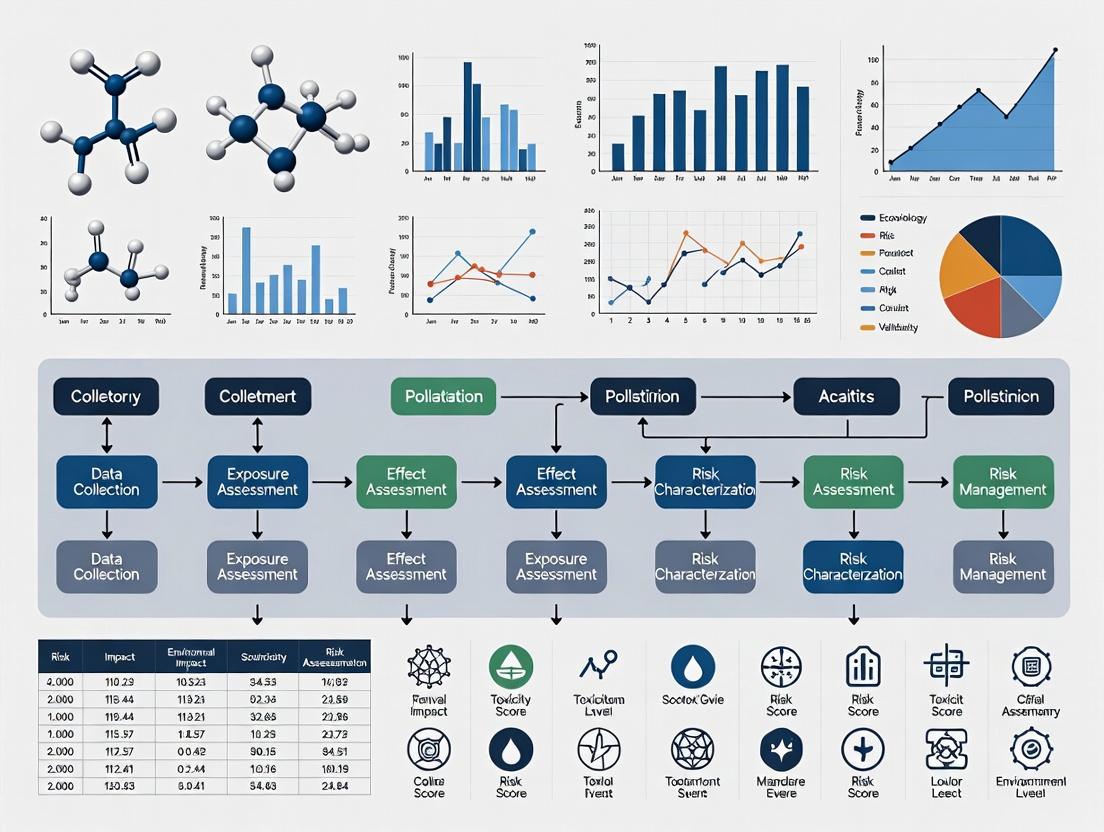
This article provides a comprehensive framework for researchers and drug development professionals on validating ecological risk assessment (ERA) methodologies using stock status reports and other quantitative benchmarks.
Validating Ecological Risk Tools: How Stock Status Reports Shape Next-Generation Assessment Methods
Abstract
This article provides a comprehensive framework for researchers and drug development professionals on validating ecological risk assessment (ERA) methodologies using stock status reports and other quantitative benchmarks. It first explores the foundational principles of ERA, the mismatch between measurement and assessment endpoints, and introduces key screening tools like Productivity and Susceptibility Analysis (PSA) and the Sustainability Assessment for Fishing Effects (SAFE)[citation:1][citation:2]. The methodological section details comparative approaches for validating these data-poor tools against data-rich benchmarks such as Fishery Status Reports (FSR)[citation:1]. Subsequently, the troubleshooting section addresses common issues like over-precautionary outcomes and data scarcity, offering optimization strategies including the integration of fishers' knowledge[citation:4]. Finally, the article synthesizes empirical validation results—such as PSA's 27% and SAFE's 8% misclassification rates against FSR—to guide method selection and future development toward integrated, next-generation risk assessment paradigms[citation:1][citation:5].
Understanding Ecological Risk Assessment: Core Principles, Tools, and the Critical Need for Validation
An Ecological Risk Assessment (ERA) is a formal, scientific process for evaluating the likelihood that one or more environmental stressors may cause adverse ecological effects [1]. It is a critical tool for informing environmental management and policy, serving two primary purposes: prospective (predicting likelihood of future effects from proposed actions) and retrospective (evaluating the cause of observed effects from past or ongoing exposures) [1] [2].
The overarching objective is to provide risk managers with scientifically defensible information to support decisions—such as chemical regulation, habitat restoration, or remediation—that protect the health of ecosystems and the services they provide [1] [3]. This process is inherently iterative and tiered, designed to efficiently allocate resources by starting with conservative, screening-level assessments and progressing to more complex, realistic models only for risks deemed unacceptable at lower tiers [4] [2].
Within the context of a broader thesis on validation, ERAs share fundamental challenges with stock assessment models used in fisheries science: both rely on models to estimate unobservable quantities (e.g., ecological risk, spawning stock biomass) and must integrate multiple lines of evidence under uncertainty. Therefore, validation frameworks developed for stock assessments, particularly those focusing on prediction skill and model plausibility, offer valuable paradigms for strengthening the credibility of ERA outcomes [5].
Comparative Analysis of Tiered Assessment Approaches
The tiered approach is central to efficient ERA. It begins with simple, conservative screening and escalates in complexity, data requirements, and ecological realism. The table below compares the key characteristics, methodologies, and outputs across assessment tiers.
Table: Comparison of Tiered Ecological Risk Assessment Approaches
| Assessment Tier | Primary Objective | Key Methodologies & Models | Exposure & Effects Estimation | Risk Characterization Output | Typical Use Case/Context |
|---|---|---|---|---|---|
| Tier 1: Screening | To identify stressors and scenarios posing negligible risk or requiring further evaluation. Uses worst-case assumptions to ensure conservatism [2]. | Deterministic Risk Quotients (RQs) [2]. Standard models: T-REX, TerrPlant, BeeREX (terrestrial) [6]; Tier I Rice Model (aquatic) [6]. | Exposure: Single, high-end point estimate (e.g., maximum application rate). Effects: Laboratory toxicity endpoints (e.g., LC50, NOAEC) for standard test species [4] [2]. | Risk Quotient (RQ) compared to a Level of Concern (LOC). Binary outcome: "Risk" or "No Risk" [2]. | Initial regulatory review of pesticides; prioritization of sites for further investigation. |
| Tier 2: Refined (Deterministic) | To refine the risk estimate for concerns identified in Tier 1 by incorporating more realistic, but still simplified, exposure scenarios. | More sophisticated fate & transport models. Examples: PWC (Pesticide in Water Calculator) [6], KABAM (bioaccumulation) [6], AgDRIFT (spray drift) [6]. | Exposure: Refined estimates using real-world scenarios (e.g., specific crops, weather). Effects: May use species sensitivity distributions (SSDs) or multiple toxicity endpoints [6]. | Probabilistic outputs (e.g., distributions of exposure concentrations). A refined RQ or exceedance probability. | Refined assessment for specific use patterns; site-specific preliminary assessments. |
| Tier 3: Advanced (Probabilistic & Modeling) | To provide a realistic, population- or ecosystem-relevant risk estimate to inform complex management decisions [2]. | Mechanistic Effects Models: Population models (e.g., following Pop-GUIDE), MCnest (avian reproduction) [6]. Integrated Models: Coupling exposure models (e.g., PWC) with effects models. | Exposure: Probabilistic, temporally and spatially explicit simulations. Effects: Models translating individual-level effects to impacts on population growth, structure, or ecosystem services [2]. | Probabilistic estimates of population-level endpoints (e.g., risk of decline >20%). Quantitative characterization of uncertainty. | Endangered species assessments; complex remediation decisions; evaluating chronic, population-level risks [2]. |
Methodological Workflow: From Problem Formulation to Risk Characterization
The ERA process follows a structured, three-phase workflow initiated by a planning stage. This sequence ensures the assessment is focused, scientifically defensible, and aligned with management needs [1] [3].
Planning & Problem Formulation: This foundational phase translates a broad management problem into a concrete assessment plan. Key activities include integrating available information, selecting assessment endpoints (the ecological entity and its attribute to protect, such as "reproduction in largemouth bass populations"), and developing a conceptual model [4] [3]. The conceptual model diagrammatically links stressors to receptors via exposure pathways, forming risk hypotheses. The phase concludes with a detailed analysis plan [4].
Analysis: This phase separately evaluates exposure and ecological effects. The exposure assessment describes the stressor's path from source to receptor, its distribution in the environment, and the extent of contact [3]. For chemicals, this considers bioavailability, bioaccumulation, and timing relative to sensitive life stages [3]. The effects assessment (or stressor-response assessment) evaluates the relationship between the magnitude of exposure and the likelihood or severity of adverse effects, drawing from laboratory and field data [1] [3].
Risk Characterization: This phase integrates the analysis to estimate risk. It involves risk estimation (comparing exposure and effects) and risk description, which interprets the results, discusses ecological adversity, and, critically, summarizes all uncertainties and assumptions [1] [3]. The output must be clear enough to support a risk management decision.
The Tiered Assessment Framework in Practice
The tiered framework is a pragmatic implementation of the ERA workflow, where each cycle through the three phases increases in refinement.
Screening (Tier 1): This level uses highly conservative assumptions (e.g., maximum exposure, most sensitive toxicity value) to calculate a deterministic Risk Quotient (RQ). Its strength is speed and efficiency for clear low-risk scenarios. A major limitation is that it does not quantify risk probability or magnitude and can overestimate risk, triggering unnecessary further testing [2].
Refined (Tier 2): Assessments that exceed screening levels move to Tier 2, which replaces worst-case assumptions with more realistic data. Exposure estimates may incorporate regional weather data, specific application methods, or probabilistic distributions [6]. Effects assessment may use Species Sensitivity Distributions (SSDs). Outputs include probabilistic metrics, providing a better sense of the likelihood of adverse effects.
Advanced Modeling (Tier 3): For high-stakes or complex decisions, Tier 3 employs mechanistic models to understand how effects manifest at population or community levels. For example, the MCnest model projects the impact of pesticide exposure on avian annual reproductive success [6]. The most significant advancement is the use of population models (guided by frameworks like Pop-GUIDE) that integrate life-history traits, density-dependence, and exposure dynamics to predict impacts on population growth or extinction risk [2]. This moves risk characterization beyond simple quotients to ecologically relevant endpoints.
Validation Paradigms: Lessons from Fisheries Stock Assessment
A core challenge in ERA, as in fisheries science, is validating models when the true state of the system (e.g., population-level risk, true stock biomass) is unobservable [5]. Stock assessment science has developed rigorous validation paradigms that can inform ERA.
Table: Comparison of Validation Paradigms from Stock Assessment for ERA Application
| Validation Paradigm | Core Principle | Key Diagnostic Tools | Advantages | Challenges & Considerations | Potential Application in ERA |
|---|---|---|---|---|---|
| "Best Assessment" | Select a single "best" model based on statistical goodness-of-fit to historical data [5]. | Residual analysis; Retrospective analysis (checking stability of estimates over time) [5]. | Simplicity; provides a single answer for managers. | High risk of model misspecification; "cherry-picking" models to fit beliefs; ignores alternative plausible hypotheses [5]. | Analogous to selecting a single toxicity value or exposure model without exploring alternatives. |
| Model Ensemble | Combine outputs from multiple plausible models to represent structural uncertainty [5]. | Weighting schemes (e.g., based on AIC, prediction skill); diversity of model structures [5]. | Quantifies uncertainty from competing hypotheses; can improve prediction robustness. | Requires objective method to weight models; ensemble must be diverse and representative [5]. | Creating ensembles of exposure models (e.g., PWC scenarios) or effects models (e.g., different population model structures). |
| Management Strategy Evaluation (MSE) | Simulation-test the entire management cycle (assessment, decision rule, implementation) under many plausible "states of nature" [5]. | Operating Models (OMs) represent system truth; test Management Procedures (MPs) against OMs; prediction skill validation [5]. | Tests robustness of decisions, not just models; most comprehensive validation framework. | Computationally intensive; requires broad stakeholder buy-in to design OMs and MPs. | Testing the robustness of an ERA-based regulatory trigger (e.g., an RQ LOC) or a remediation goal across many simulated ecosystems. |
| Prediction Skill Validation | Assess a model's ability to predict data withheld from the fitting process (hindcasting) [5]. | Hindcast Analysis: Omit recent data, fit model, predict omitted values, compare to observations [5]. | Objectively measures predictive ability; strong tool for model selection and rejection. | Requires adequate time-series data. | Validating population models by hindcasting species abundance data; validating exposure models by hindcasting environmental monitoring data. |
The uncertainty grid approach used in stock assessments—systematically evaluating combinations of key uncertain parameters—is directly applicable to higher-tier ERA [5]. For instance, an ERA for a pesticide could run an ensemble of simulations varying parameters like degradation rate, application timing, and species sensitivity to understand how these uncertainties propagate to the final risk metric.
The Scientist's Toolkit: Key Research Reagent Solutions
Table: Essential Reagents, Models, and Tools for Ecological Risk Assessment Research
| Tool/Reagent Category | Specific Example(s) | Primary Function in ERA | Associated Tier/Phase |
|---|---|---|---|
| Exposure Fate & Transport Models | PWC (Pesticide in Water Calculator): Estimates pesticide concentrations in water bodies from land applications [6]. AgDRIFT/AGDISP: Predicts atmospheric deposition and spray drift from applications [6]. | Simulate the environmental fate of chemical stressors and estimate exposure concentrations for ecological receptors. | Tier 1-3, Analysis Phase. |
| Terrestrial Exposure & Effects Models | T-REX: Estimates pesticide residues on avian and mammalian food items [6]. MCnest: Integrates toxicity, timing, and life history to estimate impacts on bird population productivity [6]. | Translate pesticide use patterns into dose estimates for terrestrial species; project individual-level exposures to population-level consequences. | T-REX (Tier 1-2); MCnest (Tier 3). |
| Aquatic Bioaccumulation Models | KABAM: Estimates bioaccumulation of hydrophobic pesticides in aquatic food webs and risks to predators [6]. | Models trophic transfer and biomagnification of persistent chemicals, a key exposure pathway for fish, birds, and mammals. | Tier 2-3, Analysis Phase. |
| Population Modeling Framework | Pop-GUIDE (Population modeling Guidance, Use, Interpretation, and Development for ERA): A framework for developing fit-for-purpose population models [2]. | Provides standardized guidance for building, documenting, and interpreting mechanistic population models to assess ecological risks. | Tier 3, Analysis & Risk Characterization. |
| Probabilistic Risk Tools | EcoRisk View (Software Suite): An advanced program for conducting comprehensive multi-pathway probabilistic ecological risk assessments [7]. | Integrates exposure and effects distributions to compute probabilistic risk estimates, moving beyond deterministic RQs. | Tier 2-3, Risk Characterization. |
| Validation & Diagnostics Toolbox | Hindcast Analysis/Prediction Skill Metrics: Tools for omitting data, generating predictions, and comparing them to observations [5]. Uncertainty Grids: Structured sets of model scenarios covering key parameter uncertainties [5]. | Objectively evaluate model predictive performance and quantify the impact of parametric and structural uncertainty on assessment outcomes. | All Tiers, essential for model validation and reporting uncertainty. |
Ecological Risk Assessment (ERA) is the formal process used to evaluate the safety of manufactured chemicals and other anthropogenic stressors on the environment [8]. A fundamental and persistent challenge within this field is the disconnect between what is easily measured in controlled settings—measurement endpoints—and the ultimate ecological values society seeks to protect—assessment endpoints [8].
Measurement endpoints are the quantifiable biological responses (e.g., cell viability, organismal mortality, gene expression) observed in standardized laboratory tests. In contrast, assessment endpoints are explicit expressions of the actual environmental values to be protected, such as the sustainability of a fish population, the biodiversity of a stream community, or the integrity of an ecosystem service [8]. In most ERAs, the measurement endpoint is a toxicity value from a laboratory test on a model organism, while the assessment endpoint is a broader, often vaguely defined concept like "ecosystem function" [8]. This gap creates uncertainty, potentially leading to risk estimates that either underestimate threats (causing environmental degradation) or overestimate them (leading to unnecessary remediation costs) [8].
This guide compares the performance of contemporary strategies designed to narrow this endpoint gap. Framed within the broader thesis of validating ecological risk assessments with real-world ecosystem status reports, we objectively evaluate methods ranging from traditional bioassays to modern computational models, supported by experimental data.
Comparative Analysis of Methodological Approaches
This section provides a comparative evaluation of prominent methodologies, summarizing their core principles, advantages, limitations, and illustrative data.
Tiered Assessment Frameworks
Traditional ERA often employs a tiered framework, progressing from simple, conservative screens to complex, site-specific studies [8]. The table below compares the key characteristics of different tiers.
Table: Comparison of Tiers in Ecological Risk Assessment [8]
| Tier Level | Basic Description | Typical Risk Metric | Advantages | Limitations |
|---|---|---|---|---|
| Tier I | Conservative screening analysis to rule out negligible risks. | Hazard/risk quotient compared to a Level of Concern. | Rapid, cost-effective, requires minimal data. | Highly conservative; may overestimate risk; lacks probabilistic realism. |
| Tier II | Refined analysis incorporating variability and uncertainty. | Probability of adverse effect to an ecological receptor. | More realistic risk estimate; begins to quantify uncertainty. | Requires more robust exposure and effects data. |
| Tier III/IV | Highly refined or site-specific analysis with field studies. | Multiple lines of evidence from environmentally relevant data. | High ecological relevance; can directly address assessment endpoints. | Resource-intensive, time-consuming, complex to interpret. |
Bioassay-Based Screening Strategies
Bioassays are fundamental measurement tools. A 2025 comparative study evaluated the sensitivity of bioassays using unicellular organisms and vertebrate cell lines against 21 chemicals and 279 wastewater samples [9]. The performance data highlights significant differences in utility for screening.
Table: Comparative Performance of Bioassays for Detecting Chemical Toxicity [9]
| Bioassay Type | Test System | Sensitivity to 21 Ref. Chemicals | Responsiveness to 279 Env. Samples | Key Strengths | Primary Weaknesses |
|---|---|---|---|---|---|
| Algal Assay | Raphidocelis subcapitata | >80% detected | >92% responded | High sensitivity to broad chemicals; protein/lipid-free medium enhances bioavailability. | May not detect vertebrate-specific toxicities. |
| Bacterial Assay | Escherichia coli | Moderate | Data not specified | Rapid, cost-effective; sensitive to specific modes (e.g., antibiotics). | Lower overall sensitivity in complex mixtures. |
| Yeast Assay | Saccharomyces cerevisiae | Least responsive | Data not specified | Eukaryotic model; useful for fungicide detection. | Generally low sensitivity for broad screening. |
| Vertebrate Cell Viability | Various fish and mammalian cell lines | Variable by cell line | 21–53% responded | Detects vertebrate-specific pathway disturbances. | Medium composition can reduce bioavailability of lipophilic compounds. |
| Combined Assay | Algae + DR-EcoScreen cells | Not specified | 96.4% of toxicities captured | High-throughput, cost-effective strategy for broad screening. | Requires multiple assay platforms. |
The study concluded that a combined battery using an algal assay and a vertebrate cell line (DR-EcoScreen) captured 96.4% of detected toxicities in environmental samples, offering a powerful high-throughput screening strategy [9]. This aligns with the principle that no single measurement endpoint is sufficient [8].
Computational & Machine Learning Approaches
Computational methods, particularly machine learning (ML), are emerging as powerful tools for predicting toxicity and bridging data gaps. The ToxACoL paradigm represents a significant advance in acute toxicity assessment for multi-species and multi-endpoint prediction [10].
Table: Comparison of Machine Learning Paradigms for Acute Toxicity Prediction [10]
| ML Paradigm | Core Approach | Advantages | Limitations | Performance Note |
|---|---|---|---|---|
| Single-Task Learning (STL) | Models one toxicity endpoint independently. | Simple, interpretable models for data-rich endpoints. | Poor performance on data-scarce endpoints; ignores endpoint correlations. | Random Forest and Graph Neural Networks often perform well. |
| Multi-Task Learning (MTL) | Shares representation learning across multiple related endpoints. | Improves average performance across all endpoints via knowledge sharing. | Struggles with highly imbalanced data; may not improve scarce endpoints. | Better average performance than STL but can dilute focus. |
| Adjoint Correlation Learning (ToxACoL) | Models endpoint relationships via graph topology; learns compound and endpoint representations simultaneously. | Dramatically improves prediction for data-scarce endpoints (e.g., 43-87% for human endpoints); enables extrapolation. | Higher model complexity; requires careful graph construction. | Reduces needed training data by 70-80% for sparse endpoints, aligning with 3Rs principles. |
ToxACoL’s “endpoint-aware” learning explicitly models the relationships between different experimental conditions (species, route), which is crucial for extrapolating from standard test species to sensitive ecological receptors or humans [10].
Qualitative Ecosystem-Based Tools
In data-poor contexts, such as fisheries management, qualitative and semi-quantitative tools are vital for incorporating ecosystem information. The Ecological Risk Assessment for the Effects of Fishing (ERAEF) framework is one such approach [11].
Table: Comparison of Qualitative ERA Tools in Fisheries Management [12] [11]
| Tool / Approach | Application Context | Methodology | Output | Utility for Bridging the Gap |
|---|---|---|---|---|
| Scale Intensity Consequence Analysis (SICA) | Initial, qualitative screening of fishery impacts. | Expert judgment to rank risks based on scale, intensity, and consequence of impact. | Prioritizes issues for further assessment. | Incorporates broad ecosystem considerations early in the assessment process. |
| Productivity Susceptibility Analysis (PSA) | Semi-quantitative risk assessment for bycatch species. | Scores species based on productivity (life history) and susceptibility to the fishery. | Relative vulnerability ranking (Low, Moderate, High). | Translates limited population data into management priorities for non-target species. |
| Ecosystem-Based Risk Tables | Integrating qualitative ecosystem trends into single-species management. | Distills complex ecosystem information into qualitative advice for risk tolerance adjustment. | Informs flexible management decisions amidst uncertainty. | Directly incorporates ecosystem-level assessment endpoints (e.g., stability) into stock management. |
An application of SICA and PSA to an Amazonian shrimp trawl fishery identified 12 out of 47 bycatch species as highly vulnerable, directing future management and data collection efforts [11]. These tools make the link between the measurable (catch data) and the assessment goal (ecosystem sustainability) more transparent in data-limited situations [12].
Experimental Protocols for Key Studies
Objective: To identify the most sensitive bioassays for detecting a wide range of toxicological effects in environmental samples.
- Chemical Selection: 21 chemicals with diverse modes of action (e.g., herbicides, pharmaceuticals, metals) and known environmental relevance were selected.
- Bioassay Panel: Three unicellular organisms (the algae Raphidocelis subcapitata, bacterium Escherichia coli, and yeast Saccharomyces cerevisiae) and five vertebrate cell lines (including fish and mammalian cells) were cultured under standard conditions.
- Exposure & Measurement:
- Unicellular organisms: Exposed in 96-well plates; growth inhibition was measured via optical density or fluorescence.
- Vertebrate cells: Exposed for 24 hours; cell viability was measured using an MTS assay, which quantifies mitochondrial metabolic activity.
- Environmental Sampling: 279 wastewater treatment plant effluent samples were collected, concentrated, and screened using the most sensitive assays from the initial chemical testing.
- Data Analysis: Sensitivity was calculated as the percentage of chemicals or samples eliciting a significant toxic response. Complementarity between assays was analyzed to design an optimal screening battery.
Objective: To develop a machine learning model that accurately predicts data-scarce toxicity endpoints by learning relationships between multiple experimental conditions.
- Data Curation: A dataset of 59 acute toxicity endpoints (e.g., LD50, TDLo) covering over 80,000 compounds was assembled from public databases like TOXRIC. Endpoints varied by species, administration route, and measurement indicator.
- Graph Construction: A graph was built where nodes represent toxicity endpoints. Edges and their weights between nodes were established based on the similarity of experimental conditions and correlations in available toxicity data.
- Model Architecture: The ToxACoL model uses a dual-branch architecture:
- Compound Branch: A neural network processes molecular representations (e.g., SMILES strings).
- Endpoint Graph Branch: A graph convolution network propagates information across the endpoint relationship graph.
- Adjoint Correlation Mechanism: At each layer, the two branches interact, allowing the model to learn endpoint-aware compound representations.
- Training & Validation: The model was trained to predict toxicity values for all endpoints simultaneously. Performance was rigorously validated, with special attention to its accuracy on data-scarce human toxicity endpoints compared to state-of-the-art benchmarks.
Visualizing the Pathway from Measurement to Assessment
The Biological Hierarchy from Measurement to Assessment Endpoints
Modern Integrated Workflow for Validating ERA
The Scientist's Toolkit: Key Research Reagent Solutions
This table details essential materials and tools featured in the discussed approaches for conducting research aimed at bridging the endpoint gap.
Table: Essential Research Tools for Advanced Ecological Risk Assessment
| Tool/Reagent Category | Specific Example | Primary Function in Research | Relevance to Endpoint Gap |
|---|---|---|---|
| High-Sensitivity Bioassay Organisms | Raphidocelis subcapitata (Green Algae) | Serves as a sensitive, broad-spectrum toxicity sensor in screening batteries [9]. | Provides an efficient, ecologically relevant measurement endpoint for primary producers. |
| Vertebrate Cell Line Assays | DR-EcoScreen cells; various fish cell lines | Detects disturbances in vertebrate-specific biological pathways via viability (MTS) or reporter gene assays [9]. | Bridges in vitro measurements to potential impacts on higher organisms. |
| Computational Toxicity Models | ToxACoL Model Framework | Predicts multi-species acute toxicity and extrapolates to data-scarce endpoints using adjoint correlation learning [10]. | Directly models relationships between measurement endpoints to infer assessment-level risks. |
| Qualitative Risk Assessment Frameworks | SICA & PSA Tools (ERAEF) | Provides structured, expert-driven assessment of risk in data-poor contexts (e.g., fisheries bycatch) [11]. | Translates limited data into vulnerability rankings, linking operational data to population sustainability goals. |
| Ecosystem Service Models | InVEST Carbon Stock Model | Quantifies ecosystem functions (like carbon sequestration) based on land use/cover data [13]. | Connects landscape-scale measurements to assessment endpoints concerning climate regulation services. |
| Validated Alternative Test Methods | OECD Test Guidelines | Provides internationally accepted standardized procedures for chemical safety testing [14]. | Ensures measurement endpoints are reliable, reproducible, and fit for regulatory use in higher-tier assessments. |
The core challenge of bridging measurement and assessment endpoints cannot be solved by a single method. Validation of ecological risk assessment requires a convergent, multi-pronged strategy:
- Leverage Combined Bioassays: High-throughput screening batteries, such as combining algal and vertebrate cell assays, maximize the detection of bioactive substances with high ecological relevance [9].
- Embrace Computational Extrapolation: Advanced machine learning models like ToxACoL that explicitly learn relationships between endpoints are powerful for predicting risks for data-scarce species and scenarios, reducing uncertainty [10].
- Integrate Qualitative and Quantitative Data: In management contexts, frameworks like ERAEF successfully incorporate qualitative ecosystem information into decision-making, especially where quantitative data is limited [12] [11].
- Commit to Iterative Ground-Truthing: The ultimate validation of any approach lies in its ability to predict or correlate with real-world ecosystem status reports, whether from fishery stock assessments [11], carbon stock monitoring [13], or biodiversity surveys. This requires a continuous cycle of measurement, prediction, monitoring, and model refinement.
The future of robust ERA lies in the integrated application of these complementary tools, moving beyond reliance on isolated measurement endpoints toward a holistic, evidence-based prediction of true ecological outcomes.
This guide provides a comparative analysis of two critical screening tools used in ecological risk assessment (ERA): the Productivity and Susceptibility Analysis (PSA) and the Sustainability Assessment for Fishing Effects (SAFE). Framed within broader thesis research on validating ERA outcomes with empirical stock status reports, this guide objectively evaluates each tool's performance, supported by experimental data and detailed methodologies. The analysis is intended for researchers and scientists developing and applying risk assessment frameworks in environmental management and conservation.
Comparative Performance Analysis: PSA vs. SAFE
The core function of ERA screening tools is to prioritize ecological components or activities for more detailed assessment. The following table summarizes the key design principles, outputs, and validation contexts for PSA and SAFE.
Table 1: Core Design and Application of PSA and SAFE Frameworks
| Feature | Productivity and Susceptibility Analysis (PSA) | Sustainability Assessment for Fishing Effects (SAFE) |
|---|---|---|
| Primary Objective | A semi-quantitative, rapid-risk screening tool to evaluate the vulnerability of species to a specific fishery or pressure [15]. | A quantitative framework to assess the sustainability of fishing activities on target and non-target species, often integrating stock assessment models [15]. |
| Methodological Approach | Risk is scored based on attributes related to Productivity (e.g., growth rate, fecundity) and Susceptibility (e.g., overlap with gear, catchability) [15]. | Risk is calculated using defined sustainability indicators and reference points, often involving population modeling and catch data analysis [15]. |
| Key Outputs | A relative vulnerability score or rank, categorizing species as low, medium, or high risk [15]. | An estimate of whether fishing mortality rates are sustainable relative to biological reference points (e.g., FMSY) [15]. |
| Strengths | Rapid, requires less data than full assessments, effective for data-poor species, useful for multi-species comparisons [15]. | Provides quantitative, actionable management advice (e.g., catch limits), directly linked to stock status and sustainability metrics [15]. |
| Limitations | Semi-quantitative scores can be subjective; does not provide absolute estimates of risk or population impact [15]. | Requires robust catch and biological data; computationally intensive; less suitable for data-poor scenarios [15]. |
| Validation Context | Validation often involves comparing PSA risk rankings with independent population trends or outcomes from more complex quantitative models [15]. | Validation is inherent through comparison with stock status reports from formal assessments and monitoring of population trends against predictions [15]. |
Experimental Protocols and Validation Methodologies
Validation of ERA tools against real-world outcomes is a cornerstone of robust ecological science. The protocols below outline generalized methodologies for testing PSA and SAFE frameworks.
2.1 Protocol for Validating PSA Risk Rankings
This protocol describes a retrospective analysis to validate PSA outcomes against independent stock status data.
- Problem Formulation & Species Selection: Define the geographic region and fishery. Select a broad suite of species (both target and non-target) impacted by the fishing activity [1].
- PSA Application: For each species, collect data and score the predefined Productivity and Susceptibility attributes according to the standardized PSA framework [15]. Calculate the composite vulnerability score and assign a risk category (e.g., High, Medium, Low).
- Independent Status Data Collection: Collate time-series data on population biomass, abundance indices, or fishing mortality from stock assessments, scientific surveys, or fishery-independent monitoring programs. Categorize each species' population trend as "Declining," "Stable," or "Increasing" over a relevant period [15].
- Statistical Validation: Construct a contingency table comparing the PSA risk category (predictor) with the observed population trend category (response). Use statistical tests like Chi-square or calculation of correct classification rates to determine if higher PSA risk scores are significantly associated with declining population status [15].
- Sensitivity Analysis: Test the robustness of the PSA rankings by varying input data or scoring weights within plausible ranges to see if risk categories change significantly for key species [15].
2.2 Protocol for Validating SAFE Sustainability Indicators
This protocol tests the accuracy of SAFE framework outputs against subsequent observed stock status.
- Model Setup and Historical Analysis: Apply the SAFE framework to historical catch and biological data for a well-assessed stock. Estimate key sustainability indicators, such as the ratio of fishing mortality (F) to the target reference point (FMSY), for past years [15].
- Prediction and Benchmarking: Using data available up to a chosen historical year (e.g., 2010), run the SAFE model to estimate sustainability indicators for that year. Record the model's diagnosis (e.g., F > FMSY, indicating unsustainable fishing) [15].
- Comparison with "True" Status: Compare the SAFE diagnosis from Step 2 with the "accepted" stock status for that same year, as determined later by a comprehensive, peer-reviewed stock assessment that incorporated more complete data [15].
- Performance Metrics Calculation: Repeat the process for multiple stocks and time periods. Calculate diagnostic performance metrics for the SAFE framework, including:
- Sensitivity: Proportion of truly overfished stocks correctly identified by SAFE.
- Specificity: Proportion of truly sustainable stocks correctly identified by SAFE.
- Precision: Proportion of stocks flagged as overfished by SAFE that were truly overfished [15].
Visualizing Methodological Frameworks
Comparative ERA Tool Workflow & Validation
Conducting rigorous ERA tool development and validation requires specific data resources and analytical tools.
Table 2: Essential Resources for ERA Tool Development and Validation
| Resource Category | Specific Tool / Database | Function in ERA Tool Research |
|---|---|---|
| Biological Traits Data | FishBase, SeaLifeBase | Provides standardized species-level data on productivity attributes (e.g., growth rate, age at maturity) essential for PSA scoring and SAFE model parameterization [15]. |
| Fisheries Interaction Data | FAO Catch Databases, Regional Fishery Management Organization (RFMO) reports | Supplies time-series catch, bycatch, and effort data needed to calculate susceptibility in PSA and fishing mortality in SAFE frameworks [15]. |
| Stock Status Benchmarks | RAM Legacy Stock Assessment Database, IUCN Red List | Provides "gold standard" population trends and conservation statuses used as independent validation metrics to test the accuracy of PSA and SAFE outputs [15]. |
| Statistical & Modeling Software | R Statistical Environment (with packages like fishmethods, SAFR), AD Model Builder |
Enables the quantitative analysis for validation (e.g., classification error rates), running population models for SAFE, and conducting sensitivity analyses [15]. |
| Guidance & Frameworks | U.S. EPA EcoBox Toolkit, NOAA Fisheries PSA Guidelines [15] [16] [1] | Offers established protocols, conceptual models, and best practices for structuring ERA problems, defining assessment endpoints, and applying standardized tools like PSA. |
In summary, the selection between PSA and SAFE is contingent upon the assessment's objectives, data availability, and required management outputs. PSA serves as an efficient, data-limited screening tool to triage risks, while SAFE provides a quantitative, sustainability-focused assessment suitable for data-moderate situations. Validation against independent stock status reports, as outlined in the experimental protocols, is critical for advancing ERA science, testing tool reliability, and strengthening the evidence base for ecological management decisions. This comparative analysis provides a foundation for such thesis research, highlighting the complementary roles these tools play in a robust ecological risk assessment paradigm.
Within the framework of ecological risk assessment (ERA) validation, two critical constructs emerge: benchmark data and Stock Status Reports (FSRs). Benchmark data refers to standardized, quantitative values that represent chemical concentration thresholds below which adverse effects on ecological receptors are not expected [17]. These benchmarks, derived from toxicity studies on aquatic and terrestrial organisms, serve as foundational validation standards against which site-specific contamination data are compared to screen for potential risk [18].
An FSR (Stock Status Report), in this ecological context, is conceptualized as a comprehensive summary and synthesis. It integrates measured environmental concentrations (MECs) of chemicals of concern (COCs) with relevant ecological benchmark data to define the current "status" of a system—whether it is potentially impaired or within acceptable limits [19]. The overarching thesis posits that the iterative comparison of site data (MECs) against validated, hierarchical benchmarks forms the core of a defensible validation protocol for ERA. This process transforms raw monitoring data into a validated risk characterization, essential for informed decision-making in environmental remediation and protection [19] [20].
Different regulatory and research entities develop and curate ecological benchmark databases, each with distinct methodologies, taxonomic focuses, and intended applications. The selection of an appropriate benchmark source is a critical first step in validating an FSR. The table below provides a comparative overview of three prominent sources.
Table 1: Comparison of Major Ecological Benchmark Databases for Validation
| Source / Program | Primary Authority | Key Media Covered | Taxonomic Focus | Core Application in Validation | Update Frequency |
|---|---|---|---|---|---|
| Aquatic Life Benchmarks [18] | U.S. EPA Office of Pesticide Programs | Surface Water, Sediment | Freshwater & Marine Vertebrates/Invertebrates, Plants | Screening-level risk assessment for pesticide registration and monitoring; primary comparator for aquatic MECs. | Annual (last update Sept. 2025) |
| TCEQ Ecological Benchmark Tables [19] | Texas Commission on Environmental Quality | Surface Water, Sediment, Soil | Aquatic organisms, Soil invertebrates, Wildlife, Plants | State-level remediation projects under TRRP rule; used for Tier 1 & Tier 2 screening-level ecological risk assessments (SLERA). | Periodic (last update Aug. 2023) |
| Ecological Benchmark Tool [17] | Oak Ridge National Laboratory (ORNL) | Surface Water, Sediment, Soil, Biota | Aquatic organisms, Soil invertebrates, Mammals, Terrestrial plants | Comprehensive screening for a wide range of chemicals and receptors; often used in preliminary site investigations and research. | Not explicitly stated (compilation from multiple agencies) |
The experimental protocol for employing these benchmarks in FSR validation follows a consistent workflow. First, site investigation yields chemical-specific MECs for environmental media. Second, a benchmark selection process identifies the most appropriate, protective value (often the lowest chronic or acute value for the most sensitive relevant species) from a authoritative source like those above [18]. Third, a quantitative comparison is performed, typically by calculating a hazard quotient (HQ = MEC / Benchmark). An HQ > 1.0 indicates a potential risk, triggering further tiered assessment [19]. This direct comparison constitutes the fundamental validation check, determining if concentrations are "acceptable" against the standard.
Experimental Protocols for Benchmark Derivation and Application
The scientific validity of an FSR hinges on the rigor of the benchmarks it employs. These values are not arbitrary but are generated through standardized toxicity testing and quantitative assessment protocols.
Protocol for Benchmark Derivation (e.g., EPA Aquatic Life Benchmarks):
- Data Collection & Selection: Toxicity values are extracted from studies that comply with Harmonized Test Guidelines (e.g., 40 CFR 158) and the Evaluation Guidelines for Ecological Toxicity Data in the Open Literature [18]. Studies are evaluated for quality, relevance, and reliability.
- Species Sensitivity Analysis: For a given chemical, all acceptable toxicity endpoints (e.g., LC50 for acute effects, NOAEC/EC10 for chronic effects) are assembled for various species (fish, invertebrates, plants).
- Critical Value Determination: The benchmark is typically based on the most sensitive value from the available data for each taxonomic group (e.g., freshwater invertebrates) [18]. In some frameworks, statistical methods like species sensitivity distributions (SSDs) may be used to derive a protective concentration (e.g., HC5).
- Benchmark Specification: Final values are reported as concentrations (e.g., µg/L) for specific media, effect types (acute/chronic), and receptor groups [18].
Protocol for Site-Specific FSR Validation Using Benchmarks:
- Exposure Concentration Characterization: Representative environmental samples are collected and analyzed using approved analytical methods (e.g., EPA SW-846 methods) to determine MECs [19].
- Benchmark Alignment: Select benchmarks that match the site's media (water, soil), relevant ecological receptors (based on a site conceptual model), and appropriate exposure duration (acute vs. chronic).
- Risk Quantification: Calculate Hazard Quotients (HQs) or similar risk indices for each COC-receptor pair.
- Risk Characterization & FSR Compilation: Interpret HQ data. COCs with HQ < 1 across all receptors may be eliminated from further consideration. COCs with HQ > 1 are identified as potential drivers of risk, and their data form the core of the FSR, which summarizes the "status" of the site [19]. This report then undergoes peer review, a key validation step where independent experts assess the correctness of data application and interpretation [20].
The Scientist's Toolkit: Essential Reagents and Materials
The derivation and application of ecological benchmarks require specialized tools and data resources. The following table details key components of the methodological toolkit.
Table 2: Research Reagent Solutions for Ecological Benchmark Development and FSR Validation
| Tool / Material | Function in Validation Process | Example Source / Standard |
|---|---|---|
| Standardized Toxicity Test Organisms | Provide consistent, reproducible biological response data for benchmark derivation. Examples include fathead minnow (Pimephales promelas), water flea (Daphnia magna), and earthworm (Eisenia fetida). | EPA Ecological Effects Test Guidelines (OCSPP 850 series) |
| Analytical Reference Standards & Certified Materials | Ensure accurate quantification of chemical concentrations in environmental samples and dosing solutions in toxicity tests, forming the reliable numerator for HQ calculations. | Commercial chemical suppliers, NIST Standard Reference Materials |
| Ecological Benchmark Databases | Provide the validated denominator values (benchmarks) for risk calculations. They are the core reference for FSR compilation. | U.S. EPA Aquatic Life Benchmarks [18], TCEQ Ecological Benchmark Tables [19], ORNL Ecological Benchmark Tool [17] |
| Quality Assurance/Quality Control (QA/QC) Protocols | Govern sample collection, handling, analysis, and data management to ensure the integrity and defensibility of both toxicity test results and field MEC data. | EPA guidance (e.g., QA/R-5), individual laboratory QA/QC plans |
| Statistical Analysis Software | Used for deriving benchmarks (SSD modeling, uncertainty analysis) and analyzing site data (calculating representative concentrations, HQs, confidence intervals). | R, SSD Master, EPA ProUCL |
Visualizing the Validation Workflow and Conceptual Relationships
The validation of an FSR through benchmark comparison is a systematic process. The following diagram illustrates the core workflow from data generation to risk-based decision-making.
Validation Workflow for Ecological Stock Status Reports
The conceptual foundation for this workflow rests on aligning different forms of validity with assessment stages. The next diagram maps these key validity concepts onto the ERA framework.
Validity Concepts Mapped to Risk Assessment Stages
Ecological Risk Assessment (ERA) tools are critical for informing environmental management decisions, from chemical regulation to fisheries management [3]. The growing complexity of ecological challenges and the integration of novel data sources, such as ecosystem services and stock status reports, make the quantitative validation of these tools not just beneficial but imperative [21] [22]. Validation moves beyond conceptual appeal, providing a measurable assurance that a tool performs reliably within its defined scope, quantifying its precision, accuracy, and uncertainty [23]. This article establishes a validation framework and provides comparative performance data for contemporary ERA methodologies, framing the discussion within the essential integration of stock status information to achieve sustainable ecosystem management [24] [22].
Comparison Guide 1: Bayesian Integration of Multiple Evidence Lines
This quantitative framework synthesizes disparate data types—such as risk assessments, biomonitoring, and epidemiology studies—into a single, probabilistic risk estimate using Bayesian Markov Chain Monte Carlo (MCMC) methods [25].
- Performance Metrics & Data: The tool's output is a probability distribution of the Risk Quotient (RQ), allowing decision-makers to calculate the probability of exceeding a regulatory Level of Concern (LOC). A case study on insecticides demonstrated high precision in final risk estimates [25].
- Experimental Protocol: The validation of a Bayesian integration tool follows a defined protocol [25]:
- Define Parameter of Interest: Establish the risk metric (e.g., Risk Quotient for a specific population).
- Collect Prior Data: Gather all existing, relevant studies to construct an initial (prior) probability distribution.
- Model Likelihood: For each new line of evidence (study), develop a statistical model that describes the probability of the observed data given different parameter values.
- Compute Posterior via MCMC: Use computational sampling (MCMC) to combine the prior and the likelihood models, generating an updated (posterior) probability distribution.
- Validate with Hold-Out Data: Reserve a portion of the evidence or a subsequent study. Compare the tool's posterior predictive distribution against this independent data to assess calibration and accuracy.
Table 1: Performance Summary of Bayesian Evidence Integration Tool [25]
| Tool Name / Approach | Primary Output | Reported Performance (Case Study) | Key Uncertainty Metric |
|---|---|---|---|
| Bayesian MCMC Integration | Probability distribution of Risk Quotient (RQ) | Mean RQ (Malathion): 0.4386 (Variance: 0.0163)Mean RQ (Permethrin): 0.3281 (Variance: 0.0083)P(RQ > 1.0) for both: < 0.0001 | Posterior variance; Probability of exceeding threshold |
(Bayesian Evidence Integration Workflow)
Comparison Guide 2: Stock Status Plots (SSPs) for Fishery Trends
SSPs are a diagnostic and communication tool that classifies fishery stocks into status categories (e.g., developing, overexploited, collapsed) based on the trend of catch data relative to historical maximum catch [24].
- Performance Metrics & Data: Performance is measured by the diagnostic logic's consistency and its ability to reflect known stock histories. The tool's output is the annual percentage of stocks (or catch) in each status category, revealing trends in ecosystem exploitation [24].
- Experimental Protocol: Validating an SSP tool involves testing its classification logic against known stock histories or simulated data [24]:
- Define Stock & Criteria: Select a taxon meeting minimum data criteria (e.g., >5 consecutive years of catch, >1000 tonnes total) [24].
- Apply Classification Algorithm: For each year in the time series, apply the status criteria (e.g.,
if (year < max_year AND catch < 0.5*max_catch) then status = "Developing") [24]. - Generate Aggregate Plots: Tally the number of stocks in each status per year to create "stock-status" plots. Sum the catch by status for "stock-catch-status" plots [24].
- Validate with Expert Assessment: Compare the tool's classification timeline for well-documented, data-rich stocks (e.g., Atlantic herring) against independent expert assessments and management history to verify diagnostic accuracy [24].
Table 2: Performance Logic of Stock Status Plot (SSP) Tool [24]
| Tool Name / Approach | Primary Output | Classification Criteria (Example) | Key Diagnostic Utility |
|---|---|---|---|
| Stock Status Plots (SSP) | Percentage of stocks/catch by status category over time. | Developing: Year < max catch year AND catch ≤ 50% of max.Overexploited: Year > max catch year AND catch is 10-50% of max.Collapsed: Year > max catch year AND catch < 10% of max. | Tracks portfolio-level shifts from developing to overexploited/collapsed states, signaling biodiversity loss. |
Comparison Guide 3: Ecosystem Services-Integrated ERA (ERA-ES)
This novel method integrates Ecosystem Services (ES) as assessment endpoints, using cumulative distribution functions to quantify both risks and benefits to ES supply from human activities [21].
- Performance Metrics & Data: The tool outputs quantitative metrics: the probability of ES supply falling below a critical threshold (risk) or exceeding a beneficial threshold (benefit). A marine case study showed it can differentiate between development scenarios [21].
- Experimental Protocol: The validation of an ERA-ES tool requires scenario-based testing [21]:
- Define Scenario & ES: Select a human activity scenario (e.g., offshore wind farm) and a relevant ES (e.g., waste remediation via denitrification).
- Quantify ES Supply: Model or measure the ES supply metric (e.g., denitrification rate) under baseline and intervention conditions.
- Fit Probability Distributions: Construct cumulative distribution functions (CDFs) for the ES supply metric in both states.
- Calculate Risk & Benefit Metrics: Define critical (Rc) and beneficial (Bc) thresholds. Calculate Risk as P(ESsupply < Rc) and Benefit as P(ESsupply > Bc).
- Sensitivity Analysis: Test how the risk/benefit metrics respond to changes in threshold values and input parameter uncertainty to establish the robustness of the conclusions.
Table 3: Performance Summary of ERA-ES Tool for Offshore Scenarios [21]
| Tool Name / Approach | Primary Output | Reported Performance (Marine Case Study) | Key Differentiating Output |
|---|---|---|---|
| ERA-ES Method | Probabilities of ES supply risk and benefit. | Offshore Wind Farm: Altered sediment, moderate change in waste remediation service.Mussel Cultivation: Significant increase in service supply (benefit).Multi-Use Scenario: Combined effect; net benefit calculable. | Quantifies both detrimental and beneficial outcomes, enabling trade-off analysis for sustainable design. |
(ERA-ES Method Workflow)
Comparative Synthesis of ERA Tool Performance
The choice of an ERA tool depends on the assessment's objective, data availability, and the required form of decision support.
Table 4: Comparative Overview of Quantitative ERA Tools
| Tool | Best Application Context | Key Strength | Primary Limitation | Validation Focus |
|---|---|---|---|---|
| Bayesian Integration [25] | Synthesizing disparate, uncertain evidence for chemical/health risk. | Provides a full probabilistic risk estimate with quantified uncertainty. | Requires formal statistical expertise and computational resources. | Calibration of posterior predictions against independent evidence. |
| Stock Status Plots (SSP) [24] | Communicating historical trends and portfolio status of fishery stocks. | Simple, intuitive visual communication of complex stock trends. | Retrospective; relies solely on catch data, not population dynamics. | Diagnostic accuracy against known stock assessment histories. |
| ERA-ES Method [21] | Assessing trade-offs in managed ecosystems (e.g., offshore development). | Quantifies both risks and benefits, linking ecology to human well-being. | Data-intensive; requires robust ES quantification models. | Sensitivity of risk/benefit outcomes to threshold and model choices. |
The Scientist's Toolkit: Essential Research Reagent Solutions
Quantitative validation of ERA tools relies on specific "reagents"—standardized datasets, software, and conceptual models.
Table 5: Essential Reagents for ERA Tool Development and Validation
| Research Reagent | Function in Validation | Example Application |
|---|---|---|
| Long-Term Stock Catch Time Series Data | Serves as the ground truth for testing diagnostic tools like SSPs. | Validating SSP classification logic against well-documented fisheries (e.g., Atlantic herring) [24]. |
| Pesticide Toxicity & Exposure Databases | Provides the prior and likelihood data for Bayesian integration models. | Integrating risk assessment, biomonitoring, and epidemiology studies for insecticides [25]. |
| Ecosystem Service Indicators & Models | Enables the quantification of ES supply for risk-benefit analysis. | Modeling denitrification rates for waste remediation service in marine sediments [21]. |
| Bayesian Statistical Software (e.g., Stan, JAGS) | The computational engine for performing MCMC sampling and generating posterior distributions. | Calculating the probability distribution of a Risk Quotient [25]. |
| Conceptual Model Diagrams | Maps hypothesized relationships between stressors, ecosystems, and endpoints, framing the assessment. | Linking ecosystem drivers to stock productivity for inclusion in assessment uncertainty [22]. |
Experimental Protocols for ERA Tool Validation
Adopting rigorous, standardized experimental protocols is fundamental to establishing the validation imperative. These protocols should be tailored to the tool's function but share common principles of objectivity, reproducibility, and relevance to decision contexts [23].
1. Protocol for Validating Diagnostic Accuracy (e.g., SSPs):
- Objective: To determine the correct classification rate of a status-diagnosis tool.
- Procedure: a. Assemble a reference dataset of stock histories with expert-validated status transitions (e.g., from "fully exploited" to "overexploited" in a specific year). b. Run the tool to generate predicted status classifications for each stock-year. c. Construct a confusion matrix comparing predicted vs. reference status. d. Calculate performance metrics: Overall Accuracy, Precision, and Recall for each status category [23].
- Acceptance Criterion: Tool accuracy must exceed a pre-defined threshold (e.g., >85%) for critical management categories (e.g., "collapsed").
2. Protocol for Validating Predictive Uncertainty (e.g., Bayesian Integration):
- Objective: To assess the calibration and sharpness of a probabilistic risk tool.
- Procedure: a. Use a sequential hold-out method. Train the tool on an initial set of evidence, predict the posterior for a subsequent, independent study. b. Compare the predicted probability distribution with the observed outcome from the hold-out study. c. Assess calibration: Do events predicted with X% probability actually occur X% of the time? (e.g., via probability integral transform plots). d. Assess sharpness: How narrow (informative) are the predictive intervals? [25]
- Acceptance Criterion: The predictive distributions are statistically calibrated (e.g., p > 0.05 in calibration tests) and sufficiently sharp for decision-making.
(Ecosystem-Informed Stock Assessment Pathway)
Validation in Practice: A Stepwise Framework for Comparing ERA Outcomes with Stock Status Benchmarks
Ecological Risk Assessment (ERA) provides a structured framework for evaluating the likelihood and magnitude of adverse ecological effects from human activities, such as chemical exposure or fishing pressure [8]. A core challenge in the field is validating the outputs of standardized ERA tools—often risk scores or classifications—against benchmark status determinations derived from more intensive, data-rich methods. This validation is critical for determining whether these tools, frequently employed in data-poor scenarios, correctly prioritize management action and accurately reflect true ecological risk [26] [2].
This guide is framed within a broader thesis on validating ERA methodologies against established status reports. It provides a comparative analysis of two prominent ERA tools used in fisheries—Productivity and Susceptibility Analysis (PSA) and the Sustainability Assessment for Fishing Effects (SAFE)—benchmarked against official Fishery Status Reports (FSR) and quantitative stock assessments. We present experimental data, detailed protocols, and research resources to inform researchers and professionals on designing and executing robust validation studies [26].
Comparative Performance of ERA Tools Against Benchmarks
A foundational 2016 comparative study offers critical quantitative data on the performance of PSA and SAFE methods [26]. The study validated the risk classifications from these tools against two independent benchmarks: 1) Stock status classifications from official Australian Fishery Status Reports (FSR), and 2) Outcomes from data-rich quantitative stock assessments.
Table 1: Performance of PSA and SAFE Against Fishery Status Report (FSR) Classifications [26]
| ERA Tool | Overall Misclassification Rate | Nature of Misclassifications | Key Performance Insight |
|---|---|---|---|
| Productivity & Susceptibility Analysis (PSA) | 27% (26 of 96 stocks) | All cases overestimated risk (false positive). | Highly precautionary; may flag many stocks as medium/high risk that are not classified as overfished. |
| Sustainability Assessment for Fishing Effects (SAFE) | 8% (59 of 96 stocks) | 3% overestimated risk; 5% underestimated risk (false negative). | More balanced but not perfectly accurate; small risk of missing stocks in trouble. |
Table 2: Performance of PSA and SAFE Against Data-Rich Quantitative Stock Assessments [26]
| ERA Tool | Overall Misclassification Rate | Nature of Misclassifications | Key Performance Insight |
|---|---|---|---|
| Productivity & Susceptibility Analysis (PSA) | 50% (9 of 18 stocks) | All cases overestimated risk. | High rate of false positives against a more precise benchmark. |
| Sustainability Assessment for Fishing Effects (SAFE) | 11% (2 of 18 stocks) | Both cases overestimated risk. | Demonstrated significantly higher alignment with quantitative assessments. |
Key Comparative Takeaways:
- PSA is intentionally precautionary, erring on the side of overestimating risk. This design makes it a effective screening tool to ensure high-risk species are not missed, but at the cost of potentially diverting management resources to lower-priority stocks [26].
- SAFE, which uses continuous quantitative data in its calculations rather than PSA's ordinal scoring, showed substantially better alignment with both status report and stock assessment benchmarks. It provided a more accurate reflection of risk with a lower rate of both over- and under-estimation [26].
- The study underscores that the choice of benchmark is crucial. Validation against more rigorous, quantitative stock assessments revealed larger performance gaps than validation against the broader FSR classifications [26].
Experimental Protocols for Validation Studies
The following methodology is adapted from the seminal comparative study to provide a template for designing a validation study [26].
Phase 1: Tool Comparison and Data Harmonization
- Objective: Systematically compare the foundational assumptions, input data requirements, and risk computation algorithms of the ERA tools under review.
- Procedure:
- Document each tool's conceptual model for translating species traits (e.g., productivity, susceptibility, distribution) into a risk score.
- Create a data equivalence table. Both PSA and SAFE, for instance, use similar life history and fishery interaction data, but PSA downgrades continuous data into ordinal scores (1-3), while SAFE uses continuous variables [26].
- For a given set of species or stocks, compile the identical underlying data set required to run both tools.
Phase 2: Alignment with Status Report Classifications
- Objective: Quantify the agreement between ERA risk categories (e.g., low, medium, high) and official stock status classifications (e.g., not overfished, overfished).
- Procedure:
- Apply ERA Tools: Run the harmonized data set through each ERA tool (e.g., PSA, SAFE) to generate independent risk scores/classifications for each stock.
- Compile Benchmark Data: Obtain the official status classification for the same stocks from the benchmark source (e.g., Fishery Status Reports). These reports typically use a weight-of-evidence approach, combining catch data, surveys, and formal assessments [26].
- Cross-Tabulation and Analysis:
- Create a confusion matrix comparing ERA classification vs. benchmark status.
- Calculate the misclassification rate (total incorrect / total stocks).
- Differentiate between overestimation (ERA risk higher than benchmark) and underestimation (ERA risk lower than benchmark) errors, as their management implications are profoundly different [26].
Phase 3: Validation Against Quantitative Stock Assessments
- Objective: Validate ERA outputs against the most data-intensive and statistically rigorous benchmarks available.
- Procedure:
- Identify Overlap Stocks: Select a subset of stocks that have been assessed by both the ERA tools and formal quantitative stock assessments (e.g., statistical catch-at-age models) [26].
- Define Assessment Benchmark: Use the output from the quantitative assessment (e.g., stock biomass relative to sustainable targets) as the "true" status benchmark.
- Statistical Comparison: Perform the same cross-tabulation and error analysis as in Phase 2. This typically reveals the highest-fidelity performance metrics for the ERA tools, as it removes the subjectivity inherent in some status report determinations [26].
Validation Study Workflow for ERA Tool Performance
Conducting a robust validation study requires specific conceptual and data resources. The following toolkit outlines key components.
Table 3: Research Reagent Solutions for ERA Validation Studies
| Item / Concept | Function in Validation Study | Notes & Examples |
|---|---|---|
| ERA Toolbox Frameworks | Provides the structured, hierarchical methodology for applying different risk tools. | The Ecological Risk Assessment for the Effects of Fishing (ERAEF) framework employs tools like SICA, PSA, and SAFE [11]. |
| Benchmark Status Classifications | Serves as the "ground truth" against which ERA outputs are validated. | Fishery Status Reports (FSR), national agency stock assessments, or IUCN Red List categories. |
| Quantitative Stock Assessment Models | Provides high-confidence, data-rich benchmarks for a subset of stocks. | Models like Stock Synthesis or age-structured production models [26]. |
| Harmonized Biological & Fishery Datasets | Ensures consistent inputs for comparing different ERA tools. | Datasets containing life history traits (growth, reproduction), spatial distribution, and fishery susceptibility parameters [26]. |
| Measurement vs. Assessment Endpoint Clarification | Critical for framing the study's objective and interpreting mismatch. | A measurement endpoint is the quantified output of the ERA tool (e.g., a PSA score). The assessment endpoint is the real-world value being protected (e.g., sustainable population) [8]. Validation studies test the link between these. |
| Uncertainty/Safety Factor Protocols | Provides context for interpreting conservative biases in ERA tools. | Understanding how default uncertainty factors (e.g., applying a 10x safety factor) are embedded in tools like PSA explains observed overestimation of risk [27]. |
Logical Framework for ERA Tool Validation
Validation studies are essential for calibrating trust in ERA tools and guiding their evolution. Based on the comparative data and protocols presented, practitioners should:
- Acknowledge Inherent Tool Bias: Recognize that different tools have different philosophical bases. PSA is a precautionary screening tool, whereas SAFE is designed for more quantitative risk estimation [26].
- Select Benchmarks Appropriately: Validate against the most rigorous benchmark available (e.g., quantitative assessments > status reports). Transparently report which benchmark is used and its potential limitations [26] [2].
- Report Full Error Profiles: Move beyond simple accuracy rates. Distinguishing between overestimation and underestimation errors is critical for risk managers, as the consequences of missing an at-risk species (false negative) are typically more severe than unnecessary precaution (false positive) [26].
- Drive Iterative Improvement: Use validation results to refine ERA tools. For instance, findings from studies like the one cited have informed subsequent modifications to PSA and SAFE methodologies to improve their accuracy and reduce bias [26] [11].
The ongoing development of ERA frameworks, including their application in new ecosystems like the Amazon Continental Shelf, continues to underscore the need for rigorous, standardized validation against agreed-upon benchmarks to ensure ecological management is both effective and efficient [11].
In the domain of ecological risk assessment for fisheries, the necessity to evaluate the sustainability of numerous data-limited species has spurred the development of rapid assessment tools. Frameworks like the Productivity Susceptibility Analysis (PSA) represent a class of qualitative risk assessments designed to prioritize management and research efforts for target and non-target species [28]. Positioned as a secondary tier in hierarchical ecological risk assessment frameworks, PSA aims to identify species at medium or high risk, who are then candidates for more rigorous, data-intensive quantitative stock assessments [28].
However, the widespread application of such tools—PSA has been applied to over 1,000 fish populations—precedes a robust, quantitative evaluation of their foundational assumptions and predictive performance [28]. This analysis is critical within the broader thesis of validating ecological risk assessments against established stock status reports. If the screening tools used to prioritize resources are fundamentally flawed, the entire management edifice is compromised. This article performs a direct tool-to-tool analysis, focusing on the assumptions and data processing of the PSA framework. It examines a key quantitative evaluation of PSA to elucidate its operational logic, test its performance against simulated population dynamics, and discuss its position relative to more quantitative alternatives like the Sustainability Assessment for Fishing Effects (SAFE) approach.
Foundational Assumptions and Methodological Frameworks
Deconstructing the PSA Framework
The PSA methodology is predicated on the assumption that a species' vulnerability to overfishing is a function of two composite properties: Productivity (P) and Susceptibility (S) [28].
- Productivity encompasses life-history characteristics that determine the intrinsic rate of population increase. The standard PSA evaluates seven attributes: mean age at maturity, fecundity, mean maximum age, maximum size, von Bertalanffy growth parameter K, natural mortality, and trophic level [28].
- Susceptibility reflects the interaction between the population and the fishery that influences mortality. It is assessed through four attributes: availability, encounterability, selectivity, and post-capture mortality [28].
For each attribute, a species is assigned a categorical risk score of 1 (low risk), 2 (medium risk), or 3 (high risk) based on pre-defined threshold values. The overall Productivity score (P) is the arithmetic mean of the seven attribute scores. The overall Susceptibility score (S) is calculated as the geometric mean of its four attributes, reflecting an assumption of multiplicative interaction [28]. The final vulnerability score (V) is derived as the Euclidean distance from the origin: V = √(P² + S²). This score, ranging from 1.41 to 4.24, is then categorized as Low, Medium, or High risk [28].
Table 1: PSA Productivity Attributes and Scoring Criteria
| Productivity Attribute | Low Risk (Score=1) | Medium Risk (Score=2) | High Risk (Score=3) |
|---|---|---|---|
| Mean Age at Maturity (years) | < 5 | 5 – 15 | > 15 |
| Fecundity (eggs/year) | > 20,000 | 100 – 20,000 | < 100 |
| Maximum Age (years) | < 10 | 10 – 30 | > 30 |
| Maximum Size (cm) | < 50 | 50 – 200 | > 200 |
| Growth Parameter (K) | > 0.2 | 0.1 – 0.2 | < 0.1 |
| Natural Mortality (/year) | > 0.2 | 0.1 – 0.2 | < 0.1 |
| Trophic Level | > 3.5 | 3.0 – 3.5 | < 3.0 |
The SAFE Methodology: A Quantitative Counterpart
The Sustainability Assessment for Fishing Effects (SAFE) framework represents a more quantitative risk assessment pathway. While a detailed deconstruction is limited by the available search results, SAFE is recognized in the literature as a quantitative method that typically involves estimating the potential depletion of a stock under a given fishing pressure by comparing the fishing mortality rate to biological reference points [28]. It moves beyond categorical scoring towards population dynamics modeling, even if simplified. This fundamental difference in approach—qualitative categorical aggregation versus quantitative modeling—defines the core of the comparison.
Comparative Analysis: Assumptions and Data Processing
A critical examination reveals profound differences in the logical structure and informational requirements of the two frameworks.
- Nature of Assumptions: PSA relies on fixed categorical thresholds (e.g., maturity at >15 years is always high risk) that assume a universal, context-independent relationship between a single life-history trait and population resilience. It also assumes that averaging scores across disparate attributes (from fecundity to trophic level) yields a meaningful composite metric. In contrast, SAFE is built on dynamic, mathematical relationships derived from fisheries science, such as the correlation between life-history invariants, which explicitly model how biological parameters interact to determine population growth and response to fishing.
- Data Processing Logic: PSA’s data processing is a linear, deterministic pathway from trait measurement to risk category. The use of an arithmetic mean for P and a geometric mean for S are normative choices not derived from population theory. The final Euclidean distance calculation implies an equal weighting of productivity and susceptibility. SAFE’s processing is inherently model-based, integrating parameters to simulate population trajectories or estimate key metrics like the ratio of fishing mortality to natural mortality (F/M), with uncertainty explicitly acknowledged.
- Output and Interpretation: PSA outputs a static, ordinal risk ranking (Low, Medium, High). Its connection to actual management benchmarks (e.g., biomass limits) is ambiguous. SAFE aims to produce a probabilistic statement about risk, such as the probability of depletion below a defined limit reference point over a specified time horizon, which can directly inform precautionary catch limits.
Table 2: Core Comparison of PSA and SAFE Methodological Paradigms
| Aspect | Productivity Susceptibility Analysis (PSA) | Sustainability Assessment for Fishing Effects (SAFE) |
|---|---|---|
| Primary Classification | Qualitative, categorical risk assessment. | Quantitative, model-based risk assessment. |
| Core Assumption | Vulnerability can be decomposed into independent, scorable attributes whose averaged scores reflect population risk. | Population dynamics can be simulated or approximated using established theoretical relationships to estimate sustainability metrics. |
| Data Processing | Deterministic scoring and weighted averaging (arithmetic/geometric). Final score calculated via Euclidean distance. | Application of population models (e.g., surplus production, age-structured) or estimation of reference points (e.g., FMSY, Fcrash). |
| Key Output | Static vulnerability score (1.41-4.24) and ordinal risk category (Low, Medium, High). | Estimates of sustainability indicators (e.g., F/M, depletion level) often with associated uncertainty. |
| Management Link | Indirect; used for prioritization. Does not directly advise on acceptable catch levels. | More direct; can be used to set provisional catch limits or fishing mortality targets based on risk tolerance. |
Experimental Validation and Performance
A pivotal quantitative evaluation by Hordyk and Carruthers (2018) tested the PSA framework by mapping its logic onto a conventional age-structured population dynamics model [28]. This experiment serves as a critical validation protocol.
Experimental Protocol: Simulation-Based Validation
- Model Construction: A deterministic age-structured model was developed, parameterized by the same life-history traits used in PSA (e.g., maturity, growth, natural mortality).
- PSA Scoring Simulation: Virtual populations with a wide range of life-history combinations were generated. Each was scored using the standard PSA algorithm to obtain a vulnerability score and risk category.
- Dynamic Performance Benchmark: The same virtual populations were subjected to simulated fishing pressure within the dynamics model. Their performance was measured using a quantitative benchmark: the ratio of the fishing mortality rate at equilibrium that drives the population to 20% of its unfished biomass (F20%) to the natural mortality rate (M). This F20%/M ratio is a robust, theory-based measure of resilience.
- Correlation Analysis: The experimentally derived F20%/M values were compared against the PSA-predicted vulnerability scores to test the predictive capacity of the PSA framework [28].
Key Findings and Limitations of PSA
The simulation experiment revealed significant shortcomings:
- Poor Predictive Performance: The correlation between the PSA vulnerability score and the quantitative F20%/M benchmark was weak. Populations with identical PSA scores exhibited a very wide range of actual biological resilience. Conversely, populations with similar resilience could receive very different PSA scores [28].
- Inappropriate Averaging Assumptions: The study found that the PSA's method of averaging attribute scores was not aligned with population dynamics theory. The impact of life-history traits on resilience is not additive or multiplicative in the way PSA assumes [28].
- Misleading Risk Categorization: As a consequence, the PSA risk categories (Low, Medium, High) did not reliably correspond to actual risk levels as determined by the population model. This raises the possibility of both false positives (prioritizing robust species) and false negatives (failing to identify at-risk species) [28].
The conclusion was stark: the information required to score a fishery using PSA—detailed life-history parameters—is largely sufficient to populate a simple but dynamic operating model. The latter approach, while requiring similar data, provides a more credible, transparent, and reproducible characterization of risk [28].
PSA Framework Workflow and Data Processing
Table 3: Key Research Reagent Solutions for Ecological Risk Assessment
| Tool/Resource | Primary Function | Relevance to PSA/SAFE Comparison |
|---|---|---|
| Age-Structured Population Dynamics Model | A mathematical simulation framework that tracks numbers-at-age over time, incorporating processes of growth, mortality, and reproduction. | Serves as the "ground truth" simulator in validation experiments (e.g., Hordyk & Carruthers, 2018) to test the predictions of qualitative tools like PSA [28]. |
| Life-History Invariant Relationships | Empirical or theoretical correlations between biological parameters (e.g., M vs. K, M vs. Lmax). | Used in data-limited quantitative methods (like some SAFE implementations) to estimate unknown parameters from known ones, reducing data needs. |
| Monte Carlo Simulation Engine | A computational algorithm that performs random sampling from defined probability distributions to model uncertainty. | Critical for propagating uncertainty in quantitative assessments (SAFE) and for testing the robustness of qualitative scoring systems (PSA) across parameter space. |
| Fisheries Stock Assessment Software (e.g., Stock Synthesis, BAM) | Comprehensive, statistical frameworks for integrating data and fitting complex population models. | Represents the "Level 3" quantitative assessment in hierarchical frameworks; provides benchmarks against which screening tools (PSA) should be validated. |
This direct analysis underscores a fundamental methodological divide. The PSA framework is a deterministic, categorical scoring system built on assumptions about attribute aggregation that are not supported by population dynamics theory. Experimental validation via simulation modeling demonstrates its predictive performance is poor, jeopardizing its utility for reliable prioritization [28].
In contrast, the SAFE approach, representing a class of quantitative, model-based assessments, aligns more closely with the scientific principles of fisheries science. Even in its simpler forms, it leverages functional relationships between life-history traits to produce risk estimates with a clearer link to population outcomes.
Simulation Protocol for Validating PSA Predictions
For the broader thesis on validating ecological risk assessments, the implication is clear: validation must be performed against simulated or empirical stock status benchmarks derived from dynamic models. The research community should prioritize the development and use of tiered, quantitative frameworks that make the best use of available data—even if limited—within a model-based paradigm that is transparent, reproducible, and grounded in ecological theory. The alternative, relying on unvalidated categorical tools, risks misdirecting conservation resources and failing to achieve the core objective of ecological risk management.
The management of sustainable fisheries relies on accurate classifications of stock status to determine if overfishing is occurring. While data-rich, quantitative stock assessments represent the gold standard, comprehensive data is unavailable for the majority of fished species, particularly for non-target bycatch [11]. In these data-poor scenarios, semi-quantitative Ecological Risk Assessment (ERA) methods are critical screening tools used to prioritize species for management action [26]. Two prominent methods within the Ecological Risk Assessment for the Effects of Fishing (ERAEF) framework are the Productivity and Susceptibility Analysis (PSA) and the Sustainability Assessment for Fishing Effects (SAFE) [26].
The central thesis of this guide is that the predictive performance of these screening tools must be rigorously validated against more definitive assessments to ensure management resources are correctly allocated. This comparison examines the methodology and performance of PSA and SAFE in classifying overfishing status, using Australian Fishery Status Reports (FSR) and quantitative stock assessments as validation benchmarks [26]. As of 2025, with 35.5% of global marine stocks classified as overfished, the imperative for accurate, efficient assessment tools has never been greater [29].
Comparative Analysis of Methodological Frameworks
The PSA and SAFE methods are both hierarchical tools designed to estimate a species' relative vulnerability to fishing pressure using commonly available biological and fishery data [26]. Their core similarity lies in the conceptual model of fishing impact, which is treated as a multiplicative process involving a species' spatial overlap with the fishery, its encounterability with gear, its probability of retention, and its post-capture survival [26].
The fundamental divergence between the two methods is in their treatment of data. PSA operates on an ordinal scale, downgrading quantitative inputs into categorical risk scores (typically 1 to 3) for a series of attributes related to productivity (e.g., growth rate, age at maturity) and susceptibility (e.g., spatial overlap, catchability) [26]. These scores are combined into a single risk score, which is then placed into a risk category (e.g., low, medium, high).
In contrast, SAFE is a quantitative model that uses continuous numerical data within equations at each step of the assessment [26]. It estimates fishing mortality (F) and compares it to reference points, deriving a risk categorization based on the probability that the species is being overfished. The base version of SAFE (bSAFE) assumes random distribution of fish and assigns fixed catchability values, while an enhanced version (eSAFE) models density distributions and estimates gear-specific catchability [26].
The table below summarizes the key methodological differences.
Table 1: Methodological Comparison of PSA and SAFE Frameworks [26]
| Characteristic | Productivity and Susceptibility Analysis (PSA) | Sustainability Assessment for Fishing Effects (SAFE) |
|---|---|---|
| Data Treatment | Ordinal/categorical scoring (e.g., 1-3 scale) | Continuous numerical variables in equations |
| Core Approach | Semi-quantitative, risk matrix based | Quantitative, model-based |
| Output | Relative risk ranking (Low, Medium, High) | Estimated fishing mortality (F) and probability of overfishing |
| Key Assumptions | Risk attributes are equally important; linear combinations | Homogeneous fish distribution (bSAFE); fixed catchability based on size/shape |
| Primary Strength | Simple, rapid, requires minimal data transformation | More precise, retains data integrity, provides mortality estimate |
| Inherent Tendency | Precautionary (tends to overestimate risk) | Less precautionary, more aligned with quantitative assessment outcomes |
Experimental Protocol for Method Validation
The validation study by Zhou et al. (2016) provides a replicable protocol for comparing ERA outcomes with official stock status determinations [26].
1. Data Compilation:
- Gather PSA and SAFE risk scores for a common set of species from prior ERAEF assessments. The foundational study used data from Australian Commonwealth fisheries assessments conducted between 2003-2008 [26].
- Obtain the corresponding official stock status classifications from the Australian Fishery Status Reports (FSR). The FSR uses a weight-of-evidence approach, incorporating stock assessments and other indicators to classify stocks as either "subject to overfishing" or "not subject to overfishing" [26].
- For a subset of species with sufficient data, compile results from full quantitative stock assessments (Tier 1 assessments), which provide the most reliable estimate of overfishing status [26].
2. Matching and Alignment:
- Align species between the ERA outputs (PSA/SAFE) and the validation benchmarks (FSR, Tier 1 assessments). Ensure taxonomic and stock definitions are consistent.
- For the ERA methods, define a classification rule. In the foundational study, PSA species classified as "high risk" were considered as "predicted subject to overfishing," while "medium" and "low" risk were considered "not subject to overfishing." For SAFE, a probability of overfishing >50% was used as the prediction threshold [26].
3. Validation Analysis:
- Construct a confusion matrix (2x2) for each comparison (PSA vs. FSR, SAFE vs. FSR, PSA vs. Tier 1, SAFE vs. Tier 1).
- Calculate the misclassification rate: the proportion of all stocks where the ERA prediction disagreed with the validation benchmark.
- Disaggregate errors into overestimation (ERA predicts overfishing, but benchmark says not) and underestimation (ERA predicts no overfishing, but benchmark says it is occurring). Underestimation is considered a more serious error for a precautionary management system.
Table 2: Validation Results Against Fishery Status Reports (FSR) and Quantitative Assessments [26]
| Validation Benchmark | ERA Method | Number of Stocks Compared | Overall Misclassification Rate | Overestimation Error | Underestimation Error |
|---|---|---|---|---|---|
| Fishery Status Report (FSR) | PSA | 96 | 27% (26 stocks) | 27% (26 stocks) | 0% |
| SAFE | 96 | 8% (59 stocks) | 3% (3 stocks) | 5% (5 stocks) | |
| Tier 1 Quantitative Assessment | PSA | 18 | 50% (9 stocks) | 50% (9 stocks) | 0% |
| SAFE | 18 | 11% (2 stocks) | 11% (2 stocks) | 0% |
Performance Evaluation and Interpretation of Results
The validation data reveals a clear performance differential. When validated against FSR classifications, PSA had a misclassification rate of 27%, and all errors were overestimations of risk [26]. This means PSA flagged more than a quarter of stocks as being at high risk of overfishing when the more comprehensive FSR analysis concluded they were not. Against the more rigorous Tier 1 quantitative assessments, PSA's misclassification rate rose to 50%, again all overestimations [26].
In contrast, SAFE demonstrated significantly higher accuracy. Its misclassification rate against FSRs was 8%, with a slight balance towards overestimation (3%) over underestimation (5%) [26]. Against Tier 1 assessments, SAFE's error rate was 11%, with all errors being overestimations [26].
These results confirm that PSA acts as a highly precautionary screening tool. Its design, which simplifies complex data into categorical scores, makes it sensitive to potential risk but at the cost of a high false-positive rate. This can be useful for initial, rapid triage but may lead to inefficient allocation of management resources if not followed by more refined analysis.
SAFE, by preserving quantitative relationships, provides a more accurate prediction that aligns more closely with definitive stock assessments. Its lower rate of serious (underestimation) errors is particularly important for conservation outcomes. The study concludes that SAFE outperforms PSA in terms of agreement with independent assessments of overfishing status [26].
Integrated Workflow for ERA Validation
The following diagram illustrates the logical workflow for validating Ecological Risk Assessment (ERA) methodologies against established benchmarks like Fishery Status Reports (FSR). This process is essential for evaluating the predictive accuracy and managerial utility of data-poor assessment tools [26].
Diagram 1: Workflow for Validating ERA Method Predictions (100 chars)
The Scientist's Toolkit: Essential Research Reagent Solutions
Implementing and validating ERA methods requires specific conceptual and data "reagents." The table below details these essential components.
Table 3: Essential Reagents for ERA Method Implementation and Validation
| Research Reagent | Function in ERA & Validation | Example Source/Format |
|---|---|---|
| Species Life History Trait Database | Provides productivity attribute data (e.g., growth rate, fecundity, age at maturity) for PSA and SAFE calculations. | FishBase, SeaLifeBase, primary literature. |
| Fishery Interaction & Catch Data | Provides susceptibility attribute data (e.g., spatial overlap, gear selectivity, discard mortality rates). | Fishery observer programs, logbook data, scientific survey reports. |
| Validated Stock Status Classifications | Serves as the benchmark (ground truth) for validating ERA method predictions. | Official Fishery Status Reports (e.g., Australia's FSR, NOAA Stock Status Reports) [30] [31]. |
| Quantitative Stock Assessment Models | Provides high-confidence reference points for validation on data-rich species (e.g., Stock Synthesis, ASPM). | Government assessment reports, peer-reviewed publications. |
| ERA Software Scripts (R/Python) | Code libraries for automating PSA score calculations, SAFE model runs, and subsequent validation statistics. | CSIRO's ERAEF guidelines, open-source repositories on GitHub. |
The comparative validation against FSRs demonstrates that choice of ERA methodology has significant consequences for management perception of risk. The highly precautionary nature of PSA makes it a useful first-pass filter to identify a broad set of potentially vulnerable species, particularly in ecosystems with high bycatch, such as the Amazonian shrimp trawl fishery where dozens of species can be at moderate to high risk [11]. However, its high overestimation rate means its outputs should not be conflated with definitive stock status.
For a more accurate prioritization that closely aligns with full stock assessments, the quantitative SAFE method is superior [26]. Its adoption can lead to more efficient and targeted management interventions. This is critical in a global context where effective, science-based management has been proven to achieve high sustainability rates—exceeding 90% of stocks fished sustainably in regions like the Northeast Pacific [29].
Ultimately, embedding this validation step into the fisheries management cycle strengthens the entire system. It builds confidence in data-poor assessment tools, ensures management actions are based on the best available science, and supports the progress toward Ecosystem-Based Fisheries Management by providing reliable risk profiles for both target and non-target species [11].
Conceptual Frameworks for Benchmarking in Fisheries Assessment
Within the broader thesis of validating ecological risk assessments with stock status reports, benchmarking serves as the critical bridge between theoretical models and empirical reality. In fisheries science, stock assessments are quantitative analyses that estimate population size (abundance or biomass) and the rate of removal by fishing (fishing mortality). These estimates are compared to reference points to determine if a stock is overfished or if overfishing is occurring [32]. The process guides sustainable fisheries management by forecasting future stock conditions under potential management actions [32].
The validation of these assessments hinges on moving beyond simple model fit to evaluating predictive performance. A core advancement in this field is the use of prediction skill, which measures the precision of a model's predicted value against an observed value that was withheld from the model during fitting [5]. This approach establishes an objective framework for accepting or rejecting model hypotheses and for weighting models within an ensemble, directly addressing the need for robust validation within ecological risk frameworks [5].
Fisheries management advice is typically generated through one of three primary modelling paradigms, each with distinct implications for benchmarking and validation [5]:
- The Best Assessment Paradigm: A single model is selected from alternatives based on goodness-of-fit diagnostics.
- The Model Ensemble Paradigm: Estimates from multiple plausible models are combined to provide advice, acknowledging structural uncertainty.
- Management Strategy Evaluation (MSE): A simulation-testing framework where management procedures are tested against a suite of "Operating Models" representing hypotheses about the true system.
Adherence to good practice guidelines is essential to avoid historical pitfalls and to ensure assessments provide objective scientific information for management decisions [33]. These practices cover model structure selection, parameterization of biological processes, and appropriate weighting of data within assessments.
Table 1: Comparison of Stock Assessment Modeling Paradigms [5]
| Paradigm | Core Approach | Uncertainty Quantification | Primary Benchmarking Focus |
|---|---|---|---|
| Best Assessment | Selects a single "best" model based on statistical fit. | Confidence/Credible intervals around a single model. | Retrospective analysis; hindcast prediction skill. |
| Model Ensemble | Combines outputs from multiple plausible models. | Across-model variation; model averaging. | Weighting ensemble members based on plausibility/prediction skill. |
| Operational Models for MSE | Tests management rules against simulated realities. | A pre-specified set of Operating Models representing key uncertainties. | Performance of management procedure across all Operating Models. |
Comparative Methodologies for Assessment Benchmarking
Benchmarking in stock assessment is a systematic process that compares a current assessment's outputs, methods, or performance against established standards. This can involve internal comparisons (e.g., comparing a new assessment to a prior benchmark for the same stock) or external comparisons (e.g., comparing assessment performance across different stocks or ecosystems) [34] [35].
A foundational methodology is the hindcast or out-of-sample validation. In this approach, the most recent years of data are omitted from the assessment model fitting. The model is then used to "predict" these omitted years, and the predictions are compared to the observed data to calculate prediction skill [5]. This tests the model's forecasting ability, which is central to providing management advice.
For complex, data-rich assessments, a powerful tool is the uncertainty grid. This is a full-factorial experimental design that runs an assessment model across numerous combinations of key assumptions and fixed parameters. For example, an uncertainty grid for albacore tuna included 1,440 model configurations varying factors like natural mortality, recruitment steepness, and data weighting [5]. The resulting ensemble of model outputs directly quantifies how assessment conclusions depend on uncertain inputs, fulfilling a rigorous sensitivity and uncertainty analysis.
A persistent methodological challenge is the use of tuning algorithms. These are ad hoc, iterative processes used to set parameters—such as the variance of recruitment or the effective sample size of compositional data—outside of the formal statistical likelihood function [36]. While practical, these algorithms hinder reproducibility, efficiency, and full uncertainty estimation. Modern best practice advocates replacing them with mixed-effects models, where such parameters are estimated as random effects within the integrated likelihood framework. This transition improves statistical rigor, reproducibility, and the ability to formally estimate uncertainty [36].
Table 2: Key Quantitative Metrics for Benchmarking Stock Assessments
| Metric Category | Specific Metrics | Source/Application |
|---|---|---|
| Core Population Status | Spawning Stock Biomass (SSB), Fishing Mortality (F), Recruitment [32] [5] | Fundamental outputs compared to reference points (e.g., B/BMSY, F/FMSY). |
| Model Fit Diagnostics | Residual patterns, Likelihood profiles, AIC/BIC [5] [33] | Goodness-of-fit to catch, abundance index, and composition data. |
| Retrospective Pattern | Mohn's rho or similar statistic [5] | Measures systematic trend in revised estimates as new data are added. |
| Prediction Skill | Mean Absolute Error (MAE), Root Mean Squared Error (RMSE) for hindcasts [5] | Quantifies accuracy of short-term forecasts against withheld data. |
| Uncertainty Indicators | Coefficient of Variation (CV), Width of credible intervals [5] | Assesses the precision of key status estimates. |
Diagram 1: Stock Assessment Benchmarking Workflow. The process integrates base model development, systematic uncertainty exploration via grids, and empirical validation through hindcasting.
Experimental Protocols for Empirical Validation
Protocol 1: Hindcast Validation for Prediction Skill This protocol tests an assessment model's ability to predict the recent state of the stock, which is critical for management [5].
- Data Preparation: Begin with a complete time series of assessment data (e.g., catch, abundance indices, size composition) up to year Y.
- Data Partitioning: Truncate the dataset to year Y-n (e.g., omitting the most recent 5 years of data). The data from years Y-n+1 to Y are set aside as a validation set.
- Model Fitting: Fit the stock assessment model using only data up to year Y-n.
- Prediction: Using the fitted model, project (hindcast) the population dynamics and expected observations (e.g., abundance index) for the years Y-n+1 to Y. This prediction does not use the withheld data.
- Skill Calculation: Compare the model's predictions to the actual withheld observed data. Calculate quantitative metrics such as Mean Absolute Error (MAE) or Root Mean Squared Error (RMSE).
- Interpretation: Low prediction skill indicates potential model misspecification, conflicting data, or unresolved structural uncertainty, necessitating model refinement [5].
Protocol 2: Operating Model Conditioning for Management Strategy Evaluation (MSE) This protocol benchmarks the plausibility of Operating Models (OMs) used to test management procedures [5].
- OM Development: Develop a suite of OMs representing alternative hypotheses about population dynamics, stock structure, and data quality.
- Conditioning: Condition each OM on the available historical data (e.g., fit the OM as if it were an assessment model).
- Diagnostic Benchmarking: Evaluate each conditioned OM using a suite of diagnostics, including:
- Fit to Data: Standard goodness-of-fit diagnostics.
- Retrospective Analysis: Check for systematic trends.
- Prediction Skill: As described in Protocol 1.
- Weighting/Selection: Use the diagnostic results to weight OMs in the ensemble or to select a "reference set" that represents the most plausible states of nature. OMs with poor empirical performance may be down-weighted or excluded [5].
- Management Procedure Testing: Test candidate management procedures against the benchmarked and weighted set of OMs to evaluate robustness.
Table 3: Current Stock Status from Benchmark Assessments (Illustrative Examples) [32]
| Species (Stock) | Population Abundance | Fishing Mortality | Assessment Basis |
|---|---|---|---|
| American Lobster (GOM/GBK) | Not depleted | Overfishing is occurring | 2025 Benchmark Assessment |
| Atlantic Herring | Overfished | Overfishing not occurring | 2024 Assessment Update |
| Atlantic Menhaden | Not overfished | Overfishing not occurring | 2025 Single-Species Update |
| Black Sea Bass | Not overfished | Overfishing not occurring | 2025 Management Track |
| Striped Bass | Overfished | Overfishing not occurring | 2024 Assessment Update |
Diagram 2: Prediction Skill Validation via Hindcasting. The core empirical validation protocol where recent data is withheld to test a model's predictive accuracy objectively [5].
Conducting and benchmarking data-rich stock assessments requires a specialized suite of analytical tools and structured information.
1. Assessment Software Platforms:
- Stock Synthesis (SS3): A widely used, general-purpose integrated assessment model framework. It is the primary tool for many benchmark assessments and supports the construction of complex uncertainty grids [5] [36].
- Template Model Builder (TMB) & R Packages (e.g.,
wham,sampler): Enable the implementation of advanced statistical methods, including mixed-effects models, facilitating the move away from tuning algorithms [36].
2. Data Standards and Management:
- Relational Databases: Structured databases (e.g., built on SQL) for catch, biological samples, and fishery-independent survey data are essential for reproducible assessments.
- Standardized Data Formats: Adoption of common formats (e.g., the Fisheries Stock Assessment template) ensures interoperability between data collection, model fitting, and review processes.
3. Computational Infrastructure:
- High-Performance Computing (HPC) Clusters: Running large uncertainty grids (e.g., 1,440 configurations) or complex Bayesian models with MCMC sampling is computationally intensive and requires parallel processing [5].
- Version Control Systems (e.g., Git): Critical for tracking changes in assessment code, data, and model configurations, especially during collaborative benchmark processes and peer review.
4. Diagnostic and Visualization Suites:
- R/Shiny Diagnostic Dashboards: Interactive tools for exploring model fits, residual patterns, retrospective analyses, and hindcast performance are becoming standard for model evaluation and peer review.
- Automated Reporting Tools: Frameworks like
rmarkdownorquartothat integrate analysis code with text and figures to generate consistent, transparent assessment reports.
5. Structured Peer Review Processes:
- Stock Assessment Workshops/Review Committees (e.g., SAW/SARC, SEDAR): Formal, independent peer review panels are mandatory for benchmark assessments to ensure scientific credibility for management use [32]. These panels follow detailed terms of reference that include evaluating model benchmarking results.
- Center for the Advancement of Population Assessment Methodology (CAPAM) Workshops: Provide forums for disseminating and evaluating new assessment and benchmarking methodologies [33].
Ecological Risk Assessment (ERA) is a diagnostic process that estimates the probability and magnitude of undesired ecological impacts resulting from environmental stressors or human activities [37]. Within the specific thesis context of validating ecological risk assessments against empirical stock status reports, the accuracy of the assessment models themselves becomes paramount. The management of natural resources, such as fisheries, relies on model-derived advice to set sustainable catch limits and conservation measures [38] [5]. If the models used to estimate stock status are flawed, management decisions may either jeopardize population sustainability or impose unnecessary socio-economic restrictions.
This guide compares the performance of contemporary paradigms and diagnostic tools for validating stock assessment and ecological risk models. A core challenge is that key management quantities, like spawning stock biomass or population depletion, are latent variables that cannot be directly observed and must be inferred from models [5]. Therefore, performance metrics must evaluate a model's predictive skill, its tendency for misclassification (e.g., labeling a depleted stock as healthy), and the direction and magnitude of bias (overestimation or underestimation of risk). Recent research demonstrates that estimates of risk themselves can be substantially biased, necessitating rigorous validation frameworks to back-calculate true risk levels [38].
Comparison of Diagnostic Tools and Model Paradigms
Selecting and validating models is critical for providing robust management advice. Different paradigms exist, each with strengths and weaknesses in quantifying and mitigating error.
Comparative Analysis of Model Validation Paradigms
Table 1: Comparison of Primary Modeling Paradigms for Providing Management Advice [5].
| Paradigm | Core Approach | Method for Handling Uncertainty | Key Performance Metrics | Primary Risk of Error |
|---|---|---|---|---|
| Best Assessment | A single "best" model is selected based on statistical fit to historical data. | Uncertainty is expressed via confidence/credible intervals around the chosen model's estimates. | Goodness-of-fit (e.g., AIC, residuals), retrospective bias. | Model Misspecification: The chosen model may be structurally incorrect, leading to systematic bias that uncertainty intervals do not capture. |
| Model Ensemble | Multiple plausible models are run, and their outputs are combined (e.g., averaged, weighted). | Uncertainty is represented by the variation in estimates across the ensemble of models. | Prediction skill, model weighting scores, coverage probability of ensemble intervals. | Ensemble Composition: If the ensemble lacks model diversity or excludes critical hypotheses, it may convey false confidence. |
| Management Strategy Evaluation (MSE) | Management procedures are simulation-tested against a suite of "Operating Models" representing key uncertainties. | Robustness is achieved by identifying management strategies that perform well across all Operating Models. | Probability of achieving management objectives (e.g., staying above limit reference points), long-term yield. | Operating Model Plausibility: If the set of Operating Models fails to represent the true system dynamics, the tested strategies may not be robust in reality. |
Performance of Common Diagnostic Tools
Diagnostic tools are used to select models within these paradigms. A simulation-estimation experiment evaluating tools for state-space stock assessment models found significant variation in their efficacy [39].
Table 2: Performance of Diagnostic Tools for Identifying Process Errors in State-Space Models [39].
| Diagnostic Tool | Intended Purpose | Ability to Identify Correct Process Error Structure | Key Finding on Impact of Error |
|---|---|---|---|
| Goodness-of-fit Tests (e.g., AIC) | Compare model fit to data; lower AIC suggests better fit. | Inconsistent. Often could not correctly distinguish between models with different process errors (e.g., survival vs. natural mortality). | Incorrectly attributing process error for natural mortality led to large bias in management quantities. |
| Retrospective Analysis | Check stability of estimates as new data are added sequentially. | Limited in identifying specific missing process errors. | Patterns can sometimes be removed by unjustified model adjustments, reducing diagnostic utility. |
| Hindcast Prediction Skill | Assess a model's ability to predict omitted "future" data points. | More effective for exploring model misspecification and data conflicts. | Provided an objective basis for weighting or rejecting models in an ensemble. |
| Simulation-Estimation Exercise | Generate simulated data from known parameters and test a model's ability to recover them. | High. Directly quantifies estimation bias and misclassification rates under controlled scenarios. | Revealed that excluding a necessary source of process error causes large bias, while including an unnecessary one generally does not [39] [38]. |
Quantitative Metrics of Misclassification and Bias
The ultimate performance metrics are those that quantify decision errors and their consequences.
Misclassification Rates in Hazard Assessments
In chemical ERA, a "misclassification" occurs when a model assigns an incorrect hazard level to a substance. A 2022 study quantitatively assessed a derivation procedure for predicted no-effect concentrations, revealing highly variable misclassification rates depending on data availability [40].
Table 3: Misclassification Rates in Chemical Hazard Classification Based on Data Availability [40].
| Available Ecotoxicity Data | Description of Data Case | Range of Misclassification Rates Observed | Key Implication |
|---|---|---|---|
| Full Chronic Dataset | Data for three trophic levels (algae, invertebrate, fish). | Low (Baseline) | Considered the "correct" classification; target for other procedures. |
| Limited Chronic Data | Data for only one or two trophic levels. | Very High & Inconsistent | Procedures with limited data are unreliable. For example, using only algal data resulted in poor classification ability for many chemicals [40]. |
| Limited Data with Uncertainty Factors | Limited data with additional safety (uncertainty) factors applied. | Improved Consistency | Adding uncertainty factors reduced variance in misclassification rates across different data cases, making the procedure more conservative and consistent. |
Overestimation and Underestimation of Population Status
In conservation ecology, bias in estimating population status directly translates to overestimation (thinking a population is healthier than it is) or underestimation (the reverse) of risk. A large-scale analysis of 627 population time-series using a Gompertz state-space model (GSSM) quantified the "risk of biased population status estimate," defined as the probability that the final-year population depletion estimate is at least 50% biased [38].
Table 4: Factors Influencing Bias in Population Status Estimates and Associated Risks [38].
| Biological Factor | Effect on Risk of >50% Bias | Typical Direction of Bias When It Occurs | Management Consequence |
|---|---|---|---|
| High Population Growth Rate | Increases Risk | Not specified uniformly; depends on other factors. | Scaling issues in log-transformed models can magnify errors for fast-growing species. |
| High Population Variability | Increases Risk | Not specified. | High noise complicates signal detection and parameter estimation. |
| Weak Density Dependence | Increases Risk | Bias in growth parameter estimates leads to bias in depletion estimates. | More challenging to estimate carrying capacity and sustainable harvest levels. |
| Shorter Time Series | Increases Risk | For lower-risk species: bias tends towards overestimation (false positive of health). | Overestimation may lead to excessive harvest and population decline. Underestimation forfeits sustainable yield. |
| Stronger Density Dependence | Decreases Risk (but estimates of density dependence itself are more biased). | For higher-risk species: proportion of false positives decreases. | Accurate management requires understanding non-linear population responses. |
The study found that the estimated risk level itself is often biased. For example, three muskrat populations were estimated to be at medium risk, but the simulation-estimation exercise indicated their "true" risk was much higher [38]. This underscores the need for the back-calculation of risk via simulation-estimation methods to correct inherent biases in statistical models.
Experimental Protocols for Validation
Simulation-Estimation for Quantifying Risk Bias
Objective: To back-calculate the true risk of misclassification or biased estimation inherent in a model-structure/data combination [38]. Workflow:
- Define Parameter Space: Establish biologically plausible ranges for model parameters (e.g., growth rate, carrying capacity, process error variances).
- Generate Simulated "Truths": Randomly sample thousands of parameter sets from the defined space. For each set, simulate a population trajectory (e.g., using a Gompertz or Ricker model) over a defined time series length.
- Simulate Observations: Add realistic observation error to the simulated true population states to create synthetic datasets that mimic real monitoring data.
- Estimation Phase: Fit the candidate assessment model (e.g., GSSM) to each synthetic dataset and estimate parameters and derived quantities (e.g., final-year depletion).
- Calculate Performance Metrics: Compare estimates to known simulated truths. For each parameter combination, calculate:
- Relative Error: (Estimate - Truth) / Truth.
- Misclassification Rate: Proportion of runs where status (e.g., "depleted"/"not depleted") is incorrectly assigned.
- Bias Direction: Proportion of biased results that are overestimates or underestimates.
- Back-calculation: For an empirical dataset, its parameter estimates define a region in the parameter space. The simulation results from that region reveal the probable distribution of true parameters and the associated true risk of bias that produced the observed estimates.
Diagram 1: Simulation-Estimation Workflow for Risk Validation. This protocol quantifies inherent model bias and enables back-calculation of true risk for empirical data [38].
Diagnostic Toolbox for Empirical Validation
Objective: To empirically validate integrated stock assessment models using prediction skill and other diagnostics to assign model plausibility [5]. Workflow:
- Construct Uncertainty Grid: Define an ensemble of model configurations (Operating Models) covering major uncertainties (e.g., natural mortality, stock-recruitment steepness, data weighting).
- Condition Models: Fit each model configuration in the grid to the full historical dataset.
- Hindcast (Out-of-Sample Prediction): For each model, sequentially omit the most recent
nyears of data. Refit the model to the truncated data and "project" or predict the omitted data. - Calculate Prediction Skill: Compare predictions to the actual observed data that were omitted. Common metrics include:
- Mean Absolute Scaled Error (MASE): Assesses accuracy.
- Coverage Probability: Percentage of observations falling within the model's predicted confidence intervals.
- Diagnostic Synthesis: Combine prediction skill with other diagnostics (e.g., retrospective bias) to weight models in an ensemble or reject implausible ones. Models with poor prediction skill are down-weighted or discarded.
- Provide Ensemble Advice: Management advice (e.g., stock status, catch recommendations) is generated based on the weighted ensemble of validated, plausible models.
Diagram 2: Diagnostic Validation and Ensemble Modeling Workflow. This process uses prediction skill to empirically validate models and objectively weight them in an ensemble for management advice [5].
The Scientist's Toolkit: Essential Research Reagents & Materials
Table 5: Essential Tools and Platforms for Validating Ecological Risk and Stock Assessments.
| Tool Category | Specific Tool/Platform | Primary Function in Validation | Key Reference/Application |
|---|---|---|---|
| Statistical Software & Programming | R with packages (e.g., TMB, r4ss, ggplot2), Python, AD Model Builder. |
Core platform for implementing statistical catch-at-age models, state-space models, and running simulation-estimation analyses. | Used in simulation-estimation frameworks [38] and fitting integrated stock assessment models [5]. |
| Bayesian Computation Tools | Just Another Gibbs Sampler (JAGS), Stan, Bayesian MCMC algorithms. | Estimating parameters and uncertainties for complex, hierarchical models where process and observation errors are explicitly modeled. | Used for Bayesian state-space models [39] and conditioning Operating Models [5]. |
| Stock Assessment Software | Stock Synthesis (SS), Coleraine, Multifan-CL, SPiCT. | Integrated, peer-reviewed platforms to implement statistical catch-at-age models, which form the basis for many stock assessments and Operating Models. | SS was used to condition the IOTC albacore tuna uncertainty grid [5]. |
| Simulation Frameworks | Management Strategy Evaluation (MSE) frameworks (e.g., DLMtool in R, MSEkit). |
Formal simulation-testing of management procedures against a suite of Operating Models to evaluate robustness and performance. | Core paradigm for testing management robustness to uncertainty [5]. |
| Ecotoxicity & Risk Databases | ECOTOX (EPA), EnviroTox, Critical body residue databases. | Provide the chronic toxicity data for multiple species and trophic levels required to calculate reliable predicted no-effect concentrations and assess misclassification rates. | Essential for chemical ERA and studies on hazard classification misclassification [40]. |
| Population Data Archives | Global Population Dynamics Database (GPDD), RAM Legacy Stock Assessment Database. | Source of empirical population time-series data for testing model performance, meta-analysis, and deriving biological priors. | GPDD provided 627 time series for analysis of risk bias [38]. |
| High-Performance Computing (HPC) | University clusters, cloud computing services (AWS, Google Cloud). | Enables the computationally intensive execution of thousands of simulation-estimation runs or large uncertainty grids in a feasible time. | Necessary for large-scale simulations (>5 million datasets) [38] and 1,440-model grids [5]. |
Improving ERA Accuracy: Diagnosing Common Pitfalls and Implementing Optimization Strategies
The prostate-specific antigen (PSA) test stands as a pivotal yet contentious tool in oncology, renowned for its high sensitivity but criticized for its low specificity [41]. Its propensity to yield elevated readings from non-cancerous conditions—such as benign prostatic hyperplasia (BPH), prostatitis, or infection—can trigger a cascade of unnecessary biopsies, psychological distress, and overtreatment of indolent cancers [42] [41]. This clinical dilemma of over-precaution, where a test overestimates risk to avoid false negatives, finds a direct parallel in ecological risk assessment (ERA). In fisheries science, assessment models, akin to diagnostic tests, are used to estimate stock status and guide management. When these models are overly precautionary, they may overestimate the risk of stock depletion, leading to unnecessarily restrictive catch limits that impact food security and livelihoods [5].
This article frames the limitations of the PSA paradigm within a broader thesis on validating ecological risk assessment. We posit that the core issue in both fields is not the intent of precaution but the quality of the diagnostic tool or model and the structure of the decision-making pathway. By comparing the evolution beyond total PSA concentration—toward structural assays like IsoPSA, multivariable risk calculators like Stockholm3, and integrated MRI pathways—with emerging validation techniques in stock assessment, we identify universal strategies to replace blanket over-precaution with targeted, evidence-based risk stratification [43] [44].
Publish Comparison Guide: Performance of PSA and Next-Generation Biomarkers
The following tables provide a quantitative comparison of the diagnostic performance, clinical outcomes, and resource utilization associated with PSA-based screening versus contemporary, refined approaches.
Table 1: Diagnostic Performance of PSA and Emerging Blood-Based Biomarkers
| Biomarker (Study) | AUC (95% CI) | Sensitivity | Specificity | Optimal Cut-off | Key Comparative Finding |
|---|---|---|---|---|---|
| Total PSA [45] | 0.81 | 76% | 95% | 4.4 ng/mL | Baseline performance for prostate cancer detection. |
| Neuroendocrine Marker (NEM) [45] | 0.99 | 98% | 97% | 1.9 ng/mL | Significantly outperforms PSA in differentiating PCa from benign conditions (p<0.0001). |
| Stockholm3 (Repeat Screening) [44] | 0.765 (0.725–0.805) | Not Specified | Not Specified | ≥0.15 | Superior to PSA (AUC 0.651) for detecting Gleason ≥7 cancer in a repeat screening context. |
| IsoPSA [42] | Clinical Validation Reported | Not Specified | Not Specified | Structure-Based | Demonstrates greater accuracy for clinically significant PCa (csPCa) than standard PSA. |
Table 2: Outcomes and Resource Utilization in Screening Pathways
| Screening Strategy / Trial | PSA Positivity Rate | Biopsy Compliance Rate | Cancer Detection Rate (vs. PSA+) | MRI Scans per Cancer Detected | Key Efficiency Outcome |
|---|---|---|---|---|---|
| Standard PSA Pathway (Real-World) [41] | 10.1% (≥4 ng/mL) | 34.6% of PSA+ | 40.9% of biopsied | Not Applicable | Majority (65.4%) of elevated PSA managed without biopsy. |
| ERSPC (Protocolized PSA) [46] | ~28% (over screening) | ~89% after positive PSA | ~24% of biopsies | Not Standard | 456 men invited to prevent one death; 12 diagnosed to prevent one death. |
| STHLM3-MRI (Stockholm3 vs. PSA) [44] | Defined by cut-off | MRI-led pathway | Similar GS ≥4+3 detection | 41% fewer MRIs with Stockholm3 (≥0.15) | Stockholm3 maintained detection of high-risk cancers while significantly reducing MRI scans. |
Table 3: Performance Indicators (PIs) Across Major Screening Trials [43] PI data extracted from ten major trials including ERSPC, PLCO, CAP, STHLM3-MRI, and ProScreen.
| Performance Indicator | Range Across Reviewed Trials | Primary Factors Influencing Variation |
|---|---|---|
| Participation Rate | 12% to 89% | Study design, invitation method, era of study, age. |
| PSA Positivity Rate | 0.8% to 29% | Age, use of repeat PSA tests, socioeconomic factors, cut-off values. |
| Proportion Undergoing MRI | 0.6% to 11% of participants | Indication criteria, use of multivariable risk algorithms. |
| Proportion Undergoing Biopsy | 0.5% to 25% of participants | Risk stratification strategy, biopsy compliance, biopsy trigger. |
| Detection of Clinically Significant PCa | 41% to 82% of all detected cancers | Diagnostic pathway (PSA-only vs. PSA + risk stratification + MRI). |
Detailed Experimental Protocols
1. Clinical Validation of IsoPSA [42]
- Objective: To determine if the structure-based IsoPSA assay more accurately identifies high-grade prostate cancer than concentration-based PSA testing.
- Methodology: A prospective, multicenter study. Blood samples are collected from men with elevated PSA levels. The IsoPSA test analyzes the structural isoforms of the PSA protein in the blood plasma using a proprietary assay. The structural profile is then correlated with histopathological outcomes from prostate biopsy (the reference standard).
- Key Procedures:
- Specimen Handling: Blood samples must be collected under standardized conditions. Specimens are not collected within 72 hours of prostate manipulation (e.g., DRE), within 2 weeks of UTI/prostatitis, or within 30 days of prostate surgery or biopsy.
- Analysis: The assay interrogates the entire spectrum of PSA structural changes, generating an index score predictive of the risk for clinically significant prostate cancer (csPCa).
- Outcome Measures: Primary outcome is the diagnostic accuracy for csPCa (Gleason score ≥7), measured by sensitivity, specificity, and area under the ROC curve (AUC).
2. Retrospective Comparison of NEM and PSA [45]
- Objective: To assess the efficacy of the novel neuroendocrine marker (NEM/ZFPL1) against PSA for detecting prostate cancer.
- Methodology: A retrospective analysis of banked plasma samples from 508 men across four cohorts: normal, BPH, confirmed PCa, and other cancers. NEM and PSA concentrations were measured using a highly sensitive immunosensor-based assay.
- Key Procedures:
- Sample Preparation: Archived plasma samples were retrieved from institutional biorepositories.
- Biomarker Quantification: The immunosensor assay for NEM uses a unique monoclonal antibody against ZFPL1. The assay's linear range, sensitivity, and precision (intra-assay variation <5%) were established prior to analysis.
- Statistical Analysis: Receiver operating characteristic (ROC) curve analysis was performed. The Youden Index was used to determine optimal diagnostic cut-offs. Predictive values were calculated by matching biomarker levels with clinicopathologic data.
- Outcome Measures: AUC, sensitivity, specificity, positive predictive value (PPV), and negative predictive value (NPV) for both NEM and PSA.
3. The STHLM3-MRI Repeat Screening Trial [44]
- Objective: To compare the blood tests PSA and Stockholm3 for repeat prostate cancer screening within an MRI-guided biopsy pathway.
- Methodology: A secondary analysis of a population-based, randomized trial. Men aged 50-74 with a baseline PSA ≥1.5 ng/mL who were not diagnosed with PCa after an initial screening round were invited for repeat screening 2-3 years later.
- Key Procedures:
- Blood Testing: Both PSA and the multivariable Stockholm3 test (incorporating PSA, other plasma protein markers, genetic markers, and clinical data) were analyzed.
- Imaging Trigger: Biparametric 1.5-T MRI was performed for men with PSA ≥3 ng/mL or Stockholm3 ≥0.11.
- Biopsy Trigger: Men with PI-RADS score ≥3 lesions on MRI were referred for combined targeted and systematic biopsies.
- Analysis: Outcomes were compared using relative positive fractions (RPF) to assess differences in the number of MRIs, biopsies, and cancers detected.
- Outcome Measures: Primary: Detection of Gleason ≥7 cancer. Secondary: Number of MRI scans and biopsy procedures performed, detection of Gleason 6 and Gleason ≥4+3 cancer.
4. Empirical Validation of Stock Assessment Models via Prediction Skill [5]
- Objective: To validate integrated stock assessment models by evaluating their prediction skill, moving beyond traditional goodness-of-fit measures.
- Methodology: Models are validated using a hindcasting approach. Recent data points (e.g., the last 3-5 years of catch or abundance index data) are omitted from the model fitting process.
- Key Procedures:
- Model Fitting: The assessment model is fitted to the truncated data set.
- Prediction: The fitted model is used to predict the values of the omitted data points (e.g., stock biomass or catch rates for the omitted years).
- Skill Assessment: Predictions are compared to the observed, withheld data. Prediction skill is quantified using metrics like Mean Absolute Scaled Error (MASE) or similar, measuring the precision of the prediction relative to the observation.
- Uncertainty Grids: This process is repeated across a grid of many plausible model configurations (varying parameters like natural mortality, stock-recruitment steepness) to test robustness.
- Outcome Measures: Quantitative prediction skill scores for each model configuration, used to objectively weight or select models for management advice, thereby moving beyond subjective "best assessment" choices.
Visualizing Diagnostic Pathways and Validation Logic
Comparison of PSA-Only and Risk-Stratified Diagnostic Pathways
Hindcasting and Prediction Skill Workflow for Model Validation
The Scientist's Toolkit: Research Reagent Solutions
Table 4: Key Reagents and Materials for Biomarker and Ecological Risk Assessment Research
| Item / Solution | Primary Function | Application Context |
|---|---|---|
| Hybritech PSA Assay | Quantitative measurement of total PSA concentration in serum. | The standardized assay used in major trials like ERSPC for protocolized screening [46]. |
| IsoPSA Assay | Analysis of the structural isoforms of PSA protein to differentiate cancer-derived PSA. | Used in clinical validation studies to improve specificity for high-grade prostate cancer [42]. |
| Anti-ZFPL1 Monoclonal Antibody | Highly specific capture and detection antibody for the neuroendocrine marker (NEM) protein. | Core component of the immunosensor assay for NEM quantification in plasma samples [45]. |
| Stockholm3 Algorithm Components | Panel includes assays for PSA, free PSA, intact PSA, hK2, MSMB, MIC1, plus genetic markers (SNPs). | Integrated into a multivariable risk prediction tool used in trials like STHLM3-MRI to refine biopsy decisions [44]. |
| PI-RADS v2.1 Phantom & Atlas | Standardized reference for imaging protocol and reporting of prostate MRI. | Essential for consistent interpretation of mpMRI in diagnostic pathways, determining biopsy triggers. |
| Uncertainty Grid Framework | Structured factorial design combining alternative model structures and fixed parameters. | Used in fisheries stock assessment (e.g., IOTC albacore) to quantify uncertainty and condition operating models [5]. |
| Productivity-Susceptibility Analysis (PSA) Framework | Semi-quantitative risk assessment scoring system for data-limited stocks. | Ecological tool to assess vulnerability of fish stocks based on life history (productivity) and fishery interaction (susceptibility) attributes [47]. |
Ecological Validation: Translating Clinical Lessons to Stock Assessment
The journey from total PSA to refined diagnostic pathways provides a blueprint for addressing over-precaution in ecological risk assessment. The fundamental lesson is that a single, noisy indicator (like total PSA or a single catch-per-unit-effort index) is insufficient for precise risk estimation and often leads to precautionary overestimation.
1. From Single Indicator to Multivariable Assessment: Just as clinical practice incorporates MRI, genetic markers, and clinical data into tools like Stockholm3, ecological assessments must move beyond single-stock models. Productivity-Susceptibility Analysis (PSA) exemplifies this, using multiple attributes (e.g., growth rate, fecundity, spatial overlap with gear) to create a composite vulnerability score [47]. This mirrors the shift from PSA density to multivariable clinical risk calculators.
2. Empirical Validation via Prediction Skill: A critical flaw in both fields has been the reliance on model goodness-of-fit rather than predictive performance. A model can fit historical data well by over-parameterizing but fail to predict future states accurately, leading to poor management outcomes. The hindcasting and prediction skill methodology [5] provides an empirical validation framework directly analogous to the prospective clinical validation of IsoPSA or Stockholm3. By testing a model's ability to "predict" withheld data, we obtain an objective metric to weight or select models, reducing subjective bias and replacing blanket precaution with evidence-based confidence.
3. Structured Uncertainty Quantification: The clinical use of an "uncertainty grid" of biomarker cut-offs and MRI thresholds finds its parallel in the uncertainty grids used in fisheries stock assessment [5]. Running hundreds to thousands of model scenarios that vary key uncertain parameters (e.g., natural mortality) allows managers to see the full range of plausible stock states. Advice can then be based on the robust performance of management strategies across this range, rather than the over-precautionary outcome of a single, worst-case scenario.
4. Integrating Local Ecological Knowledge (LEK): The debate on PSA screening emphasizes shared decision-making with the patient. In ecology, fishers' knowledge (FK) serves a similar role. Studies in the Azores have shown that PSA-based vulnerability assessments using FK can produce outcomes that align with those derived from conventional scientific knowledge (CSK) [47]. Integrating FK can fill critical data gaps, ground-truth model outputs, and improve stakeholder buy-in, making management less a top-down imposition of precaution and more a shared, evidence-informed process.
The over-precaution induced by the PSA test is not an intrinsic failure of the goal of early detection but a failure of diagnostic specificity and risk stratification. Similarly, over-precaution in ecological management stems from inadequate assessment tools and validation. The solution in both domains lies in embracing multivariable, validated, and transparently uncertain assessment frameworks.
For researchers and assessors, this means:
- Moving beyond single indicators to integrated risk scores.
- Demanding empirical validation of predictive performance through hindcasting and prediction skill analysis for models.
- Quantifying and communicating uncertainty through structured scenario grids.
- Integrating diverse knowledge sources, from genomic biomarkers to local ecological expertise.
By adopting this rigorous, validation-focused paradigm, we can evolve from a stance of blanket over-precaution to one of precision risk assessment, where conservation and clinical resources are allocated efficiently to address the most significant risks.
The sustainable management of global fish stocks relies on accurate scientific assessments to determine population status and guide harvest levels. However, a significant proportion of the world's fisheries, particularly small-scale fisheries (SSFs), are considered data-poor or data-less, lacking the time-series catch, survey, and biological data required for conventional analytical stock assessments [48] [49]. This "data poverty" impedes the evaluation of stock status against international sustainability goals and the implementation of an ecosystem approach to fisheries management [49].
In this context, Fishers' Knowledge (FK), also termed Local Ecological Knowledge (LEK), has emerged as a critical, cost-effective alternative data source to fill crucial information gaps [47] [50]. FK comprises empirical, experience-based observations of species abundance, distribution, behavior, and environmental changes, accumulated over a lifetime of fishing [47]. This guide provides a comparative analysis of methodologies that integrate FK with conventional scientific knowledge (CSK) for ecological risk and stock assessment, framed within the broader thesis of validating assessment outcomes against management benchmarks.
Comparative Analysis of FK Integration Methodologies
Different methodological frameworks integrate FK with varying degrees of quantification and complexity. The table below compares three prominent approaches, highlighting their data requirements, outputs, and validation linkages.
Table 1: Comparison of Primary Methodologies for Integrating Fishers' Knowledge (FK)
| Methodology | Core Approach | FK Data Input | Primary Outputs | Link to Stock Status Validation |
|---|---|---|---|---|
| Productivity & Susceptibility Analysis (PSA) [47] | Semi-quantitative risk assessment scoring productivity (life history) and susceptibility (fishery exposure) attributes. | Scores for attributes (e.g., max size, habitat, catchability) obtained via structured fisher questionnaires. | Vulnerability score & risk ranking (Low/Mod/High) for multiple stocks. | Outputs can be compared to formal stock status reports to check if high-risk PSA stocks are listed as overfished [47]. |
| Historical LEK Reconstruction [48] [50] | Uses fisher recall of past catch events to reconstruct multi-decade time series of catch, size, and species composition. | Recall data on "best catch," species lists, and size at capture for past decades (e.g., 1960s-present). | Long-term trends in catch rate, mean size, and species diversity; identification of shifting baselines. | Reconstructed trends provide an independent historical baseline against which official assessment timelines and perceived stock declines can be validated [51] [50]. |
| Qualitative/Quantitative Ecosystem Modeling [49] | Uses FK to inform structure (species, diets) of ecosystem models or uses FK alone to build qualitative interaction networks. | FK on species presence, trophic interactions, and relative abundance used to parameterize or create models. | Ecosystem indicators (e.g., trophic level, robustness); simulated impacts of species removal. | Model-predicted responses to fishing pressure (e.g., biomass changes) offer a system-level validation of single-species assessment advice. |
Experimental Protocol: Integrated PSA for Vulnerability Assessment
A pivotal study in the Azores demonstrated a direct protocol for comparing CSK and FK within the same assessment framework [47].
- Species Selection: 22 priority marine stocks were selected.
- CSK Data Acquisition: A literature review gathered published biological (e.g., growth rate, age at maturity) and fishery (e.g., gear selectivity) parameters for each stock.
- FK Data Acquisition: A structured questionnaire with 27 close-ended items was administered individually to fishers. They provided scores (Low=1, Moderate=2, High=3) for the same productivity and susceptibility attributes (e.g., perceived maximum size, habitat specificity, susceptibility to gear) for species they knew well.
- Analysis: Four separate PSA runs were conducted: PSA-1 (CSK only), PSA-2 (FK only), and two with integrated data sources. Vulnerability was calculated as the Euclidean distance from the origin on a scatter plot of average productivity and susceptibility scores:
V = √[(P - 0)² + (S - 0)²]. - Validation Comparison: The resulting vulnerability rankings and risk categories from all four PSA runs were compared for congruence.
Table 2: Experimental Results from Azores PSA Study Comparing CSK and FK Outputs [47]
| Stock Example | PSA with CSK Only | PSA with FK Only | PSA with Integrated Data | Congruence |
|---|---|---|---|---|
| Common Octopus (Octopus vulgaris) | High Vulnerability | High Vulnerability | High Vulnerability | High - Full agreement on high-risk status. |
| Blackspot Seabream (Pagellus bogaraveo) | Moderate Vulnerability | High Vulnerability | Moderate-High Vulnerability | Moderate - General agreement on elevated risk, with some score variation. |
| Blue Jack Mackerel (Trachurus picturatus) | Low Vulnerability | Low-Moderate Vulnerability | Low Vulnerability | High - General agreement on lower risk profile. |
The study concluded that while some differences in scores and rankings occurred, the overall risk patterns between independent and integrated PSAs matched, validating FK as a reliable source for assessment when CSK is absent [47].
Experimental Protocol: LEK Reconstruction for Historical Baselines
Research in the Congo Basin provided a protocol for using FK to assess "data-less" fisheries and generate historical baselines [48].
- Site & Fisher Selection: Studies were conducted in SSF communities in the Kadey River (Cameroon) and the Congo River mainstem (DRC). Fishers with long-term experience were surveyed.
- Data Production via Recall: Surveys gathered FK on:
- Multispecies Catch Trends: Fishers' recall of their "best catch" event for five-year periods from the 1960s to 2010s.
- Species Composition: Lists of the most important species caught in each decade.
- Length-at-Catch: Estimations of the typical size of key species caught in recent vs. past years.
- Analysis of Historical Dynamics: Trends in catch and species diversity were analyzed to identify serial depletion and "fishing down" of large-bodied species.
- Status Assessment with Reference Points: The reported recent length-at-catch for the 12 most important species was compared to scientifically established length-at-maturity (Lm) and optimal length (Lopt) reference points obtained from FishBase.
- Validation: The LEK-derived status was evaluated against life history theory, which predicts that catching fish below Lm/Lopt leads to growth and recruitment overfishing.
Table 3: Experimental Results from Congo Basin LEK Study on Stock Status [48]
| Metric from FK | Finding | Implied Stock Status vs. Reference Points |
|---|---|---|
| Trend in Best Catch | Declined 65-80% over the last half-century. | Indicates severe depletion from historical baselines. |
| Species Diversity | Decreased; catch became more homogenous. | Suggests loss of large-bodied, vulnerable species (K-strategists). |
| Length-at-Catch vs. Lm/Lopt | 11 of 12 key species were caught below Lm and Lopt. | Overfished: Strong indicator of growth overfishing for most stocks. |
Validation of Assessment Models Integrating Alternative Data
The integration of FK into stock assessment paradigms necessitates rigorous validation to ensure robust and credible management advice [5]. Validation moves beyond simple model fit to evaluating predictive skill and plausibility.
Table 4: Validation Techniques for Stock Assessment Models [52] [5]
| Validation Technique | Description | Role in Validating FK-Integrated Assessments |
|---|---|---|
| Retrospective Analysis | Examines the consistency of model estimates as new data are added over time. A persistent trend (retrospective pattern) indicates model misspecification. | Can reveal if an assessment model integrating FK produces more stable and consistent historical estimates than a CSK-only model. |
| Hindcast Prediction Skill | A portion of recent data (e.g., the last 5 years) is omitted, the model is fitted to the older data, and its predictions are compared to the withheld observed data. | Provides an objective metric to test whether models incorporating FK have better predictive skill for stock indicators than data-poor models without FK. |
| Residual Analysis | Examines the differences between observed data and model predictions. Standardized residuals should be random. | Critical for compositional data: For length/age data from FK, One-Step-Ahead (OSA) quantile residuals must be used instead of Pearson residuals to correctly account for correlation [52]. |
| Management Strategy Evaluation (MSE) | A simulation framework that tests how different harvest control rules perform under a wide range of uncertainties about the "true" stock dynamics. | FK can be used to design more plausible "Operating Models" that represent true system dynamics, making the MSE a stronger test of management robustness [5]. |
Workflow for Validating an Integrated Assessment
The following diagram illustrates a diagnostic workflow for validating a stock assessment model that incorporates alternative data sources like FK.
Diagram 1: Diagnostic Workflow for Validating Integrated Stock Assessments (Max Width: 760px)
The Scientist's Toolkit: Frameworks and Reagents for Integrated Assessment
This toolkit details the essential frameworks, models, and analytical "reagents" required for designing and executing research that integrates FK into ecological risk assessment.
Table 5: Research Toolkit for FK-Integrated Ecological Risk Assessment
| Tool Category | Specific Tool / Framework | Function & Application | Key Reference |
|---|---|---|---|
| Risk Assessment Framework | Productivity & Susceptibility Analysis (PSA) | A semi-quantitative, data-poor method to rank relative vulnerability of multiple stocks. Ideal for initial screening using FK attributes. | [47] |
| Assessment Model Classes | Data-Limited Methods (e.g., DBSRA, DCAC) | Provide catch advice using only catch time series and basic life history. FK can inform life history priors. | [53] |
| Aggregate Biomass Dynamics Models | Estimate biomass trends and reference points using catch and an abundance index. FK-based CPUE can serve as the index. | [53] [5] | |
| Validation Software/Packages | compResidual R Package |
Calculates correct One-Step-Ahead (OSA) residuals for compositional data (age/length), essential for validating model fits to FK-derived size data. | [52] |
| Template Model Builder (TMB) | A tool for statistical modeling; enables internal calculation of OSA residuals for complex state-space assessment models. | [52] | |
| Data Collection Protocol | Structured & Semi-Structured Interviews | Standardized questionnaires (for scoring) and open-ended interviews (for historical trends) to collect quantifiable and qualitative FK. | [47] [48] [50] |
| Reference Data Source | FishBase / Life History Traits | Repository of published life history parameters (Lm, Lopt, growth) to ground-truth and calibrate FK-derived information. | [48] |
Integrated Framework for Ecosystem Assessment
The following diagram synthesizes the frameworks from the toolkit into a coherent pathway for conducting an ecosystem-level assessment in data-poor contexts, using either qualitative or quantitative models informed by FK.
Diagram 2: Integrated Framework for Ecosystem Assessment in Data-Poor Fisheries (Max Width: 760px)
The integration of Fishers' Knowledge into ecological risk and stock assessment is not merely a stopgap for data poverty but a robust methodological enhancement that enriches the scientific process. Comparative studies demonstrate that FK-based assessments can yield outcomes congruent with CSK-based methods, providing reliable vulnerability rankings and historical baselines where no other data exist [47] [48] [50].
Validation remains paramount. Employing diagnostic toolboxes—including hindcast prediction skill, retrospective analysis, and proper residual diagnostics—is essential to test the plausibility and predictive performance of integrated models [52] [5]. When validated, these integrated approaches provide a stronger, more inclusive evidence base for management, directly supporting the thesis that multi-source validation strengthens the credibility of ecological risk assessments and their alignment with stock status objectives.
The quantification of vulnerability is a cornerstone of modern risk science, whether the subject is an aquatic ecosystem exposed to chemical stressors or an information system exposed to cyber threats. This guide objectively compares two dominant scoring paradigms: Ecological Risk Screening, exemplified by the U.S. EPA's Restoration and Protection Screening (RPS) Tool [54], and the Common Vulnerability Scoring System (CVSS) used in cybersecurity [55] [56]. Both frameworks transform multidimensional attributes into a single, prioritized score, making the selection and weighting of those attributes a critical determinant of the final outcome. This analysis is framed within a broader thesis on validating ecological risk assessments, where the rigor applied to attribute selection in computational scoring models must meet the standards required for empirical validation against real-world ecological status reports [1] [57].
Comparative Analysis of Attribute Selection Methodologies
The foundational step in any scoring system is defining what to measure. The approaches diverge significantly based on their domain's nature.
Ecological Risk Screening (EPA RPS Tool) mandates a tripartite categorical structure. Assessors must select indicators from three mandatory categories: Ecological (condition of the ecosystem), Stressor (sources of risk), and Social (societal and management factors) [54]. This structure ensures a holistic assessment. The tool provides a vast pre-calculated indicator database but emphasizes tailored selection aligned with specific screening objectives [54]. For instance, a project focused on aquatic life would prioritize biological condition indicators, while a stormwater management project would focus on impervious cover metrics.
Cybersecurity Vulnerability Scoring (CVSS) employs a fixed set of intrinsic metrics. Attributes are not chosen but are universally applied from defined groups: Base (exploitability, impact scope), Temporal (state of exploit code, remediation), and Environmental (organizational security impact) [55] [56]. The "selection" involves interpreting the vulnerability against these pre-defined metrics. The Environmental metrics are the primary avenue for customization, allowing organizations to modify base scores based on asset criticality and existing controls [56].
Table 1: Core Attribute Selection Paradigms
| Aspect | Ecological Risk Screening (EPA RPS) | Cybersecurity Vulnerability Scoring (CVSS v4.0) |
|---|---|---|
| Selection Philosophy | Flexible, objective-driven selection from a broad catalog [54]. | Fixed, universal application of a standard metric set [55]. |
| Attribute Categories | Ecological, Stressor, Social (all required) [54]. | Base, Threat, Environmental, Supplemental [55]. |
| Customization Point | Choice and combination of indicators within categories; addition of custom local data [54]. | Adjustment of Environmental and Supplemental metrics to reflect organizational context [56]. |
| Primary Goal of Selection | To reflect the specific ecological, stressor, and social context of the watershed being assessed [54]. | To consistently capture the intrinsic technical severity of a software flaw, modifiable for local context [56]. |
Comparative Analysis of Weighting and Scoring Sensitivity
After selection, assigning influence to each attribute is where sensitivity is most acutely manifested.
In the EPA RPS Tool, weighting is explicit and discretionary. The default is equal weighting, but users are expected to assign weights (e.g., High=3, Medium=2, Low=1) based on the indicator's relevance to the screening objective and data quality [54]. A weight directly multiplies an indicator's normalized value, giving high-weight indicators disproportionate influence on the final index score. This makes the final score highly sensitive to expert judgment during weight assignment.
In CVSS, sensitivity is governed by formulaic interactions. The final score (0-10) is calculated via a complex, non-linear formula defined by the FIRST consortium [55]. Sensitivity analysis reveals that metrics like Impact Subscore and Attack Vector have high influence. The Environmental metrics allow for modified base scores, but the overall calculation remains bound to the standardized formula [56]. The sensitivity is thus baked into the model's mathematics rather than user-defined weights.
Table 2: Quantitative Impact of Weighting Schemes on Final Scores
| Scoring System | Typical Weighting Range | Impact on Final Score | Illustrative Sensitivity Scenario |
|---|---|---|---|
| EPA RPS Tool | User-defined (e.g., 1-5). Default is equal weight [54]. | Linear. An indicator with weight 5 has 5x the influence of an indicator with weight 1 on the category index. | If a critical stressor like "Impervious Surface Cover" is weighted 5x higher than a less relevant one, it can shift a subwatershed's rank from medium to high priority. |
| CVSS Base Score | Implicit, non-linear weights within the scoring formula [55]. | Non-linear. Changes in high-impact metrics (e.g., moving from "High" to "Critical" on CIA impacts) cause larger score jumps than changes in low-impact metrics. | A vulnerability scoring 9.0 (Critical) may drop to 7.5 (High) if its scope changes from "Changed" to "Unchanged," demonstrating high sensitivity to the Scope metric. |
| CVSS with Environmental | Multipliers (0-1.5) applied to Base metrics [56]. | Compound non-linear. Adjusting "Confidentiality Requirement" to "High" (1.5) can significantly elevate the final score for a mission-critical asset. | A base score of 6.5 (Medium) can exceed 9.0 (Critical) when adjusted for high security requirements on a critical asset. |
Experimental Protocols for Sensitivity and Validation
Validating that a scoring system's outputs align with real-world outcomes requires rigorous method comparison studies. Protocols from clinical laboratory science provide a transferable template for ecological risk assessment validation [58] [59].
Protocol for Sensitivity Analysis of Weighting Schemes
- Objective: To quantify how variations in attribute weights affect the final priority rankings of assessment units (e.g., subwatersheds, software assets).
- Design: A factorial experimental design.
- Define a baseline weighting scheme (e.g., equal weights or standard CVSS formula).
- Systematically vary the weight of a single key attribute across a realistic range (e.g., from 1 to 5 in an ecological model, or adjust a CVSS Environmental multiplier from 0.5 to 1.5).
- Recalculate final scores for all assessment units for each weight value.
- Measure outcome shifts using:
- Rank Correlation (Spearman's ρ): Tracks stability of priority ordering.
- Score Delta Distribution: Records the mean and maximum change in absolute scores.
- Interpretation: Attributes that cause large rank reversals or score deltas are high-sensitivity levers. The study should report the "weight threshold" at which prioritization outcomes meaningfully change [59].
Protocol for Method Comparison Against a Reference
- Objective: To validate the outputs of a vulnerability scoring model against an independent benchmark of observed ecological impact or successful cyber exploitation.
- Design: A paired-sample comparison study.
- Sample Selection: Select 40-100 distinct assessment units (e.g., vulnerable systems or contaminated sites) [58] [59]. Ensure samples cover the full range of calculated vulnerability scores.
- Reference Method: Define a robust, outcome-based reference. For ecology, this could be a detailed biological assessment index or stock status report. For cybersecurity, it could be documented evidence of exploitation within a specific time frame.
- Testing & Analysis:
- Calculate the vulnerability score (Test Method) for each unit.
- Obtain the reference status (Reference Method) for each unit.
- Use Deming regression or Passing-Bablok regression (which account for error in both methods) over correlation analysis to assess agreement [58].
- Create a Bland-Altman difference plot to visualize bias across the score range [58].
- Interpretation: A consistent bias (e.g., the scoring system overestimates risk for high-value assets) indicates a need to recalibrate the weighting formula or attribute selection.
Diagram 1: Workflow for validating a vulnerability scoring model against observed outcomes.
The Scientist's Toolkit: Research Reagent Solutions
Implementing robust sensitivity and validation analyses requires specific conceptual and analytical tools.
Table 3: Essential Research Toolkit for Scoring Sensitivity Analysis
| Tool / Reagent | Function in Analysis | Application Example |
|---|---|---|
| Factorial Experimental Design | A structured method to test the effect of multiple factors (e.g., different weights) on an outcome [59]. | Testing how simultaneous changes to weights for "Ecological Integrity" and "Social Vulnerability" affect watershed prioritization. |
| Deming Regression | A linear regression method that accounts for measurement error in both the X and Y variables, unlike ordinary least squares [58]. | Comparing model-predicted risk scores (with error) against field-measured biological index scores (with error). |
| Bland-Altman (Difference) Plot | A graphical method to plot the difference between two measures against their mean, revealing bias and its dependence on magnitude [58]. | Visualizing whether a CVSS-derived risk score consistently overestimates likelihood of exploit for high-severity vulnerabilities. |
| Spearman's Rank Correlation (ρ) | A non-parametric measure of the monotonic relationship between two ranked variables. | Assessing the stability of asset prioritization order when the Environmental score multiplier is adjusted. |
| Sensitivity Index | A calculated metric (e.g., % change in output rank per % change in input weight) quantifying attribute influence. | Reporting that the "Attack Vector" metric has a sensitivity index of 2.1, making it a high-leverage component of the CVSS score. |
Visualization of Scoring System Architecture and Sensitivity
The logical flow from raw attributes to a final score, and the points of sensitivity within it, can be visualized as follows.
Diagram 2: Logical architecture of a vulnerability scoring system and its key sensitivity points.
This comparison reveals that attribute selection and weighting are not technical preliminaries but are central, sensitive determinants of a vulnerability score's meaning and utility. The flexible, expert-driven approach of ecological screening maximizes relevance but introduces subjectivity that must be documented. The fixed, formulaic approach of CVSS maximizes consistency but may require environmental adjustment to reflect true organizational or ecological risk.
For researchers validating ecological risk assessments, we recommend:
- Transparent Documentation: Fully document attribute selection rationale and weighting choices as part of the assessment record [54].
- Routine Sensitivity Testing: Implement the experimental protocols described to understand the stability of prioritization outcomes before acting on them.
- Empirical Validation: Treat scoring models as hypotheses. Use method comparison studies against biological or stock status reports to test their predictive accuracy and calibrate them over time [59] [57].
- Visualization Standards: Employ sequential color palettes (light to dark) for severity scores and categorical palettes for distinct attributes in reporting, ensuring accessibility for color-blind readers [60] [61].
By adopting the rigorous, quantitative sensitivity analysis practices commonplace in other scientific fields, the validation of ecological vulnerability scoring can move from a qualitative check to a robust, reproducible component of risk science.
Ecological Risk Assessment for the Effects of Fishing (ERAEF) provides a critical framework for evaluating the impact of fisheries on marine species, especially for data-poor bycatch species where traditional, intensive stock assessments are not feasible [11]. Within this framework, two principal tools have been developed: the Productivity and Susceptibility Analysis (PSA) and the Sustainability Assessment for Fishing Effects (SAFE) [26]. Both tools aim to prioritize species for management action by estimating their vulnerability to fishing pressures. However, they diverge fundamentally in their treatment of input data: PSA reduces quantitative biological and fisheries data to an ordinal risk scale (typically 1-3), while SAFE retains and processes these data as continuous numerical variables within its calculations [26]. This methodological distinction has significant implications for the accuracy, precision, and practical utility of the risk rankings produced. This guide provides a direct, evidence-based comparison of these tools, validating their performance against higher-tier, data-rich assessment methods to inform researchers and resource managers on their optimal application.
Methodology Comparison: Foundational Design Principles
The core difference between PSA and SAFE lies in their data processing architecture. Although they utilize similar input data pertaining to species productivity (e.g., lifespan, fecundity) and susceptibility to the fishery (e.g., spatial overlap, gear selectivity), their analytical pathways are distinct [26].
Productivity and Susceptibility Analysis (PSA) operates as a semi-quantitative, categorical scoring system. Each input parameter is assigned a risk score (e.g., low=1, medium=2, high=3) based on predefined breakpoints. These ordinal scores are then combined, often via a Euclidean distance calculation from the origin in productivity-susceptibility space, to place the species into an overall risk category [26]. This process inevitably discards the granularity of the original data.
Sustainability Assessment for Fishing Effects (SAFE) is a fully quantitative, model-based approach. It uses continuous data directly in a series of multiplicative equations that estimate the total fishing mortality (F) for a species. This is then compared to a biological reference point, such as the fishing mortality rate at maximum sustainable yield (FMSY), to derive a continuous sustainability index or risk ratio [26]. This design preserves the quantitative relationships within the data.
Table 1: Core Methodological Comparison of PSA and SAFE
| Feature | Productivity and Susceptibility Analysis (PSA) | Sustainability Assessment for Fishing Effects (SAFE) |
|---|---|---|
| Data Treatment | Converts continuous data to ordinal scores (e.g., 1-3) [26]. | Uses continuous data directly in equations [26]. |
| Output | Categorical risk rank (e.g., Low, Medium, High). | Quantitative estimate of fishing mortality (F) and risk ratio (e.g., F/FMSY). |
| Primary Logic | Risk is a function of the Euclidean distance from origin in scored productivity-susceptibility space. | Risk is a function of estimated total mortality from fishery encounter, capture, and mortality processes. |
| Key Assumption | Risk categories consistently reflect biological reality across all species. | The population is in equilibrium, and catchability can be approximated by body size/shape. |
| Precautionary Bias | Inherently more precautionary; tends to overestimate risk [26]. | Less precautionary; aims for quantitative accuracy, leading to fewer false positives [26]. |
The following diagram illustrates the fundamental difference in the data processing workflow between the ordinal (PSA) and continuous (SAFE) methodologies.
Validation Through Comparative Performance Analysis
The true test of a screening-level tool is its performance against more certain, data-rich assessments. A seminal comparative study validated both PSA and SAFE against two benchmarks: 1) expert stock status classifications from Fishery Status Reports (FSR), and 2) formal quantitative stock assessments (Tier 1) [26] [62].
Validation Against Fishery Status Reports (FSR)
FSRs represent a comprehensive, weight-of-evidence assessment of whether a stock is overfished or subject to overfishing, conducted by resource assessment scientists and considered highly credible [26]. The comparison involved numerous stocks and measured the rate of misclassification.
Table 2: Misclassification Rate Against Fishery Status Reports [26] [62]
| Tool | Overall Misclassification Rate | Nature of Misclassifications | Interpretation |
|---|---|---|---|
| PSA | 27% (26 stocks) | 100% overestimation of risk (false positives). | Highly precautionary. Classifies many stocks as "at risk" that FSR deems not overfished. |
| SAFE | 8% (59 stocks) | 3% overestimation, 5% underestimation of risk. | More accurate and balanced. Significantly fewer false positives than PSA. |
Validation Against Quantitative Stock Assessments
Quantitative stock assessments (e.g., Tier 1) are the gold standard for determining stock status but are data- and resource-intensive [26]. A direct comparison for a subset of stocks provided a stringent test of the ERA tools' precision.
Table 3: Misclassification Rate Against Quantitative Stock Assessments [26] [62]
| Tool | Overall Misclassification Rate | Nature of Misclassifications |
|---|---|---|
| PSA | 50% (9 of 18 stocks) | All misclassifications were overestimations of risk. |
| SAFE | 11% (2 of 18 stocks) | All misclassifications were overestimations of risk. |
Key Finding: SAFE demonstrated markedly superior accuracy, with a misclassification rate less than a quarter of PSA's when validated against the most rigorous assessment methods. This performance advantage is directly attributable to its continuous, quantitative framework which preserves information and provides a more precise estimate of fishing mortality [26].
Experimental Protocols for Validation Studies
The validation data presented above were generated through systematic, reproducible research protocols. The following outlines the core methodology from the comparative study [26] [62].
1. Selection of Validation Benchmarks:
- FSR Benchmark: Stock status classifications ("overfishing occurring" or not) were taken from official Australian Commonwealth Fishery Status Reports, which integrate catch data, surveys, and expert judgment [26].
- Tier 1 Benchmark: Formal quantitative stock assessments (e.g., using Stock Synthesis) were used for species where such data-rich models were available. The assessment output of fishing mortality relative to target levels (F > FMSY) served as the "true" status [26].
2. Application of PSA and SAFE:
- For the same set of species, PSA and SAFE were applied using standardized, fishery-specific input data on life history (e.g., growth rate, age at maturity) and fishery interaction (e.g., spatial overlap, gear selectivity).
- PSA Protocol: Input parameters were scored 1-3 based on established criteria. The overall risk score was calculated as the Euclidean distance: √((Productivity score)² + (Susceptibility score)²). Thresholds (e.g., <2.6 = low risk) were applied to bin species into categories [26].
- SAFE Protocol: Continuous input values were used in the base SAFE (bSAFE) model. The model estimates total fishing mortality (F) as a function of fishing effort, spatial availability, encounter probability, selectivity, and post-capture mortality. This F is compared to an estimate of FMSY derived from life-history invariants to calculate a risk ratio [26].
3. Comparison and Misclassification Metric:
- The risk outcome from each tool (e.g., PSA "Medium/High Risk" = "overfishing predicted"; SAFE F/FMSY > 1 = "overfishing predicted") was compared to the benchmark classification.
- A misclassification was recorded when the tool's prediction disagreed with the benchmark. Disagreements were further categorized as overestimation (tool predicts risk, benchmark says no risk) or underestimation (benchmark identifies risk, tool does not).
Tiered Assessment Framework and Tool Integration
Ecological risk assessment operates within a tiered framework, where rapid, low-cost screening tools like PSA and SAFE inform decisions about which species require more intensive, higher-tier assessment [11] [5]. The validation of these tools is essential for ensuring this filtering process is efficient and reliable.
The following diagram maps the logical flow of this tiered assessment process and shows where PSA and SAFE are typically applied, as well as how their validation fits into the broader research thesis.
The Scientist's Toolkit: Essential Reagent Solutions
Conducting robust ecological risk assessments requires specific conceptual and analytical "reagents." The following table details key components necessary for implementing and validating tools like PSA and SAFE.
Table 4: Research Reagent Solutions for ERA Implementation and Validation
| Tool/Resource | Primary Function | Role in ERA & Validation |
|---|---|---|
| Life-History Invariant Databases | Compiles species-specific parameters (e.g., natural mortality M, growth rate k, length at maturity). | Provides the essential productivity inputs for both PSA scoring and SAFE model equations [26]. |
| Fishery Interaction Matrices | Quantifies spatial/temporal overlap, gear selectivity curves, and post-capture mortality rates. | Provides the susceptibility inputs. Critical for SAFE's continuous estimation of encounter and capture probability [26]. |
| Reference Point Estimators | Models (e.g., based on life history) to derive proxies for FMSY and BMSY for data-poor species. | Provides the sustainability benchmark against which SAFE's estimated fishing mortality is compared to calculate risk [26]. |
| Uncertainty Grid Frameworks [5] | Structured sets of alternative model assumptions (e.g., on M, steepness) for integrated assessments. | Used in higher-tier assessments to quantify uncertainty. Provides a template for developing robustness tests for SAFE/PSA inputs [5]. |
| Prediction Skill Diagnostics [5] | Statistical methods (e.g., hindcast testing) to measure a model's ability to predict omitted data. | The core methodology for objectively validating stock assessment models that serve as benchmarks for PSA/SAFE [5]. |
| Fishery Status Reports (FSR) | Comprehensive, periodic expert synthesis of stock status using all available data streams. | Serves as a key validation benchmark for evaluating the real-world classification performance of screening tools [26]. |
The transition from ordinal to continuous data processing, exemplified by the SAFE methodology over PSA, delivers a measurable and significant advantage in accuracy for ecological risk screening. Validation against higher-tier assessments confirms that SAFE's continuous framework reduces false positive rates dramatically—from 27% to 8% against FSRs and from 50% to 11% against quantitative stock assessments [26] [62].
For researchers and managers, this evidence supports clear strategic guidance:
- For Prioritization Efficiency: Employ the SAFE methodology when the goal is to accurately identify species at genuine high risk for targeted management or further assessment, thereby conserving resources by minimizing false alarms.
- For Precautionary Screening: The PSA tool may still serve in contexts where an extremely precautionary "first-pass" filter is explicitly desired, accepting a higher false-positive rate to ensure no high-risk species are missed.
- For Methodological Development: The validation paradigm established here—rigorous comparison against FSRs and stock assessments—provides the essential framework for testing future improvements to these and other emerging risk assessment tools [5].
The integration of validated, quantitative screening tools like SAFE into tiered assessment frameworks strengthens the entire ecosystem-based fisheries management process, enabling the efficient and scientifically defensible allocation of conservation resources.
Within the critical field of ecological risk assessment (ERA), a persistent challenge is the validation of stock status reports for data-limited species and ecosystems [47] [63]. Conventional Scientific Knowledge (CSK), derived from systematic monitoring and modeling, is often sparse or unavailable for many small-scale fisheries and rapidly changing environments [47] [64]. This gap undermines confident management decisions. Concurrently, Fishers’ Knowledge (FK)—empirical, place-based understanding accumulated through resource use—is increasingly recognized as a vital, complementary data stream [47] [63].
This guide objectively compares assessment approaches that integrate CSK and FK, positioning them within a broader tiered assessment strategy aimed at balancing realism, conservatism, and efficiency [65]. We evaluate standalone and hybrid methodologies, presenting experimental data to demonstrate how integrated approaches can produce more robust, validated risk assessments where data is limited, ultimately strengthening the scientific basis for stock status validation.
Comparison of Assessment Approaches
The following tables compare the core methodologies, performance characteristics, and outcomes of different CSK, FK, and hybrid assessment approaches based on recent experimental studies.
Table 1: Methodological Comparison of Core Assessment Frameworks
| Approach | Primary Data Source | Key Methodology | Typical Application Context | Major Strengths | Major Limitations |
|---|---|---|---|---|---|
| Conventional Scientific Knowledge (CSK) Assessment [65] [47] | Systematic surveys, literature, long-term monitoring. | Quantitative modeling (e.g., population models), Risk Quotients, stock assessments. | Data-rich scenarios, regulatory risk assessment for chemicals, well-studied stocks. | High objectivity, reproducibility, quantitative predictions, regulatory acceptance. | Data-intensive, costly, often unavailable for diverse or small-scale fisheries. |
| Fishers’ Knowledge (FK) Assessment [47] [63] | Structured interviews, surveys, participatory mapping with fishers. | Semi-quantitative scoring (e.g., Productivity-Susceptibility Analysis), trend analysis, habitat mapping. | Data-poor contexts, small-scale fisheries, identifying spatial patterns and life-history traits. | Cost-effective, incorporates spatial/temporal detail, high social legitimacy. | Potential for bias, variable quality, can be qualitative, requires careful validation. |
| Hybrid CSK-FK Integrated Assessment [47] [66] | Combined CSK data and FK interview data. | Integrated scoring within a common framework (e.g., PSA), data fusion for modeling. | Priority species with partial CSK data, need for cross-validated vulnerability scores. | Balances robustness and feasibility, cross-validates data sources, improves coverage. | Requires significant effort in data collection and harmonization of different knowledge types. |
| Process-Informed Hybrid Model [67] | Environmental sensor data & mechanistic process understanding. | Neural networks with embedded physical/biological equations (Process-Informed Neural Networks). | Predicting ecosystem functions (e.g., carbon fluxes) under data-sparse or novel conditions. | Superior transferability, leverages sparse data effectively, maintains mechanistic insight. | High computational and technical expertise required; still emerging in applied ecology. |
Table 2: Performance Comparison from Experimental Case Studies
| Study Context | Approaches Compared | Key Performance Metric | Results and Comparative Findings | Source |
|---|---|---|---|---|
| 22 Fishing Stocks, Azores [47] | PSA-CSK, PSA-FK, Hybrid PSA (Integrated CSK/FK). | Vulnerability ranking correlation & risk category classification. | High concordance between independent and hybrid PSA outcomes; hybrid approach reflected similar risk trends, validating FK as a reliable supplement or alternative. | [47] |
| Ecological Vulnerability, Benin [66] | Additive Model (exposure-sensitivity-adaptation) vs. Composite PCA Model. | Spatial area classified as vulnerable/stable (km²). | Composite (PCA) model identified 12,150 km² more stable area and 722 km² more vulnerable area than the additive model, showing method sensitivity. | [66] |
| Carbon Flux Prediction, Temperate Forests [67] | Process-Based Model (PM), Neural Network (NN), Process-Informed NN (PINN). | Prediction error under data-sparse regimes and transferability to new sites. | PINNs outperformed both pure PMs and NNs in data-sparse, high-transfer tasks, demonstrating the hybrid's superior robustness. | [67] |
| Seascape Connectivity, Zanzibar [63] | FK from fisher interviews vs. CSK from scientific studies. | Identification of fish migration routes and habitat connectivity. | A high degree of overlap was found between FK and CSK, with fishers using multiple gears/habitats providing particularly accurate information. | [63] |
Experimental Protocols for Key Hybrid Assessments
Protocol 1: Integrated Productivity and Susceptibility Analysis (PSA)
- Objective: To determine the vulnerability of multiple fish stocks to overfishing by integrating CSK and FK data within a semi-quantitative risk assessment framework [47].
- Design:
- Stock Selection: Identify priority species (e.g., 22 commercially exploited stocks in the Azores) [47].
- CSK Data Compilation: Conduct a literature review to score productivity attributes (e.g., growth rate, fecundity) and susceptibility attributes (e.g., spatial overlap with gear, catchability) on a scale (e.g., 1-3) [47].
- FK Data Collection: Develop and administer structured, anonymous questionnaires to fishers. Questions probe the same attributes using experience-based indicators (e.g., perceived size at maturity, observed aggregation behavior) [47].
- Data Integration: Perform three separate PSAs: CSK-only, FK-only, and a hybrid where attributes are scored using the best available source from either CSK or FK [47].
- Analysis: Calculate vulnerability scores (Euclidean distance from origin in PSA plot) for each stock under all three approaches. Compare rankings and risk category classifications (low, moderate, high) [47].
Protocol 2: Process-Informed Neural Network (PINN) for Ecological Prediction
- Objective: To enhance the prediction of an ecological process (e.g., forest carbon flux) by embedding mechanistic equations into a neural network architecture [67].
- Design:
- Base Model Definition: Start with a process-based model (PM) comprising known mechanistic equations (e.g., photosynthesis, respiration equations) [67].
- Neural Network Integration: Construct a neural network where the PM is not just a data source but is structurally integrated. This can be done by using the PM's equations to calculate a physics-based loss function, or by using the PM's outputs as inputs or constraints within the network layers [67].
- Training Regime: Train the PINN using observed data (e.g., eddy covariance flux measurements). The loss function minimizes both data error and the violation of the physical laws encoded in the PM [67].
- Validation: Test the predictive skill of the PINN against a pure PM and a pure data-driven NN, using sparse data sets and evaluating performance on transfer tasks to new, unseen sites or conditions [67].
Workflow and Conceptual Diagrams
Diagram 1: Workflow for an integrated CSK-FK vulnerability assessment, showing parallel data streams converging into a common analytical framework [47].
Diagram 2: The tiered assessment concept, showing the trade-off between conservatism, realism, and efficiency across methodological complexity [65].
The Researcher's Toolkit for Hybrid Assessments
Table 3: Essential Research Reagents and Materials for CSK-FK Studies
| Tool / Reagent | Category | Primary Function in Hybrid Assessment | Application Notes |
|---|---|---|---|
| Structured & Semi-Structured Interview Protocols [47] [63] | FK Data Collection | To systematically collect localized, experiential knowledge on species biology, abundance trends, and habitat use in a format amenable to scoring. | Must be ethically reviewed; questions should be pre-tested and translated; use of visual aids (photos, maps) enhances reliability [63]. |
| Productivity and Susceptibility Analysis (PSA) Framework [47] | Analytical Framework | A semi-quantitative, data-poor method to score biological and fishery interaction attributes, producing comparable vulnerability metrics. | Flexible; scoring thresholds can be based on literature or sample quantiles; allows for explicit integration of CSK and FK scores [47]. |
| Principal Component Analysis (PCA) & Spatial Interpolation (IDW) [66] | Data Analysis & Visualization | To reduce multidimensional indicator data (climate, socio-economic) into composite vulnerability indices and create continuous spatial vulnerability maps. | Used in composite hybrid models; helps handle correlated variables and visualize geographic patterns of risk [66]. |
| Process-Informed Neural Network (PINN) Architecture [67] | Hybrid Modeling | To embed known mechanistic equations (process-based models) into neural networks, improving prediction under data sparsity and enhancing model transferability. | Represents the cutting edge of hybrid mechanistic-statistical modeling; requires expertise in both domain science and machine learning [67]. |
| Geographic Information System (GIS) Software | Spatial Analysis Platform | To manage, analyze, and visualize spatial data layers crucial for vulnerability assessments (e.g., habitat maps, fishing effort, climate variables). | Essential for creating the spatial components of exposure and susceptibility in ecological risk indices [66]. |
Empirical Validation Results: Benchmarking PSA and SAFE Performance with Quantitative Findings
Introduction and Broader Context Ecological Risk Assessment (ERA) is a formal process used to estimate the effects of human actions, such as fishing, on natural resources and to interpret the significance of those effects [1]. Within fisheries science, the Ecological Risk Assessment for the Effects of Fishing (ERAEF) framework employs screening-level tools to prioritize species for management when data-intensive stock assessments are not feasible [26]. The central thesis of validation research in this field is to determine how well these rapid, "data-poor" assessment tools approximate the outcomes of more rigorous, "data-rich" evaluations. This guide provides a direct comparison and validation of two prominent ERAEF tools: the Productivity and Susceptibility Analysis (PSA) and the Sustainability Assessment for Fishing Effects (SAFE) [26].
Methodology Comparison: Foundational Principles and Workflow
2.1 Conceptual Framework PSA and SAFE are founded on similar conceptual logic: a species' risk from fishing is a function of its intrinsic capacity to recover (productivity) and its exposure to the fishery (susceptibility) [26]. Both tools use similar input data related to species life history and fishery operations [26]. Their critical divergence lies in how they process this information. PSA simplifies quantitative data into an ordinal risk score (typically 1-3) for various attributes, which are then aggregated into overall productivity and susceptibility scores [26] [68]. SAFE, in contrast, retains quantitative data as continuous variables within mathematical equations that model population dynamics and fishing mortality at each step of the assessment [26].
2.2 Comparative Workflow The following diagram illustrates the logical workflow and key differences between the PSA and SAFE methodologies within a tiered ecological risk assessment framework.
Ecological Risk Assessment (ERAEF) Tiered Framework and Tool Workflow
- Experimental Protocols for Validation
3.1 Data Sources and Study Design The validation study compared PSA and SAFE outputs against two independent benchmarks: Fishery Status Reports (FSR) and data-rich quantitative stock assessments [26]. Data for PSA were drawn from comprehensive analyses of Australian Commonwealth fisheries conducted in the early 2000s, using fishery data from 2003-2006 [26]. Data for SAFE came from applications to multiple Commonwealth fisheries between 2010 and 2012 [26]. The FSR, an annual report by the Australian Department of Agriculture, uses weight-of-evidence and stock assessment methods to determine if a stock is overfished or if overfishing is occurring, and is considered a credible benchmark [26].
3.2 Validation Protocol Steps
- Alignment of Stock Lists: Species/stocks assessed by both the ERA tools (PSA or SAFE) and the benchmark methods (FSR or stock assessment) were identified.
- Risk Classification Mapping: Outcomes from all methods were standardized into comparable risk categories related to "overfishing" status.
- Comparison and Misclassification Calculation: For each stock, the classification from PSA or SAFE was compared to the classification from the benchmark. A discrepancy was counted as a misclassification.
- Bias Analysis: The direction of misclassification (overestimation or underestimation of risk) was recorded to determine if the tools were precautionary.
- Performance Data: Comparative Results The core validation results demonstrate a significant difference in the performance of the two screening tools [26].
4.1 Misclassification Rates Against Benchmarks
Comparison of PSA and SAFE Misclassification Rates [26]
| Validation Benchmark | Number of Stocks Analyzed | PSA Misclassification Rate | SAFE Misclassification Rate | Notes on Bias |
|---|---|---|---|---|
| Fishery Status Reports (FSR) | Not explicitly stated | 27% (26 stocks) | 8% (59 stocks) | PSA: Overestimated risk in 100% of misclassifications. SAFE: Overestimated risk in 3%, underestimated in 5%. |
| Tier 1 Stock Assessments | 18 stocks | 50% | 11% | All misclassifications by both tools were overestimations of risk. |
4.2 Methodology and Performance Summary
Comparative Summary of PSA and SAFE Methodologies and Performance [26]
| Feature | Productivity & Susceptibility Analysis (PSA) | Sustainability Assessment for Fishing Effects (SAFE) |
|---|---|---|
| Core Approach | Semi-quantitative, risk scoring matrix. | Quantitative, population dynamics modeling. |
| Data Treatment | Converts continuous variables to ordinal scores (1-3). | Uses continuous numerical variables in equations. |
| Risk Calculation | Based on Euclidean distance of productivity (P) and susceptibility (S) scores (V=√(P²+S²)). | Based on estimating fishing mortality (F) and comparing it to biological reference points. |
| Primary Output | Categorical risk ranking (Low, Medium, High). | Probability or statement regarding risk of overfishing. |
| Validation Performance | Higher misclassification rate (27-50%), strongly precautionary. | Lower misclassification rate (8-11%), more accurate. |
| Key Strength | Rapid, requires minimal data, highly precautionary. | More accurate and less biased, utilizes available data more fully. |
| Key Weakness | High false-positive rate, can misdirect management resources. | Requires more input data and analytical capacity. |
- The Scientist's Toolkit: Key Research Reagents Effective validation research in ecological risk assessment relies on specific data resources and analytical tools.
Essential Reagents and Resources for ERA Validation Research
| Research Reagent | Primary Function in Validation | Relevance to PSA/SAFE Study |
|---|---|---|
| Life History Trait Databases | Provide species-specific parameters (e.g., growth rate, age at maturity, fecundity) for productivity scoring (PSA) and model inputs (SAFE). | Foundation for scoring PSA attributes and populating SAFE equations [26]. |
| Fishery Catch & Effort Logbooks | Document spatial and temporal distribution of fishing, providing data on encounterability and catchability. | Critical for calculating susceptibility in both tools [26]. |
| Fishery Status Reports (FSR) | Provide a credible, weight-of-evidence benchmark for stock status against which screening tools are validated. | Served as the primary validation benchmark in the cited study [26]. |
| Quantitative Stock Assessment Models | Represent the highest data-standard benchmark, using statistical models to estimate biomass and fishing mortality. | Used for Tier 1 comparison to evaluate tool performance against the most rigorous standard [26]. |
| Geographic Information System (GIS) Data | Maps species distribution and fishery effort layers to analyze spatial overlap and availability. | Underpins the spatial analysis components of susceptibility in both methods. |
- Analysis and Implications for Validation Research
6.1 Interpreting the Performance Gap The substantial difference in misclassification rates stems from the tools' fundamental designs. PSA's ordinal scoring system and aggregation rules lose information and introduce a precautionary bias by design, leading to frequent overestimation of risk [26]. SAFE's quantitative framework makes more efficient use of the same underlying data, producing risk estimates closer to those from data-rich assessments [26]. This aligns with a broader critique that qualitative risk assessment frameworks like PSA can have inappropriate underlying assumptions and poor predictive performance when evaluated with population models [68].
6.2 Visualization of the Validation Process The validation workflow is a critical but often implicit component of ERA research. The following diagram explicitly outlines the process from tool application to performance evaluation.
Validation Workflow for Ecological Risk Assessment Tools
6.3 Conclusions and Research Directions This validation confirms that SAFE provides a more accurate screening-level assessment than PSA when benchmarked against rigorous stock status evaluations [26]. For the broader thesis on ERA validation, this underscores that the choice of screening tool has material consequences. A highly precautionary tool like PSA may prioritize many species for costly follow-up assessment, potentially diluting resources for truly high-risk stocks. A more accurate tool like SAFE offers better prioritization. Future research should focus on refining quantitative screening methods, developing hybrid approaches, and standardizing validation protocols across diverse ecosystems and fisheries to strengthen the entire ERAEF framework.
Ecological Risk Assessment for the Effects of Fishing (ERAEF) provides a critical framework for managing marine ecosystems, especially for data-poor species where traditional, intensive stock assessments are not feasible [11]. Within this hierarchy, semi-quantitative tools like Productivity and Susceptibility Analysis (PSA) and the Sustainability Assessment for Fishing Effect (SAFE) are widely employed to screen species for vulnerability and prioritize management actions [26]. However, the true measure of any screening tool lies in its validation against more robust, data-rich methods. This comparison guide analyzes a pivotal study that validated PSA and SAFE against Tier 1 quantitative stock assessments, revealing a significant performance gap: a 50% misclassification rate for PSA compared to 11% for SAFE [26] [62]. Framed within the broader thesis of validating ecological risk tools with stock status reports, this guide provides an objective comparison of these methodologies, their experimental protocols, and their implications for researchers and fisheries managers.
Methodological Comparison: PSA vs. SAFE
While both PSA and SAFE are designed to assess the risk of overfishing for data-poor species within the ERAEF framework, their underlying computational approaches and handling of data differ fundamentally [26]. The following table summarizes their core characteristics.
Table 1: Core Methodological Comparison of PSA and SAFE
| Feature | Productivity and Susceptibility Analysis (PSA) | Sustainability Assessment for Fishing Effect (SAFE) |
|---|---|---|
| Core Approach | Qualitative, risk-scoring matrix. | Quantitative, model-based calculation. |
| Data Handling | Downgrades quantitative inputs into ordinal scores (typically 1-3). | Uses quantitative data as continuous variables in equations. |
| Risk Calculation | Multiplicative or additive scoring of Productivity and Susceptibility attributes. | Population model estimating fishing mortality rate (F) relative to a sustainability threshold. |
| Primary Output | Relative risk rank (e.g., Low, Medium, High). | Estimate of whether fishing mortality is sustainable. |
| Design Principle | Precautionary; aims to minimize false negatives (missing at-risk species). | Quantitative; aims for accuracy relative to a reference point. |
The foundational difference lies in data processing: PSA simplifies information into categories, while SAFE retains and propagates quantitative values through its calculations [26]. Furthermore, PSA was designed to be inherently precautionary, making it more likely to classify a stock as at risk to avoid missing a truly vulnerable species [26].
Experimental Protocol for Validation Against Tier 1 Assessments
The key validation study compared the performance of PSA and SAFE against benchmark Tier 1 quantitative stock assessments [26] [62]. Tier 1 assessments represent the most data-rich and analytically complex evaluations in fisheries science, using time series of catch, abundance, and biological data to estimate stock status with high certainty.
1. Selection of Stocks and Data Compilation:
- Stocks: The study used 18 fish stocks from the Southern and Eastern Scalefish and Shark Fishery (SESSF) in Australia that had been assessed using both Tier 1 methods and the ERAEF tools [26].
- Data Sources: Tier 1 assessment results were obtained from official SESSF stock assessment reports. Corresponding PSA and SAFE scores for the same stocks were gathered from historical ERAEF analyses conducted for Australian Commonwealth fisheries [26].
2. Alignment of Risk Classifications:
- The outcome (classification) from each method was standardized into a binary framework: "at risk of overfishing" or "not at risk of overfishing."
- For Tier 1 assessments, this was based on whether the estimated fishing mortality (F) exceeded the limit reference point (e.g., FMSY).
- For PSA, a risk ranking of "High" or "Medium" was aligned with "at risk." For SAFE, an unsustainable projected F was aligned with "at risk" [26].
3. Comparison and Misclassification Analysis:
- The classification from each ERA tool (PSA and SAFE) was directly compared to the classification from the Tier 1 assessment for each of the 18 stocks.
- A misclassification was recorded when the ERA tool's classification (at risk/not at risk) did not match the Tier 1 benchmark.
- Misclassification rates were calculated as: (Number of misclassified stocks / 18 total stocks) * 100 [26] [62].
Performance Results: Quantitative Comparison of Misclassification
The validation against Tier 1 stock assessments provided a clear, quantitative measure of the accuracy of the two screening tools. The results unequivocally favored the quantitative approach of SAFE.
Table 2: Misclassification Rates of PSA and SAFE Against Tier 1 Assessments [26] [62]
| Assessment Tool | Number of Stocks Assessed | Overall Misclassification Rate | Nature of Misclassifications |
|---|---|---|---|
| Productivity and Susceptibility Analysis (PSA) | 18 | 50% (9 stocks) | All misclassifications were overestimations of risk (false positives). |
| Sustainability Assessment for Fishing Effect (SAFE) | 18 | 11% (2 stocks) | All misclassifications were overestimations of risk (false positives). |
The 50% misclassification rate for PSA indicates it was incorrect for every second stock when judged against the best available assessment. Critically, all its errors were false positives, labeling stocks as at risk when the Tier 1 assessment found they were not. This aligns with its precautionary design but suggests it may be overly conservative [26]. SAFE demonstrated markedly higher accuracy, with its errors also being precautionary overestimates.
Visualizing the Assessment Frameworks and Workflows
The placement of these tools within a broader management framework and their distinct logical workflows are key to understanding their application and results.
Diagram 1: Hierarchical Framework of the Ecological Risk Assessment for the Effects of Fishing (ERAEF). The diagram shows how PSA and SAFE function as Level 2 screening tools within a broader, tiered management system designed to prioritize species for detailed assessment or management action [26] [11].
Diagram 2: Contrasting Workflows of PSA and SAFE Methodologies. The visual highlights the critical divergence: PSA reduces data to scores for a matrix classification, while SAFE processes quantitative data through a model to estimate a key population parameter [26].
The Scientist's Toolkit: Essential Research Reagent Solutions
The application and validation of ERAEF tools require specific data inputs and analytical resources. The following table details key components of the research toolkit for scientists working in this field.
Table 3: Key Research Reagent Solutions for ERAEF Studies
| Item/Resource | Primary Function | Application in Validation Research |
|---|---|---|
| Life History Trait Databases | Compile species-specific parameters (e.g., growth rate, age at maturity, fecundity). | Provide the core "Productivity" inputs for both PSA and SAFE, and priors for Tier 1 models [26]. |
| Fishery Catch & Effort Logbooks | Record spatial and temporal data on fishing operations and retained catch. | Key for calculating "Susceptibility" in PSA and estimating exposure in SAFE [26]. |
| Standardized PSA Scoring Sheets | Guideline matrices for converting life history and fishery data into ordinal scores. | Ensure consistency and repeatability when applying the PSA methodology across different stocks [26] [11]. |
| SAFE Software Implementation | Programmed scripts or software (e.g., in R) that execute the SAFE population model. | Allows for the quantitative calculation of fishing mortality (F) from input data, ensuring the method is applied correctly [26]. |
| Tier 1 Stock Assessment Models | Integrated statistical models (e.g., Stock Synthesis, ASPM). | Serve as the benchmark ("gold standard") for validating the simpler PSA and SAFE tools [26]. |
| Reference Point Definitions | Predefined biological limits (e.g., FMSY, BMSY). | Provide the sustainability thresholds against which SAFE outputs and Tier 1 assessments are judged [26]. |
The validation study demonstrates that while both PSA and SAFE are useful screening tools within the ERAEF framework, SAFE offers substantially greater accuracy when tested against data-rich Tier 1 stock assessments [26] [62]. The high (50%) false-positive rate of PSA suggests its precautionary nature may lead to the over-prioritization of management resources for stocks that are not actually at risk. For researchers and drug development professionals in the ecological context, this underscores the importance of methodological validation and selecting assessment tools whose precision aligns with the management question.
The findings support a nuanced application of the ERAEF hierarchy: PSA provides a rapid, highly precautionary first filter, while SAFE serves as a more accurate secondary screen. Ultimately, for high-consequence decisions, investment in data collection to support Tier 1 assessments or highly tailored models remains essential. This validation framework sets a precedent for rigorously testing other ecological risk assessment tools across environmental sciences.
The validation of ecological risk assessments (ERAs) against real-world ecosystem status reports represents a fundamental challenge in environmental science. A persistent and systematic issue within this validation process is the directional bias in assessment errors—specifically, the tendency of models to either consistently overestimate or underestimate actual ecological risk. Understanding the sources and magnitudes of these directional errors is not an academic exercise; it is essential for translating risk predictions into effective management actions, prioritizing resource allocation for remediation, and avoiding false positives that lead to unnecessary economic cost or false negatives that result in unrecognized ecological degradation [69].
This guide provides a comparative analysis of contemporary ecological risk assessment frameworks, focusing on their inherent methodological strengths and weaknesses that predispose them to directional errors. We situate this analysis within the critical thesis context of validating model predictions against empirical stock status reports, such as measures of biodiversity loss, carbon stock stability, or population health [13]. By comparing traditional and emerging approaches—from statistical Species Sensitivity Distributions (SSDs) to holistic network and "defensome" analyses—we aim to equip researchers and assessors with the knowledge to identify, quantify, and correct for systematic biases in their work [70] [71].
Comparative Analysis of Assessment Frameworks and Their Error Profiles
Different methodological frameworks for ERA incorporate varying assumptions and data types, leading to distinct profiles of over- or underestimation. The following table summarizes key approaches, their typical data inputs, and their characterized directional biases.
Table 1: Comparison of Ecological Risk Assessment Frameworks and Associated Directional Errors
| Assessment Framework | Primary Data Inputs | Typical Application Context | Common Source of Overestimation | Common Source of Underestimation | Key Reference/Study |
|---|---|---|---|---|---|
| Traditional Single-Pollutant SSD | Single-species toxicity data (LC/EC50), environmental concentration [70]. | Deriving generic water quality criteria (e.g., EPA benchmarks) [18]. | Use of overly sensitive indicator species; not accounting for ecosystem recovery or defense mechanisms [71]. | Limited taxonomic diversity in data; ignoring mixture toxicity or lagged effects [72]. | Iwasaki & Yanagihara (2025) [70]. |
| Probabilistic Risk Assessment (e.g., for microplastics) | Species sensitivity distribution, monitored environmental concentration distributions [73]. | Estimating risk quotients for contaminants like pesticides or microplastics. | Reliance on laboratory toxicity tests with high, pristine particles vs. weathered environmental particles [74]. | Focusing only on concentration, ignoring polymer type, shape, size, and adsorbed co-pollutants [73]. | Ma & You (2025) [73]. |
| Information Network Analysis (INA-ERA) | Food web structure, material-energy flows, source apportionment data [69]. | Site-specific risk transmission for metals/complex contaminants. | Applying stringent, non-site-specific environmental constraints or toxicity thresholds [69]. | Using lenient constraints; omitting key trophic interactions or exposure pathways. | Study on heavy metals in Cangzhou [69]. |
| Holistic "Microplastome" or Overall Risk Index | Multi-dimensional contaminant properties (type, size, shape), co-pollutant data [73]. | Assessing complex pollutant mixtures (e.g., microplastic assemblages). | Potential double-counting of correlated risk factors. | Incomplete characterization of all relevant dimensions or interactions. | Ma & You (2025) [73]. |
| Drought Vulnerability Index (DVI) | Climate indices (SPEI), vegetation indices (NDVI) over lag periods [72]. | Assessing ecosystem impacts of climatic stressors. | Assuming instantaneous vegetation response to drought. | Not considering lagged effects (1-3 months) is a major source of systematic underestimation [72]. | Yin et al. (2025) [72]. |
Synthesis of Comparative Insights: The choice of framework dictates the error landscape. Traditional chemical-focused methods (Rows 1 & 2) are prone to underestimation from oversimplification—failing to account for complex real-world interactions like mixture effects, contaminant properties, and ecological feedbacks [73] [74]. In contrast, more advanced models (Rows 3 & 4) risk overestimation by introducing excessive complexity or stringent assumptions that may not map to a specific ecosystem's buffering capacity [69]. A critical meta-error, as seen in drought assessment, is the temporal misalignment between cause and measured effect, leading to systematic underestimation if lagged responses are ignored [72].
Quantitative Comparison of Methodological Choices on Risk Estimates
The statistical and modeling choices within a given framework can significantly alter the final risk estimate. Research directly comparing these choices provides quantitative evidence of their impact.
Table 2: Impact of Methodological Choices on Hazard Concentration (HC5) Estimates and Error Direction [70]
| Methodological Choice | Comparison | Effect on HC5 Estimate | Implied Direction of Error if Model is Wrong | Experimental Basis |
|---|---|---|---|---|
| Statistical Distribution for SSD | Log-Normal vs. Burr Type III vs. Model Averaging. | HC5 estimates varied by up to half an order of magnitude across chemicals. No single distribution was universally best. | Using an inappropriate single distribution can lead to over- or under-estimation with no consistent direction. | Analysis of 35 chemicals with >50 species toxicity data each [70]. |
| Taxonomic Breadth of Data | SSDs built with narrow vs. broad taxonomic groups. | HC5 values can shift significantly if a highly sensitive phylum is over- or under-represented. | Underestimation of risk likely if key sensitive taxa are missing from the dataset. | Subsampling experiments from full datasets [70]. |
| Environmental Scenario | Stringent (SEC) vs. Lenient (LEC) Environmental Constraint [69]. | Integral ecological risk was 3.49 times higher under SEC than LEC. | Using LEC thresholds when SEC conditions apply leads to underestimation. Using SEC universally may cause overestimation. | INA-ERA applied to three industrial sites [69]. |
| Consideration of Lagged Effects | Concurrent response vs. Lagged response (1-3 months) to drought [72]. | Vegetation vulnerability was systematically underestimated when lagged effects were ignored. | Underestimation is the definitive directional error from omitting temporal lag. | Global analysis of SPEI and NDVI data (1982-2022) [72]. |
Detailed Experimental Protocols for Key Studies
This protocol assesses site-specific ecological risk transmission, with explicit quantification of error direction via scenario analysis.
1. Site Selection and System Definition:
- Select contaminated sites (e.g., representative industrial sites).
- Define the ecosystem boundary and identify all key ecological components (compartments) based on the local food web (e.g., soil, microorganisms, plants, herbivores, carnivores).
2. Data Collection and Source Apportionment:
- Collect soil samples and analyze for heavy metal concentrations (e.g., As, Ni, Cd, Hg, Cu, Pb).
- Perform Positive Matrix Factorization (PMF) on concentration data to apportion contamination sources (e.g., industrial, vehicular, natural-industrial mixed).
3. Network Model Construction:
- Quantify material-energy flows between all ecological components based on biomass, diet, and energy transfer studies.
- Construct an adjacency matrix representing the flow network.
4. Risk Calculation under Dual Scenarios:
- Stringent Environmental Constraint (SEC): Define contamination probability thresholds based on a low acceptable carcinogenic risk (e.g., 10⁻⁶), primarily protecting human health.
- Lenient Environmental Constraint (LEC): Define thresholds based on a higher, more permissible risk level.
- Use the INA model to calculate the initial, transmitted, and cumulative ecological risk for each component under both SEC and LEC scenarios.
5. Uncertainty and Error Direction Analysis:
- Perform Monte Carlo simulations (e.g., 10,000 iterations) on material-energy flow parameters.
- Quantify how risk to each component fluctuates when the scenario shifts from SEC to a defined quantile (e.g., 90th) of the simulation.
- Key Output: The ratio of integral risk (SEC/LEC) quantifies the potential for systematic underestimation if lenient standards are applied. Risk fluctuations for key components (e.g., carnivores) reveal sensitivity to input uncertainty.
This protocol evaluates statistical error in deriving HC5 values, a cornerstone of regulatory benchmarks.
1. Data Curation from Reference Database:
- Source acute toxicity data (LC50/EC50) from a curated database (e.g., EnviroTox).
- Apply quality filters: exclude data >5x chemical water solubility.
- Select chemicals with data for >50 species spanning at least 3 taxonomic groups (algae, invertebrates, fish, amphibians).
2. Establishment of Reference HC5:
- For each chemical, use the complete species dataset (>50) to calculate a non-parametric 5th percentile (the reference HC5).
3. Subsampling Experiment:
- Randomly subsample toxicity data for 5, 10, and 15 species from the complete dataset for each chemical. Repeat this process multiple times (e.g., 1000 iterations) to generate robust distributions of subsampled estimates.
4. SSD Fitting and HC5 Estimation:
- For each subsample, fit multiple parametric statistical distributions (Log-Normal, Log-Logistic, Burr Type III, Weibull, Gamma).
- Single-Distribution Approach: Derive an HC5 estimate from each individual fitted distribution.
- Model-Averaging Approach: Use model selection criteria (e.g., Akaike weights) to compute a weighted average HC5 from all fitted distributions.
5. Error Calculation and Comparison:
- Calculate the deviation (e.g., log difference) between each subsampled HC5 estimate (from both single-distribution and model-averaging) and the reference HC5.
- Compare the magnitude and variability of deviations across methods. The method that produces deviations closest to zero with the smallest variance is considered more robust and less prone to systematic error.
This protocol assesses microplastic risk by integrating multi-dimensional particle properties, contrasting with concentration-only methods.
1. Field Sampling and Characterization:
- Collect water samples from the study area (e.g., wetland, river systems).
- Extract microplastics, and characterize each particle for:
- Polymer Type (using FTIR or Raman spectroscopy).
- Size (in multiple diameter classes).
- Shape (fragment, fiber, pellet, film).
- Color.
2. Calculation of Dimension-Specific Risk Indices (DRI):
- Assign a normalized risk score (0-1) to each property category based on published toxicity studies (e.g., fragments > fibers; PVC/PS > PE/PP; smaller size > larger size).
- For each particle, calculate a multiplicative DRI = (Polymer Risk Score) × (Size Risk Score) × (Shape Risk Score).
3. Calculation of Overall Risk Index (ORI):
- For a sampling site, calculate the ORI as the sum of the DRI for all particles, weighted by the log-transformed abundance of particles.
ORI = Σ (DRI_i * log10(Abundance_i + 1))
4. Threshold Determination and Risk Classification:
- Construct an SSD using chronic toxicity data from literature for microplastics matching the studied polymer types and shapes.
- Fit the best distribution (e.g., Gamma) to derive an HC5.
- Map the HC5 concentration from the SSD to a corresponding ORI threshold value using regression, establishing ORI limits for "high risk."
5. Comparative Error Analysis:
- Perform a traditional probabilistic risk assessment using concentration data only (Risk Quotient = MEC/PNEC).
- Map the spatial distribution of risk areas using both the traditional method and the ORI method.
- Key Output: Quantify the difference in the geographic area and location designated as "high risk" by the two methods. A larger high-risk area from ORI suggests that traditional concentration-only methods underestimate risk by ignoring toxicologically relevant particle properties.
Diagram: Workflow for Validating Ecological Risk Assessment with Stock Status
Diagram: Methodological Choices and Their Impact on Error Direction
The Scientist's Toolkit: Essential Research Reagent Solutions
Table 3: Key Reagents, Materials, and Tools for Featured ERA Methods
| Item/Tool Name | Primary Function in ERA | Associated Framework/Protocol | Role in Mitigating Directional Error |
|---|---|---|---|
| EnviroTox Database | Curated repository of high-quality ecotoxicity data for multiple species and chemicals [70]. | SSD Development, Model Comparison [70]. | Provides robust data for non-parametric reference HC5, allowing quantification of bias from small samples. |
| Positive Matrix Factorization (PMF) Model | A receptor model for quantitative source apportionment of contaminants [69]. | INA-ERA, Source Identification [69]. | Correctly attributes risk to sources, preventing underestimation of anthropogenic contributions or overestimation of background risk. |
| InVEST Carbon Stock Model | Spatially explicit model for estimating carbon storage and sequestration based on land use [13]. | Validation via Stock Status (Carbon) [13]. | Provides empirical "stock status" metric (carbon stock) to validate risk predictions of landscape ecological change. |
| Fourier-Transform Infrared (FTIR) Spectroscopy | Identifies the polymer type of microplastic particles [73]. | Microplastome Risk Assessment [73]. | Enables calculation of polymer-specific risk scores, preventing underestimation from treating all plastics as equally toxic. |
| Distributed Lag Nonlinear Models (DLNMs) | Statistical models for exposure-response relationships with lagged effects [72]. | Drought Vulnerability Assessment [72]. | Quantifies lagged ecological responses, directly correcting for a major source of systematic underestimation in stressor-impact models. |
| Long Short-Term Memory (LSTM) Network | A type of recurrent neural network for modeling time-series data [69]. | Dynamic Risk Prediction [69]. | Captures complex temporal dependencies in risk transmission, improving prediction accuracy and reducing temporal misalignment errors. |
| Monte Carlo Simulation Software | Performs probabilistic uncertainty analysis by random sampling [69]. | Uncertainty Analysis in INA-ERA & SSDs [69] [70]. | Quantifies parameter uncertainty, illustrating the potential range of risk estimates and guarding against overconfident (over- or under-) predictions. |
| Chemical Defensome Assay Panels | Molecular tools (qPCR, RNA-seq) to measure gene expression of defense pathways (e.g., CYP, GST, ABC transporters) [71]. | Mechanistic Toxicological Studies [71]. | Reveals organismal capacity to cope with stress, indicating where traditional toxicity tests might overestimate risk by ignoring physiological defense. |
The sustainable management of fish stocks, a cornerstone of ecological risk assessment (ERA), fundamentally depends on accurate stock status reports. However, for the majority of global fish stocks, particularly those targeted by diverse small-scale fisheries (SSFs), conventional scientific knowledge (CSK) from systematic surveys is absent or severely limited [47]. This pervasive data-poor reality creates a critical validation gap, undermining the reliability of management advice and the achievement of conservation objectives such as Maximum Sustainable Yield (MSY) [5]. In response, qualitative risk assessment frameworks like the Productivity Susceptibility Analysis (PSA) have been developed to rapidly evaluate vulnerability to overfishing [28] [75]. The central challenge lies in validating the outcomes of these tools in the absence of robust, independent stock data.
Integrating Fishers' Knowledge (FK)—the experience-based, ecological understanding held by resource users—presents a promising pathway to bridge this validation gap [47]. FK offers detailed, long-term observations on species abundance, distribution, and size structure that can complement or substitute for missing CSK. This article, situated within a broader thesis on validating ecological risk assessments, provides a comparative guide to assessment methodologies. It objectively evaluates the performance of the integrated FK/CSK approach within the PSA framework against other stock assessment paradigms, supported by experimental data and detailed protocols. The analysis aims to equip researchers and managers with evidence-based insights for selecting and validating assessment strategies in data-limited contexts.
Comparative Guide to Stock Assessment and Validation Methodologies
The validation of ecological risk assessments requires choosing an appropriate methodology based on data availability and management needs. The following table compares the core characteristics, data requirements, and validation capacities of the primary assessment approaches, including the integrated FK/CSK method.
Table 1: Comparative Analysis of Stock Assessment and Validation Methodologies
| Assessment Method | Core Description & Purpose | Typical Data Requirements | Management Advice Output | Capacity for Independent Validation |
|---|---|---|---|---|
| Productivity Susceptibility Analysis (PSA) with Integrated FK/CSK [47] [75] | A semi-quantitative, risk-based framework to rank the relative vulnerability of multiple stocks to fishing impacts. Integrates FK via structured questionnaires to score biological (productivity) and fishery (susceptibility) attributes. | CSK: Life-history parameters from literature. FK: Fishers' observations on size, abundance, catch rates, and gear interactions for target species. | Ranks stocks into low, moderate, and high vulnerability categories. Prioritizes species for management and further research. | Moderate. Dependent on the quality of FK data collection and the concordance between independent FK and CSK scores. True validation requires comparison with quantitative stock status. |
| Data-Limited Methods (e.g., LBIs, LBSPR) [76] [53] | A suite of quantitative models that use basic catch or length-frequency data to estimate stock status relative to reference points like MSY. | Time series of catch; or length-composition data from landings/surveys. May require basic life-history info (e.g., growth, maturity). | Estimates of stock status (e.g., F/MSE, Spawning Potential Ratio). Catch recommendations. | Moderate to High. Model outputs (e.g., mean length) can be directly compared to new, independent survey data. Performance tested via simulation. |
| Integrated Statistical Stock Assessment (e.g., Stock Synthesis) [53] [5] | A comprehensive, quantitative model that synthesizes all available data (catch, abundance indices, age/length compositions) to estimate historical biomass and fishing mortality. | Long time series of catch, one or more abundance indices, and age or length composition data. | Estimates of current biomass and fishing mortality relative to reference points (B/BMSY, F/FMSY). Probabilistic forecasts and catch advice. | High. Rigorous validation possible through hindcast testing (predicting omitted data), residual analysis, and retrospective analysis [52] [5]. |
| Ecological Risk Assessment (ERA) Frameworks [77] | A structured process for identifying and quantifying the risk of adverse ecological effects from stressors like contaminants or fishing. Often employs probabilistic methods. | Stressor exposure data (e.g., contaminant concentrations); dose-response or toxicity data. | Probabilistic risk quotients or distributions. Identifies high-risk stressors, locations, or times. | Variable. Depends on the ability to compare predicted impacts with observed ecological outcomes. Uncertainty is explicitly characterized. |
Experimental Protocols for Integrated FK/CSK PSA
The validation of PSA outcomes using FK hinges on rigorous, transparent methodologies for data collection, integration, and analysis. The following protocols are synthesized from recent field studies [47] [75].
Table 2: Detailed Experimental Protocol for FK/CSK Integrated PSA [47]
| Protocol Phase | Key Activities & Design | Data Source & Instrumentation | Integration & Scoring Method |
|---|---|---|---|
| 1. Species Selection & CSK Baseline | Identify priority stocks based on commercial importance and data gaps. Conduct a systematic literature review for biological traits (e.g., max age, size at maturity, fecundity). | Scientific publications, technical reports, databases (e.g., FishBase). | Score each CSK productivity attribute (e.g., growth rate, age at maturity) on a 1 (high productivity/low risk) to 3 (low productivity/high risk) scale using published thresholds or quantiles. |
| 2. FK Data Acquisition | Administer structured, close-ended questionnaires to fishers individually to avoid group bias. Questions must be phrased in locally understandable terms about observable characteristics. | Customized questionnaire targeting FK analogues of PSA attributes (e.g., "What is the largest size you have caught?" for maximum size). | Fishers score attributes for species they know using the same 1-3 scale. Responses are averaged across fishers for each species-attribute combination. |
| 3. PSA Construction & Integration | Construct four separate PSA plots: 1) CSK-only, 2) FK-only, 3) CSK Productivity + FK Susceptibility, 4) FK Productivity + CSK Susceptibility. | CSK scores from Phase 1; FK scores from Phase 2. | For each PSA variant, calculate the Vulnerability (V) score per stock: V = √(P² + S²), where P and S are the mean productivity and susceptibility scores. Rank stocks by V score. |
| 4. Validation & Outcome Analysis | Compare vulnerability ranks and categories (Low/Moderate/High) across the four PSA variants. Assess concordance using rank correlation coefficients. | Vulnerability scores and ranks from all PSA variants. | The primary validation metric is the degree of agreement in risk categorization between the integrated FK/CSK PSA and the CSK-only PSA. Strong concordance supports the utility of FK as a substitute or supplement. |
Performance Comparison: Supporting Experimental Data
Empirical studies applying the above protocol provide quantitative data to evaluate the performance of the integrated FK/CSK approach.
Table 3: Comparative Performance Data from Integrated PSA Studies
| Study & Species Context | Key Finding on FK/CSK Concordance | Validation Strength & Limitations | Reference |
|---|---|---|---|
| Azores Small-Scale Fisheries (22 stocks) [47] | Vulnerability ranks from all four PSA variants (CSK, FK, and two integrated) were significantly correlated. The overall pattern of risk categorization (low/moderate/high) was consistent across methods. | Strength: Demonstrated strong pattern agreement where CSK exists. Limitation: True stock status unknown; validation is relative between methods, not against an absolute benchmark. | [47] |
| Peruvian Coastal Groundfish (10 stocks) [75] | High-Vulnerability species identified via PSA (e.g., Pacific goliath grouper) aligned with independent evidence of being overexploited or highly sensitive to fishing. | Strength: PSA outcomes were consistent with ancillary, qualitative status information. Limitation: Lack of quantitative stock assessments for definitive confirmation. | [75] |
| Quantitative Simulation Evaluation [28] | When tested with an age-structured population model, the underlying scoring assumptions of standard PSA were found to be inappropriate, and its predictive performance for actual overfishing risk was poor. | Strength: Provides a rigorous theoretical test against a known simulated truth. Limitation: Critique is of generic PSA methodology, not specifically of the FK-integrated version. Highlights need for validation. | [28] |
Visualizing the Integrated Assessment and Validation Workflow
The following diagram illustrates the logical workflow for implementing and validating an integrated FK/CSK PSA, highlighting the points of comparison that serve as internal validation checks.
Integrated FK/CSK PSA Validation Workflow
The broader landscape of stock assessment methods can be conceptualized as a hierarchy of data intensity and analytical complexity, as shown below.
Stock Assessment Method Hierarchy by Data Needs
The Scientist's Toolkit: Essential Research Reagent Solutions
Implementing and validating integrated FK/CSK approaches requires specific methodological tools.
Table 4: Research Toolkit for FK/CSK Integration and PSA Validation
| Tool / Reagent | Primary Function | Application in FK/CSK PSA | Key Considerations |
|---|---|---|---|
| Structured FK Questionnaire | To systematically translate fishers' observational knowledge into quantifiable scores for predefined PSA attributes. | Core instrument for FK data acquisition. Questions must be pre-tested for clarity and cultural relevance [47]. | Avoid leading questions. Use visual aids (size charts, pictures). Ensure anonymous and individual administration. |
| PSA Attribute Scoring Rubric | To provide consistent, transparent rules for converting both CSK (from literature) and FK (from surveys) data into ordinal risk scores (1-3). | Enables the integration of disparate data types into a common analytical framework [47] [75]. | Thresholds for score categories (e.g., what size is "large"?) must be defined a priori, potentially using species-specific quantiles. |
| Validation Diagnostic Suite | A set of quantitative and graphical diagnostics to assess model fit and prediction skill. | Used to compare outcomes across PSA variants (concordance) and to validate higher-tier assessment models [52] [5]. | For PSA, primary diagnostics are rank correlation coefficients and cross-tabulation of risk categories. For integrated models, hindcast prediction skill is key [5]. |
| Uncertainty Grid Framework [5] | A factorial design that runs an assessment model across a spectrum of plausible assumptions for critical uncertain parameters (e.g., natural mortality). | While more common in complex assessments, the principle can guide sensitivity testing in PSA (e.g., testing different FK scoring thresholds). | Helps characterize how epistemic uncertainty in inputs propagates to uncertainty in vulnerability rankings and management advice. |
The selection and application of Ecological Risk Assessment (ERA) tools are foundational to environmental science, drug ecotoxicology studies, and sustainable development policy. Trust in these tools hinges on rigorous, transparent validation—a process that demonstrates a model's outputs are credible and fit for their intended purpose [78]. Despite the proliferation of sophisticated tools and long-standing guidelines, a significant gap persists between the performance of validation and its reporting. A systematic review of health economic models—a field with parallel challenges in synthesizing complex data for decision-making—reveals that reporting of validation efforts has not significantly improved over the past decade [79]. Critical aspects like conceptual model validation and computerized model verification are reported in less than 10% and 4% of studies, respectively [80]. This context frames a critical thesis: for ERA tools to reliably inform stock status reports and ecological management decisions, a systematic, evidence-based approach to evaluating their validation outcomes is essential. This guide synthesizes comparative evidence to provide researchers and professionals with a framework for selecting tools based on demonstrated, rather than assumed, validity.
Comparative Analysis of Validation Outcomes and Tool Performance
The following tables synthesize empirical data on validation reporting trends and compare the core characteristics of prominent ERA frameworks and tools. This comparative evidence is crucial for assessing the maturity and trustworthiness of different assessment approaches.
Table 1: Reported Validation Outcomes in Model-Based Assessments (Systematic Review Evidence) [79] [80]
| Validation Category | Description | Reporting Rate (2016-2024) | Trend vs. Prior Period |
|---|---|---|---|
| Validation of Model Outcomes | Comparing model results with independent empirical data or other models. | 52% (Cross-validity), 36% (Empirical comparison) | No significant change [80]. |
| Validation of Input Data | Expert review and verification of data used to populate the model. | Increased (Specific rate not provided) | Significantly improved [80]. |
| Validation of Conceptual Model | Ensuring the model's structure correctly represents the ecological system. | ~10% | Remained low [80]. |
| Validation of Computerized Model | Technical verification that the model code executes as intended (e.g., debugging, verification). | < 4% | Most underreported category [80]. |
Table 2: Comparison of Selected ERA Frameworks and Tools
| Tool/Framework | Primary Purpose & Scale | Core Inputs | Key Outputs & Validation Approach | Reported Use in Validation |
|---|---|---|---|---|
| EPA Ecological Risk Assessment Guidelines [78] | Regulatory framework for problem formulation, analysis, and risk characterization. | Stressor characteristics, ecosystem receptors, exposure pathways. | Risk estimates, uncertainty characterization. Emphasizes iterative dialogue between assessors, managers, and stakeholders for validation [78]. | Framework for process validation; widespread use but formal outcome validation often underreported. |
| Ecological Threat Report (ETR) [81] [82] | Global/sub-national assessment of ecological threats (water, food, natural disasters, demography) linked to resilience and conflict. | Time-series data on water risk, food insecurity, natural events, demographic pressure [81]. | Index scores, threat rankings, trend analyses. Validated through correlation with conflict data and real-world displacement metrics [82]. | High; outcomes validated against independent conflict deaths and displacement data (e.g., 4x conflict death rate in high-seasonality areas) [82]. |
| ERA Long-Term Experiments (LTE) Database [83] | Analysis of agronomic practice impacts by integrating long-term experiment data with climate variables. | Harmonized data from 181 LTEs (yield, practices), climate data (precipitation, temperature) [83]. | Climate-impact relationships, meta-analyses. Validation through statistical robustness checks and geospatial analysis of integrated data [83]. | Internal consistency and statistical validation; acts as a validation source for other agricultural models. |
| AI Agent for Clinical Decision-Making [84] | Autonomous tool for multimodal oncology decision support (analogous to complex ERA). | Patient histopathology, genomics, radiology, clinical notes [84]. | Treatment plans, tool-use chains. Rigorously validated against expert judgment on simulated patient cases (91% conclusion accuracy) [84]. | Extensive; protocol includes benchmarking against base models and expert review of tool-use accuracy (87.5%) [84]. |
Experimental Protocols for Tool Validation
To trust the outcomes of an ERA tool, one must examine the protocols used to validate it. The following methodologies, drawn from high-impact studies, provide templates for rigorous validation design.
1. Systematic Review Protocol for Assessing Validation Reporting [79] [80]
- Objective: To quantify the reporting of validation efforts in published model-based assessments over time.
- Method:
- Search & Screening: A systematic literature search is conducted in major databases (e.g., PubMed, Embase) using predefined terms. Titles, abstracts, and full texts are screened against strict eligibility criteria (e.g., model-based studies within a specific domain and timeframe).
- Data Extraction: Included studies are evaluated using a structured validation taxonomy (e.g., the AdViSHE tool [80], categorizing validation into conceptual, input, computerized, and outcome validation).
- Analysis: The proportion of studies reporting any activity in each validation category is calculated. Statistical comparisons (e.g., two-proportion z-tests) are made with data from prior review periods to identify trends.
2. Benchmarking Protocol for Complex, Tool-Using AI Systems [84]
- Objective: To evaluate the accuracy and reliability of an autonomous AI system that uses multiple sub-tools for decision support.
- Method:
- Benchmark Creation: Develop a set of realistic, multimodal case studies (e.g., 20 simulated patient journeys in oncology) with known, expert-derived "ground truth" answers [84].
- Agent Testing: The AI agent processes each case, autonomously deciding which tools (e.g., image analysis, database query, calculator) to invoke and in what sequence.
- Blinded Expert Evaluation: Human experts, blinded to the source of the outputs, evaluate three key dimensions: (a) correctness of final conclusions, (b) appropriateness and accuracy of tool use, and (c) accuracy of supporting evidence citations.
- Comparative Analysis: The agent's performance is compared against baseline models (e.g., a general-purpose LLM without specialized tools) to measure the value added by the integrated toolset [84].
3. Outcome Validation Against Independent Real-World Metrics [81] [82]
- Objective: To test the predictive validity of a composite ecological threat index by correlating it with independent measures of societal instability.
- Method:
- Index Calculation: Compute ecological threat scores for sub-national regions based on calibrated metrics of water risk, food insecurity, etc. [81].
- Correlation with Conflict Data: Statistically analyze the relationship between changes in ecological threat scores (e.g., increased rainfall seasonality) and independent data on conflict fatalities or internal displacements [82].
- Causal Inference: Use longitudinal data and control for confounding variables to strengthen the evidence for a causal link between the ecological threats measured by the tool and the observed societal outcomes.
Visualizing Validation Workflows and Tool Selection Logic
ERA Process with Integrated Validation Checkpoints
Decision Logic for Trusting ERA Tools Based on Validation
Table 3: Key Research Reagent Solutions for ERA Validation
| Tool/Resource | Function in Validation | Application Example |
|---|---|---|
| Validation Taxonomies & Checklists (e.g., AdViSHE-inspired categories) | Provides a systematic framework to design, execute, and report validation activities across all model aspects (conceptual, data, technical, outcome) [80]. | Used during study design to ensure all validation pillars are addressed and in systematic reviews to assess reporting gaps [79]. |
| Independent Benchmark Datasets | Serves as "ground truth" for outcome validation, allowing comparison of model predictions against observed empirical data. | The ERA LTE database provides long-term yield data to validate agricultural impact models [83]. Conflict statistics validate the predictive claims of ecological threat indices [82]. |
| Version Control Systems (e.g., Git) | Enables "validation as code" by tracking every change to model code, data, and parameters, ensuring full traceability and reproducibility of results [85]. | Critical for technical verification of computerized models, allowing auditors to replay any past analysis [85]. |
| Uncertainty & Sensitivity Analysis Software | Quantifies how uncertainty in input data and model structure propagates to uncertainty in outputs, which is a core component of a complete validation report. | Used to test model robustness and identify critical data gaps, moving beyond single-point estimates to probabilistic risk characterizations. |
| Structured Validation Reporting Templates | Addresses the under-reporting problem by providing a standard format to document validation methods, results, and limitations comprehensively. | Ensures that even negative or uncertain validation outcomes are reported, preventing publication bias and informing future tool selection. |
Synthesis and Guidelines for Practice
The comparative evidence indicates that tool sophistication does not guarantee validated outcomes. Selection must be guided by documented evidence, not just functionality. Primary guidelines for researchers and assessors include:
- Prioritize Tools with Empirical Outcome Validation: Favor tools like the ETR, whose outputs are explicitly tested against independent real-world data (e.g., conflict metrics) [82], over those that only report internal consistency checks.
- Demand Transparency Across All Validation Pillars: Use Table 1 as a checklist. A tool is not fully validated if its documentation omits conceptual rationale, input data verification, or technical/code verification [80].
- Adopt a "Validation as Code" Mindset: Embrace digital validation platforms and version control to make the entire modeling process—not just the final report—audit-ready, traceable, and reproducible [85].
- Report Validation Comprehensively, Especially "Failures": To combat systemic under-reporting, document all validation efforts, including limitations and negative results. This builds collective knowledge and drives better tool development.
Ultimately, trusting an ERA tool is a decision supported by evidence of its validation. In an era of increasing ecological volatility and complex stock assessments [81] [82], moving from selective disclosure to systematic, transparent validation reporting is not merely an academic exercise—it is a fundamental prerequisite for scientific credibility and effective environmental stewardship.
Conclusion
The validation of ecological risk assessment tools against authoritative benchmarks like stock status reports is not merely an academic exercise but a critical step toward robust and reliable environmental management. Empirical comparisons reveal significant performance differentials; for instance, while both PSA and SAFE serve as useful screening tools, the quantitative SAFE method demonstrates superior alignment with stock status reports, underscoring the value of retaining continuous data over ordinal scoring[citation:1]. The integration of fishers' knowledge presents a promising pathway to overcome data limitations and enhance assessment credibility in diverse contexts[citation:4]. Moving forward, the field must embrace a next-generation ERA paradigm that prioritizes rigorous validation, hybrid data integration, and the development of mechanistically transparent models. This evolution, championed by initiatives like the HESI Next Generation ERA Committee, will be essential for producing defensible risk assessments that effectively balance precaution with accuracy to protect both ecological and biomedical resources[citation:2][citation:5].
References
- 1. Ecological Risk Assessment | US EPA [https://www.epa.gov/risk/ecological-risk-assessment]
- 2. Moving beyond Risk Quotients: Advancing Ecological Risk ... [https://www.mdpi.com/2673-4133/3/2/12]
- 3. Conducting an Ecological Risk Assessment [https://www.epa.gov/risk/conducting-ecological-risk-assessment]
- 4. Technical Overview of Ecological Risk Assessment [https://www.epa.gov/pesticide-science-and-assessing-pesticide-risks/technical-overview-ecological-risk-assessment]
- 5. Empirical validation of integrated stock assessment models to ... [https://pmc.ncbi.nlm.nih.gov/articles/PMC11218941/]
- 6. Models for Pesticide Risk Assessment [https://www.epa.gov/pesticide-science-and-assessing-pesticide-risks/models-pesticide-risk-assessment]
- 7. Risk Assessment [https://www.weblakes.com/software/risk-assessment/]
- 8. The pros and cons of ecological risk assessment based on ... [https://pmc.ncbi.nlm.nih.gov/articles/PMC5141515/]
- 9. Comparative Evaluation of Toxicity End Points in ... [https://pmc.ncbi.nlm.nih.gov/articles/PMC12409895/]
- 10. ToxACoL: an endpoint-aware and task-focused compound ... [https://www.nature.com/articles/s41467-025-60989-7]
- 11. Ecological risk assessment of marine resources caught as ... [https://www.frontiersin.org/journals/marine-science/articles/10.3389/fmars.2025.1490894/full]
- 12. Prioritizing qualitative, ecosystem-based risk assessments ... [https://www.sciencedirect.com/science/article/abs/pii/S0964569125003801]
- 13. Multi-scenario simulation of carbon stock and landscape ... [https://www.nature.com/articles/s41598-025-03148-8]
- 14. Guidance Document on the Validation and International ... [https://www.oecd.org/en/publications/guidance-document-on-the-validation-and-international-acceptance-of-new-or-updated-test-methods-for-hazard-assessment_e1f1244b-en.html]
- 15. Ecological Risk Models and Tools [https://www.epa.gov/risk/ecological-risk-models-and-tools]
- 16. Phases of ERA - Tools [https://www.epa.gov/ecobox/phases-era-tools]
- 17. Ecological Benchmark Tool for Chemicals [https://rais.ornl.gov/tools/eco_search.php]
- 18. Aquatic Life Benchmarks and Ecological Risk Assessments ... [https://www.epa.gov/pesticide-science-and-assessing-pesticide-risks/aquatic-life-benchmarks-and-ecological-risk]
- 19. Ecological Risk Assessments [https://www.tceq.texas.gov/remediation/eco]
- 20. Validity and validation of safety-related quantitative risk ... [https://www.sciencedirect.com/science/article/pii/S0925753516301795]
- 21. Quantitative approach for assessing risks and benefits to ... [https://www.sciencedirect.com/science/article/abs/pii/S0048969725011416]
- 22. Using Ecosystem Information in the Stock Assessment and ... [https://noaa-edab.github.io/presentations/20220815_SCS7_Keynote2_Gaichas.html]
- 23. True or False? You can validate a qualitative method [https://www.westgard.com/lessons/basic-method-validation/performance-validation-qualitative-methods.html]
- 24. Stock Status Plots Method [https://www.seaaroundus.org/stock-status-plots-method/]
- 25. A quantitative approach for integrating multiple lines of ... [https://pmc.ncbi.nlm.nih.gov/articles/PMC4304847/]
- 26. Ecological risk assessments for the effects of fishing [https://www.sciencedirect.com/science/article/abs/pii/S0165783616302272]
- 27. critical evaluation of safety (uncertainty) factors for ecological ... [https://academic.oup.com/etc/article/17/1/99/7829487]
- 28. A quantitative evaluation of a qualitative risk assessment ... [https://journals.plos.org/plosone/article?id=10.1371/journal.pone.0198298]
- 29. FAO releases the most detailed global assessment of ... [https://www.fao.org/newsroom/detail/fao-releases-the-most-detailed-global-assessment-of-marine-fish-stocks-to-date/en]
- 30. NOAA Fisheries Announces Final 2024 and Projected ... [https://www.fisheries.noaa.gov/bulletin/noaa-fisheries-announces-final-2024-and-projected-2025-specifications-atlantic]
- 31. Determination of Overfishing or an Overfished Condition [https://www.federalregister.gov/documents/2025/04/24/2025-07049/determination-of-overfishing-or-an-overfished-condition]
- 32. Stock Assessments [https://asmfc.org/programs/science/stock-assessments/]
- 33. A perspective on current stock assessment good practices ... [https://www.sciencedirect.com/science/article/pii/S0165783623000358]
- 34. Accurate Industry Benchmarking 2025 [https://coresignal.com/blog/industry-benchmarking/]
- 35. What Is a Benchmark Study? Guide (2025) [https://www.parallelhq.com/blog/what-benchmark-study]
- 36. Perspective: Let's simplify stock assessment by replacing ... [https://www.sciencedirect.com/science/article/abs/pii/S016578361830033X]
- 37. Ecological Risk Assessment - an overview [https://www.sciencedirect.com/topics/earth-and-planetary-sciences/ecological-risk-assessment]
- 38. Improving risk assessments in conservation ecology - PMC [https://pmc.ncbi.nlm.nih.gov/articles/PMC6597725/]
- 39. An evaluation of common stock assessment diagnostic ... [https://www.sciencedirect.com/science/article/pii/S0165783624000328]
- 40. Evaluation of procedures for deriving predicted no‐effect ... [https://www.nies.go.jp/social/en/publications/abstract/copy_of_Hourly_future_climate_scenario_databsets.html]
- 41. Downstream Outcomes of Elevated Prostate-Specific ... [https://pmc.ncbi.nlm.nih.gov/articles/PMC12433287/]
- 42. Prostate-specific antigen testing: Improving accuracy, risk ... [https://www.questdiagnostics.com/healthcare-professionals/diagnostic-insights/articles/2025/prostate-specific-antigen-testing-improving-accuracy-risk-assessment-and-biopsy-decisions]
- 43. Overview of Performance Indicators of Prostate Cancer ... [https://pmc.ncbi.nlm.nih.gov/articles/PMC12445575/]
- 44. Repeat Prostate Cancer Screening using Blood-based ... [https://www.sciencedirect.com/science/article/pii/S258893112400244X]
- 45. Comparison of Its Performance with Prostate-Specific Antigen [https://www.mdpi.com/2072-6694/16/15/2619]
- 46. Study confirms PSA screening improves survival and safety [https://www.news-medical.net/news/20251030/Study-confirms-PSA-screening-improves-survival-and-safety.aspx]
- 47. Scientific and Fisher's Knowledge-Based Ecological Risk ... [https://www.mdpi.com/2071-1050/14/22/14870]
- 48. An approach to assess data-less small-scale fisheries [https://pmc.ncbi.nlm.nih.gov/articles/PMC10030197/]
- 49. A Framework for Simulating Ecosystem Effects in Data ... [https://www.frontiersin.org/journals/marine-science/articles/10.3389/fmars.2021.799068/full]
- 50. Local fishers experience can contribute to a better ... [https://www.sciencedirect.com/science/article/abs/pii/S0165783621003507]
- 51. The Use of Recreational Fishers' Ecological Knowledge to ... [https://www.frontiersin.org/journals/marine-science/articles/10.3389/fmars.2020.00242/full]
- 52. Model validation for compositional data in stock ... [https://www.sciencedirect.com/science/article/pii/S0165783622002648]
- 53. Stock Assessment Model Descriptions [https://www.fisheries.noaa.gov/insight/stock-assessment-model-descriptions]
- 54. Step 3: Select Indicators [https://www.epa.gov/rps/step-3-select-and-weight-relevant-indicators]
- 55. Vulnerability Metrics - NVD [https://nvd.nist.gov/vuln-metrics/cvss]
- 56. What is the Common Vulnerability Scoring System (CVSS)? [https://www.balbix.com/insights/understanding-cvss-scores/]
- 57. Ecological risk assessment and prioritization of ... [https://www.sciencedirect.com/science/article/pii/S1470160X25008507]
- 58. Statistical analysis in method comparison studies part one [https://acutecaretesting.org/en/articles/statistical-analysis-in-method-comparison-studies-part-one]
- 59. The Comparison of Methods Experiment [https://www.westgard.com/lessons/basic-method-validation/lesson23.html]
- 60. How to choose colors for data visualizations [https://www.atlassian.com/data/charts/how-to-choose-colors-data-visualization]
- 61. Risk Reporting: Best Color Palettes for Data Visualization [https://onspring.com/risk-reporting-best-color-palettes-for-data-visualization/]
- 62. Ecological risk assessments for the effects of fishing: A ... [https://figshare.utas.edu.au/articles/journal_contribution/Ecological_risk_assessments_for_the_effects_of_fishing_A_comparison_and_validation_of_PSA_and_SAFE/22954520]
- 63. Fishers' Local Ecological Knowledge (LEK) on Connectivity ... [https://www.frontiersin.org/journals/marine-science/articles/10.3389/fmars.2019.00130/full]
- 64. Need for a new Kuroshio Research [https://www.sciencedirect.com/science/article/pii/S0079661121000033]
- 65. Realism, Conservatism, and Tiered Ecological Risk ... [https://www.mdpi.com/2673-4133/3/2/11]
- 66. Hybrid model for ecological vulnerability assessment in ... [https://www.nature.com/articles/s41598-021-81742-2]
- 67. Process‐Informed Neural Networks: A Hybrid Modelling ... [https://pmc.ncbi.nlm.nih.gov/articles/PMC11613309/]
- 68. A quantitative evaluation of a qualitative risk assessment ... [https://pmc.ncbi.nlm.nih.gov/articles/PMC5983465/]
- 69. Ecological Risk Transmission Network and Its Response ... [https://www.sciencedirect.com/science/article/abs/pii/S0269749125014575]
- 70. Comparison of model-averaging and single-distribution ... [https://academic.oup.com/etc/article/44/3/834/7942970]
- 71. extended chemical defensome: emphasizing mechanisms of ... [https://academic.oup.com/etc/article/44/11/3118/8217271]
- 72. Global vegetation vulnerability to drought is ... [https://www.sciencedirect.com/science/article/abs/pii/S0168192325000711]
- 73. A new holistic perspective to assess the ecological risk of ... [https://www.sciencedirect.com/science/article/abs/pii/S0304389424024981]
- 74. Multiple Effects, Pathways, and Potential Health Risks from ... [https://pmc.ncbi.nlm.nih.gov/articles/PMC12655938/]
- 75. Productivity susceptibility analysis in extremely data-poor ... [https://www.sciencedirect.com/science/article/pii/S0165783624001085]
- 76. Assessing the stock status of the data-poor common sole ... [https://www.sciencedirect.com/science/article/pii/S0272771422000075]
- 77. Probabilistic framework for assessing ecological risk of ... [https://www.sciencedirect.com/science/article/abs/pii/S0045653521023821]
- 78. Guidelines for Ecological | US EPA Risk Assessment [https://www.epa.gov/risk/guidelines-ecological-risk-assessment]
- 79. Under-reporting of Validation Efforts for Health Economic ... [https://pubmed.ncbi.nlm.nih.gov/40293688/]
- 80. Under-reporting of Validation Efforts for Health Economic ... [https://link.springer.com/article/10.1007/s40273-025-01491-2]
- 81. Threat Ecological - US Launch - Institute for Economics... Report 2025 [https://www.economicsandpeace.org/event/ecological-threat-report-2025-us-launch/]
- 82. Threat Ecological : Extreme... — TradingView News Report 2025 [https://www.tradingview.com/news/reuters.com,2025-10-29:newsml_ACN103346a:0-ecological-threat-report-2025-extreme-wet-dry-seasons-emerge-as-critical-conflict-catalyst/]
- 83. EiA2030/ERA_ltes: Long-term agronomic experiment data ... [https://github.com/EiA2030/ERA_ltes]
- 84. Development and validation of an autonomous artificial ... [https://www.nature.com/articles/s43018-025-00991-6]
- 85. Navigating the Evolving Landscape of Validation in 2025 [https://investigationsquality.com/2025/06/12/navigating-the-evolving-landscape-of-validation-in-2025-trends-challenges-and-strategic-imperatives/]