Integrating Ecological Risk Assessment into Territorial Spatial Planning: A Strategic Framework for Sustainable Development
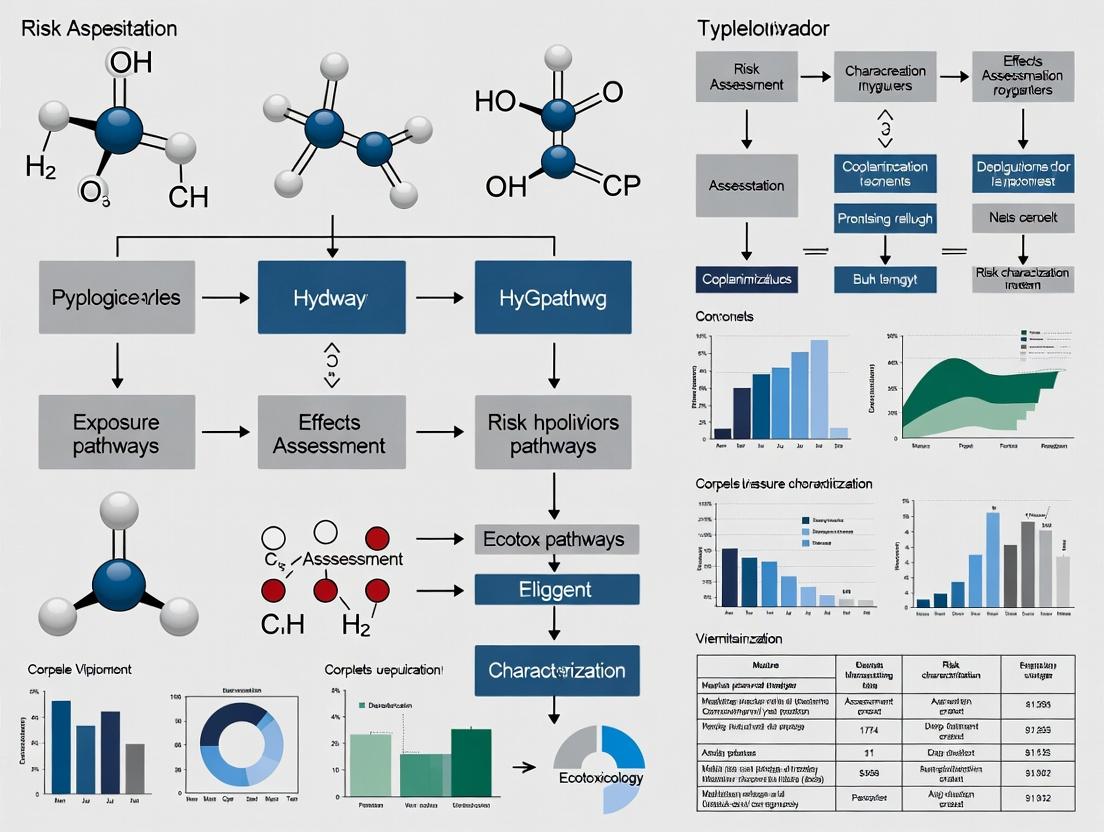
This article provides a comprehensive synthesis of ecological risk assessment (ERA) within the context of territorial spatial planning, tailored for researchers, scientists, and drug development professionals interested in environmental determinants...
Integrating Ecological Risk Assessment into Territorial Spatial Planning: A Strategic Framework for Sustainable Development
Abstract
This article provides a comprehensive synthesis of ecological risk assessment (ERA) within the context of territorial spatial planning, tailored for researchers, scientists, and drug development professionals interested in environmental determinants of health. It explores foundational theories, advanced methodological applications, common implementation challenges, and validation through comparative case studies. The scope encompasses the integration of ERA to enhance ecosystem resilience, mitigate risks from urbanization and land-use change, and inform sustainable spatial policy. Drawing on current research, it covers frameworks like the EPA's guidelines, landscape ecological risk models, multi-scenario simulations, and the assessment of territorial spatial resilience, offering a holistic view for interdisciplinary application.
Foundations of Ecological Risk Assessment: Core Concepts and Integration into Spatial Planning
Ecological Risk Assessment (ERA) is defined as a formal, scientific process used to estimate the likelihood and significance of adverse effects on plants, animals, and entire ecosystems resulting from exposure to one or more environmental stressors [1]. These stressors encompass chemical contaminants, physical habitat alterations, invasive species, and disease. In the context of territorial spatial planning research, ERA provides a critical evidence-based framework for evaluating the potential ecological consequences of land-use decisions, infrastructure development, and resource management policies. It enables planners and researchers to move from qualitative concern to quantifiable risk estimation, balancing socio-economic development with the imperative of maintaining ecological integrity and the services ecosystems provide [1] [2].
The process is governed by core principles that ensure its scientific rigor and relevance to decision-making. It is systematically phased, beginning with planning and moving through problem formulation, analysis, and risk characterization [1]. A foundational principle is its iterative and tiered nature, where simple, conservative screening assessments are conducted first to identify risks warranting more complex, resource-intensive evaluation [3]. Furthermore, ERA emphasizes the development of conceptual models that diagrammatically link stressors to potential ecological receptors through explicit exposure pathways, making assumptions and relationships transparent [4] [3]. Finally, it requires the explicit acknowledgment and reporting of uncertainties arising from data gaps, natural variability, and model limitations, which is crucial for proper interpretation by risk managers [1].
The Phased Process of Ecological Risk Assessment
The U.S. EPA's framework structures ERA into a sequence of phases, beginning with an initial planning stage [1] [3].
Diagram: The iterative, phased workflow of an Ecological Risk Assessment (ERA).
Planning and Scoping
The planning stage establishes the assessment's foundation and is a collaborative dialogue between risk managers, risk assessors, and stakeholders [1] [3]. Key objectives include:
- Defining risk management goals and the decisions the assessment must inform (e.g., "restore native fish populations") [3].
- Identifying the ecological entities of concern (e.g., a valued species, habitat, or ecosystem service).
- Determining the spatial and temporal scope of the assessment.
- Agreeing on the level of complexity and analysis (e.g., screening-level vs. detailed baseline assessment) and allocating resources [4] [3].
- Documenting agreements and forming the interdisciplinary team, which may include ecologists, toxicologists, hydrologists, and statisticians [3].
Phase 1: Problem Formulation
Problem formulation translates the planning goals into a specific, technical roadmap for the assessment. It involves three core activities [1] [3]:
- Selection of Assessment Endpoints: These are explicit expressions of the ecological entity and its valued attribute to be protected (e.g., "reproduction of the bald eagle population," "species diversity in forest litter communities"). Endpoints are chosen based on ecological relevance, susceptibility to stressors, and relevance to management goals [3].
- Development of Conceptual Models: Diagrammatic models are created to illustrate the hypothesized relationships between sources of stress, the stressors themselves, exposure pathways, and the assessment endpoint receptors. These models identify key data needs and inform the analysis plan [4] [3].
- Development of an Analysis Plan: This plan details the specific data, models, and methods that will be used to measure or predict exposure and ecological effects. It concludes the problem formulation phase [1].
Phase 2: Analysis
The analysis phase consists of two parallel, complementary lines of evidence [1]:
- Exposure Assessment: This characterizes the contact or co-occurrence of stressors with ecological receptors. It evaluates the sources, release mechanisms, environmental fate and transport, and the resulting magnitude, frequency, and duration of exposure for the selected endpoints [3]. For chemicals, key considerations include bioavailability, bioaccumulation, and biomagnification potential [3].
- Ecological Effects Assessment: This evaluates the cause-and-effect relationship between a stressor and a biological response. It involves developing a stressor-response profile, drawing from laboratory toxicity data, field observational studies, and modeled projections to understand the likelihood and severity of effects at different exposure levels [3].
Phase 3: Risk Characterization
Risk characterization integrates the exposure and effects analyses to produce a risk estimate. It involves two components [1]:
- Risk Estimation: The assessor quantitatively or qualitatively compares the measured or predicted exposure with the stressor-response data to estimate the probability and severity of adverse effects [1].
- Risk Description: This summarizes the evidence, explains the estimates' significance, and discusses key uncertainties and assumptions. It interprets the adversity of effects in the context of the assessment endpoints and the ecosystem services they provide, delivering clear conclusions to support decision-making [1] [3].
Scope and Application in Territorial Spatial Planning
The scope of ERA is inherently flexible, designed to address issues from contaminated site remediation to landscape-scale planning [1]. Its principles are directly applicable to territorial spatial planning research, which seeks to optimize land and resource use while maintaining ecological sustainability.
A key advancement is the integration of ERA with Cumulative Effects Assessment (CEA), which evaluates the combined, incremental impacts of multiple stressors from past, present, and future human activities [2]. For marine spatial planning, ecosystem-based CEA frameworks are being developed that consider the additive, synergistic, or antagonistic effects of various pressures (e.g., fishing, shipping, offshore energy) on ecosystem components across four-dimensional spaces (including depth and time) [2]. Similarly, in riparian and watershed management, ERAs are integrated with Ecosystem Service Valuation (ESV) to create comprehensive ecological zoning frameworks. A 2023 study of the Luo River riparian buffer zone in China used GIS analysis and landscape ecological risk indices to classify zones for restoration, reconstruction, conservation, or protection, directly linking risk assessment to spatial management decisions [5].
Table 1: Application of ERA Principles in Spatial Planning Research
| Planning Context | ERA/CEA Approach | Key Metrics & Tools | Planning Output |
|---|---|---|---|
| Marine Spatial Planning [2] | Ecosystem-Based CEA; Risk-based assessment of multiple pressures. | Pressure-state-impact models; GIS spatial overlay; Likelihood-consequence risk matrices. | Marine use zoning; Mitigation of cumulative impacts on ecosystem integrity. |
| Riparian/Watershed Management [5] | Integrated ESV and Landscape ERA. | Landscape Ecological Risk Index; Unit-area-equivalent-factor method for ESV; GIS grid analysis. | Ecological zoning (Restoration, Conservation, etc.); Land-use policy recommendations. |
| Metropolitan Area Soil & Water Resources [6] | "ST-QS-RR" Conceptual Model (Security Threat, Quality Status, Risk Regulation). | CRITIC weighting; TOPSIS evaluation; Kernel density estimation; Resistance diagnosis model. | Identification of main risk resistance factors; Spatio-temporal risk maps for resource governance. |
| Superfund Site Remediation [4] | Baseline Ecological Risk Assessment. | Exposure point concentration; Toxicity reference values; Food web modeling. | Clean-up goals and remediation strategies. |
These applications demonstrate how the structured, hypothesis-driven ERA process provides a robust scientific underpinning for spatial planning. It allows researchers to forecast the ecological risks of different planning scenarios, identify geographic areas of highest sensitivity or existing impairment, and design monitoring programs to track ecosystem recovery [1] [2].
Detailed Methodological Protocols
Protocol for Developing a Landscape Ecological Risk Index (LERI)
This protocol is adapted from integrated ESV-ERA studies for regional spatial planning [5].
1. Objective: To quantitatively assess and map the spatial heterogeneity of ecological risk across a landscape resulting from changes in land use/cover and landscape pattern. 2. Materials & Data:
- Multi-temporal land use/land cover (LULC) classification maps (e.g., for 1990, 2000, 2010, 2023).
- GIS software (e.g., ArcGIS, QGIS).
- Landscape pattern analysis software (e.g., FRAGSTATS). 3. Procedure:
- Step 1 - Landscape Classification & Grid Overlay: Classify the study area into landscape types (e.g., forest, agriculture, urban, wetland). Overlay a vector grid (e.g., 1km x 1km or 2km x 2km) onto the LULC map.
- Step 2 - Calculate Landscape Metrics: For each grid cell, calculate:
- Landscape Disturbance Index (LDI): A weighted composite index based on the area and assigned disturbance weight of each landscape type within the cell. (e.g., Urban=7, Agriculture=5, Forest=1, Wetland=2).
- Landscape Fragmentation Index (LFI): Derived from metrics like patch density, edge density, and splitting index within the cell.
- Landscape Vulnerability Index (LVI): Assign a relative vulnerability weight (1-5) to each landscape type based on its ecological sensitivity and importance.
- Step 3 - Compute LERI: Integrate the three indices for each grid cell using the formula:
LERI_{cell} = LDI * LFI * LVI. Normalize the final LERI values to a range (e.g., 0-1). - Step 4 - Spatial Classification & Trend Analysis: Use natural breakpoint classification (e.g., Jenks) in GIS to categorize cells into risk levels (Low, Medium-Low, Medium, Medium-High, High). Perform trend analysis on multi-temporal LERI maps to identify areas of increasing or decreasing risk. 4. Data Analysis: Spatial statistics (global and local Moran's I) can identify significant clusters of high or low risk. The LERI map serves as a direct input for ecological zoning in spatial plans.
Protocol for a Screening-Level Exposure Assessment for Chemical Stressors
This tiered protocol, based on Superfund guidance, quickly identifies chemicals of potential concern [4] [3].
1. Objective: To screen and refine a list of detected chemicals to those requiring further evaluation in a baseline ERA. 2. Materials & Data:
- Site investigation data: Chemical concentrations in relevant media (soil, sediment, surface water, pore water, tissue).
- Ecological Soil Screening Levels (Eco-SSLs) or other standardized toxicity reference values (TRVs) [4].
- Basic site conceptual model. 3. Procedure:
- Step 1 - Compile Detected Chemicals: List all chemicals detected in environmental samples.
- Step 2 - Compare to Screening Benchmarks: For each chemical in each medium, calculate a Hazard Quotient (HQ):
HQ = (Measured Environmental Concentration) / (Screening Benchmark). Use the most appropriate benchmark (e.g., Eco-SSL for soil invertebrates, Aquatic Life Criteria for water). - Step 3 - Screen and Refine: Apply screening criteria:
- If HQ < 0.1 for all exposure pathways, the chemical is excluded from further consideration (risk is considered negligible).
- If 0.1 ≤ HQ < 1.0, the chemical is retained but may be a lower priority; consider site-specific factors.
- If HQ ≥ 1.0, the chemical is identified as a "Contaminant of Potential Ecological Concern" (COPEC) and moves forward to a more detailed baseline assessment [4].
- Step 4 - Consider Bioavailability & Background: For metals and organic compounds, adjust concentrations based on bioavailability parameters (e.g., acid-volatile sulfide for sediment metals) and compare to site-specific background levels where appropriate [4]. 4. Uncertainty: This screening is conservative by design. Exceeding a benchmark indicates potential risk, not confirmed injury, and necessitates further study.
Table 2: The Scientist's Toolkit for Ecological Risk Assessment Research
| Tool/Reagent Category | Specific Item/Technique | Primary Function in ERA |
|---|---|---|
| Geospatial Analysis Tools | Geographic Information Systems (GIS), Remote Sensing Imagery (Satellite, UAV), Spatial Statistical Packages (e.g., GeoDa). | To map stressors, receptors, and exposure pathways; analyze landscape patterns; calculate spatial metrics for risk indices; visualize risk zones [5] [6]. |
| Ecological & Toxicological Benchmarks | Ecological Soil Screening Levels (Eco-SSLs), Ambient Water Quality Criteria (AWQC), Species Sensitivity Distributions (SSDs). | To provide standardized toxicity reference values for screening-level risk estimations and to derive protective concentration thresholds [4] [3]. |
| Exposure & Fate Models | Bioaccumulation Factors (BAFs), Fugacity-based models (e.g., EQC, RAIDAR), Hydrological Transport Models. | To predict the environmental fate and partitioning of chemical stressors; estimate concentrations in exposure media; model uptake into food webs [3]. |
| Statistical & Multivariate Analysis | CRITIC/Entropy Weighting, TOPSIS Evaluation, Principal Component Analysis (PCA), Markov Chain Models. | To objectively weight risk indicators, integrate multiple lines of evidence, diagnose resistance factors, and analyze spatio-temporal risk trends [6]. |
| Field Assessment Kits | Pore Water Samplers (e.g., peepers), Sediment Corers, Passive Sampling Devices (e.g., SPMDs, POCIS), Portable Water Quality Meters. | To collect media samples for chemical analysis; obtain in-situ measurements of key exposure parameters (pH, DO, conductivity). |
| Laboratory Toxicity Tests | Standardized test organisms (e.g., Ceriodaphnia dubia, Pimephales promelas, Eisenia fetida), Microcosm/Mesocosm Systems. | To generate stressor-response data for site-specific media (water, sediment, soil) and evaluate effects at individual, population, and community levels. |
Advanced Integration: Cumulative Effects and Ecosystem-Based Approaches
Modern territorial planning requires moving beyond single-stressor assessments. The Ecosystem-Based Approach (EBA) integrates ecological principles into spatial planning by considering ecosystem connectivity, resilience, and the delivery of services [2]. A risk-based CEA operationalizes this within an ERA framework.
Diagram: A risk-based framework for integrating cumulative pressures on ecosystem receptors in spatial planning.
The protocol involves:
- Spatially Explicit Pressure Mapping: Using GIS to map the intensity and footprint of all human activities (pressures) within the planning region [2].
- Ecosystem Receptor Sensitivity Mapping: Mapping the distribution and sensitivity of key ecological components (habitats, species, processes) to different pressures.
- Risk Matrix Integration: Overlaying pressure and sensitivity maps in a risk matrix framework (e.g., Risk = Pressure Intensity x Receptor Sensitivity) to produce cumulative risk heat maps [2].
- Planning Response: Using these maps to zone for compatible uses, designate protected or restoration areas, and strategically mitigate cumulative impacts, thereby directly linking ERA science to spatial management outcomes [5] [2].
Ecological Risk Assessment, as defined by EPA guidelines, provides a structured, adaptable, and scientifically defensible process that is indispensable for contemporary territorial spatial planning research. Its phased approach—from collaborative planning and problem formulation through integrated analysis and risk characterization—ensures that ecological considerations are rigorously evaluated. The integration of ERA with landscape analysis, cumulative effects assessment, and ecosystem service valuation represents the frontier of applied ecological research, enabling planners to make informed decisions that promote sustainable development. As spatial planning grapples with increasing complexity and competing demands, the principles and protocols of ERA offer an essential toolkit for safeguarding ecological integrity across landscapes and seascapes.
Theoretical and Conceptual Foundation
The integration of Landscape Ecology, Ecosystem Services (ES), and Risk Governance forms a critical theoretical triad for advancing ecological risk assessment within territorial spatial planning. This framework shifts from reactive environmental management to a proactive, spatial-explicit planning paradigm that acknowledges landscapes as dynamic social-ecological systems [7]. At its core, it posits that the spatial configuration and composition of landscapes (landscape ecology) directly mediate the supply and flow of benefits to humans (ecosystem services), while simultaneously influencing the propagation and impact of ecological risks [8] [9]. Effective governance must therefore be relational, moving beyond top-down regulation to engage with the complex interdependencies between nature, human behavior, and institutional arrangements [7].
A key conceptual advancement is the treatment of Landscape Ecological Risk (LER) not merely as a negative outcome but as a spatial process that interacts dialectically with ES provision. High LER, often characterized by landscape fragmentation, habitat loss, and anthropogenic disturbance, typically degrades the capacity of ecosystems to deliver services such as carbon storage, water purification, and biodiversity maintenance [10] [11]. Conversely, spatial planning that enhances ecosystem services through strategic conservation and restoration can mitigate ecological risks, creating a positive feedback loop for landscape resilience [9]. This interaction is non-stationary, exhibiting significant spatiotemporal heterogeneity that requires advanced analytical models like Geographically and Temporally Weighted Regression (GTWR) to unpack [8].
From a governance perspective, this integration demands a shift from viewing landscapes as "matters of fact" to treating them as "matters of concern" [7]. This relational approach emphasizes care, co-production of knowledge, and the negotiation of diverse values among stakeholders. It aligns with symbiosis theory, which provides a framework for understanding and managing the interdependent, reciprocal relationships between ecological, cultural, and functional elements within a territory [12]. Ultimately, the theoretical basis argues for adaptive management cycles where spatial risk assessments informed by landscape and ES models directly feed into iterative planning, zoning, and policy interventions, enabling a responsive and evidence-based governance system [9].
Application Notes: Key Dimensions for Territorial Spatial Planning
Spatial Dimension: Pattern-Process-Risk Interactions
The spatial configuration of land uses is a primary driver of both ecosystem service flows and ecological risk exposure. Landscape metrics—including patch density, edge density, contagion, and landscape shape index—serve as quantifiable proxies for fragmentation and connectivity, which are fundamental to risk analysis [10].
- Ecological Security Patterns (ESPs): Constructing ESPs is a primary application for spatial planning. This involves identifying ecological sources (high-quality, low-risk habitat patches), modeling ecological resistance surfaces (based on LER, land use, and topography), and delineating ecological corridors and nodes using models like the Minimum Cumulative Resistance (MCR) [11]. For instance, in the Wuhan Urban Agglomeration, integrating ES value and LER into resistance surface modeling led to the identification of 24 key ecological corridors and 42 strategic nodes, forming a resilient network [11].
- Risk-Service Zoning: Overlaying spatial layers of LER and key ES (e.g., habitat quality, water yield, soil conservation) allows for the division of a territory into distinct management zones. Common zonings include: Ecological Conservation Zones (high ES, low LER), Ecological Restoration Zones (low ES, high LER), Sustainable Utilization Zones (moderate ES and LER), and Critical Control Zones (high ES but also high LER) [8] [9]. This zoning provides a direct spatial guide for differentiated land-use policies and conservation investments.
Temporal Dimension: Tracking Change and Trajectories
Understanding decadal trends is vital for assessing the impact of policies and projecting future scenarios.
- Long-Term Trend Analysis: Multi-temporal analysis (e.g., across 20-40 year periods) reveals the impacts of urbanization, agricultural expansion, and conservation efforts. Studies in Southwest China and the Wuling Mountain Area show that while intensive urban expansion increases local LER, regional vegetation recovery projects can lead to a net decline in average LER and improvement in services like soil conservation over time [8] [10].
- Driving Force Analysis: Advanced statistical and machine learning models, such as Random Forest (RF) and Geodetector, are used to attribute changes in LER to specific drivers. Key drivers consistently identified include:
- Anthropogenic Factors: Population density, GDP, distance to roads, and industrial activity.
- Land Use Factors: Proportion of construction/industrial space, changes in agricultural intensity.
- Natural Factors: Elevation, slope, and precipitation patterns. Importantly, interaction effects between drivers (e.g., economic activity and terrain) often have stronger explanatory power than single factors, highlighting the complexity of socio-ecological systems [10].
Governance Dimension: From Assessment to Action
Translating spatial and temporal analyses into effective governance requires frameworks that bridge science and policy.
- Relational Governance Framework: This approach conceptualizes governance as mediating the relationships between Nature, Human Behavior, and Institutional Arrangements. It emphasizes "care" as a motivator for action, advocating for participatory, place-based governance that recognizes diverse landscape values and knowledge systems [7].
- Symbiosis-Based Planning: Applied in rural landscape assessment, this framework evaluates systems based on symbiotic units (components), environments (context), interfaces (interaction zones), and models (interaction types). It promotes strategies that enhance mutualistic relationships between ecological, production, and living spaces, which is central to China's rural revitalization and "production-living-ecological" (PLE) space optimization [12].
- Adaptive Management Integration: The continuous cycle of assessment, planning, intervention, and monitoring is essential. Spatial zoning and network optimization provide the "adaptive" knowledge for targeting interventions, whether it's strictly protecting ecological sources, restoring degraded corridors, or implementing nature-based solutions in peri-urban risk zones [9].
Table 1: Key Quantitative Findings from Integrated LER-ES Studies
| Study Region & Period | Key Trend in LER | Key Trend in Ecosystem Services | Primary Drivers & Zoning Outcomes | Source |
|---|---|---|---|---|
| Wuling Mountain Area, China (2000-2020) | Overall decline; reduction in karst rocky areas; increase in peri-urban zones. | Habitat Quality (HQ): Remained high. Soil Conservation (SC): Improved. Water Yield (WY): Varied with precipitation. | Strong negative correlation between LER and HQ/SC. GTWR model confirmed spatiotemporal heterogeneity. Four ecological zones delineated for management. | [8] |
| Southwest China, Urban Agglomeration (2000-2020) | Average Ecological Risk Index (ERI) stable (0.20-0.21); spatial shift from high/low to medium-risk zones. | N/A (Study focused on PLE space transition). Industrial production space grew by 9.8x. | RF & Geodetector identified anthropogenic disturbance and land use level as top drivers. 105 corridors and 156 nodes built for ecological network. | [10] |
| Wuhan Urban Agglomeration, China (1980-2020) | Higher/high-risk areas decreased from 19.30% to 13.51%. | Total ES Value increased from CNY 1110.998B to CNY 1160.698B. | ESP constructed with 30 source areas, 24 corridors, and 42 nodes based on integrated ESV-LER resistance. | [11] |
| Bailongjiang Watershed, China (1990-2014) | LER higher in low-elevation valleys with intense human activity. | Food production: Increased. Carbon, Water, Biodiversity: Decreased then increased. | Overlay analysis of ES and LER effective for adaptive management zoning at watershed scale. | [9] |
Detailed Experimental Protocols
Protocol 1: Integrated LER and ES Assessment for Ecological Zoning
Objective: To quantify the spatiotemporal dynamics of Landscape Ecological Risk (LER) and key Ecosystem Services (ES), analyze their interrelationships, and delineate ecological management zones.
Workflow Diagram:
Materials & Software: GIS software (ArcGIS/QGIS), FragStats, InVEST model suite, R/Python with GTWR and statistical packages, multi-temporal land use/cover data, DEM, soil data, climate data, socioeconomic statistics.
Procedure:
- Data Preparation and Gridding: Collect and harmonize multi-temporal (e.g., 5-year intervals) spatial datasets. Establish a standardized coordinate system. Overlay a vector grid (e.g., 2km x 2km or 5km x 5km, based on average patch size) over the study area to create risk assessment units [10].
- Landscape Ecological Risk Index (LERI) Calculation:
- Landscape Disturbance Index (Ei): For each landscape type i (e.g., forest, cropland, urban), calculate
Ei = aCi + bSi + cDi. WhereCiis fragmentation index,Siis separation index,Diis dominance index. Weights a, b, c sum to 1. - Landscape Vulnerability Index (Vi): Assign a relative vulnerability weight (1-5) to each landscape type based on its ecological sensitivity and recovery capacity, normalized to [0,1].
- Loss Index (Ri): Calculate
Ri = Ei * Vi. - Landscape Ecological Risk Index (ERIk): For each assessment unit k, compute
ERIk = Σ (Aki / Ak) * Ri. WhereAkiis the area of landscape i in unit k, andAkis the total area of unit k [10] [11].
- Landscape Disturbance Index (Ei): For each landscape type i (e.g., forest, cropland, urban), calculate
- Ecosystem Service Assessment:
- Utilize the InVEST model for a standardized assessment:
- Habitat Quality: Input land use, threat sources (e.g., urban, roads), and sensitivity tables.
- Soil Conservation: Input land use, rainfall erosivity, soil erodibility, DEM, and management factors.
- Water Yield: Input land use, precipitation, evapotranspiration, soil depth, and plant available water content [8] [9].
- Generate spatial raster maps for each service and calculate the mean value within each assessment grid.
- Utilize the InVEST model for a standardized assessment:
- Spatiotemporal Relationship Analysis: Employ the Geographically and Temporally Weighted Regression (GTWR) model to regress each ES (dependent variable) against LERI (independent variable). This reveals how the strength and direction (positive/negative) of the LER-ES relationship varies across space and time [8].
- Ecological Zoning: Perform a spatial overlay (union) of standardized layers (e.g., LERI, Habitat Quality, Soil Conservation). Use cluster analysis (e.g., K-means, Iso Cluster) on the grid attribute table to classify areas into distinct ecological zones (e.g., Conservation Priority, Risk Control, Sustainable Use). Validate zones with local ecological knowledge and land use plans.
Protocol 2: Construction of Ecological Security Patterns (ESP)
Objective: To identify, design, and optimize an ecological network (sources, corridors, nodes) that enhances landscape connectivity and mitigates ecological risk.
Workflow Diagram:
Materials & Software: GIS software, Linkage Mapper/Circuitscape toolbox, resistance surface generator, graph theory-based connectivity software (e.g., Conefor).
Procedure:
- Identify Ecological Sources: Extract core areas from the "Ecological Conservation Zone" (from Protocol 1, Step 5) or select patches based on criteria: high ES value (top 20%), low LER, large area (> specified threshold), and high ecosystem integrity [11].
- Construct Comprehensive Resistance Surface: Create a raster where each cell's value represents the cost/impedance to ecological flow. Base resistance on multiple factors:
- LER Layer: Higher risk equals higher resistance.
- Land Use Type: Assign base resistance values (e.g., forest=1, water=10, farmland=50, urban=100).
- Topography: Incorporate slope (steeper = higher resistance).
- Anthropogenic Interference: Distance to roads/railways, population density. Normalize and weight these factors (e.g., using AHP [12]) to create a unified resistance surface map.
- Extract Corridors and Nodes:
- Use the Minimum Cumulative Resistance (MCR) model to calculate the least-cost path between all pairs of ecological source patches. The MCR between source j and k is:
MCR = min(Σ (Dij * Ri)), whereDijis the distance andRiis the resistance of cell i. - Apply circuit theory models (e.g., using Circuitscape) to identify pinch points (narrow corridors critical for connectivity) and barriers.
- Ecological corridors are derived from the least-cost paths or current density maps. Ecological nodes are defined at the intersections of multiple corridors or at critical pinch points [10] [11].
- Use the Minimum Cumulative Resistance (MCR) model to calculate the least-cost path between all pairs of ecological source patches. The MCR between source j and k is:
- Evaluate and Optimize the Network: Calculate network topology metrics (e.g., connectivity probability, corridor redundancy, node centrality). Identify gaps in the network and propose new conservation areas or stepping-stone patches to improve overall connectivity and resilience.
Protocol 3: Driving Mechanism Analysis for Adaptive Governance
Objective: To quantitatively diagnose the primary drivers of landscape ecological risk and model their interactive effects to inform targeted governance interventions.
Materials & Software: R/Python with 'randomForest' and 'GD' (Geodetector) packages, spatial data on potential drivers (land use, socio-economic, natural).
Procedure:
- Variable Selection and Processing: Compile a pool of potential driver variables in raster format (aligned with the LERI grid from Protocol 1).
- Natural Factors: Elevation, slope, precipitation, NDVI, soil type.
- Anthropogenic/Land Use Factors: Distance to roads/urban centers, population density, GDP density, proportion of construction land, industrial land, agricultural intensity index.
- Landscape Metrics: Patch density, edge density at the grid level. Discretize continuous variables into appropriate strata for Geodetector analysis.
- Random Forest (RF) Modeling for Factor Importance:
- Use LERI as the response variable and the driver set as predictors.
- Train an RF regression model. Use out-of-bag error to assess performance.
- Extract the %IncMSE (percentage increase in mean squared error) or IncNodePurity metric to rank the importance of each driver variable in explaining LER variance [10].
- Geodetector Analysis for Interaction Effects:
- Use the Factor Detector to calculate the q-statistic:
q = 1 - (Σ Nh σh²) / (N σ²). WhereNhis units in stratum h,σh²is variance of LER in stratum h,Nis total units, andσ²is global variance. The q-value ∈ [0,1] indicates the proportion of LER variance explained by a factor. - Use the Interaction Detector to assess whether two factors, X1 and X2, interact to enhance or weaken the explanatory power on LER. Compare
q(X1∩X2)withq(X1)andq(X2).- Types: Nonlinear weaken, Single-factor nonlinear weaken, Two-factor enhance, Independent, Nonlinear enhance [10].
- Use the Factor Detector to calculate the q-statistic:
- Interpretation for Governance: Synthesize results to identify:
- Key Leverage Factors: The most influential drivers (high RF importance & high q-value).
- Critical Interactions: Factor pairs with significant interaction effects (e.g., economic activity and terrain).
- Spatial Hotspots of Driver Influence: Where the effect of key drivers is strongest. This diagnostic output directly informs the prioritization and design of governance interventions, such as controlling urban sprawl in sensitive low-elevation areas or implementing differentiated land-use policies based on local driver combinations.
The Scientist's Toolkit: Essential Research Reagents & Materials
Table 2: Key Reagent Solutions & Materials for Integrated LER-ES Research
| Item Name | Category | Function & Application in Research | Key Source/Example |
|---|---|---|---|
| InVEST Model Suite | Software/Model | A core tool for spatially explicit modeling of multiple ecosystem services (e.g., habitat quality, carbon storage, water yield). Translates land use and environmental data into ES maps. | Used in Wuling Mountain Area for HQ, SC, WY assessment [8]; in Bailongjiang watershed for ES analysis [9]. |
| FragStats | Software | Calculates a wide array of landscape pattern metrics (patch, class, landscape level) from land use/cover maps. Essential for quantifying landscape structure for LER indices. | Used to calculate fragmentation, separation indices for LER assessment in Southwest China study [10]. |
| Geographically and Temporally Weighted Regression (GTWR) Model | Statistical Model | A advanced regression technique that captures non-stationary spatiotemporal relationships. Used to analyze how the LER-ES correlation varies across space and time. | Applied to reveal spatially heterogeneous LER-ES relationships in the Wuling Mountain Area [8]. |
| Minimum Cumulative Resistance (MCR) Model | Spatial Analysis Model | The foundational algorithm for extracting least-cost paths and constructing ecological corridors between source patches based on a resistance surface. | Core model for ecological corridor identification in Wuhan and Southwest China ESP construction [10] [11]. |
| Random Forest & Geodetector | Statistical/Machine Learning Tools | Random Forest: Identifies important driving factors of LER from a complex set. Geodetector: Quantifies spatial stratified heterogeneity and detects interaction effects between drivers. | Combined use for driving force analysis of LER in Southwest China [10]. |
| Multi-Temporal Land Use/Land Cover (LULC) Data | Core Data | The fundamental spatial dataset. Changes in LULC are the primary determinant of landscape pattern evolution, ES provision, and LER change. Typically derived from remote sensing. | 30m resolution data from CAS-RESDC used in multiple studies [8] [10] [11]. |
| Analytic Hierarchy Process (AHP) | Decision-Support Method | A structured technique for organizing and analyzing complex decisions. Used to determine the relative weights of different factors (e.g., for resistance surface construction or indicator weighting in assessments). | Part of a symbiotic framework for rural landscape assessment, used for weighting indicators [12]. |
| Symbiosis Theory Evaluation Framework | Conceptual Framework | Provides a structured lens (units, environment, interfaces, models) to assess the interdependent relationships within rural social-ecological systems, informing holistic governance. | Applied in rural landscape quality assessment to integrate ecological, cultural, and functional elements [12]. |
The Critical Role of ERA in Territorial Spatial Planning for Sustainable Development and Resilience
This document provides detailed application notes and protocols for integrating Ecological Risk Assessment (ERA) into territorial spatial planning, framed within a broader thesis on advancing methodological rigor in spatial planning research. ERA is defined as the process of estimating the likelihood of adverse ecological effects resulting from human activities or natural stressors [13]. Its critical role in planning lies in providing a systematic, evidence-based foundation for land-use decisions, enabling the balancing of development needs with the imperative to maintain ecosystem integrity, services, and long-term resilience [3] [14].
Traditional environmental impact assessment often lacks a structured risk estimation framework. In contrast, ERA is distinguished by its formal phases—Problem Formulation, Analysis (Exposure and Effects), and Risk Characterization—and the explicit incorporation of uncertainty [3] [13]. Within territorial planning, this paradigm shifts from reactive impact mitigation to proactive risk forecasting and management. It allows planners to answer critical questions: What ecosystems are at risk? What are the probable consequences of different spatial development scenarios? Where should interventions be prioritized to maximize ecological security?
The integration of ERA transforms planning from a sectoral, administrative exercise into a transdisciplinary science-policy interface. It necessitates the synthesis of ecological data (e.g., species sensitivity, habitat connectivity), spatial analysis (e.g., landscape patterns, vulnerability mapping), and socio-economic drivers (e.g., land-use change models) [14]. The overarching thesis context posits that the evolution of ERA from chemical-focused, site-specific assessments to landscape-scale, multi-stressor evaluations is pivotal for developing spatial plans that are truly sustainable and resilient to global changes such as climate change and rapid urbanization [15] [13].
Core Analytical Protocols for ERA in Spatial Planning
The application of ERA to territorial spatial planning requires adapting standard protocols to address landscape-scale processes and multi-source stressors. The following workflows and methodologies provide a reproducible framework for researchers and planning professionals.
2.1 Foundational ERA Workflow Protocol The foundational protocol is based on the established EPA framework but is contextualized for spatial planning applications [3]. The process is iterative, allowing for refinement as new data becomes available or planning questions evolve.
Diagram 1: ERA Workflow Integrated with Spatial Planning Cycles (82 characters)
Phase 1: Planning & Scoping
- Objective: To align the ERA with specific spatial planning decisions and define operational boundaries.
- Protocol:
- Engage Risk Managers & Stakeholders: Collaborate with planning authorities, environmental agencies, and community representatives to define risk management goals (e.g., "protect wetland hydrological function," "maintain biodiversity corridors") [3].
- Define Spatial Scope & Scale: Determine the geographic boundary of the assessment (e.g., municipal region, river basin, coastal zone) and the administrative scale of output (e.g., parcels, zoning districts, townships) [14].
- Develop Iterative Approach: Plan for a tiered assessment, starting with a screening-level ERA to identify high-risk zones, followed by more detailed, resource-intensive assessments for priority areas [3].
Phase 2: Problem Formulation
- Objective: To develop a conceptual model that links planning actions (stressors) to potential ecological impacts.
- Protocol:
- Identify Assessment Endpoints: Select valued ecological entities and their specific attributes relevant to management goals. These should be ecologically relevant, susceptible to stressors, and socially valued [3]. Examples include: the reproductive success of an endangered species (entity: population, attribute: recruitment), the water purification capacity of a wetland (entity: ecosystem, attribute: service function), or landscape connectivity (entity: habitat network, attribute: structural integrity).
- Characterize Stressors: Define the stressors arising from planned land-use changes (e.g., habitat fragmentation from new roads, chemical runoff from new agricultural zones, increased hydrological disruption from urbanization) [14].
- Develop a Conceptual Model: Create a diagram (see Diagram 2) illustrating hypothesized exposure pathways (e.g., contaminant transport via surface water) and effect pathways (e.g., habitat loss leading to population decline) [3].
- Create an Analysis Plan: Specify the data requirements, metrics, and models to be used in the next phase.
Phase 3: Analysis (Exposure & Effects)
- Objective: To quantitatively or qualitatively evaluate the interaction between stressors and endpoints.
- Exposure Assessment Protocol:
- Stressor Distribution: Use Geographic Information Systems (GIS) and spatial models to map the intensity and distribution of stressors (e.g., noise pollution levels, impervious surface cover, predicted chemical concentrations) [16] [17].
- Receptor Co-location Analysis: Overlay stressor maps with habitat maps or species distribution models to estimate the extent, frequency, and magnitude of co-occurrence [3].
- Ecological Effects Assessment Protocol:
- Stress-Response Relationships: Apply established models or conduct targeted studies to quantify the relationship between stressor magnitude and endpoint response. This can utilize species sensitivity distributions (SSDs) for chemicals, or landscape ecology metrics (e.g., fragmentation indices predicting species loss) [14] [13].
- Ecosystem Service Degradation Analysis: Model how changes in ecosystem structure (e.g., forest cover loss) affect service flows (e.g., carbon sequestration, sediment retention), framing loss in terms relevant to human well-being [18].
Phase 4: Risk Characterization
- Objective: To synthesize analysis results into an estimate of risk, communicating likelihood, severity, and uncertainty to inform planning choices.
- Protocol:
- Risk Estimation: Integrate exposure and effects profiles to estimate the probability and magnitude of adverse effects. For spatial planning, this often results in risk maps categorizing areas as high, medium, or low risk [18] [14].
- Uncertainty Description: Explicitly document sources of uncertainty (e.g., data limitations, model assumptions, natural variability) and their potential influence on risk estimates [3] [13].
- Risk Description: Summarize the evidence, highlight the main contributors to risk, and interpret the ecological and practical significance of the findings for the planned development scenarios.
2.2 Protocol for Landscape-Scale Risk Assessment Using a Two-Dimensional Matrix This advanced protocol, demonstrated in the Tibetan Plateau case study, enriches traditional ERA by explicitly integrating ecosystem service degradation as a measure of "loss" [18].
Diagram 2: Two-Dimensional Matrix Model for Integrated ERA (78 characters)
Step 1: Calculate the Probability Index
- Compile spatial datasets representing factors influencing a system's susceptibility. The Tibetan Plateau study used:
- Topographic Sensitivity: Slope, elevation.
- Ecological Resilience: NDVI (Normalized Difference Vegetation Index) anomaly, vegetation coverage.
- Landscape Vulnerability: Landscape fragmentation index, landscape dominance index.
- Ecological Sensitivity: Soil erosion sensitivity, habitat quality.
- Method: Normalize each indicator layer, assign weights (e.g., using expert judgment or analytical hierarchy process), and compute a weighted sum to generate a composite "Probability" raster map [18].
- Compile spatial datasets representing factors influencing a system's susceptibility. The Tibetan Plateau study used:
Step 2: Calculate the Loss Index
- Model key ecosystem services (ES) using biophysical models (e.g., InVEST, RUSLE).
- Method:
- Quantify the baseline capacity for ES like water yield, soil retention, carbon storage, and habitat provision.
- Model ES capacity under a proposed land-use/cover change scenario derived from the spatial plan.
- Calculate the degradation (loss) for each ES as the difference between baseline and scenario.
- Normalize and weight ES loss layers to create a composite "Loss" raster map [18].
Step 3: Construct the Risk Matrix and Map
- Method: Use the formula:
Ecological Risk Index (ERI) = Probability Index × Loss Index. Reclassify the resulting ERI values into discrete risk levels (e.g., Low, Middle, High). - Spatial Identification: The final output is a risk zonation map. Areas with high probability and high loss are designated as Priority Control Areas, requiring stringent planning regulations or restoration investments [18].
- Method: Use the formula:
2.3 Quantitative Data from Case Studies The following table summarizes key quantitative findings from recent ERA case studies, illustrating the application of the above protocols.
Table 1: Comparative Summary of Ecological Risk Assessment Case Study Results
| Case Study Region | Spatial Scale & Unit | Key Risk Indicators/Metrics | Major Findings (Quantitative) | Implication for Spatial Planning |
|---|---|---|---|---|
| Tibetan Plateau [18] | Regional (Township units) | Probability Index (Topography, Resilience, etc.); Loss Index (ES Degradation); Moran's I (spatial autocorrelation) | - 55.94% of area dominated by high probability. - 30.54% experienced increased ES loss. - 55.44% of area classified as Middle-High or High risk. - Moran's I for risk: 0.567 (positive spatial autocorrelation). | Identified priority control regions (Naqu, Ali, Rikaze). Supports zoning plans with differentiated protection intensities. |
| Fuchunjiang River Basin, China [14] | Suburban Basin (Township units) | Landscape Ecological Risk Index (based on land use change patterns); GDP; Geodetector (factor analysis) | - Spatial pattern: "high in NW, low in SE". - Dominant influencing factors: GDP, human interference, area of residential land. - Coupling of risk and GDP showed an inverted "U" (EKC relationship). | Suggests targeted strategies for different townships. Indicates economic development stage may influence risk management focus. |
| Quito, Ecuador [17] | City (District/Parish units) | Smart City KPIs (air quality, water coverage, waste recovery, digital access) | - Drinking water coverage: 98.9%. - Target solid waste recovery rate: 60-70%. - >920,000 residents with free municipal Wi-Fi. - Metro ridership: 151,000 trips/day. | KPIs provide baseline for monitoring planning outcomes. Digital and infrastructure data crucial for exposure assessment in urban ERA. |
Implementation Framework: Integrating ERA into the Planning Cycle
For ERA to be effective, it must be formally embedded within statutory planning processes. The following protocol outlines this integration, drawing from international examples like Ecuador's National Adaptation Plan [15] and smart city frameworks [17].
3.1 Institutional Integration Protocol
- Pre-Plan Phase (Strategic Assessment):
- Action: Conduct a regional-scale ERA to establish an ecological baseline and identify broad risk zones (e.g., floodplains, critical habitats, climate vulnerability hotspots). This informs the development of high-level spatial visions and growth strategies.
- Tool: Landscape-scale risk models and ecosystem service assessments [18] [14].
- Plan-Making Phase (Scenario Testing):
- Action: Integrate ERA as a mandatory step in evaluating alternative spatial scenarios (e.g., compact city vs. dispersed growth). Use the two-dimensional matrix protocol to compare the risk profiles of each scenario.
- Tool: GIS-based overlay analysis, land-use change simulation models coupled with effect models.
- Plan Implementation & Monitoring Phase:
- Action: Use ERA outputs to define spatial zoning regulations (e.g., prohibiting high-impact uses in high-risk zones) and prioritize green infrastructure projects. Establish a monitoring program based on key risk indicators (e.g., habitat connectivity indices, water quality trends).
- Tool: Smart city KPIs and sensor networks for real-time monitoring of stressors (e.g., air quality, traffic noise) [17]. Regular land-use audits via remote sensing.
3.2 The Scientist's Toolkit: Essential Research Reagent Solutions This table details key materials, datasets, and tools required to execute the protocols described.
Table 2: Research Reagent Solutions for ERA in Spatial Planning
| Item Category | Specific Item / Platform | Function in ERA Protocol | Application Notes |
|---|---|---|---|
| Spatial Data & Platforms | Geographic Information System (GIS) Software (e.g., QGIS, ArcGIS) | Core platform for spatial data management, analysis, overlay, and risk mapping. Essential for exposure assessment and visualization [16] [14]. | Open-source QGIS is widely used in research; supports plugins for advanced ecological modeling. |
| Remote Sensing Imagery (e.g., Landsat, Sentinel-2) | Provides multi-temporal land use/cover data to calculate landscape metrics, track change, and model ecosystem services [18] [14]. | Medium-resolution (10-30m) is standard for regional studies; high-resolution (<5m) needed for urban or habitat studies. | |
| Ecological & Environmental Models | InVEST (Integrated Valuation of Ecosystem Services & Tradeoffs) | Suite of models to quantify and map ecosystem services (carbon, water, habitat, etc.) for "Loss" assessment [18]. | Requires biophysical input data (e.g., soil type, precipitation, land cover). Well-documented and peer-reviewed. |
| Fragstats | Software for calculating a wide array of landscape pattern metrics (e.g., patch density, edge contrast) used in landscape vulnerability analysis [14]. | Output metrics serve as inputs for probability or risk indices. | |
| Statistical & Analytical Tools | R or Python with spatial libraries (sf, raster, GDAL) | Enables custom statistical analysis, weight assignment, index calculation, and geospatial operations. Used for spatial regression and Geodetector analysis [14]. | Essential for reproducible research and handling large datasets. |
| Geodetector | A statistical method to assess spatial stratified heterogeneity and quantify the explanatory power of driving factors (e.g., GDP, land use) on ecological risk [14]. | Used in the analysis phase to identify dominant risk-influencing factors. | |
| Reference & Assessment Databases | Species Sensitivity Distribution (SSD) Databases | Compiles toxicity data (e.g., EC50, LC50) for many species and chemicals, used to derive protective concentrations in effects assessment [13]. | Critical for risk assessments involving chemical stressors from agricultural or industrial zones. |
| Regional Soil, Climate, and Hydrological Datasets | Provides baseline biophysical parameters required for ecosystem process modeling and exposure estimation. | Often sourced from national geological surveys or global databases (WorldClim, SoilGrids). |
Advanced Integration: Climate Resilience and Multi-Criteria Decision Support
Contemporary territorial planning must address climate change. ERA protocols must be extended to assess climate-related risks (e.g., increased flood frequency, heat islands, drought) to ecological and human systems. Ecuador's National Adaptation Plan (NAP) process exemplifies this integration [15].
4.1 Protocol for Climate-Informed ERA
- Step 1: Climate Stressor Definition: Use downscaled climate projections (e.g., for temperature, precipitation extremes) to define future abiotic stressors [15].
- Step 2: Vulnerability Analysis: Assess the exposure, sensitivity, and adaptive capacity of key ecological endpoints (e.g., montane forests, wetland hydrology) to these climate stressors.
- Step 3: Compound Risk Assessment: Overlay climate vulnerability maps with existing anthropogenic risk maps (from Protocol 2.2) to identify areas facing compound or cascading risks. For example, a watershed already at high risk from erosion due to deforestation becomes critically vulnerable under projected intense rainfall scenarios.
4.2 Decision-Support Protocol using Multi-Criteria Analysis (MCA) The final risk characterization often presents planners with multiple, conflicting objectives (e.g., development density, ecological protection, economic cost). MCA provides a structured framework for transparent decision-making [13].
- Step 1: Define Alternatives & Criteria: Alternatives are different spatial plan scenarios. Criteria include Ecological Risk Score, Economic Cost, Social Equity Impact, and Infrastructure Efficiency.
- Step 2: Score and Weight: Score each alternative against each criterion. Assign weights to criteria based on stakeholder and planner priorities.
- Step 3: Synthesis and Ranking: Use an MCA method (e.g., weighted summation, PROMETHEE) to aggregate scores and rank alternatives. ERA provides the critical quantitative input for the "Ecological Risk Score" criterion, ensuring ecological considerations are robustly factored into the final planning decision [13].
Quantitative Data Synthesis
The following tables synthesize quantitative findings from contemporary studies on urban climate risk and landscape ecological risk, highlighting the measurable impacts of the key drivers.
Table 1: Urban Climate Risk Assessment (Shanghai Case Study) [19]
| Metric Category | Specific Indicator | Key Finding (Projection for 2030) | Primary Driver |
|---|---|---|---|
| Land Use/Land Cover (LULC) Change | Dominant LULC Type | Arable land remains dominant (>53% of area). | Urbanization |
| Impervious Surface Trend | Continued increase projected, despite overall land transformation decrease. | Urbanization | |
| Climate Hazard Indicators | Extreme Precipitation | Significant influence on the Climate Risk Index (CR). | Climate Change |
| Heatwaves | Significant influence on the Climate Risk Index (CR). | Climate Change | |
| Spatial Risk Distribution | Climate Risk (CR) Pattern | Clear NW-SE gradient: higher values in northwest, lower in southeast. | Climate Change (primarily), Land Use |
| Factor Influence | Relative Contribution to CR | Climatic factors > Land-use changes > Socio-economic factors. | Integrated |
Table 2: Ecosystem Service Degradation & Ecological Risk (Central Yunnan Case Study) [20]
| Ecosystem Service (ES) Type | Measured Ecological Risk (ER) Trend (Past 20 yrs) | Projected ER Trend (Next 20 yrs) | Notes on Spatial Pattern |
|---|---|---|---|
| Habitat Quality | Assessed via InVEST model. | Generally decreasing trend under simulated scenarios. | Significant spatial heterogeneity. |
| Carbon Storage | Assessed via InVEST model. | Generally decreasing trend under simulated scenarios. | Significant spatial heterogeneity. |
| Water Yield | Assessed via InVEST model. | Generally decreasing trend under simulated scenarios. | Significant spatial heterogeneity. |
| Soil Retention | Assessed via InVEST model. | Generally decreasing trend under simulated scenarios. | Significant spatial heterogeneity. |
| Overall ER from LUCC | Distribution range relatively large. | Generally decreasing trend. | High-risk areas concentrated on construction land. |
| ER Relationships | Trade-offs/Synergies among ERs | ERs associated with ES types are mainly synergistic. | Leads to ripple effects across risks. |
Table 3: Theoretical Framework of Landscape Ecological Risk Transformation [21]
| Study Phase (Zhangjiachuan County) | Trend in Ecological Risk Index | Spatial Aggregation Pattern | Theoretical Phase |
|---|---|---|---|
| 2000-2015 | Increased ("inverted U-shaped" curve ascent) | Weakened (2000-2005), then gradually increased (2005-2015). | Risk Accumulation |
| 2015-2020 | Decreased ("inverted U-shaped" curve descent) | Slightly weakened. | Risk Mitigation |
| Overall Pattern (2000-2020) | "Inverted U-shaped" trend (increase then decrease). | High in the west, low in the east. | Aligns with Environmental Kuznets Curve theory. |
Experimental Protocols for Ecological Risk Assessment
This protocol integrates the established U.S. EPA framework [3] with advanced geospatial modeling to assess risks from urbanization, land-use change, and climate change.
Phase 1: Problem Formulation & Planning
- Objective: Define the scope, assessment endpoints, and conceptual model for the risk assessment [3].
- Team Assembly: Collaborate with risk managers, ecologists, GIS specialists, climatologists, and local stakeholders [3].
- Define Assessment Endpoints: Select ecologically relevant entities and attributes susceptible to the key drivers (e.g., "population of native riparian species," "flood mitigation capacity of a wetland," "urban heat island intensity") [3].
- Develop a Conceptual Model: Create a diagram (see Diagram 1) illustrating sources (e.g., urban expansion), stressors (e.g., habitat fragmentation, increased surface temperature), exposure pathways, and potential effects on endpoints [3].
- Analysis Plan: Specify data needs, models (e.g., PLUS, InVEST, climate models), and methods for exposure and effects analysis.
Phase 2: Analysis – Exposure and Effects This phase involves parallel workstreams to model future scenarios and quantify exposure and ecosystem impacts.
Protocol 2.1: Land Use and Land Cover (LULC) Projection using the PLUS Model [19] [20]
- Purpose: To project future LULC patterns under different socio-economic and policy scenarios.
- Input Data:
- Historical LULC Maps: At least two time points (e.g., 2000, 2010, 2020) for model calibration [19].
- Driving Factors: Spatial datasets (e.g., distance to roads/rivers, elevation, slope, GDP, population density) [19].
- Scenario Definitions: Parameters for Shared Socioeconomic Pathways (SSPs) or custom policy scenarios (e.g., natural development, ecological protection) [19] [20].
- Procedure:
- Land Expansion Analysis Strategy (LEAS): Extract areas of land use expansion between two historical periods and sample driving factors to train a Random Forest algorithm for each LULC type [19].
- Cellular Automata (CA) based on Multi-class Random Forest Patches: Use the trained models to calculate development probabilities for each LULC type. Integrate a multi-class seed generation mechanism to simulate patch-level changes [19].
- Iterative Simulation: Run the CA model iteratively to project LULC for the target year (e.g., 2030, 2040) under the defined scenario.
- Validation: Validate the model's accuracy by simulating a known historical year and comparing it to the actual map using metrics like the Kappa coefficient.
Protocol 2.2: Climate Hazard Projection using CMIP6 Data [19]
- Purpose: To obtain future climate data (e.g., temperature, precipitation) consistent with LULC projection scenarios.
- Input Data:
- Global Climate Model (GCM) Outputs: Raw data from multiple CMIP6 models for selected SSP scenarios (e.g., SSP126, SSP245, SSP585) [19].
- Bias-Correction & Downscaling Tools: (e.g., Delta method, quantile mapping; statistical or dynamical downscaling models).
- Procedure:
- Model Selection & Ensemble: Select a suite of CMIP6 GCMs. Create a multi-model ensemble mean or use individual model outputs to capture uncertainty.
- Bias Correction & Spatial Downscaling: Apply statistical methods to correct systematic biases in GCM outputs against observed historical climate data and downscale them to the spatial resolution of the study area.
- Extreme Indicator Calculation: Calculate derived climate hazard indicators (e.g., number of heatwave days, maximum 5-day precipitation) for the baseline and future periods.
Protocol 2.3: Ecosystem Service Assessment using the InVEST Model [20]
- Purpose: To quantify the supply of key ecosystem services (ES) for historical and future LULC scenarios.
- Input Data:
- LULC Maps: From historical data and PLUS model projections.
- Biophysical Tables: CSV files defining ES parameters (e.g., carbon storage, habitat suitability) for each LULC class.
- Ancillary Data: Watershed maps, soil depth, precipitation, digital elevation models (DEM), etc., depending on the specific InVEST module.
- Procedure:
- Module Selection: Run relevant InVEST modules (e.g., Habitat Quality, Carbon Storage, Sediment Retention, Water Yield).
- Parameterization: Populate biophysical tables and spatial inputs based on local literature, field data, or model defaults.
- Model Execution: Run the models for each LULC map (historical and projected).
- Quantification of Degradation: Calculate the change or degradation in ES supply between time periods or scenarios as a measure of ecological "loss" [20].
Phase 3: Risk Characterization & Integration
- Purpose: To synthesize exposure and effects data into a comprehensive risk estimate.
- Procedure:
- Risk Index Construction: Develop a multi-dimensional Climate Risk (CR) or Ecological Risk (ER) index [19]. A common framework integrates:
- Hazard: Magnitude/frequency of climate extremes (from Protocol 2.2).
- Exposure: Presence of vulnerable assets or ecosystems in harm's way (e.g., population density in floodplains, area of sensitive habitat in projected urban zones).
- Vulnerability: Susceptibility of exposed elements to damage (can be derived from socio-economic data or ecosystem sensitivity indices) [19].
- Spatial Overlay & Calculation: Use GIS to overlay hazard, exposure, and vulnerability layers. Apply a weighted linear combination or more complex algorithms to compute a final risk score for each grid cell.
- Uncertainty & Sensitivity Analysis: Document sources of uncertainty and test how sensitive the final risk rankings are to changes in model assumptions or weightings.
- Identification of Priority Areas: Map risk levels to identify high-risk hotspots requiring immediate management intervention [18].
- Risk Index Construction: Develop a multi-dimensional Climate Risk (CR) or Ecological Risk (ER) index [19]. A common framework integrates:
Visualized Workflows and Relationships
Conceptual Model of Key Drivers and Risk Pathways
Integrated ERA Experimental Workflow
The Scientist's Toolkit: Essential Research Reagents & Materials
Table 4: Core Models, Software, and Data Sources for ERA Protocols
| Tool Category | Specific Tool/Model | Primary Function in Protocol | Key Reference/Note |
|---|---|---|---|
| Land Use Change Modeling | PLUS Model (Patch-generating Land Use Simulation) | Projects future LULC under different scenarios using LEAS and a CA framework. Essential for Protocol 2.1. | Used in Shanghai [19] and Central Yunnan [20] studies. |
| Ecosystem Service Assessment | InVEST Model (Integrated Valuation of Ecosystem Services and Trade-offs) | Quantifies habitat quality, carbon storage, water yield, etc. Calculates ES degradation for risk assessment. Core to Protocol 2.3. | Open-source suite from the Natural Capital Project; used in [20]. |
| Climate Data & Projections | CMIP6 Data (Coupled Model Intercomparison Project Phase 6) | Provides global climate model outputs for SSP scenarios. Raw input for downscaling and hazard calculation (Protocol 2.2). | Used with SSP126, SSP245, SSP585 scenarios in [19]. |
| Statistical & Spatial Analysis | Geographic Information System (GIS) Software (e.g., ArcGIS, QGIS) | Platform for all spatial data management, overlay, zonal statistics, and final risk mapping. | Indispensable for spatial ERA [21]. |
| Geographically Weighted Regression (GWR) | Analyzes spatially varying relationships between drivers and risk indicators. | Used to analyze ER driving factors [20]. | |
| Geographic Detector Method (GDM) | Identifies driving factors of spatial patterns and assesses their interaction effects. | Used to analyze ER driving factors [20]. | |
| Base Data Inputs | Historical LULC Maps | Derived from satellite imagery (e.g., Landsat, Sentinel) for model calibration and validation. | Foundational data source [19] [20]. |
| Socio-economic Datasets | Population density, GDP, road networks, etc., used as driving factors in PLUS and exposure layers. | Critical for integrated risk modeling [19]. | |
| Visualization & Analysis | Graphviz / Network Visualization Tools | Creates diagrams for conceptual models and workflow visualization (e.g., DOT language). | [22] [23] |
Advanced Methodologies and Practical Applications for Spatial Ecological Risk Analysis
Core Framework and Key Indices for Landscape Ecological Risk Assessment (LER)
Landscape Ecological Risk Assessment (LER) is a spatially explicit methodology that quantifies the potential adverse effects of natural and anthropogenic disturbances on ecosystem structure, function, and stability [24]. Within the context of territorial spatial planning, it serves as a critical tool for diagnosing environmental vulnerability, predicting the impacts of land-use change, and informing sustainable development strategies [14]. The foundation of this assessment lies in the analysis of landscape patterns—the spatial arrangement and composition of land cover types—which mediate ecological processes and resilience [25].
The methodology operates on the principle that landscape patterns can be deconstructed into measurable indices describing composition (what and how much is present) and configuration (how it is spatially arranged) [26]. Changes in these indices, such as increased fragmentation or reduced connectivity, signal shifts in ecological functions and increased susceptibility to risk [24] [27].
Key landscape pattern indices central to risk assessment include:
- Percentage of Landscape (PLAND): A composition metric measuring the proportional abundance of a patch type, influencing dominant ecological processes [26].
- Patch Density (PD): A configuration metric quantifying fragmentation by measuring the number of patches per unit area [26] [27].
- Edge Density (ED): The total length of edge between patch types per unit area, influencing species interactions and energy flows [26].
- Largest Patch Index (LPI): The percentage of total landscape area comprised by the largest patch, a key indicator of landscape dominance and connectivity [26].
- Aggregation Index (AI): Measures the degree to which patches of the same type are spatially aggregated, reflecting habitat consolidation [26].
- Landscape Shape Index (LSI): Quantifies the complexity of patch shapes relative to a standard shape, with higher values indicating more complex and often more disturbed perimeters [28].
These indices are synthesized into a composite Landscape Ecological Risk Index (LERI). A common LERI model integrates a Fragmentation Index (Ci), a Disturbance Index (Di) for each landscape type, and a Loss Index (Si) to represent ecosystem vulnerability [24] [14]. The resulting LERI values are mapped to reveal the spatial heterogeneity of risk, guiding targeted planning interventions [29].
Application Notes: From Basin Management to Public Health
The landscape pattern index method is applied across diverse spatial scales and planning objectives. The following applications illustrate its versatility in translating spatial patterns into actionable planning insights.
Determining the Optimal Scale for Analysis
A fundamental step in any LER assessment is determining the optimal spatial scale (grain and extent) for analysis, as index values and ecological interpretations are scale-dependent [25] [27].
Application Summary: Studies in the Yellow River Basin and Bosten Lake Basin systematically determined that the most effective spatial scale for landscape pattern analysis was 90 km × 90 km and 10 km × 10 km, respectively [25] [27]. This was achieved by analyzing the coefficient of variation and semi-variance of key indices across multiple scales to find where landscape characteristics stabilized. Applying this optimal scale revealed a trend of increasing fragmentation and distribution heterogeneity in these basins over recent decades [25].
Table 1: Comparative Scale Determination in Basin Studies
| Study Area | Optimal Scale | Key Method for Scale Determination | Observed Landscape Trend (2000-2020) |
|---|---|---|---|
| Yellow River Basin [25] | 90 km × 90 km | Coefficient of variation, Semi-variogram | Increasing fragmentation, decreasing aggregation. |
| Bosten Lake Basin [27] | 10 km × 10 km | Grain-size response curve, Semi-variance function | Decreasing fragmentation, increasing spatial heterogeneity. |
| Gediz Sub-basin, Türkiye [29] | Grain-level analysis | Spatial autocorrelation (Moran's I) | 45% change in LERI; strong spatial clustering of risk. |
Integrating Economic and Ecological Analysis (Environmental Kuznets Curve)
LER assessment can be coupled with socioeconomic analysis to explore the relationship between development and environmental pressure, a cornerstone of sustainable spatial planning.
Application Summary: Research in the Fuchunjiang River Basin, a suburban area of Hangzhou, China, assessed LER at the township administrative scale [14]. By correlating the LERI with Gross Domestic Product (GDP), the study identified an inverted U-shaped relationship, demonstrating the applicability of the Environmental Kuznets Curve (EKC) to ecological risk management. This finding suggests that after a certain threshold of economic development, further growth is associated with improved landscape management and reduced ecological risk, providing a quantitative argument for integrating economic and environmental planning [14].
A Novel Method for Linear Landscape Corridors: GA-WA
Balancing development and protection in sensitive linear corridors like coastal zones requires fine-scale analytical tools.
Application Summary: The Landscape Pattern Gradient Analysis method coupled with Wavelet Algorithm (GA-WA) was developed for coastal zone management [30]. This method involves:
- Gradient Analysis: Using a moving window along a transect from coastline inland to calculate landscape indices, creating a "gradient change curve."
- Wavelet Transform: Applying a wavelet algorithm to the curve to perform multi-scale analysis, identifying the characteristic periods and cycles of landscape change at different spatial resolutions. This micro-analysis pinpoints exact locations where human intervention is most needed, transforming abstract indices into precise planning coordinates for ecological corridor design and patch functional positioning [30].
Linking Landscape Patterns to Public Health Outcomes
The most direct human-centric application translates landscape configuration into health risk metrics, bridging landscape ecology and public health policy.
Application Summary: The Landscape Pattern Health Index (LPHI) framework was developed using data from Ningbo, China [26]. It moves beyond traditional indices by using a two-stage Generalized Weighted Quantile Sum (GWQS) regression to weight landscape metrics based on their statistical association with health outcomes (e.g., stroke mortality). This generates a composite index with distinct Protective and Hazard components. For example, configurations of grassland and forest were protective, while complex, fragmented impervious surfaces were hazardous [26].
Table 2: Landscape Pattern Health Index (LPHI) Association with Stroke Mortality [26]
| Season | LPHI Component | Mean Value | Effect of IQR Increase on Stroke Mortality | Key Driving Metrics |
|---|---|---|---|---|
| Warm | Protective Composite | 0.90 | -20% (13% to 26% decrease) | Grassland PD, Grassland AI |
| Hazard Composite | 1.16 | +29% (19% to 40% increase) | Impervious Surface ED | |
| Cold | Protective Composite | 0.94 | -22% (16% to 28% decrease) | Grassland AI, Grassland PD |
| Hazard Composite | 1.13 | +20% (11% to 29% increase) | Impervious Surface ED |
Experimental Protocols for LER Assessment
Protocol 1: Scale Optimization and Landscape Index Calculation
This protocol establishes the foundational spatial framework for analysis.
- Data Acquisition: Acquire multi-temporal Land Use/Land Cover (LULC) classification data (e.g., from Landsat, Sentinel) for the study area. Ensure consistency in classification schemes across time periods [24] [29].
- Scale Optimization (Grain & Extent):
- Grain Size: Re-sample the LULC raster at multiple grain sizes (e.g., 30m, 60m, 90m, 150m). Calculate selected landscape indices (e.g., PD, LPI) for each. Plot index values against grain size; the point where the response curve stabilizes indicates the optimal grain size [27].
- Analysis Extent: Using the optimal grain, partition the study area into square grids of multiple extents (e.g., 3x3km, 5x5km, 10x10km). Calculate the coefficient of variation for core indices within each grid size. The extent where the mean coefficient of variation is minimized indicates the optimal analytical scale [25].
- Landscape Index Computation: Using software like FragStats, calculate a suite of class-level and landscape-level pattern indices for each temporal snapshot at the determined optimal scale. Core indices should include PLAND, PD, ED, LPI, LSI, and AI [26] [24].
Protocol 2: Constructing and Mapping the Landscape Ecological Risk Index (LERI)
This protocol details the synthesis of indices into a mappable risk model.
- Construct the LERI Model: For each landscape type (i) in each risk assessment unit (k), calculate:
- Fragmentation Index (Cik): Often derived from PD and LSI.
- Disturbance Index (Dik): A weighted measure based on the landscape type's sensitivity to disturbance.
- Loss Index (Sik): Represents the intrinsic vulnerability of the ecosystem service provided by the landscape type.
- Landscape Ecological Risk Index (LERIk):
LERIk = ∑ (Sik × Dik × Cik)for all landscape types within unit k [24] [14].
- Risk Classification & Mapping: Classify the calculated LERI values into discrete risk levels (e.g., Lowest, Lower, Medium, Higher, Highest) using natural breaks or quantile methods. Visualize the spatiotemporal changes in risk levels using GIS software [29].
Protocol 3: Spatial Statistical and Driver Analysis
This protocol validates spatial patterns and identifies causal factors.
- Spatial Autocorrelation Analysis:
- Global Moran's I: Calculate to determine if the spatial distribution of LERI values is clustered, dispersed, or random. A significant positive value (near +1) indicates strong spatial clustering of similar risk values [27] [29].
- Local Indicators of Spatial Association (LISA): Perform to identify specific locations of significant spatial clusters ("High-High", "Low-Low") and outliers ("High-Low", "Low-High"). High-High clusters are priority areas for risk mitigation [29].
- Driver Analysis using Geodetector: To quantify the influence of potential factors (e.g., GDP, population density, slope, distance to roads) on LERI, use the Geodetector model. The q-statistic measures the explanatory power of each factor, and interaction detection reveals whether factors jointly enhance or weaken each other's influence on ecological risk [14].
Protocol 4: Application of the GA-WA Method for Linear Corridors
This specialized protocol is for fine-scale analysis of coastal zones, river corridors, or other linear landscapes [30].
- Define Transect and Moving Window: Establish a primary transect line perpendicular to the corridor's core (e.g., from shoreline inland). Define a rectangular moving window of specified dimensions.
- Gradient Analysis: Move the window along the transect at a fixed step. At each position, calculate landscape pattern indices for the area within the window. Plot the index values against the transect distance to form a gradient change curve.
- Wavelet Transform: Apply a continuous wavelet transform (e.g., Morlet wavelet) to the gradient curve. Generate three diagnostic plots:
- Wavelet Variance Diagram: Identifies the dominant scales (periods) of pattern fluctuation.
- Real Component Contour Diagram: Reveals the phase and variation of cycles across scales and locations.
- Modulus Squared Diagram: Shows the power (strength) of pattern cycles.
- Interpretation for Planning: Use the wavelet diagrams to locate "peak" and "trough" positions along the transect corresponding to specific gradient window scales. These points indicate where landscape patterns undergo significant shifts, guiding the precise placement of protective buffers or development zones.
Landscape Pattern Gradient Analysis Coupled with Wavelet Algorithm (GA-WA) Workflow [30]
Integrated Workflow for LER in Spatial Planning
The following diagram synthesizes the core protocols into a comprehensive workflow for integrating LER assessment into the territorial spatial planning cycle.
Integrated LER Assessment Workflow for Spatial Planning
The Scientist's Toolkit
Table 3: Essential Software and Data Resources for LER Assessment
| Tool/Resource Name | Category | Primary Function in LER Assessment | Key Feature / Note |
|---|---|---|---|
| FragStats | Software | Computes a wide array of landscape pattern metrics from categorical raster maps. | Industry standard; supports class, patch, and landscape-level indices [24]. |
| ArcGIS / QGIS | Software | Geospatial platform for data management, spatial analysis, LULC classification, and map visualization. | Essential for pre-processing, zoning, and presenting results [24]. |
| Google Earth Engine (GEE) | Platform & Data | Cloud-based platform for accessing and processing planetary-scale geospatial data (e.g., Landsat, Sentinel). | Enables large-scale, multi-temporal analyses without local computational limits [24]. |
R (with spdep, GD, sf packages) |
Software | Statistical computing and graphics. Used for advanced spatial statistics (autocorrelation), Geodetector analysis, and regression modeling (e.g., GWQS). | Open-source flexibility for custom analytical pipelines and model development [26] [14]. |
| MCD12Q1 / CLCD | Data | Global and China-specific annual land cover datasets derived from MODIS and Landsat imagery, respectively. | Provides consistent, ready-to-use LULC time series for analysis [26] [24]. |
| Geodetector | Software / Model | A set of statistical methods to measure spatial stratified heterogeneity and identify driving factors. | The q-statistic quantifies a factor's explanatory power on the spatial pattern of LERI [14]. |
| GWQS Regression Model | Statistical Model | A weighted quantile sum regression approach used to construct composite indices (e.g., LPHI) where component weights are derived from health associations. | Reduces multicollinearity and creates health-relevant indices from correlated landscape metrics [26]. |
Ecological risk assessment in territorial spatial planning research requires tools that can dynamically quantify and visualize the impact of human activities on landscape connectivity and ecosystem function. The integration of Circuit Theory and Spatial Autocorrelation analysis provides a robust, spatially explicit framework for this purpose [31]. This approach moves beyond static ecological network mapping to analyze spatiotemporal dynamics and risk-network mismatches, which are critical for adaptive management in rapidly urbanizing regions [32]. The core value lies in its ability to simulate species movement as a probabilistic process across a resistant landscape and to statistically validate the resulting patterns of connectivity and risk, thereby offering scientifically defensible evidence for prioritizing conservation interventions within broader land-use plans [31].
Key Application Notes for Risk-Informed Planning
Dynamic Analysis of Network-Risk Interactions
A primary application is diagnosing the spatial and temporal relationship between Ecological Network (EN) stability and evolving Ecological Risk (ER). A 2025 study of the Pearl River Delta (PRD) from 2000–2020 demonstrated this effectively [31].
- Quantifying Mismatch: The research revealed a 116.38% expansion in high-ER zones concurrently with a 4.48% decrease in ecological source areas and increased resistance to ecological flow within corridors [31]. This quantifies the direct pressure exerted by risk on network integrity.
- Spatial Segregation Pattern: A strong negative spatial correlation (Moran’s I = -0.6, p < 0.01) was found between EN connectivity hotspots and ER clusters. EN hotspots were concentrated 100–150 km from urban cores, while high-ER clusters were within 50 km, forming a concentric segregation pattern [31]. This spatial mismatch reveals that core urban areas generate risk that peripherally located networks are not configured to mitigate.
Table 1: Key Quantitative Findings from Dynamic Ecological Network-Risk Analysis (Pearl River Delta, 2000-2020) [31]
| Metric | 2000 Baseline | 2020 Status | Change (%) | Key Implication |
|---|---|---|---|---|
| High Ecological Risk Zone Area | Indexed Baseline | Indexed Value | +116.38% | Rapid proliferation of high-risk landscapes. |
| Ecological Source Area | Indexed Baseline | Indexed Value | -4.48% | Loss of core habitats critical for network stability. |
| Spatial Correlation (EN vs. ER) | N/A | Moran’s I = -0.6 (p<0.01) | N/A | Strong inverse spatial relationship; network avoids highest risk areas. |
| Distance of EN Hotspots | N/A | 100–150 km from urban core | N/A | Networks are pushed to the urban periphery. |
| Distance of ER Clusters | N/A | ≤ 50 km from urban core | N/A | Highest risk is concentrated in central urban areas. |
Multi-Scale and Multi-Scenario Planning
Single-scale EN planning has proven insufficient, often only addressing localized ER hotspots while leaving broader regions, particularly vulnerable peri-urban zones, unprotected [31]. The integration of these methods enables multi-scale assessment.
- Hierarchical Mapping: Combining circuit theory with spatial autocorrelation allows for analysis at regional, corridor, and pinch-point scales, identifying where interventions (e.g., corridor widening, stepping-stone habitat creation) are most critical [31].
- Scenario Simulation: The framework supports the simulation of future land-use and climate scenarios. By modifying resistance surfaces based on projected urban expansion or climate shifts, planners can model future EN configurations and ER patterns, identifying enduring corridors and future conflict zones to guide long-term spatial zoning [33].
Identification of Priority Conservation Areas
A synthesized method that combines network centrality (identifying most important nodes for connectivity) with an assessment of the human disturbance index on core habitats can identify priority areas for protection [32]. This ensures conservation resources are directed not only to the most connected habitats but also to those under the greatest threat, maximizing the effectiveness of interventions within spatial plans.
Detailed Experimental Protocols
Phase 1: Data Preparation and Habitat Suitability Modeling
Objective: To generate species- or ecosystem-specific habitat suitability maps which form the basis for resistance surfaces [34].
- Data Collection: Gather geospatial data for the study region and period. Core datasets include land use/cover (LULC), Normalized Difference Vegetation Index (NDVI), digital elevation models (DEM), road networks, and hydrological data [31]. Species occurrence data should be collected via structured methods like camera traps, transect surveys, and indirect signs [34].
- Habitat Suitability Modeling: Use the Maximum Entropy (MaxEnt) algorithm to model habitat suitability.
- Input species presence-only data and environmental predictor variables (e.g., derived from LULC, DEM, NDVI) [34].
- Run the model with cross-validation. Model performance is evaluated using the Area Under the Curve (AUC) of the Receiver Operating Characteristic (ROC), with values above 0.7 indicating acceptable performance [34].
- Output a continuous raster map where each pixel value (0-1) represents habitat suitability probability.
Phase 2: Resistance Surface Creation and Ecological Network Delineation
Objective: To transform habitat suitability into a landscape resistance map and identify core habitats (sources) and corridors [31] [34].
- Resistance Surface Creation: Invert the habitat suitability map. Common transformations include: Resistance = 1 – Suitability or Resistance = 100 * (1 – Suitability). Higher values represent greater landscape resistance to movement [34].
- Source Identification: Identify ecological sources from the habitat suitability map. Common methods include selecting patches above a high suitability threshold (e.g., >0.6) with a minimum core area (e.g., >1 km²), or using Morphological Spatial Pattern Analysis (MSPA) to identify core forest patches [31].
- Corridor Modeling with Circuit Theory: Use Circuitscape software to model connectivity.
- Input the resistance surface raster and the source locations raster.
- Run the model in "pairwise" or "advanced" mode to calculate cumulative current density. This simulates random-walk movement between sources across the landscape [34].
- Output is a current density map where higher values indicate paths with a higher probability of being used by moving organisms—these are the ecological corridors. Bottleneck areas (pinch points) within corridors are identified as localized zones of very high current density [34].
Phase 3: Ecological Risk Assessment and Spatial Autocorrelation Analysis
Objective: To quantify ecological risk and analyze its spatial relationship with the identified ecological network [31].
- Ecological Risk Index (ERI) Construction: Develop a composite ERI based on ecosystem degradation.
- Factor Selection: Calculate key ecosystem service indicators like habitat quality, soil retention, and carbon sequestration using models like InVEST [31].
- Normalization & Weighting: Normalize factor layers and integrate them using Spatial Principal Component Analysis (SPCA) or an analytical hierarchy process to assign weights [31].
- ERI Calculation: Generate a continuous ERI raster map using the weighted sum: ERI = ∑(Factori * Weighti).
- Spatial Autocorrelation Analysis:
- Global Moran’s I: Calculate this statistic to assess the overall spatial pattern of the EN (current density) and ER layers. A significant negative Moran’s I between the two layers indicates spatial segregation [31].
- Local Indicators of Spatial Association (LISA): Perform local cluster analysis (e.g., Getis-Ord Gi* or Anselin Local Moran’s I) to map specific hotspots (high-current clusters) and coldspots (high-risk clusters) and visualize their spatial mismatch [31].
Phase 4: Synthesis and Priority Area Mapping
Objective: To integrate network and risk analyses to identify strategic intervention areas [32].
- Overlay Analysis: Spatially overlay the ecological network (current density), ecological risk index, and human disturbance index (e.g., derived from night-time light data, road density, population density).
- Priority Classification: Classify areas into conservation priority levels using a matrix approach. For example:
- Highest Priority: Areas with high current density (critical corridors/pinch points) and high ecological risk or human disturbance.
- Restoration Priority: Areas with moderate current density but very high risk.
- Conservation Priority: Areas with high current density and low risk (require protection from future threats).
Diagram 1: Four-Phase Workflow for Ecological Network & Risk Analysis. This diagram illustrates the sequential protocol for integrating circuit theory and spatial autocorrelation.
The Scientist's Toolkit: Essential Research Reagents & Materials
Table 2: Key Research Reagent Solutions for Ecological Network Analysis [32] [31] [34]
| Category | Item/Software | Primary Function in Protocol | Key Specification/Note |
|---|---|---|---|
| Geospatial Data | Land Use/Land Cover (LULC) | Forms the base landscape layer for habitat and resistance modeling. | Multi-temporal (e.g., 2000, 2010, 2020), 30m resolution recommended [31]. |
| Normalized Difference Vegetation Index (NDVI) | Proxy for vegetation productivity and habitat quality. | Time-series data to account for seasonality [31]. | |
| Digital Elevation Model (DEM) | Provides topographic variables (slope, aspect) for species distribution models. | 30m SRTM or ASTER GDEM is commonly used [31]. | |
| Species Data | Camera Trap & Transect Survey Data | Provides species presence locations for habitat suitability modeling. | Data should be collected following systematic protocols to avoid bias [34]. |
| Modeling Software | MaxEnt (Maximum Entropy) | Creates species habitat suitability models from presence-only data and environmental variables [34]. | Version 3.4.1 or later; requires Java. AUC >0.7 indicates useful model [34]. |
| Circuitscape | Implements circuit theory to model landscape connectivity and identify corridors between habitat sources [34]. | Can be run as a standalone application, in R, or via GIS toolboxes. | |
| InVEST (Integrated Valuation) | Suite of models to quantify ecosystem services (habitat quality, carbon, soil retention) for ecological risk assessment [31]. | Developed by the Natural Capital Project. | |
| Statistical & GIS Platform | R/Python with gdistance, spatstat |
For advanced spatial statistics, custom resistance calculations, and spatial autocorrelation analysis (e.g., Moran’s I, LISA). | Requires proficiency in coding for spatial analysis. |
| ArcGIS / QGIS | Primary platform for data management, spatial overlay, cartography, and running many model toolboxes. | Essential for visualizing and synthesizing all intermediate and final outputs. |
Visualizing Analytical Logic: The Spatial Mismatch
Diagram 2: Logic of Spatial Autocorrelation Between Risk and Network. This diagram explains the cause and statistical result of the spatial mismatch between ecological risk and connectivity hotspots.
Multi-scenario simulation of land use and land cover change (LUCC) using cellular automata (CA)-based models has become a foundational methodology for proactive ecological risk assessment within territorial spatial planning. This article delineates the application notes and experimental protocols for three pivotal models—PLUS (Patch-generating Land Use Simulation), FLUS (Future Land Use Simulation), and CA-Markov—framed within the context of ecological risk prediction. These models facilitate the projection of future landscape patterns under divergent development pathways (e.g., business-as-usual, economic priority, ecological protection), enabling the quantitative assessment of subsequent ecological risks. By integrating findings from recent, high-impact case studies, this work provides a standardized comparative framework and detailed methodological guidelines for researchers and planners aiming to embed scientific simulation into sustainable land use decision-making.
Ecological risk assessment (ERA) in territorial spatial planning requires a forward-looking perspective to anticipate the potential impacts of land-use decisions on ecosystem structure and function. Multi-scenario simulation models serve as critical tools in this endeavor, moving beyond descriptive analysis to provide predictive, spatially explicit insights. The core of this approach lies in using historical LUCC data and socio-economic/natural driving factors to project future land use patterns, which are then evaluated through ecological risk indices [35].
Among the suite of available models, PLUS, FLUS, and CA-Markov represent significant evolution in CA-based simulation capabilities. CA-Markov, a traditional coupled model, combines Markov chains for predicting quantitative land demand with cellular automata for spatial allocation [36]. The FLUS model incorporates an Artificial Neural Network (ANN) to calculate the conversion probability of each land use type, coupled with a self-adaptive inertia mechanism to handle the complex interactions between different land-use types [36] [37]. The more recent PLUS model introduces a land expansion analysis strategy (LEAS) and a CA model based on multi-type random patch seeds (CARS), which enhances its ability to mine the driving factors of various land use changes and simulate the patch-level evolution of multiple land types simultaneously [35] [38].
This article synthesizes current research to present a coherent guide on applying these models for ecological risk assessment. The subsequent sections provide a comparative analysis of the models, detailed application protocols, methods for integrating simulations with risk assessment, and essential resources for implementation.
Comparative Analysis of Simulation Models
Selecting an appropriate model is contingent upon the research objectives, data availability, and the specific characteristics of the study area. The table below synthesizes the core mechanisms, strengths, and limitations of the PLUS, FLUS, and CA-Markov models based on recent comparative studies and applications [35] [36] [38].
Table 1: Comparative Analysis of PLUS, FLUS, and CA-Markov Models
| Feature | PLUS Model | FLUS Model | CA-Markov Model |
|---|---|---|---|
| Core Mechanism | Land Expansion Analysis Strategy (LEAS) + CA based on multi-type Random patch Seeds (CARS). | Artificial Neural Network (ANN) for suitability + Self-adaptive inertia and roulette wheel selection. | Markov chain for quantity prediction + Cellular Automata filter for spatial allocation. |
| Key Strength | Superior at simulating the patch-level growth and spontaneous generation of multiple land-use types simultaneously; effectively mines drivers for each land type [35] [38]. | Strong handling of complex competition and interactions between multiple land-use types; good simulation accuracy in diverse regions [36] [37]. | Conceptually straightforward; effective for modeling transitions between a limited number of land types where historical transition probabilities are stable [36]. |
| Primary Limitation | Computationally intensive; parameter tuning (e.g., patch generation thresholds) can be complex. | May struggle with simulating fine-grained, spontaneous patch generation compared to PLUS [36]. | Lacks spatial contiguity; weak in simulating the simultaneous evolution of multiple patch types and complex spatial dynamics [35] [36]. |
| Typical Application in ERA | Simulating urban expansion, industrial land growth, and ecological land loss under multi-scenario frameworks for detailed risk hotspot analysis [35] [39] [40]. | Multi-scenario simulation linked to ecosystem service evaluation (e.g., via InVEST model) for regional risk assessment [37]. | Projecting broad-scale land use change and associated landscape pattern risk in studies with less focus on micro-scale patch dynamics [36]. |
Detailed Application Protocols
This section outlines standardized experimental workflows for implementing the PLUS and FLUS models, which are more commonly employed in contemporary, high-resolution ecological risk studies.
Protocol for the PLUS Model
Objective: To simulate multi-scenario LUCC for a target year (e.g., 2035) and assess the spatial-temporal evolution of ecological risk.
Materials & Input Data:
- Land Use Data: Raster maps for at least two historical periods (e.g., 2010, 2020) for model calibration and validation.
- Driving Factors: A set of spatial variables (typically 10-15) encompassing natural (elevation, slope, soil type, precipitation), socio-economic (GDP, population density, night-time lights), and accessibility factors (distance to roads, railways, water bodies, city centers). All layers must be co-registered to the same resolution and projection.
- Scenario Constraints: Raster masks or rules defining restricted areas (e.g., ecological protection red lines, permanent basic farmland) and development potentials for different scenarios [35] [39].
- Software: PLUS model software package, GIS software (e.g., ArcGIS, QGIS).
Procedure:
- Data Preprocessing: Resample all driving factor data to a uniform spatial resolution. Generate distance variables using GIS tools. Randomly sample points from the historical land use maps to create training datasets.
- Land Expansion Analysis (LEAS): Use the PLUS module to extract areas of land use expansion between two historical periods. Apply the Random Forest (RF) algorithm to calculate the contribution of each driving factor to the expansion of each land use type and generate the development probability maps [38] [40].
- Scenario Definition: Define the demand for each land use type under different scenarios (e.g., Natural Development, Ecological Protection, Economic Development). This can be derived from Markov chain predictions, policy targets, or spatial planning quotas [35] [41].
- Multi-Scenario Simulation (CARS): Configure the CA model based on multi-type random patch seeds. Key parameters include the neighborhood weight for each land type, the patch generation threshold, and the expansion coefficient. Input the land demand, development probability maps, and constraint maps for each scenario to simulate future land use patterns [39].
- Model Validation: Use the land use map from the most recent historical period (e.g., 2020) for validation. Simulate the 2020 pattern using data from an earlier period (e.g., 2010) and compare it with the actual 2020 map using metrics like Overall Accuracy, Kappa coefficient, and Figure of Merit (FOM) [38].
- Output: Raster maps of simulated land use for the target year under each defined scenario.
Diagram: PLUS Model Workflow for Ecological Risk Assessment
Protocol for the FLUS Model
Objective: To project future land use scenarios and evaluate their impact on ecosystem services as a proxy for ecological risk.
Materials & Input Data: (Similar to PLUS, with emphasis on data for ANN training).
- Software: FLUS model software, GIS software.
Procedure:
- Suitability Probability Training: Use the ANN-based module in FLUS. Input historical land use data and normalized driving factors. The ANN learns the complex non-linear relationships between the location of each land use type and the driving factors to produce a suitability probability surface for each type [37].
- Model Calibration and Validation: Set parameters including the inertia coefficient, neighborhood weight, and conversion cost matrix. Perform a Monte Carlo simulation to calibrate the model. Validate the model by simulating a known land use pattern and comparing it with the actual map [36].
- Scenario Simulation: Define the total demand for each land use type under different scenarios (e.g., Natural Growth, Cropland Protection, Ecological Priority). The FLUS model uses a roulette wheel selection mechanism and the self-adaptive inertia coefficient to allocate land demand spatially based on suitability probabilities, neighborhood effects, and conversion costs [42] [37].
- Coupling with Ecosystem Service Assessment: The simulated land use maps serve as direct input to ecosystem service evaluation models like InVEST to quantify changes in habitat quality, carbon storage, and water yield [37].
- Output: Future land use maps and associated quantitative ecosystem service values under each scenario.
Ecological Risk Assessment Integration
The simulated land use maps are the foundation for ecological risk calculation. Two primary assessment frameworks are widely used:
- Landscape Ecological Risk Index (LERI): This index integrates landscape pattern indices (e.g., fragmentation, loss, and vulnerability) within a regular assessment grid. It is calculated based on the simulated land use map, where different landscape types are assigned vulnerability weights. The formula is often expressed as:
LERI_k = Σ ( (A_ki / A_k) * LDI_i * LVI_i ), whereA_kiis the area of landscape i in grid k,LDIis the landscape disturbance index, andLVIis the landscape vulnerability index [40] [41]. - Comprehensive Indicator System: This method constructs a multi-factor evaluation system tailored to regional characteristics. For example, a study on Nanjing used an index system incorporating urban expansion pressure, landscape ecological risk, grain reserve pressure, and ecological degradation pressure [35]. Another study on the Liaohe Estuary wetland employed a Pressure-State-Response (PSR) model framework, selecting indicators like vegetation degradation rate and land use intensity for pressure, vegetation coverage for state, and protection policy effectiveness for response [39].
The table below summarizes typical ecological risk outcomes from recent multi-scenario simulation studies.
Table 2: Exemplary Scenario-Based Ecological Risk Outcomes from Case Studies
| Study Area & Model | Simulated Scenarios | Key Land Use Change Trend | Ecological Risk Outcome |
|---|---|---|---|
| Nanjing (PLUS) [35] | BAU, Rapid Economic Dev. (RED), Ecological Land Protection (ELP), Eco-Economic Balance (EEB) | Strong built-up expansion under RED; higher woodland/grassland under ELP/EEB. | Highest overall risk under RED, lowest under ELP. EEB showed lower local risk than ELP in some areas, indicating need for tailored planning. |
| Xinjiang (PLUS) [40] | Natural Development (ND), Urban Development (UD), Ecological Conservation (EC) | UD: Unused land → Construction land. EC: Unused land → Forest/Grassland. | UD scenario significantly increased higher/highest risk areas. EC scenario expanded lowest risk areas. Risk pattern: low in north, high in central/south. |
| Liaohe Estuary (PLUS-Markov+PSR) [39] | Natural Increase (NIS), Economic Dev. (EDS), Ecological Protect (EPS) | Faster degradation of key vegetation (e.g., Phragmites) in EDS; reduced aquaculture/oil wells in EPS. | Mean ecological risk increased under all scenarios but was highest in EDS and lowest in EPS. High-risk areas concentrated in south estuary and west urban zones. |
| Jianghan Plain (Markov-PLUS) [41] | Natural, Economic Dev., Cropland Protection, Ecological Protection | Higher land use intensity in Natural/Economic scenarios vs. Cropland/Ecological ones. | Predicted LER in 2030 was higher in Natural and Economic Development scenarios compared to Cropland and Ecological Protection scenarios. |
This section lists critical "research reagents"—key datasets, software tools, and indices—required to conduct the simulations and assessments described.
Table 3: Essential Toolkit for Multi-Scenario Simulation and Ecological Risk Assessment Research
| Category | Item/Resource | Function/Purpose | Exemplary Source/Format |
|---|---|---|---|
| Core Data | Historical Land Use/Cover Maps | Provides the baseline and calibration data for model training and validation. | ESA CCI-LC, MODIS MCD12Q1, or region-specific datasets (e.g., FROM-GLC, CLCD for China). |
| Spatial Driving Factors | Explanatory variables representing natural and socio-economic forces behind land use change. | Digital Elevation Model (DEM), slope, distance to roads/water, population density grids, nighttime light data (NPP-VIIRS). | |
| Scenario Constraint Layers | Spatially defines areas where land use change is prohibited or encouraged under different policies. | Raster maps of Ecological Protection Redlines, Permanent Basic Farmland, Urban Development Boundaries. | |
| Software & Models | PLUS Model | Performs land expansion analysis and multi-type patch-based land use simulation. | Open-source package available from https://github.com/HPSCIL/Patch-generatingLandUseSimulationModel |
| FLUS Model | Performs ANN-based suitability estimation and multi-land-use-type simulation. | Available from the authors or integrated into platforms like GeoSOS. | |
| InVEST Model | Evaluates ecosystem services (habitat quality, carbon, water yield) from land use maps. | Open-source suite from the Natural Capital Project (https://naturalcapitalproject.stanford.edu/software/invest) | |
| GIS & Statistical Software | For data preprocessing, spatial analysis, and statistical validation. | ArcGIS, QGIS, FragStats (for landscape indices), R/Python. | |
| Assessment Frameworks | Landscape Ecological Risk Index (LERI) | A standardized formula to calculate integrated risk from landscape pattern and vulnerability. | Composite index based on landscape metrics like Fragmentation, Disturbance, and Loss [40] [41]. |
| Pressure-State-Response (PSR) Model | An organizational framework for selecting multi-dimensional indicators for comprehensive ecological risk assessment, especially in sensitive ecosystems [39]. | Indicator sets tailored to study area (e.g., pressure: degradation rate; state: vegetation cover; response: protection area). |
Visualization of Conceptual Integration
The final diagram illustrates the integrated conceptual workflow from multi-scenario simulation to ecological risk-informed planning, synthesizing the protocols and applications discussed.
Diagram: Integrated Framework for Simulation-Driven Ecological Risk Assessment
Integrating Ecosystem Service Degradation into a Probability-Loss Assessment Matrix
This document provides detailed application notes and protocols for integrating assessments of ecosystem service (ES) degradation into a structured Probability-Loss Assessment Matrix (PLAM). This integration is a critical methodological advancement for ecological risk assessment within territorial spatial planning research. The framework directly addresses nature-related financial risks, which manifest as financial losses stemming from the disruption of ecological processes that underpin economic activities [43]. The core premise is that the degradation of ecosystem services, through its impact on dependent economic sectors, translates into tangible credit, market, and operational risks for businesses and financial institutions [44].
The proposed PLAM moves beyond qualitative descriptions of risk by quantifying two dimensions:
- Probability: The likelihood of a degradation event for a specific ES within a defined spatial and temporal planning horizon.
- Loss Magnitude: The potential financial, functional, or societal loss resulting from that degradation.
This synthesis is framed within the broader context of Integrated Ecosystem Assessments (IEA), a formal five-step process for synthesizing scientific information to support ecosystem-based management decisions [45]. By embedding ES degradation metrics into a PLAM, planners and risk assessors can better evaluate cumulative impacts, illuminate trade-offs between development and conservation, and prioritize interventions within a robust decision-analytic framework [45].
Foundational Data and Core Quantitative Metrics
The construction of a credible PLAM relies on foundational data characterizing ecosystem service supply, dependency, and degradation. Recent large-scale analyses provide critical baseline metrics.
Table 1: Foundational Metrics on Ecosystem Service Dependency and Degradation
| Metric | Description | Quantitative Finding | Data Source/Context |
|---|---|---|---|
| Global Land Degradation | Proportion of Earth's terrestrial surface significantly degraded. | ~75% as of 2014 [46]. | Highlights the pervasive baseline pressure on ES supply. |
| Economic Dependency | Proportion of companies highly dependent on at least one ES. | 72% of analyzed companies in the euro area [44]. | Demonstrates widespread corporate vulnerability. |
| Financial Exposure | Proportion of bank loans exposed to highly ES-dependent companies. | 75% of corporate loans in the euro area (approx. €3.2 trillion) [44]. | Quantifies systemic risk within the financial sector. |
| Compound Climate Risk | Loans exposed to companies facing unmet flood protection needs. | Nearly 60% in the euro area [44]. | Illustrates interaction between climate hazards and ES degradation (regulating services). |
| Biodiversity Footprint | Impact of economic activities, measured as equivalent loss of pristine habitat. | >580 million hectares globally attributed to euro area economy [44]. | Connects economic activity to a primary driver of ES degradation. |
| Key Vulnerable Services | Most critical ecosystem services for economic activities. | Surface/Ground Water Provision, Mass Stabilization & Erosion Control, Flood/Storm Protection [44]. | Identifies priority services for risk assessment. |
Table 2: Sector-Specific Dependency and Impact Profile
| Economic Sector | High Dependency on ES [44] | Primary ES Dependencies [44] | Major Contribution to Biodiversity Footprint [44] |
|---|---|---|---|
| Agriculture, Forestry, Fishing | Very High | Water provision, pollination, soil fertility. | Very High (primarily via land use change). |
| Manufacturing | High | Water provision, raw materials (fiber, timber). | Highest (via climate change & land use). |
| Electricity Production | High | Water provision (esp. for cooling), climate regulation. | High (primarily via climate change). |
| Construction | High | Raw material provision (minerals, timber). | Moderate. |
| Real Estate Activities | Moderate | Flood/storm protection, climate regulation. | Low-Moderate. |
Detailed Experimental and Assessment Protocols
Protocol 1: The Five-Step Integrated Ecosystem Assessment (IEA) Workflow
This protocol adapts the established IEA framework [45] for spatial planning, with explicit outputs feeding into the PLAM.
Step 1 – Scoping & Objective Setting
- Objective: Define spatial planning boundaries, key ecosystem services of concern, and relevant socio-economic sectors.
- Method: Conduct stakeholder workshops with planners, ecologists, and sectoral representatives (e.g., agriculture, water, finance). Use structured questionnaires and facilitated discussions [45].
- Output: A formalized list of ES Assessment Endpoints (e.g., "Provision of irrigation water for district X's agriculture," "Flood attenuation capacity for city Y").
Step 2 – Indicator Development & Validation
- Objective: Select quantitative, measurable indicators for each ES endpoint.
- Method: Choose indicators that are scientifically sound, responsive to change, and feasible to monitor. Models like InVEST can quantify services like water yield, carbon storage, and habitat quality [47]. Validate indicators using historical data or simulation models [45].
- Output: A suite of validated ES indicators (e.g., annual water yield in mm, tons of carbon stored per hectare, habitat quality index).
Step 3 – Risk Analysis (Probability Estimation)
- Objective: Assess the probability of degradation for each ES indicator.
- Method:
- Modeling: Use land-use change models (e.g., PLUS model [47]) under different planning scenarios (Natural Development, Planning-Oriented, Ecological Priority) to project future pressures.
- Trend Analysis: Analyze historical trends in indicator data.
- Expert Elicitation: For data-poor services, use structured expert judgment to estimate probabilities.
- Output: A probability rating (e.g., Low <0.3, Medium 0.3-0.6, High >0.6) for the degradation of each ES endpoint within the planning timeframe.
Step 4 – Consequence Analysis (Loss Magnitude Estimation)
- Objective: Estimate the socio-economic loss associated with ES degradation.
- Method:
- Dependency Mapping: Use tools like the ENCORE database to map sectoral dependencies onto spatial ES supply maps [44].
- Valuation: Employ economic valuation (e.g., replacement cost, value-added loss) or functional metrics (e.g., population exposed to flood risk, crop yield reduction).
- Exposure Analysis: Overlay financial or asset exposure data with ES degradation maps [43].
- Output: A loss magnitude rating (e.g., Low, Medium, High, Catastrophic) for each ES endpoint.
Step 5 – Synthesis, Evaluation & Integration into PLAM
- Objective: Synthesize findings and populate the Probability-Loss Matrix.
- Method: Integrate outputs from Steps 3 and 4 into a matrix. Use multi-criteria decision analysis (MCDA) or expert workshops to review and finalize ratings.
- Output: The completed Probability-Loss Assessment Matrix, identifying high-priority risks (High Probability/High Loss) to guide spatial planning interventions.
Protocol 2: Landscape Ecological Risk Assessment for Spatial Structure Optimization
This protocol provides a spatially explicit method to assess ecological risk patterns, informing the "Probability" dimension and identifying priority areas for conservation within spatial plans [48] [49].
- Objective: To map spatial heterogeneity of ecological risk based on landscape patterns, natural stressors, and human pressure.
- Data Requirements:
- High-resolution land use/land cover (LULC) data.
- Data on natural stressors (e.g., drought index, terrain data).
- Data on human pressure (e.g., population density, GDP, distance to roads/industrial sites).
- Methodological Steps:
- Construct a Multidimensional Risk Framework: Develop an indicator system across dimensions of Natural Environment (e.g., slope, soil erosion), Human Society (e.g., population density, land use intensity), and Landscape Pattern (e.g., fragmentation, connectivity) [48].
- Determine Optimal Spatial Scale: Use response curves and area accuracy loss models to identify the optimal granularity and extent for analysis to ensure accuracy [49].
- Calculate Improved Landscape Ecological Risk Index (ILERI): Incorporate landscape disturbance index (based on LULC sensitivity) and landscape vulnerability index (based on pattern metrics like patch density) [49].
- Spatial Analysis & Risk Zoning: Use Spatial Principal Component Analysis (SPCA) to integrate all indicator layers and produce a composite risk map. Classify risk levels (e.g., Low, Medium-Low, Medium, Medium-High, High) [48].
- Identify Ecological Sources & Corridors: Apply Morphological Spatial Pattern Analysis (MSPA) to core habitat patches ("ecological sources"). Use a Minimum Cumulative Resistance (MCR) model to identify potential corridors connecting sources [48].
- Output for PLAM Integration: The high-resolution risk map directly informs the spatial probability of ecosystem degradation. High-risk zones coincide with high probability of ES loss. Identified ecological sources and corridors become critical targets for protective zoning in spatial plans.
Protocol 3: Machine Learning-Driven Scenario Analysis for ES Trade-offs
This protocol uses machine learning (ML) to analyze complex drivers of ES and simulate future scenarios, informing both "Probability" and "Loss" under different planning pathways [47].
- Objective: To identify key drivers of ES change and project ES bundles under different territorial spatial planning scenarios.
- Data Requirements: Time-series data on multiple ES (e.g., from InVEST model), and potential driver variables (climate, vegetation index, land use configuration, socio-economic data).
- Methodological Steps:
- Quantify ES Bundles: Calculate a comprehensive ES index or analyze correlations (trade-offs/synergies) between key services like water yield, carbon storage, soil conservation, and habitat quality [47].
- Driver Analysis with ML: Use ML regression models (e.g., Gradient Boosting Machine, Random Forest) to identify non-linear relationships and rank the importance of driver variables (e.g., land use change, vegetation cover, precipitation) on ES supply [47].
- Scenario Design: Define planning scenarios (e.g., Natural Development, Urban Expansion, Ecological Priority) based on driver insights and policy goals.
- Land Use Simulation: Use the PLUS model to simulate future land use patterns for each scenario [47].
- ES Projection & Assessment: Re-run ES models (e.g., InVEST) using simulated future land use to quantify ES outcomes under each scenario.
- Output for PLAM Integration: Provides quantified, spatially explicit projections of ES degradation probability and associated functional losses under alternative planning futures. The "Ecological Priority" scenario typically demonstrates the best outcomes across multiple services, providing evidence for conservation-focused planning [47].
Visualization of Methodological Frameworks
Table 3: Key Analytical Tools, Models, and Data Platforms
| Tool/Resource Name | Type | Primary Function in ES-PLAM Integration | Key Reference/Application |
|---|---|---|---|
| InVEST Model | Software Suite | Quantifies and maps multiple ecosystem services (water yield, carbon, habitat, etc.) for baseline and scenario analysis. | Primary tool for ES indicator development [47]. |
| PLUS Model | Land Use Simulation Model | Projects future land use change under different planning scenarios, providing input for ES change probability. | Used for scenario-based risk analysis [47]. |
| ENCORE Database | Data Platform | Provides data on sectoral dependencies on ecosystem services, crucial for exposure and loss analysis. | Used to link economic activities to ES [44]. |
| Integrated system for Natural Capital Accounting (INCA) | Accounting Framework | Measures ecosystem extent, condition, and service supply, forming the basis for vulnerability accounts. | Proposed as a metric for nature-related risk [43]. |
| GIS & Remote Sensing Platforms | Analytical Environment | Enables spatial analysis, landscape pattern calculation, and integration of all spatial data layers. | Foundational for all spatial protocols [48] [49]. |
| Machine Learning Libraries | Analytical Tools | Identifies complex, non-linear drivers of ES change and improves prediction accuracy. | Used in driver analysis and scenario refinement [47]. |
| Morphological Spatial Pattern Analysis (MSPA) | Analytical Tool | Identifies core habitat patches and structural connectivity within a landscape. | Used for ecological source identification [48]. |
| Minimum Cumulative Resistance (MCR) Model | Analytical Model | Simulates species movement or ecological flows to identify optimal corridors and pinch points. | Used for ecological corridor delineation [48]. |
The integration of decoupling analysis into ecological risk assessment (ERA) provides a dynamic framework for diagnosing the sustainability of urban growth within territorial spatial planning. Traditional ERA, as defined by the U.S. EPA, is a process that evaluates the likelihood of adverse ecological effects resulting from exposure to one or more stressors, structured around the phases of Planning, Problem Formulation, Analysis, and Risk Characterization [3]. This study situates the decoupling model within the Problem Formulation and Analysis phases, focusing on the stressor of urbanization and its multifaceted pressures on landscape patterns, ecosystem services, and socio-ecological resilience [50] [51].
Decoupling theory, originally developed to assess the delinking of economic growth from environmental pressure, is adapted here to quantify the relationship between urbanization intensity and ecological risk metrics [50]. A state of coupling indicates that urban expansion is directly and proportionally increasing ecological risk, whereas decoupling signifies a break in this link, where urban development proceeds without a corresponding increase—or even with a decrease—in ecological risk [52]. Analyzing this dynamic is critical for territorial spatial planning, as it moves beyond static risk snapshots to reveal the efficacy of past policies and informs the design of future spatial strategies, land-use zoning, and ecological conservation redlines to achieve sustainable urban forms.
Methodological Protocols for Decoupling Analysis
This section outlines a standardized, tiered protocol for applying decoupling analysis in ecological risk research, integrating quantitative models from recent scientific literature.
Protocol 1: Foundational Ecological Risk Index (ERI) Construction
- Objective: To establish a spatially explicit baseline metric of ecological risk against which urbanization forces are compared.
- Procedure:
- Landscape Classification: Based on land-use/land-cover (LULC) data, classify the territory into ecosystem types (e.g., forest, grassland, wetland, farmland, urban built-up). Use a consistent classification system across all time periods [50].
- Landscape Index Calculation: For each LULC patch, calculate two core indices:
- Landscape Disturbance Index (LDI): Integrates indices of fragmentation, splitting, and dominance to measure human-induced structural change.
- Landscape Vulnerability Index (LVI): Assign a relative vulnerability weight (e.g., 1-5) to each ecosystem type based on its sensitivity to anthropogenic disturbance and its ecological function [50].
- ERI Grid Calculation: Using a moving window or spatial grid analysis (e.g., 1km x 1km or 2km x 2km), compute a comprehensive Ecological Risk Index (ERI) for each spatial unit
iwith the formula:ERIi = ∑ (LDIk * LVIk * Ak) / A, wherekrepresents each landscape type within the unit,Ais its area, andAis the total area of the spatial unit [50].
- Output: A spatial-temporal dataset of ERI values for all grid cells across the study period.
Protocol 2: Comprehensive Urbanization Level (CUL) Assessment
- Objective: To quantify the multi-dimensional intensity of urban development beyond simple spatial expansion.
- Procedure:
- Indicator System Construction: Build an evaluation system across four dimensions [53]:
- Population Urbanization: Urban population density, percentage of non-agricultural population.
- Economic Urbanization: GDP per unit area, proportion of secondary & tertiary industry.
- Social Urbanization: Road network density, public service facility density.
- Spatial Urbanization: Built-up area proportion, landscape expansion index.
- Data Standardization & Weighting: Normalize all indicator data using the extreme value method. Determine objective weights for each indicator using the Entropy Weight Method [52].
- CUL Index Calculation: Use a weighted summation model to calculate a Comprehensive Urbanization Level (CUL) index for each spatial unit (e.g., city or grid) matching the ERI scale:
CULi = ∑ (Wj * Nij), whereWjis the weight for indicatorj, andNijis the standardized value [53].
- Indicator System Construction: Build an evaluation system across four dimensions [53]:
- Output: A spatial-temporal dataset of CUL values corresponding to the ERI data.
Protocol 3: Tapio Decoupling Model Application
- Objective: To dynamically classify the relationship between urbanization growth and ecological risk change between two time points (t1 and t2).
- Procedure:
- Calculate Elasticity Coefficient: For each spatial unit, compute the decoupling elasticity
eusing the formula [52] [50]:e = (%ΔERI / %ΔCUL) = [(ERIt2 - ERIt1)/ERIt1] / [(CULt2 - CULt1)/CULt1] - Decoupling State Classification: Classify the relationship based on the value of
eand the signs of ΔERI and ΔCUL, following the Tapio decoupling model framework [52]. Key states include:- Strong Decoupling (ΔERI ≤ 0 & ΔCUL > 0; e < 0): Ideal state, urbanization progresses while ecological risk declines.
- Weak Decoupling (ΔERI > 0 & ΔCUL > 0; 0 ≤ e < 0.8): Urbanization grows faster than risk increases.
- Expansive Negative Decoupling (ΔERI > 0 & ΔCUL > 0; e > 1.2): Risk increases faster than urbanization, a worst-case scenario.
- Recessive Decoupling (ΔERI < 0 & ΔCUL < 0; e > 1.2): Both decline, but risk declines faster (often in economic recessions).
- Calculate Elasticity Coefficient: For each spatial unit, compute the decoupling elasticity
- Output: A spatial map and statistical table classifying the decoupling state for each administrative unit or grid cell.
Protocol 4: Advanced Analysis of Driving Mechanisms
- Objective: To identify the key factors influencing the decoupling state and their non-linear thresholds.
- Procedure:
- Driver Selection: Compile potential driving factors from socio-economic (GDP, industrial structure), demographic (education level), infrastructural (drainage pipe density), and ecological (habitat connectivity) domains [52] [54].
- Machine Learning Screening: Use the Random Forest (RF) algorithm combined with Recursive Feature Elimination (RFE) to identify the most significant drivers of the coupling coordination degree or decoupling state [52].
- Constraint Line & Threshold Analysis: Apply quantile segmentation and elasticity analysis to detect the potential non-linear constraints and critical thresholds between key drivers and ecological risk outcomes (e.g., identifying the urban sprawl density at which risk accelerates) [52].
- Output: A ranked list of key driving factors and models describing their constraint relationships with ecological risk.
Application Notes: Empirical Findings from Case Studies
Recent applications of the decoupling model across diverse Chinese urban landscapes reveal distinct patterns and pathways.
Table 1: Empirical Decoupling States in Selected Case Studies
| Study Region | Time Period | Dominant Decoupling State | Key Findings & Implications for Planning | Source |
|---|---|---|---|---|
| Anhui Province (16 cities) | 2009-2020 | Weak & Strong Decoupling | Vast majority of samples showed developmental decoupling. Spatial urbanization and flood economic losses were key drivers. Suggests infrastructure investment and disaster mitigation can facilitate decoupling. | [52] |
| Lower Yangtze River Cities | 2010-2020 | Mixed; Strong Decoupling in core cities | Only Wuxi, Suzhou, Changzhou achieved strong decoupling. Highlights that advanced economic restructuring and efficient land use are prerequisites for strong decoupling. | [50] |
| Tianshan N. Slope Economic Belt | 2005-2020 | Coupling Coordination | Urbanization and ecological resilience showed significant positive correlation and coordinated growth. "CUL-lagging" cities faced greater coordination pressure than "UER-lagging" ones, indicating ecology-first development is more manageable. | [53] |
| Eastern China (Hu Line East) | 2002-2022 | Transition to Coordination | Coupling coordination level evolved from moderate uncoordination to basic coordination. Environmental urbanization (e.g., green infrastructure) exerted a significant negative effect on ecological vulnerability. | [55] |
Table 2: Spatial Interaction and Ecosystem Service-Based Risk Insights
| Analysis Focus | Methodology | Key Insight for Territorial Planning | Source |
|---|---|---|---|
| Urbanization vs. Ecological Resilience | Optimal Parameters-based Geographical Detector (OPGD) | Land urbanization had the most significant negative impact. Aggregation of population and economy did not inevitably lead to low resilience, pointing to the importance of compact, efficient urban form. | [56] |
| Food Web Decoupling | eDNA Metabarcoding & Metaweb Analysis | Urbanization simplifies and decouples aquatic-terrestrial food webs by replacing high-trophic predators with basal consumers. Enhancing habitat connectivity and blue-green space networks can counteract this by supporting predators. | [54] |
| Ecosystem Service Supply-Demand Risk | InVEST model & SOFM clustering | Ecological risks are bundled. In Xinjiang, a water yield-soil retention high-risk bundle (B2) was dominant. Management must address multiple correlated service deficits simultaneously, not in isolation. | [51] |
The Scientist's Toolkit: Research Reagent Solutions & Essential Materials
Table 3: Key Reagents, Models, and Data Sources for Decoupling Analysis
| Item Name | Specification/Type | Primary Function in Research | Critical Notes |
|---|---|---|---|
| Land Use/Land Cover (LULC) Data | Remote sensing imagery (Landsat, Sentinel-2) with high temporal resolution (e.g., annual). | The fundamental data layer for calculating landscape pattern indices and tracking urban spatial expansion. | Consistency in classification methodology across time series is paramount. Cloud-free, comparable seasonal imagery is ideal. |
| Integrated Valuation of Ecosystem Services and Tradeoffs (InVEST) Model Suite | Software models (e.g., Water Yield, Sediment Retention, Carbon Storage). | Quantifies the supply of key ecosystem services (water, soil, carbon, habitat) to assess ecological risk from a functional perspective. | Requires biophysical data (precipitation, soil type, vegetation cover). Calibration with local data improves accuracy [51]. |
| Environmental DNA (eDNA) Metabarcoding Kits | Commercial kits for soil/water DNA extraction, PCR amplification, and sequencing (e.g., targeting arthropod CO1 gene). | Enables high-resolution, non-invasive biodiversity monitoring across aquatic and terrestrial habitats to construct meta-food webs and assess biotic homogenization. | Critical for studying trophic interactions and biodiversity-based risk [54]. Requires strict contamination control protocols. |
| Spatial Analysis Software | ArcGIS Pro, QGIS, FRAGSTATS, R with spatialEco, SDMTools packages. |
Performs grid analysis, calculates landscape metrics, spatial autocorrelation (Moran's I), and visualizes spatiotemporal patterns of risk and urbanization. | Proficiency in scripting (Python/R) for batch processing multi-temporal data is highly beneficial. |
| Statistical & Machine Learning Platforms | R (randomForest, caret packages) or Python (scikit-learn). |
Executes driver screening (RF with RFE), performs non-linear regression, and conducts elasticity and threshold analysis. | Essential for moving beyond descriptive correlation to identify causal drivers and constraints [52]. |
Visual Synthesis: Workflow and Conceptual Diagrams
Diagram 1: Integrated Workflow for Ecological Risk Assessment and Decoupling Analysis. This diagram integrates the standard EPA ecological risk assessment framework (Phases 1-2) [3] with the specific protocols for decoupling analysis (Phases 3-4), culminating in actionable planning feedback.
Diagram 2: Dynamic States and Policy Levers in the Urbanization-Ecological Risk System. This diagram visualizes key decoupling states as defined by the Tapio model [52] [50] and links them to typical planning and policy interventions that can induce transitions between these states.
Diagram 3: Framework for Ecosystem Service Supply-Demand Risk Assessment. This diagram outlines the process of moving from quantifying individual ecosystem services and societal demands to identifying spatially explicit risk bundles, providing a direct link to targeted zoning and management [51].
Ecological Risk Assessment (ERA) within territorial spatial planning has evolved from a qualitative, field-based discipline to a quantitative, predictive science, driven by advances in geospatial technologies. The integration of Remote Sensing (RS), Geographic Information Systems (GIS), and GeoDetector models forms a synergistic triad that addresses the scale and complexity of modern environmental challenges [57]. Remote sensing provides the critical capacity for synoptic, repetitive observation of the Earth's surface, capturing data on land cover, vegetation health, water quality, and atmospheric conditions across large and often inaccessible areas [57] [58]. GIS serves as the indispensable analytical engine, enabling the storage, management, spatial analysis, and visualization of heterogeneous datasets [57]. The GeoDetector model, a statistical method, advances this framework by quantitatively identifying the driving forces behind spatial ecological risks and examining their interactions [59]. This integrated geospatial approach transforms ERA into a robust, evidence-based process essential for informing sustainable land-use policies, conservation strategies, and resilience planning in the face of climate change and anthropogenic pressure [60].
Core Geospatial Tools: Functions and Applications
Remote Sensing for Data Acquisition and Hazard Monitoring
Remote sensing functions as the primary data acquisition tool in modern ERA. It enables the detection and monitoring of ecological stressors over time, which is fundamental for risk characterization.
- Multi-Source Imagery for Risk Source Identification: Contemporary frameworks utilize data from a variety of satellite sensors. Synthetic Aperture Radar (SAR) is particularly effective for monitoring marine oil spills due to its ability to penetrate cloud cover and detect smooth oil films on rough water surfaces [61]. Concurrently, multispectral optical imagery (e.g., from Landsat, Sentinel-2) is used to calculate indices like the Floating Algae Index (FAI) to map and monitor algal blooms, another significant coastal hazard [61].
- Time-Series Analysis for Landscape Risk: Long-term archives of satellite data, such as Landsat, enable the analysis of landscape ecological risk (LER) dynamics. Studies have quantified LER by analyzing changes in landscape pattern indices (e.g., fragmentation, loss, and connectivity) derived from land use/land cover (LULC) classifications over decades [62]. This allows researchers to track the impact of human activities and climatic shifts on ecosystem stability.
GIS for Spatial Analysis, Modeling, and Decision Support
GIS is the platform where spatial data converges and is transformed into actionable insight. Its role extends beyond mapping to sophisticated spatial modeling and scenario simulation.
- Spatial Data Integration and Hotspot Analysis: GIS integrates raster data from remote sensing with vector data such as administrative boundaries, habitat maps, infrastructure, and population centers [57]. This allows for overlay analysis to identify high-risk hotspots—areas where hazard exposure coincides with vulnerable ecological or social receptors [63]. For example, ecological risk in coastal areas has been found to be highest around ports and major transportation routes [61].
- Predictive Modeling and Scenario Planning: Advanced GIS techniques facilitate predictive modeling. By combining topographic, hydrological, and land-use data, utilities and planners can model contaminant flow paths or simulate urban expansion scenarios [63]. Tools like the Relative Environmental Pressure (REP) Tool automate the weighted combination of multiple pressure factors (e.g., habitat alteration, hydrologic change, social pressure) to produce scalable, quantitative maps of cumulative environmental impact [60].
GeoDetector for Driving Force Analysis
The GeoDetector model addresses a fundamental question in ERA: what drives the observed spatial pattern of ecological risk? It moves beyond correlation to assess the explanatory power of potential drivers.
- Principle of Spatial Stratified Heterogeneity: GeoDetector operates on the principle that if an environmental factor (e.g., temperature, land use type, population density) significantly influences an ecological risk index, the spatial distribution of the risk index and the factor should exhibit similarity [59].
- Quantifying Driver Influence and Interaction: The core of GeoDetector is the q-statistic, which measures the degree to which a factor explains the spatial heterogeneity of the risk. A q-value ranges from 0 to 1, with higher values indicating greater explanatory power [59]. Critically, the interaction detector can identify whether two drivers (e.g., temperature and precipitation) strengthen or weaken each other's effect on ecological risk, providing nuanced insight into complex systemic interactions.
Application Notes and Protocols
The effective application of integrated geospatial tools follows a structured workflow, from data acquisition to the communication of risk maps. The following tables summarize key quantitative findings and provide detailed protocols for implementation.
Table 1: Summary of Quantitative Findings from ERA Case Studies
| Study Area & Focus | Key Geospatial Tools Used | Primary Risk Drivers Identified (q-value or equivalent) | Key Temporal Trend Finding |
|---|---|---|---|
| Jiaozhou Bay, China (Coastal ERA) [61] | SAR (oil spills), Optical RS (FAI for algae), GIS overlay, Vulnerability weighting | Oil spill frequency, Enteromorpha bloom intensity, proximity to ports/transport | Oil spill frequency decreased (2017-2019); Algal bloom intensity generally increased |
| Irtysh River Basin, Central Asia (Landscape ERA) [59] | LULC from RS, Landscape metrics, GeoDetector, Geographically Weighted Regression (GWR) | Temperature (primary driver), precipitation, elevation, slope, human activity | Slight increasing LER trend (1992-2020); More rapid growth from 2010-2020 |
| Engebei, Kubuqi Desert (Landscape ERA) [62] | Landsat time-series, Landscape pattern indices, Spatial autocorrelation (Moran's I) | Landscape fragmentation and loss metrics derived from LULC change | Overall risk index slightly decreased (0.1944 to 0.1940 from 2005-2021); Spatial clustering (High-High, Low-Low) observed |
| Alberta, Canada (Cumulative Pressure) [60] | GIS-based REP Tool, Python/ArcPy automation, Multi-criteria weighted analysis | Atmospheric alteration, Sedimentation, Habitat alteration, Hydrologic alteration, Social pressure | Highest cumulative pressure aligns with population centres, intense agriculture, and industrial zones |
Protocol 1: Integrated Coastal Ecological Risk Assessment
This protocol details the methodology for assessing multi-hazard risk in coastal ecosystems [61].
- Objective: To establish a quantitative ecological risk assessment framework for coastal bays that integrates multi-source remote sensing for hazard monitoring with in-situ data for vulnerability modeling.
Materials & Data:
- SAR Imagery: Time-series Sentinel-1 or equivalent SAR data for oil spill detection.
- Optical Imagery: Multi-spectral data (e.g., Sentinel-2, Landsat 8/9) for calculating the Floating Algae Index (FAI).
- Ancillary GIS Data: Layers for marine species habitats, ports, shipping lanes, and protected areas.
- In-situ Data: Ground-truthed samples for validating oil spills and algal blooms, and species distribution data.
- Software: Deep learning framework (e.g., TensorFlow, PyTorch), GIS software (e.g., ArcGIS Pro, QGIS), and statistical packages.
Procedure:
- Hazard Identification (Risk Sources): a. Oil Spills: Train a deep convolutional neural network (CNN) on annotated SAR images to automatically detect and map oil slicks. Process multi-year SAR imagery to calculate occurrence frequency per grid cell [61]. b. Algal Blooms: Calculate the FAI from optical images using the formula: FAI = Rrc,NIR - Rrc,Red + (Rrc,SWIR1 - Rrc,Red) × (λNIR - λRed)/(λSWIR1 - λRed), where Rrc is Rayleigh-corrected reflectance. Apply a threshold to classify bloom areas and calculate bloom intensity per grid cell [61].
- Vulnerability Assessment (Disaster-Bearing Body): a. Create an environmental vulnerability map by integrating habitat sensitivity data for key species (e.g., fish spawning grounds, shellfish beds) with ecological value ratings from expert judgment or literature.
- Risk Integration and Mapping: a. Normalize the hazard intensity maps (oil, algae) and the vulnerability map to a common scale (e.g., 0-1). b. Develop a weighted risk assessment model: Ecological Risk Index = (w₁ × Oil Hazard + w₂ × Algae Hazard) × Vulnerability. Weights (w) can be determined by expert elicitation or analytical hierarchy process. c. Classify the final risk index into levels (e.g., low, medium, high) and map the spatial distribution of coastal ecological risk.
Protocol 2: Landscape Ecological Risk Assessment with GeoDetector
This protocol outlines the steps for assessing regional landscape ecological risk and statistically diagnosing its drivers [59] [62].
- Objective: To evaluate spatiotemporal changes in landscape ecological risk (LER) and quantitatively identify the natural and anthropogenic factors driving its spatial heterogeneity.
Materials & Data:
- Land Use/Land Cover (LULC) Data: Time-series classified maps (e.g., 1992, 2000, 2010, 2020) derived from satellite imagery (Landsat, Sentinel).
- Driver Datasets: Raster layers for potential drivers: climatic (temperature, precipitation), topographic (elevation, slope), soil type, and anthropogenic (population density, distance to roads, nighttime light index).
- Software: GIS software, statistical software (R, Python with
GDlibrary), and spatial analysis tools (e.g., FRAGSTATS for landscape metrics).
Procedure:
- Landscape Risk Index Construction: a. Overlay a regular grid (e.g., 2km x 2km) on the study area. b. For each time period and grid cell, calculate landscape pattern indices such as Patch Density (PD), Landscape Division Index (DIVISION), and Shannon's Diversity Index (SHDI) using the LULC map. c. Construct a comprehensive LER index, often via principal component analysis or a weighted sum of selected landscape indices. Higher values indicate higher structural fragility and ecological risk [62].
- Spatio-Temporal Analysis: a. Map LER for each epoch and calculate transition statistics to identify trends. b. Perform spatial autocorrelation analysis (Global/Local Moran's I) to identify significant clusters of high-risk or low-risk areas [62].
- Driver Detection with GeoDetector: a. Data Discretization: Classify continuous driver variables (e.g., temperature) into appropriate strata using natural breaks or quantile methods. b. Factor Detection: Run the GeoDetector model to calculate the q-value for each driver factor, representing its power to explain the spatial variance of the LER index. q ∈ [0,1] [59]. c. Interaction Detection: Test pairs of factors to determine if their combined explanatory power is enhanced or weakened. The interaction types include nonlinear weaken, single-factor nonlinear weaken, two-factor enhance, independent, and nonlinear enhance. d. Spatial Heterogeneity Analysis: Use Geographically Weighted Regression (GWR) to complement GeoDetector by visualizing how the relationship between the primary driver and LER varies across space [59].
Visualization of Methodologies and Workflows
Integrated Geospatial Workflow for ERA
GeoDetector Model Framework for Driver Analysis
Coastal Multi-Hazard Risk Assessment Protocol
The Scientist's Toolkit: Essential Research Reagent Solutions
Table 2: Essential Toolkit for Geospatial Ecological Risk Assessment
| Tool Category | Specific Item/Platform | Primary Function in ERA | Key Reference/Example |
|---|---|---|---|
| Remote Sensing Data | Landsat Series (8/9, Archive) | Provides decades of medium-resolution optical/thermal data for time-series LULC change and landscape pattern analysis. | Used for long-term LER assessment in Kubuqi Desert [62]. |
| Sentinel-1 (SAR) | C-band radar imagery for all-weather, day/night monitoring of surface water, oil spills, and ground deformation. | Core data source for oil spill detection in coastal ERA [61]. | |
| Sentinel-2 (Multispectral) | High-resolution optical imagery for calculating vegetation indices, water quality parameters, and fine-scale LULC mapping. | Used for calculating the Floating Algae Index (FAI) [61]. | |
| GIS & Analytics Software | ArcGIS Pro / QGIS | Industry-standard platforms for spatial data management, advanced raster/vector analysis, model building, and cartography. | Platform for the REP Tool [60] and general spatial overlay analysis [57]. |
| R & Python (GD lib, scikit-learn) | Open-source programming for statistical analysis, machine learning model implementation, and custom GeoDetector analysis. | Used for running GeoDetector models and deep learning classification [61] [59]. | |
| FRAGSTATS | Computes a comprehensive suite of landscape pattern metrics from categorical maps (e.g., LULC). | Essential for constructing Landscape Ecological Risk Indices [62]. | |
| Specialized Models | GeoDetector Model | Statistically quantifies the explanatory power of drivers and their interactions on spatial ecological risk patterns. | Identified temperature as the primary driver of LER in the Irtysh River Basin [59]. |
| Deep Learning Frameworks (TensorFlow/PyTorch) | Enables automated, high-accuracy feature extraction from imagery (e.g., oil spills from SAR). | Used for training convolutional neural networks for oil spill detection [61]. | |
| Field & Validation | Mobile GIS & Data Collection Apps (e.g., Fulcrum) | Enables real-time field data capture (photos, GPS points, forms) directly linked to GIS databases for ground truthing. | Critical for feeding real-time observations into environmental management systems [63]. |
| In-situ Sensors & Samplers | Provides ground-truth data for calibrating/validating remotely sensed parameters (e.g., water quality, species presence). | Used to validate remote sensing hazard maps and inform vulnerability models [61]. |
Identifying Barriers and Optimizing Strategies for Effective Risk-Based Planning
Ecological Risk Assessment (ERA) is the formal process used to evaluate the impact of human activities, including chemical use and land development, on the environment [64]. In the context of territorial spatial planning—which governs land use across housing, industry, agriculture, and conservation—ERA is critical for preempting ecological damage and avoiding costly restoration [64]. However, a persistent mismatch exists between the data generated by standard ERA methods (often from controlled laboratory studies on single species) and the complex, multi-species ecosystems the process aims to protect [64]. This fundamental challenge is exacerbated by systemic implementation barriers. Legal and policy gaps create uncertainty, siloed institutions hinder integrated analysis, and resource limitations constrain the scope and quality of assessments. This article details these barriers within the ERA framework and provides application notes and protocols to advance more robust ecological risk assessment within spatial planning research.
Analysis of Implementation Barriers
The effective integration of ERA into spatial planning is hampered by three interrelated categories of barriers. The following table synthesizes their key characteristics, manifestations in planning, and consequential impacts on ERA outcomes.
Table 1: Taxonomy of Implementation Barriers in Ecological Risk Assessment for Spatial Planning
| Barrier Category | Core Definition | Manifestation in Spatial Planning & ERA | Impact on Risk Assessment Quality |
|---|---|---|---|
| Legal & Policy Gaps | Ambiguities, contradictions, or absences in legislation and guidelines governing environmental protection and planning. | Unclear mandates for cross-sectoral integration (e.g., linking water management with land-use plans) [65]. Inconsistent thresholds for "acceptable risk" across jurisdictions. Slow adoption of advanced ERA methodologies into regulatory frameworks [64]. | Creates regulatory uncertainty, discourages proactive assessment, and leads to inconsistent protection levels. Over-reliance on outdated, tier-1 quotient methods [64]. |
| Siloed Institutions | Fragmented organizational structures and knowledge systems that impede collaboration and data sharing across sectors and governance levels. | Independent planning processes for mobility, energy, and urban development without considering ecological synergies or trade-offs [66]. Weak collaboration between environmental agencies, planning departments, and public health bodies [65] [66]. | Produces narrow, sector-specific assessments that miss cumulative and cross-boundary risks. Limits the use of diverse data sources (e.g., health data for ecosystem service valuation). |
| Resource Limitations | Constraints on financial, human, temporal, and data resources required for comprehensive assessment. | Chronic underfunding for interdisciplinary environmental health research [67]. Lack of personnel skilled in higher-tier ERA (e.g., mechanistic modeling, mesocosm studies) [64]. Limited access to high-resolution, long-term ecological monitoring data. | Forces reliance on lower-tier, less certain assessments [64]. Prevents the collection of site- and species-specific data, increasing dependence on generic extrapolation models. |
2.1 Legal and Policy Gaps The regulatory landscape for ERA in planning is often fragmented. A primary gap is the lack of strong legal mandates that require and guide the integration of climate change adaptation (CCA) and ERA across different planning sectors and administrative boundaries [65]. This results in ambiguous responsibilities and allows critical ecological considerations to be marginalized in spatial development decisions. Furthermore, regulatory frameworks frequently lag behind scientific advancement. While ERA science advocates for approaches that consider multiple stressors and ecosystem recovery, many regulations still incentivize simple, deterministic hazard quotients (Tier I assessments) [64]. This gap between scientific capability and regulatory practice creates a disincentive for planners and developers to employ more accurate, higher-tier assessment methods.
2.2 Siloed Institutions Spatial planning and environmental management typically involve multiple agencies with compartmentalized mandates (e.g., forestry, water, housing, transport). This sectoral disconnect leads to independent planning processes and fragmented policies [66]. For ERA, this means that risks are assessed within narrow administrative or sectoral boundaries, failing to capture system-level interactions and transboundary effects. For instance, a pesticide risk assessment for agriculture may not account for downstream impacts on aquatic ecosystems managed by a different authority. This siloing is compounded by actor disconnects, where limited engagement between government, academia, private developers, and local communities restricts the flow of local ecological knowledge into the planning process and reduces the social legitimacy of decisions [66].
2.3 Resource Limitations Resource constraints fundamentally limit the depth and accuracy of ERA. Financial resources are disproportionately low relative to the scale of the challenge. An analysis of global research funding indicates that only a tiny fraction (e.g., 0.26% of NIH funding) is allocated to climate change and health research, a proxy for interconnected environmental health fields [67]. This underinvestment translates directly into a shortage of human capital—experts trained in advanced ecological modeling, landscape ecology, and interdisciplinary systems analysis. Consequently, planning institutions often lack the capacity to interpret complex ecological data or run sophisticated models [65]. Finally, data limitations are critical. High-tier ERAs require high-quality, site-specific data on exposure and effects, but such data are expensive and time-consuming to collect, leading to heavy reliance on extrapolation from limited datasets [64].
Table 2: Funding Patterns Indicative of Resource Limitations in Interdisciplinary Environmental Research (2000-2022)
| Database / Scope | Total Funding Analyzed | Funding for Climate & Health Topics | Percentage of Total | Implied Shortfall for Integrated ERA |
|---|---|---|---|---|
| NIH RePORTER (U.S.) | ~$620 billion [67] | ~$2.21 billion [67] | 0.36% [67] | Severe underinvestment in research linking environmental change to health and ecological outcomes. |
| Dimensions (Global) | ~$1.94 trillion [67] | ~$20.93 billion [67] | 1.08% [67] | Modest but insufficient funding for global-scale, cross-sectoral research needs. |
Methodological Protocols for Overcoming Barriers
To overcome these barriers, researchers and practitioners must adopt innovative, collaborative, and resource-aware methodologies. The following protocols provide a structured approach.
3.1 Protocol for Integrated, Cross-Sectoral ERA Workshop This protocol is designed to break down institutional silos and co-develop a shared knowledge base for a specific spatial planning challenge (e.g., assessing floodplain development risks).
- Objective: To integrate disparate sectoral data and expertise into a coherent problem definition and assessment framework for a spatial ERA.
- Materials:
- Stakeholder list (urban planners, water authority, ecologists, emergency managers, community reps).
- Pre-circulated data packets (land-use maps, hydrological models, species inventories, socio-economic data).
- Facilitated backcasting workshop materials (whiteboards, timeline canvases) [65].
- Procedure:
- Pre-Workshop Data Alignment: Coordinate with participating institutions to harmonize key datasets (e.g., coordinate systems, time periods) into a shared GIS platform.
- Stakeholder Mapping & Goal Co-definition: Facilitate a session where all actors articulate their primary objectives for the territory. Use a "Shared Epistemic Foundations" exercise to document and align core values [66].
- Backcasting from a Desired Future State: Define a collective vision for a "climate-resilient and ecologically robust" territory in 2050. Work backwards to identify the policy decisions, data needs, and ERA milestones required to achieve that vision [65].
- Barrier Identification & Leverage Point Analysis: Systematically map the legal, institutional, and resource barriers identified in the backcasting exercise. Prioritize actionable leverage points (e.g., a joint data-sharing agreement).
- Co-Design of a Tiered ERA Strategy: Collaboratively design an assessment pathway. Start with a conservative Tier I screen using available data. Plan for targeted, higher-tier studies (e.g., a mesocosm study on pollutant interaction) to address key uncertainties, explicitly identifying resource needs and responsible parties.
- Expected Output: A multi-agency work plan with a shared assessment framework, a data-sharing agreement, and a prioritized list of focused studies to reduce critical uncertainties.
3.2 Protocol for Resource-Aware, Tiered Ecological Modeling This protocol ensures efficient use of limited resources by strategically escalating model complexity.
- Objective: To generate a robust risk estimate while rationally allocating computational, data, and expert resources.
- Materials:
- Baseline GIS data.
- Statistical software (R, Python) and/or mechanistic modeling platform.
- Access to toxicity/exposure databases.
- Procedure:
- Tier I: Screening-Level Assessment.
- Apply deterministic Hazard Quotient (HQ) methods using generic exposure models and standard toxicity endpoints (e.g., LC50 for reference species) [64].
- Resource Check: If HQ << 1, risk is negligible; assessment can potentially stop with minimal resource expenditure.
- Tier II: Probabilistic Refinement.
- If Tier I indicates potential risk, refine the assessment by characterizing variability and uncertainty.
- Replace point estimates with distributions for exposure concentration and species sensitivity.
- Conduct a probabilistic risk assessment (e.g., using species sensitivity distributions).
- Resource Check: Requires more data and statistical expertise. Determine if existing data is sufficient or if targeted monitoring is needed.
- Tier III/IV: Mechanistic and Site-Specific Modeling.
- If significant risk persists or systems are highly valued, employ higher-tier models.
- Use Mechanistic Effect Models (MEMs) to simulate population-level dynamics under stress [64].
- Design field validation studies (e.g., scaled mesocosms or biomarker monitoring) to ground-truth model predictions [64].
- Resource Check: These tiers are resource-intensive. Deploy only for decisions with high stakes or irreversible consequences.
- Tier I: Screening-Level Assessment.
- Expected Output: A risk characterization that explicitly states the level of uncertainty and identifies which uncertainties drive the decision, guiding efficient resource allocation for further study.
Institutional Silos & Knowledge Flows in Spatial Planning ERA
A Tiered, Resource-Aware ERA Protocol for Decision-Making
Table 3: Research Reagent Solutions for Advanced ERA in Spatial Planning
| Tool/Reagent | Primary Function in ERA | Application Note | Relevant to Barrier |
|---|---|---|---|
| Mechanistic Effect Models (MEMs) | Simulate population- or community-level outcomes from sub-organismal or individual-level stressor data [64]. | Use to extrapolate laboratory toxicity data to relevant ecological endpoints for specific landscapes. Reduces need for costly field studies. | Resource Limitations |
| Mesocosm/Microcosm Studies | Semi-field experiments that bridge lab and field, assessing community and ecosystem responses under controlled but realistic conditions [64]. | Deploy for higher-tier assessment of chemical mixtures or non-chemical stressors in a defined spatial context (e.g., a wetland segment). | Legal Gaps (provides robust evidence for regulation) |
| Species Sensitivity Distributions (SSDs) | Statistical models that estimate the proportion of species affected at a given stressor concentration [64]. | A core tool for probabilistic Tier II assessments. Requires quality toxicity data for multiple species. | Resource Limitations (data intensive) |
| Backcasting Workshop Framework | A participatory method to define a desired future state and work backwards to identify necessary actions [65]. | Essential protocol for breaking down institutional silos and co-designing integrated assessment pathways with stakeholders. | Siloed Institutions |
| Spatial Data Integration Platform (e.g., GIS with shared standards) | A technical infrastructure for harmonizing and analyzing multi-sectoral geospatial data (land use, hydrology, species habitats). | The foundational "reagent" for any spatial ERA. Requires institutional agreements for data sharing and interoperability. | Siloed Institutions, Resource Limitations |
| Adverse Outcome Pathway (AOP) Frameworks | Organize knowledge on the chain of events from molecular initiation to population-level ecological effects. | Guides the development of predictive assays and identifies key measurable endpoints for monitoring. | Legal Gaps (helps modernize testing requirements) |
Addressing Spatial and Temporal Mismatches in Ecological Network Configuration
Within the framework of ecological risk assessment for territorial spatial planning, the configuration of Ecological Networks (EN) serves as a critical spatial strategy for mitigating systemic risks such as habitat fragmentation, biodiversity loss, and ecosystem service degradation [68]. However, the dynamic pressures of urbanization often create spatial and temporal mismatches between static EN designs and evolving Ecological Risk (ER) patterns, leading to suboptimal conservation outcomes and unresolved environmental justice issues [68]. Spatial mismatches manifest as geographical discordance between high-risk zones and conservation resources, while temporal mismatches arise from the lag between rapid landscape change and adaptive planning responses. This document provides formal application notes and experimental protocols for diagnosing, analyzing, and addressing these mismatches, equipping researchers and planners with methodologies to enhance the resilience and efficacy of ecological networks within dynamic socio-ecological systems.
Quantitative Evidence of Spatiotemporal Mismatches
Empirical studies across diverse Chinese urban agglomerations provide robust evidence of systemic spatiotemporal mismatches, quantified through key landscape and risk metrics.
Table 1: Documented Spatial Mismatches in Ecological Network Components
| Study Region | Key Spatial Metric | Documented Change (2000-2020) | Implication for Mismatch |
|---|---|---|---|
| Ulanqab [69] | Area of Ecological Sources | Decreased by 19.1% | Loss of core habitat, reduced network capacity. |
| Ulanqab [69] | Area of High-Value Ecological Resistance Surfaces | Increased | Heightened barrier to species movement, corridor disruption. |
| Pearl River Delta (PRD) [68] | Area of High Ecological Risk (ER) Zones | Expanded by 116.38% | Rapid growth of threat areas outpacing conservation. |
| Pearl River Delta (PRD) [68] | Area of Ecological Sources | Decreased by 4.48% | Shrinking and fragmentation of key source patches. |
Table 2: Documented Temporal Trends and Risk Relationships
| Study Region | Temporal Trend / Correlation | Time Period | Interpretation |
|---|---|---|---|
| Yellow River Basin Cities [70] | Decline in Supply-Demand Relationship | 2000-2020 | Maximum decline of 39.8%, indicating worsening imbalance. |
| Pearl River Delta (PRD) [68] | Spatial Correlation (Moran's I) between EN & ER | 2000-2020 | -0.6 (p<0.01), indicating strong concentric segregation. |
| Pearl River Delta (PRD) [68] | Single-Scale EN Efficacy | N/A | Addresses only localized ER hotspots, failing in peri-urban zones. |
Core Experimental Protocols
Protocol A: Constructing Dynamic Ecological Networks via Circuit Theory
Objective: To identify and map the structural components (sources, corridors, nodes) of an ecological network across multiple time points to assess temporal dynamics [69] [68].
Data Preparation:
- Acquire time-series land use/land cover (LULC) data, digital elevation models (DEM), road networks, and human footprint indices (e.g., nighttime light) for the study period (e.g., 2000, 2010, 2020).
- Process all raster data to a consistent spatial resolution and coordinate system.
Identification of Ecological Sources:
- Habitat Quality Assessment: Calculate a composite habitat suitability index. Common factors include NDVI, distance to water, elevation, and slope. Alternatively, use ecosystem service importance (e.g., soil retention, water purification) or low-degradation areas as proxies [68].
- Patch Selection: Classify the habitat suitability result using the Natural Breaks method. Select the highest class as candidate ecological patches.
- Area Thresholding: Apply a minimum area threshold (e.g., >45 hectares in the PRD study [68]) to exclude fragmented patches. The remaining large, high-quality patches are designated as ecological sources.
Construction of Resistance Surfaces:
- Select factors influencing species movement or ecological flow, categorized as stable (e.g., slope, DEM) and variable (e.g., LULC, distance to roads, human footprint) [68].
- Assign a relative resistance value (1-100) to each class within a factor (e.g., forest=1, urban=100).
- Use Spatial Principal Component Analysis (SPCA) to determine the objective weight of each factor layer [68].
- Generate the comprehensive resistance surface using the weighted sum formula:
RS = Σ(F_ij * W_j), whereRSis resistance,F_ijis the factor value, andW_jis the SPCA-derived weight.
Extraction of Corridors and Nodes via Circuit Theory:
- Implement circuit theory models (e.g., using software Circuitscape) to simulate "current" flow between all paired ecological sources across the resistance surface.
- Calculate the cumulative current density. Ecological corridors are identified as pathways with high cumulative current flow.
- Ecological nodes (pinch points and barrier points) are identified through circuit theory-based centrality analysis: Pinch points are areas crucial for connectivity, while barrier points are areas where restoration would most improve flow.
Protocol B: Assessing Spatiotemporal Evolution of Ecological Risk
Objective: To quantitatively evaluate the spatial patterns and temporal evolution of integrated ecological risk to diagnose mismatches with EN configuration [6] [68].
Indicator System Construction (ST-QS-RR Model):
- Frame the assessment using a "Security Threat (ST) - Quality Status (QS) - Risk Regulation (RR)" conceptual model [6].
- Select 12-20 representative indicators across the three dimensions. Example indicators include:
- ST: Soil erosion area, frequency of drought/flood, fertilizer application per unit area.
- QS: Vegetation coverage (NDVI), water quality index, biodiversity index.
- RR: Soil and water conservation rate, proportion of protected area, environmental investment.
Data Standardization and Weighting:
- Normalize all indicator data to a [0, 1] range.
- Employ the CRITIC method to assign objective weights. This method considers both the contrast intensity and the conflict between indicators, effectively eliminating the impact of excessive correlation [6].
Integrated Risk Calculation and Trend Analysis:
- Calculate the annual composite Ecological Risk Index (ERI) for each spatial unit using the TOPSIS method (Technique for Order Preference by Similarity to Ideal Solution), which measures the distance to both ideal and negative-ideal solutions [6].
- Analyze temporal trends using the Kernel Density Method and Markov Chain analysis to identify the stability and transition probabilities of risk levels over time [6].
- Perform Resistance Diagnosis to identify the subsystem (ST, QS, or RR) that is the primary limiting factor (main "resistance") hindering risk reduction in each spatial unit [6].
Protocol C: Spatial Correlation and Mismatch Analysis
Objective: To statistically quantify the spatial mismatch between ecological network hotspots and ecological risk clusters [68].
Hotspot Analysis (Getis-Ord Gi*):
- For the EN, calculate a connectivity importance score (e.g., current density) for each grid cell.
- For ER, use the final ERI value for each grid cell.
- Execute the Getis-Ord Gi* statistic separately on the EN importance layer and the ERI layer to identify statistically significant spatial clusters of high values (hotspots) and low values (coldspots).
Bivariate Spatial Autocorrelation (Moran's I):
- Perform bivariate global spatial autocorrelation analysis between the EN importance layer and the ERI layer.
- A significantly negative Moran's I value (e.g., -0.6) indicates a spatial mismatch where high EN importance is generally associated with low ER, and vice versa, revealing a concentric segregation pattern [68].
Overlay and Gap Analysis:
- Spatially overlay the EN component maps (sources, corridors) with the high-ER zone maps.
- Quantify the area and percentage of high-ER zones that are not covered by or are distant from EN components, identifying priority gaps for intervention.
Diagram 1: Integrated Workflow for Spatiotemporal EN-ER Assessment (94 characters)
The Scientist's Toolkit: Key Research Reagent Solutions
Table 3: Essential Analytical Tools for Spatiotemporal EN-ER Research
| Tool / Solution Category | Specific Example / Software | Primary Function in Protocol |
|---|---|---|
| Spatial Analysis & GIS Platform | ArcGIS Pro, QGIS, GDAL | Data pre-processing, spatial overlay, hotspot analysis, and final cartography. |
| Circuit Theory Modeling | Circuitscape, UNICOR | Simulating ecological flows, identifying corridors and nodes (Protocol A) [69] [68]. |
| Landscape & Network Analysis | GuidosToolbox, Conefor | Conducting Morphological Spatial Pattern Analysis (MSPA), calculating graph theory connectivity metrics. |
| Statistical & Geostatistical Analysis | R (spdep, raster), Python (scipy, libpysal), GeoDa | Performing CRITIC/TOPSIS weighting, spatial autocorrelation (Moran's I), and Markov chain analysis (Protocols B & C) [6] [68]. |
| Remote Sensing Data Sources | Landsat/Sentinel imagery, NASA SRTM DEM, Nighttime Light Data | Providing primary inputs for land cover classification, NDVI calculation, and human footprint mapping. |
| Ecosystem Service Modeling | InVEST Model Suite | Quantifying habitat quality, water purification, soil retention for source/resistance mapping [68]. |
Synthesis and Adaptive Management Framework
The integrated analysis reveals that mismatches are driven by the differential rates of change between anthropogenic pressure (rapid) and ecological network adaptation (slow). A static EN configuration becomes progressively mismatched as high-risk zones expand outward from urban cores into peri-urban and rural areas, a process documented by strong negative spatial correlations [68]. Furthermore, single-scale, monolithic network planning fails to address the gradient of risk, creating environmental justice gaps where vulnerable peri-urban ecosystems receive inadequate protection [68].
To address this within territorial spatial planning, an adaptive, multi-zonal management strategy is required, moving beyond static blueprints.
Diagram 2: Adaptive Management Framework for Mismatch Mitigation (99 characters)
This framework advocates for:
- Zoned Protection Strategies: Tailoring interventions based on the EN-ER mismatch diagnosis (e.g., urban core, peri-urban, remote rural) [70].
- Dynamic Source and Corridor Planning: Regularly updating ecological sources and corridor priorities based on risk trajectory, not just current condition.
- Multi-Scale Network Embedding: Nesting fine-scale green infrastructure within broader regional corridors to address risk gradients.
- Integration with Spatial Planning: Directly embedding the outputs of mismatch analysis into territorial master plans, land use zoning, and conservation restoration projects.
Addressing spatial and temporal mismatches is not a one-time correction but a fundamental requirement for proactive ecological risk governance within territorial spatial planning. The protocols outlined here provide a reproducible, quantitative methodology for diagnosing these mismatches. By transitioning from static ecological network maps to dynamic, adaptively managed spatial infrastructure, planners and scientists can enhance ecosystem resilience, ensure the long-term functionality of critical corridors, and ultimately align conservation efforts with the relentless and evolving geography of ecological risk.
This document provides application notes and standardized protocols for optimizing governance through enhanced cross-sectoral collaboration within the specific context of ecological risk assessment for territorial spatial planning. Effective planning requires integrating predictive scientific modeling with normative governance goals to preemptively mitigate ecological risks [71] [72]. The core challenge is bridging the gap between predictive simulation of land-use change and the normative optimization of spatial layouts to adhere to ecological protection policies, a process that inherently demands collaboration across scientific, governmental, and public sectors [71].
The proposed framework is grounded in the "One Blueprint" concept for territorial spatial planning, which emphasizes the coordination of multiple spatial intervention actions [73]. This is operationalized through an integrated workflow combining an Artificial Neural Network-Cellular Automata (ANN-CA) model for simulation with a Multi-Agent System (MAS) for optimization [71]. Concurrently, a structured stakeholder engagement process ensures that diverse perspectives from academia, industry, government, and citizens (the quadruple helix) are incorporated, fostering co-creation of solutions and enhancing social acceptance and long-term resilience [72] [74].
Data Acquisition, Curation & Quantitative Analysis Protocols
Core Data Input Requirements
Ecological risk assessment and spatial optimization require multi-source, multi-temporal data. The following table outlines essential data categories, their purpose, and key metrics.
Table 1: Essential Data Categories for Ecological Risk-Informed Spatial Planning
| Data Category | Specific Parameters & Sources | Role in Risk Assessment & Optimization |
|---|---|---|
| Land Use/Land Cover (LUCC) | Historical and current GIS layers (e.g., cropland, forest, wetland, urban). Land use transition matrices [71]. | Baseline for change detection; calculates transition probabilities for predictive modeling (Markov chain) [71]. |
| Ecological Sensitivity | "Dual evaluation" results (resource/environment carrying capacity, territorial development suitability) [71]; habitat quality indices; biodiversity maps. | Defines ecological protection redlines and constraint zones in CA simulation and MAS optimization [71] [72]. |
| Socio-Economic Drivers | Distance to urban centers, roads, markets; population density; GDP grids [71]. | Key driving factors in ANN-CA model to simulate development pressure and suitability. |
| Planning Constraints | Legal boundaries: "Three Control Lines" (Ecological Redline, Farmland, Urban Growth) [71]; protected areas. | Hard-coded constraints in models to prohibit non-compliant spatial allocations [71]. |
| Stakeholder Values | Survey data, workshop outputs on preference weights for economic, ecological, social goals [74]. | Informs the weighting of multi-objective functions in the MAS optimization model. |
Quantitative Analysis Protocol for Baseline Scenario & Optimization
This protocol details the steps to generate and evaluate spatial planning scenarios.
Step 1: Land Use Demand Prediction (Markov Chain)
- Objective: Project total quantitative demand for each land use type (especially construction land) for the target year (e.g., 2035).
- Procedure:
- From historical LUCC data (e.g., T1 and T2), calculate a state transition probability matrix (P) and an initial state vector (X₀) [71].
- Use the Markov chain formula
X_{t+1} = X_t * Pto iteratively project the area proportion for each land use type at the target year [71]. - Combine with total regional area to obtain demand in absolute area (Q_i) [71].
Step 2: Constrained Spatial Simulation (ANN-CA Model)
- Objective: Generate a spatially explicit baseline scenario reflecting trends under constraints.
- Procedure:
- ANN Training: Train an ANN with drivers (slope, distance, etc.) and ecological constraints as inputs. The target variable is historical land use change. The output is a suitability probability map for each land use type [71].
- CA Allocation: For each cell, calculate a composite transition probability integrating ANN suitability, neighborhood effect, and a stochastic factor. "Three Control Lines" are absolute constraints [71].
- Iterate allocation until the total area for each land use meets the Markov-predicted demand [71].
Step 3: Multi-Objective Spatial Optimization (MAS with Ant Colony Algorithm)
- Objective: Optimize the spatial layout (e.g., of construction land) from the baseline to improve economic, ecological, and morphological metrics.
- Procedure:
- Define Agents & Objectives: Define optimization agents (e.g., representing development units). Set a multi-objective function to maximize, which could include:
- Heuristic Information: Use the ANN-CA suitability probability as the initial heuristic information for the ant colony algorithm [71].
- Iterative Search: Simulate ant movement (land use change) based on heuristic information and accumulated pheromones (representing the quality of spatial configurations). Pheromones are updated based on the multi-objective score.
- Constraint Adherence: The optimization must strictly respect total area demand and spatial control lines [71].
Step 4: Quantitative Evaluation of Optimization Efficacy
- Objective: Quantify the improvement of the optimized scenario over the baseline.
- Procedure: Calculate and compare key landscape metrics [71]. Table 2: Key Metrics for Evaluating Spatial Optimization Outcomes
| Metric | Formula/Description | Interpretation & Benchmark (from Hui'an Case Study) [71] |
|---|---|---|
| Area-Weighted Mean Shape Index (AWMSI) | Measures patch shape complexity. A lower value indicates more regular, compact shapes. | 35.7% decrease (79.44 → 51.11) indicates significantly more regular spatial forms. |
| Aggregation Index (AI) | Measures the degree of aggregation of patch types. A higher value indicates a more compact layout. | 1.0% increase to 95.03 indicates reduced fragmentation. |
| Number of Patches (NP) | Simple count of discrete patches of a land use type. | 27.1% reduction indicates consolidation of dispersed patches. |
Visualization & Communication Protocols
Diagram Specification for Workflows and Relationships
All conceptual workflows and relationships must be visualized using the DOT language with the following strict specifications to ensure accessibility and clarity [75] [76] [77].
- Color Palette: Restricted to:
#4285F4(Blue),#EA4335(Red),#FBBC05(Yellow),#34A853(Green),#FFFFFF(White),#F1F3F4(Light Grey),#202124(Black),#5F6368(Grey) [78] [79]. - Contrast Rule: For any node containing text,
fontcolormust be explicitly set to#202124(black) for light fill colors (#FFFFFF,#F1F3F4,#FBBC05) and#FFFFFF(white) for dark fill colors (#4285F4,#EA4335,#34A853,#5F6368). This ensures a minimum contrast ratio of 4.5:1 as per WCAG 2.0 AA guidelines [75] [77]. - Max Width: 760px.
Diagram 1: Integrated Governance Framework for Spatial Planning
Diagram 2: Adaptive Ecological Risk Management Cycle
Protocol for Visualizing Quantitative Results
When presenting quantitative results (e.g., Table 2 data), follow these chart selection guidelines [80] [76]:
- Compare Metric Performance Across Scenarios: Use a clustered bar chart. Each cluster represents a scenario (Baseline vs. Optimized), with bars for AWMSI, AI, and NP. Normalize values if scales differ vastly.
- Show Trade-offs in Multi-Objective Optimization: Use a radar chart with axes for ecological risk score, economic efficiency, and spatial compactness to visualize the composite score of different optimization runs.
- Communicate with Stakeholders: Use progress charts (e.g., gauges) to show the improvement percentage for key metrics like AWMSI reduction or AI increase against policy targets [80].
Experimental Protocol for Integrated Modeling
Title: Protocol for Coupled ANN-CA Simulation and MAS Optimization for Ecological Risk-Sensitive Spatial Planning.
1. Scope: This protocol details the steps to integrate a predictive land use change model with a normative optimization algorithm to generate spatial plans that minimize ecological risk.
2. Experimental Setup & Software:
- Platform: GIS software (e.g., ArcGIS, QGIS) coupled with modeling environments (Python with PyTorch/TensorFlow for ANN, and Mesa or custom code for MAS).
- Spatial Unit: Define cellular automata grid resolution (e.g., 30m x 30m). Define MAS agents (e.g., representing administrative villages or development entities).
3. Procedure:
1. Data Preprocessing & Constraint Mapping:
* Rasterize all vector data (land use, constraints, driver layers) to the uniform CA grid.
* Create a binary constraint map where cells within Ecological Protection Redlines and Permanent Basic Farmland are assigned 0 (no transition allowed), others 1 [71].
2. ANN-CA Model Calibration & Baseline Run:
* Extract sample pixels from historical change periods. Use 70% for training, 30% for validation.
* Train the ANN until prediction accuracy on the validation set stabilizes.
* Run the CA model for the target year, hard-coding the constraint map into the transition rules.
* Validate the baseline 2035 simulation using historical data (e.g., Figure of Merit metrics).
3. MAS Optimization Setup:
* Initialize ant colony parameters (number of agents, pheromone intensity, evaporation rate).
* Define the multi-objective function. Example: Maximize Z = w1*Eco_Score + w2*Econ_Score + w3*Form_Score, where weights (w1, w2, w3) can be derived from stakeholder engagement workshops [74].
* Load the ANN-derived suitability probability map as the initial heuristic matrix.
4. Iterative Optimization & Output:
* Run the MAS for a predefined number of iterations (e.g., 1000).
* Track the Pareto front of non-dominated solutions.
* Select the final optimal scenario based on a consensus rule or the highest composite score.
* Output the optimized land use map and the performance metrics table.
4. Quality Control:
- Sensitivity Analysis: Vary the weights in the objective function to understand trade-offs.
- Uncertainty Assessment: Run the ANN-CA model multiple times with different random seeds to produce a probability map of change, not just a single realization.
The Scientist's Toolkit: Research Reagent Solutions
Table 3: Essential "Reagent Solutions" for Cross-Sectoral Spatial Planning Research
| Tool/Reagent | Function in Protocol | Analogous Role in Life Sciences |
|---|---|---|
| "Dual Evaluation" & Ecological Sensitivity Maps [71] | Defines the "assay" for ecological risk. Identifies high-sensitivity areas (receptors) and quantifies vulnerability. | Cell viability assay or biomarker panel. Identifies sensitive targets and measures response to stressors. |
| "Three Control Lines" Spatial Constraint Layer [71] [73] | Acts as a spatial inhibitor. Hard-coded boundaries that absolutely prevent certain "reactions" (land use changes). | Gene knockout or pharmacological inhibitor. Creates a controlled condition where specific pathways/outcomes are blocked. |
| ANN-CA Derived Suitability Probability Map [71] | Serves as the heuristic guide or prior knowledge for the optimization algorithm, biasing the search towards historically plausible locations. | Prior distribution in Bayesian analysis or a predicted protein structure model guiding experimental design. |
| Multi-Objective Function with Stakeholder-Defined Weights [71] [74] | The optimization criteria. Quantitatively integrates diverse, often competing, goals (economic, ecological, social) into a single, evaluable metric. | Composite efficacy-safety endpoint in a clinical trial, balancing therapeutic benefit against risk. |
| Quadruple Helix Engagement Framework [72] [74] | The co-culture system. Ensures the experimental design (planning models) incorporates inputs from all relevant "cell types" (academia, government, industry, public). | Patient-derived organoid co-culture or translational research team integrating basic science, clinical practice, and patient perspectives. |
Improving Data Integration and Interdisciplinary Knowledge Exchange
The sustainable management of territorial space requires robust ecological risk assessment (ERA) frameworks capable of synthesizing complex, multi-source data. Contemporary research underscores that land cover change (LCC) is a critical driver of regional landscape ecological risk (LER), with expanding farmlands and built-up areas directly increasing risk levels in vulnerable ecosystems [81]. Concurrently, ecological networks (ENs) are widely adopted as spatial planning tools for mitigation, yet their configurations often suffer from spatiotemporal mismatches with evolving risk patterns, leading to suboptimal conservation outcomes [68]. This disconnect highlights a fundamental challenge in territorial spatial planning: the fragmented handling of data and knowledge across disciplinary silos. Effective risk governance necessitates the integration of dynamic LER analysis with proactive EN design. This requires merging methodologies from landscape ecology, spatial statistics, and conservation biology [82]. The following application notes and protocols provide a standardized framework for integrating disparate data streams—from remote sensing and ecosystem service modeling to circuit theory—into a cohesive analysis workflow. This facilitates interdisciplinary knowledge exchange, enabling researchers, planners, and policymakers to develop spatially explicit, adaptive strategies for ecological risk governance within territorial spatial planning.
Quantitative Synthesis of Ecological Risk and Network Dynamics
Integrating findings from disparate regional studies is essential for identifying universal patterns and contextual variables in ecological risk. The following tables synthesize key quantitative data on land cover change, ecological risk distribution, and ecological network effectiveness from seminal studies in diverse Chinese landscapes [81] [68].
Table 1: Land Cover Change (LCC) and Associated Transfers (2000-2020)
| Region | Land Cover Type | Net Change (km²) | Primary Transfers (km²) | Key Driver |
|---|---|---|---|---|
| Hexi Corridor [81] | Farmland | +1,566 | Transferred IN: 1,807.63 | Agricultural expansion |
| Built-up Area | +595 | Transferred IN: 598.61 | Urbanization | |
| Unused Land | - | Transferred OUT: 1,849.73 | Conversion to farmland/grassland | |
| Grassland | - | Transferred OUT: 700.09; IN: 581.05 | Grazing pressure & restoration | |
| Pearl River Delta (PRD) [68] | High Ecological Risk Zone | +116.38% (area increase) | Expansion linked to urban core | Intensive urbanization |
| Ecological Sources | -4.48% (area decrease) | Fragmentation & loss | Urban encroachment |
Table 2: Ecological Risk Distribution and Key Influencing Factors
| Metric | Hexi Corridor (2020) [81] | Pearl River Delta Findings [68] | Implication for Planning |
|---|---|---|---|
| Dominant Risk Classes | Medium (21.15%), Relatively High (33.43%), High (22.21%) | Strong concentration of high-risk zones in urban core | Risk is not uniformly distributed; requires targeted zoning. |
| Spatial Correlation | Positive correlation at spatial scale | Strong negative correlation (Moran’s I = -0.6) between EN hotspots & ER clusters | ENs and risk exhibit inverse spatial patterns (peri-urban vs. core). |
| Primary Driving Factor | Annual mean precipitation (interaction with NDVI) | Urban expansion and increased corridor resistance | Climate and human activity are interdependent key drivers. |
| Network Effectiveness | Not Analyzed | Single-scale EN planning only addresses localized hotspots | Static ENs are insufficient for dynamic, systemic risk. |
Table 3: Ecological Security Pattern Components in the Tarim Basin (2020) [82]
| Component | Category | Area/Length/Number | Function & Priority |
|---|---|---|---|
| Ecological Sources | Primary | 61,702.9 km² | Highest ecological value & connectivity; top conservation priority. |
| Secondary | 146,802.5 km² | Moderate significance; vital for network buffering and integrity. | |
| Tertiary | 36,141.2 km² | Lower priority but essential for regional functional continuity. | |
| Ecological Corridors | Primary | 23 corridors | Critical linkages between primary sources; ensure core flows. |
| Secondary | 37 corridors | Connections between secondary sources and to primary network. | |
| Tertiary | 35 corridors | Enhance overall network connectivity and resilience. | |
| Key Nodes | Pinch Points | 48 | Areas where corridors converge; critical for movement. |
| Barrier Points | 56 | Areas blocking connectivity; priority for restoration. |
Detailed Experimental Protocols
This section outlines standardized methodologies for constructing integrated Ecological Risk-Assessment and Ecological Network (ERA-EN) frameworks, synthesizing approaches from recent studies [81] [68] [82].
Protocol 1: Dynamic Landscape Ecological Risk Assessment
This protocol assesses spatiotemporal changes in LER driven by land cover change.
- Objective: To quantify and map the evolution of LER over time and identify its primary environmental and anthropogenic drivers.
- Materials & Input Data:
- Land Use/Cover (LULC) Data: Multi-temporal (e.g., 2000, 2010, 2020) classified raster data (30m resolution recommended) [81] [82].
- Ancillary Geospatial Data: Digital Elevation Model (DEM), annual mean precipitation and temperature, Normalized Difference Vegetation Index (NDVI), road networks, nighttime light data [81] [68].
- Software: GIS platform (e.g., ArcGIS, QGIS), statistical software (e.g., R, SPSS).
- Procedure:
- Land Cover Change Analysis: Calculate transition matrices between LULC classes for each time interval. Quantify net change and gross gains/losses for each class [81].
- Landscape Index Calculation: For a pre-defined grid (e.g., 5km x 5km), calculate landscape pattern indices (e.g., Fragmentation, Isolation, Dominance) for each time period.
- LER Model Construction: Construct an LER index (LERI) by integrating the landscape disturbance index (based on pattern indices) and a vulnerability weight assigned to each LULC type. Spatially map the LERI [81].
- Driver Detection: Use a geographical detector model (like Optimal Parameter Geographic Detector) to quantify the explanatory power (q-statistic) of factors (e.g., precipitation, NDVI, temperature, slope) on the LER spatial pattern. Analyze both single-factor and interactive effects [81].
Protocol 2: Circuit Theory-Based Ecological Network Modeling
This protocol models ecological connectivity to identify sources, corridors, and critical nodes.
- Objective: To delineate an ecological network (sources, corridors, pinch points, barriers) that facilitates species movement and mitigates fragmentation.
- Materials & Input Data:
- Habitat Quality Data: Derived from models like InVEST Habitat Quality, or based on core ecological source patches [68] [82].
- Resistance Surface Raster: A composite raster where cell values represent the cost or difficulty of movement for ecological flows. Integrate factors like land use type, slope, NDVI, and distance from roads/urban areas [68].
- Software: Linkage Mapper Toolkit, Circuitscape (integrated with ArcGIS or run standalone), GeNIe.
- Procedure:
- Identify Ecological Sources: Select large, high-quality habitat patches. A common method is to apply a threshold (e.g., >45 ha) to patches with the highest habitat quality or lowest ecosystem degradation scores [68] [82].
- Construct Resistance Surface: Normalize and weight relevant spatial factors (e.g., land use, slope, human disturbance) using expert judgment or spatial principal component analysis (SPCA). Sum the weighted layers to create a final resistance surface [68].
- Extract Corridors & Key Nodes:
- Use the Linkage Mapper tool to calculate cumulative resistance least-cost paths between source pairs.
- Use Circuitscape to model landscape connectivity as an electrical circuit. This simulates random-walk movement probabilities and identifies:
- Pinch Points: Areas with high current density, critical for connectivity.
- Barrier Points: Areas where a small reduction in resistance would significantly improve connectivity [82].
- Classify Network Components: Categorize sources and corridors into primary, secondary, and tertiary levels based on their area, connectivity importance, and ecological value [82].
Protocol 3: Spatiotemporal Mismatch and Effectiveness Analysis
This protocol evaluates the alignment between dynamic ecological risks and static conservation networks.
- Objective: To analyze the spatial correlation and temporal mismatch between evolving high-risk zones and ecological network components to evaluate EN effectiveness.
- Materials & Input Data:
- Time-Series LER Rasters: Outputs from Protocol 1.
- Time-Series EN Components: Outputs from Protocol 2 for matching time points.
- Software: GIS platform with spatial statistics toolbox (e.g., ArcGIS, R with
spdeppackage).
- Procedure:
- Spatial Overlay Analysis: Overlay layers of high/very-high LER zones with ecological corridors and source areas for each time point. Calculate the area and proportion of corridors that intersect with high-risk zones [68].
- Spatial Correlation Analysis: Perform bivariate spatial autocorrelation analysis (e.g., Moran’s I) between indices of EN strength (e.g., current density from Circuitscape) and LER intensity. A significant negative correlation indicates ENs are effectively located away from high-risk areas [68].
- Gap Identification: Identify areas that are both high-risk and function as key connectivity nodes (pinch points) or barriers. These are priority conflict zones requiring intervention (e.g., targeted restoration within the corridor) [82].
- Scale-Difference Assessment: Repeat the analysis at different administrative or ecological scales (e.g., city, watershed) to identify scale-specific mismatches and inform hierarchical planning [68].
Integrated Workflow and Signaling Pathway Visualization
The following diagrams illustrate the integrated data workflow and the conceptual signaling pathway of risk generation and mitigation, adhering to specified color and contrast guidelines.
Integrated ERA-EN Data Analysis Workflow
Risk-Mitigation Signaling in Spatial Planning
The Scientist's Toolkit: Essential Reagents & Platforms
Table 4: Key Research Reagent Solutions for Integrated ERA-EN Analysis
| Tool/Platform Name | Category | Primary Function in Protocol | Key Application Note |
|---|---|---|---|
| InVEST Habitat Quality Model | Ecosystem Service Modeling | Quantifies habitat degradation and quality to identify ecological sources [68] [82]. | Requires land use and threat data. Sensitivity analysis on threat weights is recommended. |
| Circuitscape / Linkage Mapper | Connectivity Modeling | Models ecological corridors using circuit theory or least-cost path methods. Identifies pinch points and barriers [68] [82]. | Run with multiple focal node pairs. High current density outputs highlight critical, narrow corridors. |
| Optimal Parameter Geographic Detector (OPGD) | Statistical Analysis | Detects spatial stratified heterogeneity and quantifies driver importance for LER patterns [81]. | Superior to traditional regression for revealing interactive effects between driving factors (e.g., precipitation ∩ NDVI). |
| Moran’s I / Bivariate Spatial Autocorrelation | Spatial Statistics | Measures spatial correlation between LER grids and EN strength indices to identify mismatches [68]. | A significant negative Moran’s I indicates EN hotspots are successfully located away from risk clusters. |
| GeNIe (GIS-based Network Inference) | Spatial Network Analysis | Constructs and analyzes topological structure of ecological networks (e.g., node importance, corridor robustness) [68]. | Use to simulate network performance under scenarios of node or corridor loss. |
| 30m Multi-temporal Land Use Data (RESDC) | Core Data | Provides fundamental input for calculating LCC, landscape indices, and resistance surfaces [81] [82]. | Ensure consistency in classification schemes across time periods. Pre-process to uniform projection and resolution. |
In the context of ecological risk assessment for territorial spatial planning, planning control strategies are critical tools for mediating the conflict between land development and ecological protection [83]. Zoning and comprehensive control schemes aim to impose spatial governance to maintain ecological security and ensure the sustainable supply of ecosystem services (ES) [84]. Recent research integrates Landscape Ecological Risk (LER) assessment with ES valuation to create scientifically grounded zoning frameworks [85] [86]. Evaluating the effectiveness of these control strategies requires quantitative methodologies that can simulate land-use outcomes and measure ecological risk responses under different regulatory scenarios [87] [83]. This application note details the protocols and analytical frameworks for assessing these planning controls, providing researchers with standardized approaches for ecological risk assessment within territorial spatial planning.
Data Synthesis: Quantitative Findings on Control Scheme Effectiveness
The effectiveness of zoning and comprehensive control is measured through changes in landscape patterns, ecosystem service values (ESV), and ecological risk indices. The following tables synthesize key quantitative findings from recent case studies.
Table 1: Effectiveness Metrics of Ecological Zoning Control in Urban Areas (Hohhot Case Study) [87]
| Control Unit Type | Comprehensive Effectiveness Score (0-100 scale) | Key Trend in Ecological Indicators (Post-2020) | Spatial Heterogeneity |
|---|---|---|---|
| Priority Conservation Units | Higher (40-60 range) | Ecological space retention rate & Leaf Area Index (LAI) show upward trend; data distribution converges. | Low |
| Key Control Units | Medium (40-60 range) | Scores fluctuate significantly; some indicators show a distinct bimodal distribution. | Pronounced |
| General Control Units | Lower (40-60 range) | Scores decline continuously, reaching a historical low in 2020. | Moderate |
Table 2: Outcomes of Multi-Scenario Planning Control Simulations (Changde Case Study) [83] Note: LERI refers to the Landscape Ecological Risk Index.
| Planning Control Scenario | Impact on Construction Land Expansion | Impact on Ecological Land Shrinkage | Effectiveness in Preventing Landscape Ecological Risk |
|---|---|---|---|
| Inertial Development | High expansion | High shrinkage | Least effective |
| Urban Expansion Size Control | Moderate restraint | Moderate restraint | Low effectiveness |
| Ecological Spatial Structure Control | Moderate restraint | Most effective restraint | Moderate effectiveness |
| Land Use Zoning Control | Moderate restraint | Low restraint | Risk increased significantly |
| Comprehensive Control | Most effective restraint | Highly effective restraint | Most effective prevention |
Table 3: Carbon Sink Risk Zoning Outcomes (Yunnan Province Case Study) [88]
| Risk Zone Classification | % of Total Area | Key Function & Carbon Sequestration Relevance |
|---|---|---|
| High-Priority Ecological Carbon Sink Zones | 20% | Contain >60% of the province's carbon stocks. |
| Urgent Intervention Zones | 9.6% (part of total) | Critical for protecting >40% of carbon sequestration potential. |
| Priority Restoration Zones | Included in 9.6% | Critical for protecting >40% of carbon sequestration potential. |
| High-Risk Zones (Urbanized) | Not specified | Show reduced carbon sequestration; emissions >25.7 million kg. |
Experimental Protocols for Evaluation
Protocol 1: Integrated LER and ES Assessment for Ecological Zoning
This protocol establishes the baseline ecological state for planning.
- Data Acquisition: Collect multi-temporal land use/cover (LUCC) data, normalized difference vegetation index (NDVI), net primary productivity (NPP), and socio-economic data [85].
- Ecosystem Service Value (ESV) Calculation:
- Apply the equivalent factor value method, using a unit value derived from the economic value of regional average grain yield [85] [86].
- Correct the equivalent coefficient using the Consumer Price Index (CPI) to adjust for inflation [85].
- Calculate the total ESV and map its spatial distribution using a grid unit (e.g., 5km x 5km) [85].
- Landscape Ecological Risk (LER) Evaluation:
- Construct a landscape disturbance index using landscape indices such as fragmentation, isolation, and dominance [84] [85].
- Construct a landscape vulnerability index by assigning weights to different land use types (e.g., construction land > bare land > farmland > grassland > woodland > water) [85].
- Calculate the Landscape Ecological Risk Index (LERI) per grid cell:
LERI = (Landscape Disturbance Index) * (Landscape Vulnerability Index)[85].
- Spatial Correlation Analysis: Use spatial autocorrelation models (e.g., Geographically and Temporally Weighted Regression - GTWR) to uncover the spatiotemporal non-stationary relationship between LER and various ES [84].
- Zoning Delineation: Create a two-dimensional quadrant analysis based on standardized Z-scores of ESV and LERI. Typical zones include [84] [86]:
- Ecological Risk Prevention Zone (High LER, Low ESV)
- Ecological Conservation Zone (High LER, High ESV)
- ES Enhancement Zone (Low LER, Low ESV)
- Ecological Reshaping/Maintenance Zone (Low LER, High ESV)
Protocol 2: Effectiveness Evaluation of Urban Zoning Control Units
This protocol evaluates the performance of implemented zoning schemes.
- Framework Construction: Adopt the "Pattern–Quality–Function–Stress" (PQFS) comprehensive evaluation framework [87].
- Indicator System Development:
- Pattern: Ecological space retention rate, landscape connectivity index.
- Quality: Leaf Area Index (LAI), vegetation coverage.
- Function: Water yield, habitat quality, carbon sequestration.
- Stress: Human footprint index, pollution load.
- Indicator Weight Assignment: Integrate subjective and objective weighting methods, such as Principal Component Analysis (PCA) for dimensionality reduction and the Entropy Weight Method for determining objective weights [87].
- Score Calculation & Trend Analysis: Calculate annual comprehensive effectiveness scores (e.g., scaled 0-100) for different control units (Priority Conservation, Key Control, General Control). Analyze temporal trends and spatial heterogeneity using statistical distribution analysis (e.g., identifying bimodal distributions) [87].
Protocol 3: Multi-Scenario Simulation of Planning Control Schemes
This protocol models and compares future outcomes under different planning strategies.
- Scenario Design: Define the rules for five planning control scenarios [83]:
- Inertial Development: No planning constraints.
- Urban Expansion Size Control: Limits the total quantity of new construction land.
- Ecological Spatial Structure Control: Protects core ecological patches and corridors.
- Land Use Zoning Control: Develops land strictly according to designated zoning purposes.
- Comprehensive Control: Integrates all the above control rules.
- Model Simulation: Employ the Future Land Use Simulation (FLUS) model.
- Step 1: Use an Artificial Neural Network (ANN) to calculate the suitability probability for each land use type based on driving factors (e.g., distance to roads, slope, population) [83].
- Step 2: Incorporate scenario-specific conversion costs and neighborhood interaction rules into a Cellular Automaton (CA) model to generate spatial distribution of future land use [83].
- Risk Response Measurement: Calculate the Landscape Ecological Risk Index (LERI) for the simulated land use patterns of each scenario [83].
- Comparative Analysis: Quantify and compare the area of construction land expansion, ecological land shrinkage, and the overall LERI across all scenarios to determine the most effective control strategy [83].
Visualization of Core Frameworks and Pathways
Diagram 1: LER-ES Interaction & Zoning Framework
A visual representation of the integrated assessment leading to differentiated zoning.
Diagram 2: Evaluation Framework for Zoning Effectiveness
A logic flow diagram of the "Pattern-Quality-Function-Stress" evaluation system.
Diagram 3: Multi-Scenario Simulation & Risk Assessment Workflow
The experimental workflow for simulating planning scenarios and measuring ecological risk response.
The Scientist's Toolkit: Key Research Reagent Solutions
Table 4: Essential Analytical Tools and Data for Planning Control Evaluation
| Tool/Data Name | Primary Function in Evaluation | Application Context |
|---|---|---|
| Future Land Use Simulation (FLUS) Model | Simulates spatial distribution of future land use under different scenario rules by coupling Artificial Neural Networks (ANN) and Cellular Automata (CA) [83]. | Multi-scenario planning control simulation [83]. |
| Principal Component Analysis (PCA) | Reduces dimensionality of a large indicator set, identifying core components that explain most variance in ecological status [87] [88]. | Constructing comprehensive evaluation systems (e.g., PQFS framework) [87]. |
| Geographically & Temporally Weighted Regression (GTWR) | Uncovers spatiotemporal non-stationarity in relationships between variables (e.g., LER impact on ES) [84]. | Analyzing drivers and interactions in ecological risk assessment [84]. |
| Entropy Weight Method | An objective weighting method that determines indicator importance based on the degree of data dispersion [87]. | Assigning weights in comprehensive evaluation systems [87]. |
| Canonical Correspondence Analysis (CCA) | Reveals relationships between ecological communities (e.g., carbon sinks) and environmental/socio-economic factors [88]. | Integrated risk zoning and multifactor analysis [88]. |
| Normalized Difference Vegetation Index (NDVI) | Remote sensing-derived indicator of live green vegetation cover and photosynthetic activity. | Serves as a key input for ecosystem quality assessment and as a driver in LER/ES models [84] [85]. |
| Human Footprint Index | A composite measure of direct human pressures on the environment (e.g., built environments, population density, land use). | Acts as a key "Stress" indicator in effectiveness evaluation and a driver of ecological risk [84] [87]. |
| Z-Score Standardization | A statistical method that standardizes different indicators to a common scale with a mean of 0 and standard deviation of 1. | Enables the creation of integrated quadrant models for zoning (e.g., LER-ES matrix) [86]. |
Validation Through Case Studies and Comparative Analysis of Regional Approaches
Ecological Risk Assessment (ERA) is a formal process for estimating the likelihood of adverse environmental impacts due to exposure to one or more stressors, such as land-use change, chemical pollution, or invasive species [1]. Within the research framework of territorial spatial planning, ERA transitions from a purely ecological exercise to a critical spatial governance tool. It provides a scientific basis for balancing ecological protection with socio-economic development, ensuring the sustainable functioning of social-ecological systems (SES) [89].
This case study focuses on the Pearl River Delta (PRD), one of China's most dynamic and rapidly urbanizing regions. The PRD exemplifies the intense coupling between social and ecological systems, where dramatic economic growth since the 1980s has been accompanied by significant transformations in landscape patterns and ecosystem services [89] [90]. This study applies integrated analytical frameworks to quantitatively assess the spatiotemporal dynamics of ecological risk (ER) from 2000 to 2020 and evaluates the effectiveness of Ecological Networks (EN) as a spatial planning instrument for risk mitigation [68]. The findings aim to inform adaptive management and the optimization of ecological security patterns within territorial spatial plans.
Study Area and Data Foundation
The Pearl River Delta is located in southern China, encompassing nine prefecture-level cities: Guangzhou, Shenzhen, Zhuhai, Foshan, Jiangmen, Dongguan, Zhongshan, Huizhou, and Zhaoqing [68]. The region has experienced unprecedented urbanization, with its urbanization rate soaring from 69.49% in 2000 to 87.24% in 2020 [68]. This rapid growth has triggered extensive land cover change, applying immense pressure on ecological resources and leading to habitat fragmentation, biodiversity loss, and the degradation of ecosystem services [91] [90].
The analysis is built upon a multi-source geospatial data platform, integrating remote sensing, ecological, and socio-economic information to ensure a comprehensive assessment.
Table 1: Key Geospatial and Socio-Economic Data for PRD Analysis
| Data Category | Specific Datasets & Variables | Spatial/Temporal Resolution | Primary Use in Analysis |
|---|---|---|---|
| Land Use/Land Cover (LULC) | Cropland, Forest, Grassland, Water, Built-up, Unused Land [68] [91] | 30m; 2000, 2005, 2010, 2015, 2020 | LULC change analysis, habitat quality, resistance surface modeling |
| Ecological Indices | Normalized Difference Vegetation Index (NDVI), Remote Sensing Ecological Index (RSEI) [89] [68] | Annual composites (e.g., MODIS) | Vegetation health, ecosystem service capacity assessment |
| Socio-Economic | Nighttime Light (NTL) Data, Population Density Grids [68] [90] | ~500m-1km; Annual time-series | Proxy for human activity intensity, urbanization pressure |
| Topographic & Environmental | Digital Elevation Model (DEM), Slope, Soil Data, Precipitation, Evapotranspiration [68] | 30m-1km; Static or annual | Construction of ecological resistance surfaces |
| Ancillary | Road Networks, Administrative Boundaries [68] | Vector data | Proximity analysis, zoning statistics |
Core Methodologies and Experimental Protocols
Protocol 1: Quantifying Ecological Risk Dynamics
Objective: To assess the spatiotemporal evolution of comprehensive ecological risk (ER) in the PRD from 2000 to 2020, based on ecosystem degradation. Theoretical Basis: ER stems from the possibility of an ecosystem being threatened due to exposure to stressors, primarily human activities in urbanization contexts [68] [1].
Procedure:
- Indicator Selection: Identify key ecosystem attributes degraded by urbanization. Metrics include:
- Habitat Quality: Calculated using the InVEST Habitat Quality model, which evaluates degradation based on land use threats and habitat sensitivity [90].
- Landscape Connectivity: Assessed through landscape pattern indices (e.g., fragmentation, cohesion).
- Ecosystem Service Capacity: Quantified for services like carbon sequestration, water retention, and soil conservation using models like InVEST [91] [92].
- Normalization and Integration: Normalize each degradation indicator (0-1 scale). Apply Spatial Principal Component Analysis (SPCA) to determine the weight of each indicator and synthesize them into a comprehensive ER index [68].
- Spatial-Temporal Analysis: Map ER for each time slice (2000, 2005, 2010, 2015, 2020). Calculate the rate and spatial pattern of change. Use metrics like the Habitat Quality Change Index (HQCI) and Contribution Index (CI) to attribute changes to specific land use transitions, particularly construction land expansion [90].
Protocol 2: Constructing and Analyzing Ecological Networks
Objective: To model the spatial structure of ecological networks (EN) and analyze their temporal dynamics and functional connectivity. Theoretical Basis: ENs are networked spatial features comprising ecological sources, corridors, and nodes that facilitate ecological flows and maintain regional ecological security [68].
Procedure:
- Identify Ecological Sources:
- Use the comprehensive ER results or ecosystem service supply capacity maps [91].
- Apply the Natural Breaks method to classify areas into five levels of ecological suitability.
- Select the highest suitability level as candidate patches. Apply an area threshold (e.g., >45 hectares) to filter out fragmented patches, finalizing robust, contiguous ecological sources [68].
- Construct Resistance Surfaces:
- Define a raster where each cell's value represents the cost or difficulty for species movement and ecological processes.
- Incorporate stable factors (slope, elevation) and dynamic factors (land use type, distance to roads, NTL intensity, vegetation cover).
- Use SPCA to weight factors and generate a time-series of comprehensive resistance surfaces [68].
- Delineate Ecological Corridors:
- Apply Circuit Theory or the Minimum Cumulative Resistance (MCR) model.
- Using Linkage Mapper or similar tools, calculate pinch points and movement pathways between ecological sources across the resistance landscape. These pathways are identified as ecological corridors [68].
- Analyze EN Dynamics: Compare changes in the area of ecological sources, length and resistance of corridors, and overall network connectivity (using graph theory metrics) across the study period.
Protocol 3: Evaluating EN Effectiveness in ER Governance
Objective: To diagnose the spatial and temporal mismatches between EN configurations and ER patterns, evaluating the governance effectiveness of ENs. Theoretical Basis: The effectiveness of a spatial intervention (EN) depends on its alignment with the dynamic spatial distribution of the problem (ER) [68].
Procedure:
- Hierarchical Overlay Analysis: Spatially overlay the final ER distribution maps with the concurrent EN maps (sources and corridors) for each time period.
- Spatial Correlation Statistics:
- Perform Spatial Autocorrelation Analysis (Global and Local Moran's I). This quantifies the spatial association between ER values and proximity to EN elements.
- A significant negative spatial correlation (e.g., Moran's I = -0.6, p < 0.01) indicates that high-ER zones are spatially segregated from EN hotspots, revealing a governance gap [68].
- Scale-Specific Effectiveness Test: Analyze whether a single-scale EN configuration addresses ER hotspots at different distances from urban cores (e.g., within 50 km vs. 100-150 km in the periphery). This identifies environmental justice gaps where vulnerable peri-urban zones may be disproportionately affected [68].
Key Findings from the Pearl River Delta Case
The integrated application of the above protocols to the PRD from 2000 to 2020 yielded critical insights into the dynamics of risk and the performance of spatial planning tools.
Quantitative Dynamics of Ecological Risk and Ecological Networks
Table 2: Summary of Key Quantitative Findings (2000-2020)
| Metric Category | Key Trend | Magnitude of Change | Implication for Spatial Planning |
|---|---|---|---|
| Ecological Risk (ER) | Significant expansion of high-ER zones [68]. | Area increased by 116.38% [68]. | Indicates escalating and spatially spreading ecosystem degradation. |
| Ecological Sources | Decrease in total area and connectivity [68]. | Area decreased by 4.48% [68]. | Core ecological infrastructure is shrinking and fragmenting. |
| Ecosystem Service Supply-Demand | Deteriorating balance in central PRD; improvement in remote areas [91]. | Clear spatial polarization [91]. | Highlights need for differentiated zoning policies (e.g., restoration vs. conservation). |
| EN-ER Spatial Correlation | Strong negative spatial autocorrelation [68]. | Global Moran's I = -0.6 (p < 0.01) [68]. | ENs are geographically disconnected from the highest risk areas, indicating a planning mismatch. |
| Spatial Mismatch | High-ER clusters in urban core (<50 km); EN hotspots in periphery (100-150 km) [68]. | Concentric spatial segregation [68]. | Single-scale EN planning fails to address urban core risks, creating an environmental justice gap. |
Insights into System Dynamics and Thresholds
Beyond spatial patterns, the analysis revealed deeper systemic behaviors:
- Social-Ecological Coupling Trajectory: The PRD's SES evolution is phased, driven by socio-economic policies, and characterized by a continuous decline in major ecosystem services [89]. This reflects a progression through conceptual states like the "red loop," where urban systems depend on external resources, increasing systemic vulnerability [89].
- Existence of Management Thresholds: Critical thresholds were identified for key influencing factors. For example, Green Density (GD) below 21% or Land Development Size (LDS) above 54% leads to severe imbalance in ecosystem service supply-demand ratios [91]. These thresholds provide scientifically grounded control targets for territorial zoning and regulatory planning.
The Scientist's Toolkit: Essential Research Reagents and Materials
This interdisciplinary research relies on a suite of data, models, and analytical tools.
Table 3: Key Research Reagent Solutions for ERA and EN Analysis
| Tool/Reagent Category | Specific Example | Primary Function in Analysis | Key Reference/Note |
|---|---|---|---|
| Geospatial Data Platforms | USGS Earth Explorer, NASA EARTHDATA, Resource and Environment Science and Data Center (RESDC) of China | Source for multi-temporal land use, NDVI, DEM, and climate data. | Essential for building consistent, long-term time series [68] [90]. |
| Ecosystem Service & Habitat Modeling | InVEST (Integrated Valuation of Ecosystem Services and Tradeoffs) suite. | Models habitat quality, carbon storage, water yield, and sediment retention to quantify ecosystem functions and degradation [91] [90]. | A core tool for translating land use maps into ecological metrics. |
| Landscape Ecology & Network Analysis | FRAGSTATS, Linkage Mapper, Circuitscape. | Calculates landscape pattern indices; identifies ecological corridors and pinch points using circuit theory or least-cost paths [68]. | Critical for constructing and analyzing the structural connectivity of ecological networks. |
| Spatial Statistical Analysis | Geographical Detector, Geographically Weighted Regression (GWR), Spatial Autocorrelation (Moran's I). | Detects driving factors of spatial patterns, models spatially varying relationships, and quantifies spatial clustering [68] [81] [93]. | Moves beyond mapping to explain patterns and test hypotheses about spatial mismatch. |
| Socio-Economic Proxies | Nighttime Light (NTL) Data (DMSP/OLS, VIIRS). | Serves as a spatially explicit proxy for human activity intensity, economic development, and urbanization pressure [68] [90] [94]. | Overcomes limitations of statistical data tied to administrative boundaries. |
Implications for Territorial Spatial Planning and Adaptive Management
The case study demonstrates that static, single-scale ecological networks are insufficient for governing dynamically evolving ecological risks in megaregions like the PRD. The concentric segregation of high-risk zones and network elements is a critical planning failure [68].
To integrate ERA effectively into territorial spatial planning, the following adaptive strategies are recommended:
- Dynamic and Multi-Scale EN Planning: EN planning must be iterative, updated with periodic risk assessments, and designed with multiple scales in mind. Fine-grained "micro-corridors" and green infrastructure are needed within urban cores to address high ER, while regional networks protect broader ecological processes [68].
- Threshold-Based Regulatory Zoning: Spatial plans should incorporate identified ecological thresholds (e.g., GD < 21%, LDS > 54%) as "red lines" for regulatory control. Zones exceeding risk thresholds should trigger mandatory restoration or strict development limits [91].
- Spatially Differentiated Policies: Planning must move beyond one-size-fits-all approaches. Policies should differentiate between: a) Urban Core Zones requiring intensive remediation and grey-green infrastructure integration, b) Peri-Urban Transition Zones needing strategic corridor protection and controlled development, and c) Remote Ecological Conservation Zones focused on strengthening source areas and large-scale connectivity [91] [90].
In conclusion, this case study establishes that the scientific assessment of spatiotemporal ER dynamics and the critical evaluation of EN effectiveness are foundational to evidence-based territorial spatial planning. By diagnosing mismatches and understanding system thresholds, planners can transition from implementing static blueprints to practicing adaptive, resilient, and just spatial governance.
1. Introduction: Ecological Risk Assessment in Territorial Spatial Planning
Landscape Ecological Risk (LER) assessment is a critical tool within territorial spatial planning, serving to quantify the potential adverse effects of land use change on ecosystem structure, function, and stability [95]. This analysis is framed within a broader thesis on developing robust, spatial-explicit methodologies for ecological risk governance. The core premise is that simulating future Land Use and Land Cover Change (LUCC) under different planning scenarios provides essential foresight for sustainable spatial management [96].
This application note presents a comparative protocol for conducting LER assessment, using the contrasting case studies of Harbin and Changde. Harbin, a major grain-producing center in Northeast China, exemplifies a region where black soil conservation and ecological-economic balance are paramount [95]. Changde, situated in Central China, represents an area experiencing intense conflict between urban expansion and ecological space protection [96]. By comparing the methodologies, scenario designs, and outcomes from these two studies, this protocol aims to establish a transferable framework for researchers and planners to evaluate and mitigate ecological risks through informed spatial planning.
2. Methods & Experimental Protocols
2.1 Core Comparative Workflow The foundational workflow for comparative LER assessment integrates land use simulation with risk evaluation and spatial analysis. The following diagram outlines the standardized procedural steps, highlighting stages where methodological choices diverge between case studies.
Diagram 1: Comparative LER Assessment Workflow (94 chars)
2.2 Protocol 1: Land Use Simulation Modeling Accurate projection of future land use is the cornerstone of scenario-based LER assessment. The choice of model significantly influences outcomes.
Harbin Case Protocol (PLUS Model):
- Objective: Simulate land use for 2030 under multiple scenarios [95].
- Procedure:
- Data Input: Input land use maps (2000, 2010, 2020) and driving factor data (topographic, climatic, socioeconomic, accessibility) [95].
- Land Expansion Analysis Strategy (LEAS): Extract land use change and expansion between two historical periods. Use a Random Forest (RF) algorithm to analyze the contribution of each driving factor to the expansion of each land use type, generating a development probability surface [95] [97].
- Multi-type Random Patch (CARS) Model: Based on the development probability and neighborhood weights, use the CARS module to generate simulated patches, iteratively optimizing the spatial allocation until the total demand for each land type is met [95].
- Validation: Use the Kappa coefficient and Figure of Merit (FoM) to validate the 2020 simulation against observed data. The PLUS model has demonstrated high accuracy (Kappa > 0.82) [97].
Changde Case Protocol (FLUS Model):
- Objective: Simulate land use under various territorial spatial planning control schemes [96].
- Procedure:
- Data Input: Input land use maps (2009, 2015, 2018) and suitability factor data [96].
- Artificial Neural Network (ANN) Training: Train an ANN using historical land use and suitability factors to calculate the conversion probability for each land use type at each pixel [96].
- Self-Adaptive Inertia Competition: Integrate a Markov chain-predicted land demand, conversion cost matrix, and neighborhood effect into an iterative competition process. The inertia coefficient is adaptively adjusted to stabilize the area of each land type toward the target demand [96].
- Validation: Validate the model by simulating the 2018 land use pattern and comparing it with actual data [96].
Comparative Model Selection Table:
| Model | Core Mechanism | Key Advantage | Case Application |
|---|---|---|---|
| PLUS | Random Forest (LEAS) + Patch-growing (CARS) | Superior at simulating the generation and evolution of land use patches; explicitly explores driving factors [95] [97]. | Harbin [95] |
| FLUS | Artificial Neural Network + Adaptive Inertia | Effectively handles the complexity and mutual conversion of multiple land use types under scenario constraints [96]. | Changde [96] |
| CA-Markov | Transition Matrix + Cellular Automata | Simple structure, easy to implement; but limited in capturing complex transition rules and patch dynamics [97]. | Used for baseline demand projection [96] [97] |
2.3 Protocol 2: Planning Scenario Design Scenario design translates planning policies into quantitative model parameters.
Harbin Scenarios (c. 2030) [95]:
- Natural Development Scenario (NDS): Assumes continuation of historical (2000-2020) land use change trends without policy intervention.
- Economic Priority Scenario (EPS): Prioritizes expansion of built-up land and cultivated land, relaxing constraints on converting ecological land.
- Ecological Priority Scenario (EPSc): Implements strict protection of woodland, grassland, and water bodies, restricting the conversion of ecological land to other uses.
Changde Scenarios (c. 2027) [96]:
- Inertial Development Scenario: Similar to NDS, follows historical trends.
- Urban Expansion Control Scenario: Sets strict quantitative limits and spatial boundaries for the expansion of construction land.
- Ecological Spatial Structure Control Scenario: Focuses on maintaining the area and connectivity of core ecological lands like woodland and water.
- Land Use Zoning Control Scenario: Implements spatial zoning regulations (e.g., permanent basic farmland, urban development boundaries).
- Comprehensive Control Scenario: Integrates all the above control measures.
Advanced Scenario Framework (CRE): A novel Connectivity-Risk-Efficiency (CRE) framework integrates Ecological Security Patterns (ESPs) with multi-scenario optimization. It uses circuit theory to identify ecological corridors and a Genetic Algorithm (GA) to optimize corridor width, balancing ecological connectivity improvement with economic cost and risk reduction [98]. This represents a next-generation approach applicable to both Harbin and Changde-type studies.
2.4 Protocol 3: Landscape Ecological Risk Index (LERI) Calculation LER is assessed using a spatially explicit Landscape Ecological Risk Index (LERI), calculated within risk assessment units (e.g., watersheds, equal-sized grids).
Standardized Formula:
LERI_k = ∑_{i=1}^{n} ( (A_{ki} / A_k) * F_i * S_i )Where for assessment unit k:LERI_kis the landscape ecological risk index;A_{ki}is the area of landscape type i;A_kis the total area of the unit;F_iis the fragility index of landscape type i;S_iis the stability (or disturbance) index of landscape type i, often derived from landscape pattern indices like landscape loss index [95] [96].Optimization via Ecosystem Services: Recent protocols optimize LERI by replacing subjective fragility (
F_i) assignments with quantitative ecosystem service valuations. Key services (e.g., water yield, soil conservation, carbon sequestration) are modeled (e.g., using the InVEST model) and aggregated to represent landscape vulnerability more objectively [99]. Higher ecosystem service value correlates with lower landscape vulnerability.Spatial Analysis: Calculated LERI values are spatially interpolated (e.g., using Kriging) to create a continuous risk surface. Global and Local Moran's I indices are used to analyze spatial autocorrelation and identify "High-High" or "Low-Low" risk clusters [95] [68]. The Geodetector model (q-statistic) can quantify the explanatory power of various natural and socioeconomic factors on LER spatial heterogeneity [95].
3. Results & Comparative Data Synthesis
3.1 Study Area & Scenario Characteristics
| Characteristic | Harbin Case [95] | Changde Case [96] |
|---|---|---|
| Region | Northeast China, Heilongjiang Province | Central China, Hunan Province |
| Key Features | Cold region; Black soil farmland; Songnen Plain [95] | Subtropical; Dongting Lake plain; rapid urbanization [96] |
| Dominant Historical LUCC Trend | Increase in built-up land; decrease in unused land [95] | Continuous expansion of construction land; squeezing of ecological space [96] |
| Simulation Model | PLUS [95] | FLUS [96] |
| Simulation Year | 2030 [95] | 2027 [96] |
| Core Scenarios | Natural Development, Economic Priority, Ecological Priority [95] | Inertial Development, Urban Control, Ecological Control, Comprehensive Control [96] |
3.2 Key Quantitative Findings from Case Studies
| Metric | Harbin (Findings for 2000-2020/2030) | Changde (Findings for 2009-2018/2027) |
|---|---|---|
| Historical LER Trend | Overall LER showed a downward trend, dominated by medium risk [95]. | Overall LER index expanded, showing an "S-type" curve of sharp increase then mitigation [96]. |
| Spatial LER Pattern | "High in west and north, low in east and south"; highest risk near water bodies [95]. | Single-core, double-layer circle structure with north and east as core, attenuating outward [96]. |
| Spatial Autocorrelation | Significant positive autocorrelation (Moran's I: 0.798 to 0.852) [95]. | Not explicitly stated in source. |
| Key Driving Factor | DEM had greatest explanatory power; its interaction with precipitation was dominant [95]. | Implied as urban expansion and planning policy [96]. |
| Optimal Scenario | Ecological Priority Scenario showed the slowest decrease in ecological land and was most effective for improving conditions [95]. | Comprehensive Control Scenario best prevented LER increase and restrained disorderly construction land expansion [96]. |
| Scenario Performance | Ecological Priority scenario moderated risk [95]. | Land Use Zoning Control alone led to a significant LER increase; integrated control was essential [96]. |
4. Integrated Analysis & The Scientist's Toolkit
4.1 The CRE Framework for Advanced Ecological Security The CRE framework integrates Ecological Networks (EN) with multi-scenario LER assessment, addressing a critical gap in spatial planning [68] [98]. The following diagram illustrates how this framework synthesizes connectivity, risk, and economic efficiency analyses.
Diagram 2: CRE Framework for ESP Optimization (99 chars)
4.2 The Scientist's Toolkit: Essential Research Reagent Solutions
| Item Category | Specific Item / Model | Function in LER Assessment | Notes & Recommendations |
|---|---|---|---|
| Data & Platforms | Land Use/Land Cover (LULC) Data (30m) | Base data for historical analysis and model validation. | Sources: National Land Cover Database, FROM-GLC [95]. |
| Google Earth Engine (GEE) | Cloud platform for processing remote sensing big data and deriving driving factors [100]. | Essential for large-scale or long-time-series analysis. | |
| Simulation Models | PLUS Model | Land use simulation; excels in patch dynamics and driver analysis [95] [97]. | Recommended for studies focusing on mechanisms of land change. |
| FLUS Model | Land use simulation; robust in handling multi-type transitions under complex constraints [96]. | Recommended for policy-scenario testing with strict spatial rules. | |
| CA-Markov Model | Provides baseline land demand projections for other models [97]. | Useful as a comparative benchmark or for simple trend projections. | |
| Assessment & Analysis Tools | InVEST Model | Quantifies multiple ecosystem services (e.g., carbon, water, habitat) for optimizing LERI vulnerability weights [99]. | Key for advancing beyond pattern-based to function-based risk assessment. |
| Circuit Theory | Identifies ecological corridors and pinch points for building ecological networks [68] [98]. | Critical for integrating connectivity into risk governance. | |
| Geodetector | Statistically quantifies the driving force of factors on LER's spatial heterogeneity [95]. | Replaces simple correlation analysis with spatial causality exploration. | |
| Genetic Algorithm (GA) | Solves multi-objective optimization problems (e.g., in CRE framework) to balance risk, cost, and connectivity [98]. | For advanced, integrated spatial optimization studies. | |
| Software | ArcGIS / QGIS | Core platform for spatial data management, analysis, and cartography. | Standard requirement. |
| R / Python (with spatial libraries) | For statistical analysis, spatial calculation, and automating workflows. | Essential for custom index development and batch processing. |
5. Conclusion: Implications for Territorial Spatial Planning
This comparative protocol demonstrates that LER assessment under multi-scenario simulation is a powerful, replicable methodology for territorial spatial planning research. The Harbin and Changde cases underscore that while universal principles exist—such as the efficacy of ecological-priority and comprehensive control scenarios—optimal planning strategies must be context-specific, accounting for local geographical endowments and development pressures [95] [96].
The integration of ecosystem services and ecological network analysis into traditional LER assessment, as exemplified by the CRE framework, represents the forefront of this field [99] [98]. It shifts planning from reactive risk mitigation toward proactive design of resilient, spatially optimized ecological security patterns. For researchers and planners, adopting these advanced, integrated protocols is crucial for developing territorial spatial plans that scientifically balance ecological security with sustainable socioeconomic development.
1. Introduction and Conceptual Framework Territorial Spatial Resilience (TSR) is defined as the capacity of a territorial space—a complex system coupling natural ecosystems and human social systems—to absorb multi-risk disturbances, recover from damage, and adapt through co-evolution with the environment [101]. Assessing TSR is a critical component of ecological risk assessment within spatial planning research, providing a systemic measure of a region's vulnerability and adaptive potential [102].
The Yangtze River Economic Belt (YREB) serves as a quintessential case study. As a major economic zone spanning eastern, central, and western China, it has experienced rapid urbanization and industrialization, leading to dramatic land-use changes, landscape transformation, and significant ecological pressures [101] [103]. The resilience of its territorial space, divided into urban space (carrying socio-economic functions), agricultural space (for food production), and ecological space (providing ecosystem services), is foundational to the region's sustainable development and national ecological security [101].
2. Quantitative Data Synthesis: Key Findings from the YREB Research between 2000-2023 reveals distinct spatiotemporal patterns and risk factors affecting the TSR of the YREB.
Table 1: Spatial-Temporal Trends in Resilience and Risk Components (c. 2000-2020)
| Assessment Dimension | Key Trend (2000-2020) | Spatial Pattern | Notable Data Point / Change | Primary Source |
|---|---|---|---|---|
| Overall Territorial Spatial Resilience (TSR) | Combination of varying urban (RU), agricultural (RA), and ecological (RE) resilience trends. | Apparent spatial clustering; hot/cold spots for RA and RE show east-west reversal. | N/A (Composite Index) | [101] |
| Urban Space Resilience (RU) | Decreased then increased over time. | High in the east, low in the west; significant neighborhood distribution. | Average index rose from 0.2442 (2005) to 0.2560 (2018). | [101] [104] |
| Agricultural Space Resilience (RA) | Showed an increasing trend. | Spatial clustering; cold spots in eastern coastal zones. | Threatened by Non-Grain Land Use (NGLU) trends. | [101] [105] |
| Ecological Space Resilience (RE) | Showed an increasing trend. | Spatial clustering; hot spots in western mountainous zones. | Moderate landscape ecological risk overall; high risk in western/northern regions. | [101] [103] |
| Landscape Ecological Risk | Clear trend of reduction from 2000-2018. | Higher risk in western and northern regions. | Area of high/medium-high risk reduced by >150,000 km². | [103] |
| Eco-Environmental Risk Index | High-risk status overall; variability narrowing. | High in the east, low in the west; high-low clustering in Yangtze River Delta. | Index range: 50.25 to 92.16. Overall Gini coefficient fell from 0.059 to 0.0502. | [106] |
| Non-Grain Land Use (Risk to RA) | Risk continues to increase (2010-2023). | Pattern evolved from "single-peak" to "multi-peak" polarization. | Spatial network density increased, indicating stronger inter-city risk transmission. | [105] |
Table 2: Key Driving Factors and Their Explanatory Power
| Factor Category | Specific Indicators (Examples) | Influence on Resilience / Risk | Method of Analysis |
|---|---|---|---|
| Economic Factors | Economic development level, industrial structure, fiscal pressure, comparative agricultural benefits. | Dominant factor in spatial differentiation of urban resilience [104]. Primary driver of NGLU spatial correlation network [105]. | Geodetector, QAP Regression [104] [105] |
| Land Use & Landscape | Land use intensity, landscape pattern (fragmentation, connectivity), source-sink dynamics. | Directly determines habitat quality, ecosystem service function, and system vulnerability [101] [103]. | Source-sink landscape index, land suitability assessment [101] |
| Population & Social | Population density, urbanization rate, non-agricultural employment. | Population factors are secondary key drivers of urban resilience [104]. Drives demand for urban and agricultural space conversion [107]. | Geodetector [104] |
| Policy & Governance | Cultivated land protection policies, environmental regulation, ecological restoration projects. | Implementation inhibits non-grain trend [105]. Contributes to reduction in landscape ecological risk [103]. | Spatial econometric models [105] |
| Geographical Proximity | Spatial adjacency, distance. | Positively contributes to spillover effects in risk networks (e.g., NGLU) [105]. Basis for spatial autocorrelation. | Modified Gravity Model, Social Network Analysis [105] |
3. Experimental Protocols for TSR Assessment A robust TSR assessment integrates multi-dimensional evaluation, spatial statistical analysis, and predictive modeling.
Protocol 1: Multi-Dimensional TSR Index Construction
- Objective: To quantify the resilience of urban (RU), agricultural (RA), and ecological (RE) spatial subsystems [101].
- Workflow:
- Element Dimension: Assess scale and attributes (e.g., area of green space, quality of cultivated land).
- Structure Dimension: Analyze spatial configuration using landscape indices (e.g., patch density, connectivity).
- Function Dimension: Evaluate service capacity (e.g., GDP density for urban space, grain yield for agricultural space, ecosystem service value for ecological space).
- Integration: Use the entropy weight-TOPSIS method or a composite index model to synthesize the three-dimensional indicators into unified RU, RA, and RE indices [101] [108].
Protocol 2: Spatial Correlation Network Analysis for Risk Transmission
- Objective: To model and characterize the spillover pathways of specific risks (e.g., Non-Grain Land Use) across city networks [105].
- Workflow:
- Node & Tie Definition: Treat prefecture-level cities as network nodes.
- Gravity Model: Calculate the strength of spatial correlation ties between city pairs using a modified gravity model incorporating risk scale, economic distance, and geographical distance.
- Network Analysis: Use Social Network Analysis (SNA) to compute density, hierarchy, and node centrality (degree, betweenness, closeness) to identify risk control poles, transmission bridges, and marginalized nodes.
- Driving Mechanism Test: Apply Quadratic Assignment Procedure (QAP) regression to analyze the impact of matrices of economic, social, and policy factors on the network structure.
Protocol 3: Geodetector Analysis of Driving Mechanisms
- Objective: To identify key drivers of resilience/risk spatial heterogeneity and assess factor interactions [104] [107].
- Workflow:
- Factor Selection: Discretize continuous independent variables (e.g., GDP per capita, population density) into strata.
- Spatial Stratification: Overlay the dependent variable (e.g., urban resilience index) and factor strata.
- q-Statistic Calculation: Use the Geodetector model's factor detector to compute the q-statistic, which measures the explanatory power of a factor on the spatial distribution of the dependent variable (q ∈ [0,1]).
- Interaction Detection: Use the interaction detector to assess whether two factors, when combined, weaken or enhance each other's explanatory power.
Protocol 4: Multi-Scenario Future Simulation with FLUS Model
- Objective: To project the evolution of ecological space under different planning and policy scenarios [109].
- Workflow:
- Base Data: Input historical land use maps and driving factor raster data (topography, climate, distance to roads/water, socio-economic).
- Neural Network Training: Train an Artificial Neural Network (ANN) within the FLUS model to establish the relationship between driving factors and the probability of each land use type.
- Scenario Definition: Set model parameters for different scenarios (e.g., Ecological Priority, Production Priority).
- Iterative Simulation: Use a Cellular Automaton (CA) with an adaptive inertia competition mechanism to simulate land use conversion iteratively until the target year is reached.
- Validation & Analysis: Validate the model using historical data (Kappa coefficient) and analyze the area and spatial pattern changes of ecological space under each scenario.
4. The Scientist's Toolkit: Essential Research Reagents & Materials Table 3: Key Research Reagent Solutions for TSR Assessment
| Tool / Material Category | Specific Item / Dataset | Function in TSR Research | Typical Source / Format |
|---|---|---|---|
| Spatial Data Foundation | Multi-temporal Land Use/Land Cover (LULC) Data | Core input for calculating landscape patterns, change detection, and simulation. | Remote Sensing Interpretation (e.g., FROM-GLC, CLCD). Raster (GeoTIFF). |
| Environmental & Ecological Data | Digital Elevation Model (DEM), Soil Data, Climate Data (Precip., Temp.), Net Primary Productivity (NPP). | Drivers for suitability assessment, ecological process modeling, and risk evaluation. | NASA/USGS, RESDC, WorldClim. Raster/Grid. |
| Socio-Economic Data | GDP, Population Density, Nighttime Light Data, Industrial Structure, Agricultural Output. | Quantifying functional dimensions, modeling human pressure, and analyzing driving factors. | Statistical Yearbooks, WorldPop, NOAA DMSP/OLS. Vector/Table. |
| Analytical Software | Fragstats, Guidos Toolbox, ArcGIS/QGIS, Geoda, R/Python (spdep, sf, GD packages). |
Calculating landscape metrics, spatial statistics (Moran's I, Geodetector), and network analysis. | Open-source or commercial platforms. |
| Modeling Platform | FLUS, CLUE-S, InVEST, PLUS model. | Simulating future land-use scenarios and projecting ecosystem service changes. | Standalone software or toolkits. |
| Policy & Planning Data | Ecological Protection Redline, Urban Development Boundary, Cultivated Land Protection Areas. | Defining constraint scenarios for predictive models and evaluating policy effectiveness. | Government planning documents. Shapefile. |
Theoretical Foundation and Relevance to Ecological Risk
Spatial autocorrelation (SAC) describes the correlation of a variable with itself across space, embodying Tobler's First Law of Geography: "everything is related to everything else, but near things are more related than distant things" [110]. In ecological risk assessment (ERA) for territorial spatial planning, recognizing SAC is critical because it violates the fundamental statistical assumption of data independence. Ignoring SAC can lead to spurious results, including inflated Type I error rates (false positives) and biased parameter estimates, ultimately misinforming planning decisions [111].
The Global Moran's I statistic is a primary tool for measuring this phenomenon. It quantifies whether an observed spatial pattern—such as the distribution of high ecological risk values—is clustered, dispersed, or random [112] [113]. A significant positive Moran's I indicates that similar values (e.g., high-risk areas) cluster together, suggesting a common underlying driver like concentrated pollution or habitat fragmentation. A significant negative value suggests a dispersed, checkerboard pattern, which may indicate competitive or repulsive processes [112] [110]. Within a planning thesis, establishing the presence and nature of SAC is a vital validation step, confirming whether observed ecological risks are randomly distributed or form structured spatial patterns that demand targeted governance interventions [18] [83].
Statistical Framework and Interpretation
The Global Moran's I Statistic
The Global Moran's I is calculated using the formula [110]:
I = (n/S₀) * (ΣᵢΣⱼ wᵢⱼ (yᵢ - ų)(yⱼ - ų) / Σᵢ (yᵢ - ų)²)
where n is the number of observations, yᵢ and yⱼ are attribute values at locations i and j, ų is the global mean, wᵢⱼ is the spatial weight between i and j, and S₀ is the sum of all spatial weights.
The index typically ranges from -1 to +1 [113] [114]. The calculation's core is the cross-product of deviations from the mean for neighboring features. When neighboring features both have values above or below the mean, their cross-product is positive, contributing to a positive Moran's I (clustering). When one is above and the other below the mean, the cross-product is negative, contributing to a negative Moran's I (dispersion) [112].
Hypothesis Testing and Inference
Moran's I is an inferential statistic. Its raw value cannot be interpreted alone; it must be assessed within the framework of statistical significance testing [112].
- Null Hypothesis (H₀): The attribute being analyzed is randomly distributed across the study area (Complete Spatial Randomness).
- Alternative Hypothesis (H₁): The attribute exhibits significant spatial autocorrelation.
Significance is evaluated by comparing a z-score (the observed I value minus its theoretical expected value E[I], divided by the standard deviation) to the standard normal distribution or through Monte Carlo simulation [110]. A p-value is derived, representing the probability of observing the given spatial pattern if the null hypothesis were true.
The interpretation of a statistically significant result is summarized in the table below [112] [113] [114]:
Table 1: Interpretation of Global Moran's I Results
| Moran's I Value | Z-Score | P-Value | Spatial Pattern | Interpretation in Ecological Risk Context |
|---|---|---|---|---|
| Positive (≈ 0 to +1) | Positive & Significant | < α (e.g., 0.05) | Clustered | High (or low) ecological risk values are spatially aggregated. Suggests regionalized drivers (e.g., point-source pollution, contagious land degradation). |
| Near Zero | Not Significant | ≥ α | Random | No discernible spatial structure. Risk may be driven by localized, idiosyncratic factors. |
| Negative (≈ -1 to 0) | Negative & Significant | < α | Dispersed / Regular | Dissimilar risk values are adjacent (e.g., high-risk areas are consistently surrounded by low-risk buffers). May indicate spatial competition or successful zoning controls. |
Methodological Protocol for Analysis
This protocol outlines the steps for conducting a Global Moran's I analysis within an ecological risk assessment workflow.
Pre-Analysis Data Preparation
- Define Spatial Units: Determine the areal features for analysis (e.g., administrative districts, watersheds, grid cells). A minimum of 30 features is recommended for reliable results [112].
- Select the Attribute: Choose the numerical ecological risk index or variable to analyze (e.g., composite risk score, ecosystem service degradation value [18]).
- Check Data Distribution: Examine the attribute's histogram. Highly skewed data can affect stability; ensure each feature has approximately eight neighbors if skew is present [112].
Defining Spatial Relationships: The Weights Matrix
The spatial weights matrix (W) is the model of connectivity between features and is the most critical analytical decision. The choice must be justified based on the ecological process under study [112] [114].
Table 2: Common Conceptualizations of Spatial Relationships
| Method | Description | Best Use Case in Territorial Planning |
|---|---|---|
| Fixed Distance Band | Features within a specified critical distance are neighbors (weight=1); others are not (weight=0). | Modeling processes with a known sphere of influence (e.g., pollution plume dispersion). |
| K-Nearest Neighbors | Each feature is connected to its k closest neighbors. | Ensuring uniform connectivity in datasets with variable feature density (e.g., irregular administrative units). |
| Contiguity (Edge/Corner) | Features sharing a border or node are neighbors. | Analyzing aggregated data where interaction is assumed across direct boundaries (e.g., land-use change between adjacent parcels). |
| Inverse Distance | Weight is inversely proportional to distance (1/d or 1/d²). Influence decays with distance. |
Modeling continuous processes like ecological drift or atmospheric deposition where influence weakens but never fully disappears [111]. |
Standardization: Apply row standardization (dividing each weight by the row sum) so that weights sum to 1 for each feature. This is particularly important for polygon data to mitigate bias from arbitrary aggregation schemes [112] [114].
Global Moran's I Analysis Workflow for Ecological Risk
Computation and Significance Testing
Software Implementation:
- R (using
spdeppackage):
Python (using
libpysal&esda):GIS Software (e.g., ArcGIS): Use the "Spatial Autocorrelation (Global Moran's I)" tool. The tool returns the five key values (I, Expected I, Variance, z-score, p-value) and can generate an HTML report [114].
Application in Ecological Risk Assessment: Case Synthesis
Integrating Moran's I into ERA frameworks moves assessment beyond identifying "what" is at risk to diagnosing "where" and "why" risks cluster, which is essential for prioritizing spatial interventions.
- Identifying Risk Control Priority Areas: In a study on the Tibetan Plateau, Moran's I was used after constructing an ERA matrix based on ecosystem service degradation. Significant positive autocorrelation was found for probability, loss, and final risk (
I = 0.567for risk), confirming that high-risk areas were spatially clustered. This statistical validation helped justify the identification of specific prefectures (e.g., Naqu, Ali) as priority control zones [18]. - Evaluating Planning Control Scenarios: Research simulating land-use scenarios under different territorial planning controls used landscape ecological risk indices as the attribute for Moran's I analysis. By comparing the spatial autocorrelation of risk outcomes across scenarios (e.g., inertial development vs. comprehensive control), planners could evaluate which control scheme most effectively broke up clustered, high-risk spatial patterns [83].
- Decoupling Spatial Signals: Advanced applications can partition overall autocorrelation into positive (S+(x)) and negative (S-(x)) components. For instance, a study on Andean wetlands found that environmental filtering increased positive autocorrelation in species richness, while local species interactions promoted negative autocorrelation in community evenness [115]. Applied to ERA, this could separate regional stressor gradients (clustered risk) from local mitigation efforts (dispersed risk).
Integrating Moran's I into an Ecological Risk Assessment Framework
The Researcher's Toolkit
Table 3: Essential Research Reagents & Tools for Spatial Autocorrelation Analysis
| Category | Item / Software | Primary Function in Analysis | Key Consideration |
|---|---|---|---|
| Spatial Analysis Software | R with spdep, sf, spatialreg packages |
Provides the most flexible and reproducible environment for creating weights matrices, calculating Moran's I, and performing advanced spatial regression. | Steeper learning curve; required for implementing Monte Carlo tests and local indicators (LISA). |
| ArcGIS Pro (Spatial Statistics Toolbox) | Offers a user-friendly GUI for standard Global Moran's I analysis with integrated mapping and report generation [112] [114]. | Commercial license required; less customizable for novel weights matrix constructions. | |
Python with geopandas, libpysal, esda |
Bridges reproducibility and accessibility. Excellent for scripting automated analysis pipelines within larger data processing workflows. | Integration of different geospatial libraries can be complex. | |
| Spatial Weights Constructs | Contiguity-Based Weights (Queen, Rook) | Models adjacency, fundamental for analyzing aggregated data from administrative or planning zones [110]. | Assumes interaction only across borders; may not reflect real-world ecological processes operating at different scales. |
| Distance-Based Weights (Inverse, Fixed Band) | Models distance-decay effects, crucial for continuous environmental processes like pollution spread or species dispersal [111] [114]. | Choice of distance band or decay parameter is critical and often requires sensitivity analysis. | |
| Statistical Validation | Monte Carlo Simulation (moran.mc in R) |
Generates a reference distribution for Moran's I by randomly permuting attribute values across locations, providing a robust, distribution-free p-value [110]. | Computationally intensive for very large datasets (>10,000 features). |
| Z-score / P-value | Standard parametric method for assessing significance based on asymptotic normality of the I statistic [112]. | Relies on assumptions that may not hold for small sample sizes or irregular distributions. |
The integration of disaster risk management (DRM) into spatial planning represents a critical advancement in the field of territorial ecological risk assessment. The catastrophic 2018 wildfire in Mati, Attica, Greece, serves as a pivotal case study, demonstrating the consequences of planning systems that inadequately account for ecological and disaster risks [116]. This event, which resulted in significant loss of life and property, underscored the systemic vulnerabilities created by unregulated urban expansion into flammable wildland-urban interfaces and the lack of adequate evacuation routes [116].
The reconstruction of Mati through a Special Urban Plan (SUP) provides a practical framework for applying ecological risk principles to spatial planning. The SUP promoted an innovative approach focusing on sustainable spatial development, environmental protection, and disaster risk reduction [116]. This aligns with broader theoretical shifts in ecological risk assessment (ERA), which increasingly emphasize the need to move beyond single chemical stressors to evaluate multi-source, landscape-level risks influenced by human activities and climate change [64] [14]. The Mati case exemplifies the translation of ERA objectives—such as protecting ecosystem services and reducing vulnerability—into concrete planning regulations, buffer zones, and land-use allocations [116] [18].
This article details the application notes and protocols derived from the Mati experience, framed within a scientific thesis on ecological risk assessment. It provides researchers and planning professionals with quantitative benchmarks, methodological workflows, and integrative tools to proactively embed disaster risk reduction into the spatial planning process, thereby enhancing territorial resilience.
Quantitative Data from the Mati Reconstruction Planning
The Special Urban Plan for Mati proposed specific, measurable interventions to reorganize the urban fabric and reduce future fire risk. The following table summarizes the key quantitative data and planning standards established during the reconstruction process [116].
Table: Key Quantitative Planning Standards and Interventions in the Mati Special Urban Plan
| Planning Dimension | Specific Intervention / Standard | Quantitative Target / Specification | Primary Risk Reduction Objective |
|---|---|---|---|
| Land Reorganization | Creation of buffer zones & protected natural areas | Designation of specific zones with restricted or prohibited construction | Reduce exposure in high-hazard areas; protect ecological integrity |
| Road Network & Evacuation | Establishment of primary evacuation routes | Minimum width of 12 meters for primary fire escape routes [116] | Ensure safe and efficient egress during emergency |
| Urban Standards | Regulation of building materials and vegetation | Mandatory use of fire-resistant materials; defined defensible space perimeters around structures | Reduce structural vulnerability and fuel continuity |
| Open Space System | Enhancement of public open spaces and green corridors | Increased total area and connectivity of public open spaces | Provide firebreaks, community refuge areas, and ecological connectivity |
| Coastline Management | Recovery of shoreline as public resource | Improved public access points and restoration of natural coastal features | Enhance public well-being and maintain natural protective barriers |
Methodological Protocols for Integrated Risk-Sensitive Planning
Integrating disaster risk management into spatial planning requires a structured, multi-phase methodology. The following protocols synthesize lessons from Mati [116] with established frameworks for ecological [18] [83] and integrated disaster risk assessment [117].
Protocol 1: Multi-Dimensional Integration Assessment
This protocol provides a framework for analyzing the level of integration between DRM and spatial planning systems, based on dimensions identified in international literature [118] [117].
- Objective: To diagnose the strengths and gaps in how a planning system incorporates risk management across sectoral, spatial/hierarchical, and temporal dimensions.
- Procedure:
- Sectoral Integration Analysis: Map all relevant sectoral policies (e.g., environment, housing, transportation, civil protection). Assess the coherence of their objectives and regulations regarding risk reduction [117].
- Spatial/Hierarchical Integration Analysis: Examine the vertical alignment of risk-sensitive planning regulations from national to local levels. Identify conflicts or gaps in ordinances across jurisdictions [118] [117].
- Temporal Integration Analysis: Evaluate the planning system's approach to different risk phases. Determine if planning tools are used proactively for prevention (ex-ante) or primarily for reconstruction (ex-post) [116] [119].
- Output: A diagnostic report scoring integration across dimensions, used to prioritize systemic reforms.
Protocol 2: Landscape Ecological Risk Assessment (LERA) for Planning
This protocol adapts the Landscape Ecological Risk Assessment framework [18] [83] [14] to inform land-use planning decisions.
- Objective: To spatially quantify and map ecological risk based on the probability of hazard occurrence and the potential loss of ecosystem services, thereby identifying priority areas for protective or restrictive zoning.
- Procedure:
- Probability of Risk Occurrence: Develop a composite index using geospatial data representing:
- Hazard Susceptibility: Model fire, flood, or landslide propensity based on historical data, topography, and vegetation.
- Ecological Resilience: Assess based on landscape connectivity, habitat quality, and biodiversity indices [18].
- Landscape Vulnerability: Calculate using indices of fragmentation (e.g., Landscape Division Index), patch density, and land-use intensity [14].
- Potential Loss: Model the degradation of key ecosystem services (e.g., water regulation, soil retention, carbon sequestration) under different hazard scenarios [18].
- Risk Matrix Construction: Cross-tabulate probability (High, Medium, Low) and loss (High, Medium, Low) in a 3x3 matrix to assign a final integrated risk level (e.g., High, Middle-High, Middle, etc.) to each spatial unit [18].
- Spatial Prioritization: Identify "Risk Control Priority Areas" (e.g., zones with High-High or High-Middle risk) where spatial planning must enforce strictest land-use controls [18].
- Probability of Risk Occurrence: Develop a composite index using geospatial data representing:
- Output: High-resolution risk maps and priority area designations for direct incorporation into zoning ordinances and land-use plans.
Protocol 3: Land-Use Simulation for Planning Scenario Evaluation
This protocol employs a land-use change simulation model to forecast the landscape ecological risk outcomes of different planning policy scenarios [83].
- Objective: To test and compare the long-term effectiveness of different planning control strategies (e.g., urban growth boundaries, ecological corridor protection) in mitigating landscape ecological risk.
- Procedure:
- Scenario Definition: Define distinct territorial planning control scenarios, such as:
- Inertial Development: Business-as-usual trends.
- Urban Expansion Control: Strict limits on construction land quantity.
- Ecological Spatial Control: Mandated protection of core ecological patches and corridors.
- Comprehensive Control: A hybrid of multiple restrictive policies [83].
- Model Calibration: Use historical land-use data (e.g., 2009-2018) to calibrate a simulation model like the Future Land Use Simulation (FLUS) model [83].
- Scenario Simulation: Run the model to project land-use patterns for a target year (e.g., 2035) under each planning scenario.
- Risk Outcome Measurement: Calculate a Landscape Ecological Risk Index (LERI) for the projected patterns. LERI is often computed per spatial unit using landscape pattern indices (e.g., fragmentation, loss, connectivity) weighted by ecosystem service value [83] [14].
- Comparative Analysis: Compare the total area and spatial distribution of high-risk zones across scenarios to identify the most effective planning control strategy.
- Scenario Definition: Define distinct territorial planning control scenarios, such as:
- Output: Quantitative and visual evidence of how alternative planning policies influence future ecological risk, supporting evidence-based plan adoption.
Diagram Title: Multi-Dimensional Integration Assessment Protocol Workflow
Diagram Title: Landscape Ecological Risk Assessment (LERA) Protocol
Research Reagent Solutions Toolkit
Table: Essential Analytical Tools and Models for Risk-Sensitive Spatial Planning Research
| Tool / Model Name | Primary Function | Application in Planning Research | Key Reference |
|---|---|---|---|
| Future Land Use Simulation (FLUS) Model | Projects land-use change under different scenario rules. | Used in Protocol 3 to simulate and compare the outcomes of alternative planning control strategies (e.g., urban growth boundaries vs. ecological protection) [83]. | [83] |
| Landscape Ecological Risk Index (LERI) | A composite metric quantifying risk based on landscape pattern and ecosystem service value. | The core output metric in Protocol 2 & 3 to measure and map risk levels for planning prioritization [83] [14]. | [83] [14] |
| Two-Dimensional Risk Matrix | A framework for synthesizing probability and loss indices into a final risk classification. | Used in Protocol 2 to categorize areas into discrete risk levels (e.g., High, Medium, Low) for clear communication to planners [18]. | [18] |
| Spatially Integrated Policy Infrastructure (SIPI) Concept | A conceptual framework for the data, tools, and protocols needed to integrate planning and risk management. | Guides the development of the technical and governance systems required to implement the above protocols, emphasizing shared data and decision support tools [118]. | [118] |
| Integrated DRM (IDRM) Proto-Indicators | A set of candidate indicators for assessing integration across sectoral, spatial, and temporal dimensions. | Provides a checklist for conducting the diagnostic analysis in Protocol 1, helping to operationalize the assessment of planning system integration [117]. | [117] |
Application Notes: Comparative Ecological Risk Assessment Framework
The ecological security of China is underpinned by two critical yet contrasting regions: the ecologically fragile, high-altitude Tibetan Plateau and the densely populated, rapidly urbanizing cities of the lower Yangtze River. Integrating their risk assessments within territorial spatial planning is essential for national sustainable development [18] [120]. This synthesis provides a framework for researchers and policymakers, contrasting the dominant risk drivers, spatial patterns, and appropriate methodological approaches for each region.
Core Risk Paradigms: In the Tibetan Plateau, ecological risks are predominantly driven by natural geochemical processes and climate change. The primary stressors include toxic metalloids like arsenic (As) released from specific lithologies (e.g., Himalayan, Lhasa, and Qiangtang terranes) and the mobilization of historical pollutants due to permafrost degradation and glacial retreat [121] [122] [123]. A two-dimensional assessment matrix evaluating the probability of risk (based on topographic and ecological sensitivity) and the loss of ecosystem services is highly effective here [18]. The spatial pattern is one of a west-to-east gradient, with high-risk zones concentrated in the northwestern and western parts of the plateau, such as the Ali, Nagqu, and Shigatse prefectures [121] [18].
Conversely, in the Lower Yangtze River Cities, risks are almost exclusively anthropogenic, stemming from land-use and land-cover change (LUCC) linked to urban expansion. The transformation of production-living-ecological spaces (PLES) leads to landscape fragmentation, habitat loss, and altered surface energy balances, directly elevating landscape ecological risk (LER) [50] [120] [124]. Risk assessment here focuses on landscape pattern indices and the decoupling analysis of economic growth from environmental pressure. Spatially, risk agglomerates in major urban cores like Shanghai and exhibits a high-high clustering pattern, spreading from central metropolitan areas [50] [120].
Integration for Territorial Spatial Planning: For the Tibetan Plateau, spatial planning must prioritize source control and protective zoning. High-resolution risk maps (e.g., 1 km soil As prediction) are crucial for delimiting ecological conservation redlines, guiding agricultural planning, and establishing long-term monitoring networks in high-probability, high-loss zones [121] [18] [123]. In the Lower Yangtze region, planning must emphasize structural optimization and resilience building. Strategies include enforcing urban growth boundaries, optimizing the PLES structure, and enhancing ecological connectivity through green infrastructure to improve regional ecological resilience [50] [120] [125].
The following table summarizes the key comparative characteristics of ecological risks in these two regions.
Table 1: Comparative Summary of Ecological Risk Patterns in Two Key Regions
| Assessment Dimension | Tibetan Plateau | Lower Yangtze River Cities |
|---|---|---|
| Dominant Risk Source | Natural geochemistry (e.g., arsenic lithology), climate change impacts [121] [122] [123] | Anthropogenic land-use change (urban sprawl, PLES transformation) [50] [120] |
| Primary Stressor | Toxic metalloids (As, Cd, etc.), water resource system imbalance [121] [122] | Landscape fragmentation, habitat loss, surface temperature change [50] [124] |
| Key Risk Metric | Contaminant concentration, ecosystem service degradation [121] [18] | Landscape Ecological Risk (LER) index [50] |
| Spatial Pattern | West-high-east-low gradient; clustered in specific terranes (Himalayan, Lhasa) [121] | High-High agglomeration around urban cores; spreading from city centers [50] [120] |
| High-Risk Areas | Ali, Nagqu, Shigatse prefectures [121] [18] | Shanghai metropolitan core, expanding to Suzhou, Wuxi, Changzhou [50] [120] |
| Assessment Approach | Two-dimensional matrix (Probability + Loss) [18]; Machine Learning prediction [121] | PLES-based LER index; Decoupling analysis (Tapio model) [50] |
| Planning Focus | Protective zoning, source control, long-term climate-adaptive monitoring [121] [123] | Urban growth boundary, PLES optimization, ecological connectivity enhancement [50] [125] |
Detailed Experimental Protocols
Protocol 1: High-Resolution Soil Contaminant Prediction and Source Apportionment (Tibetan Plateau Focus)
This protocol details the integrated machine learning and geostatistical approach for mapping and sourcing soil contaminants like arsenic (As) in data-scarce, complex terrains [121] [123].
Field Sampling & Geodatabase Construction:
- Design: Conduct stratified random sampling across major geological units and land cover types. A minimum of ~700 surface (0-10 cm) soil samples is recommended for plateau-scale assessment [121].
- Collection: Collect ~500 g of soil per site, avoiding direct anthropogenic disturbance. Record precise GPS coordinates, landform, and visible lithology.
- Laboratory Analysis: Digest samples with a mixed acid procedure (HNO₃–HClO₄–HF). Analyze for target elements using ICP-MS. For As, employ a collision/reaction cell (CRC) with oxygen gas to overcome argon-chloride interference [123]. Implement rigorous QA/QC with certified reference materials (CRMs), blanks, and duplicates.
Predictor Variable Compilation:
- Assemble a multi-source geospatial database at a consistent resolution (e.g., 1 km). Key predictors include:
- Lithology & Geology: Geological map units, distance to faults.
- Terrain: Elevation, slope, topographic wetness index (from DEM).
- Climate: Mean annual precipitation, temperature [121].
- Soil Properties: Cation exchange capacity (CEC), pH, organic carbon (simulated or from legacy maps).
- Anthropogenic Proxy: Night-time light index, population density [121].
- Assemble a multi-source geospatial database at a consistent resolution (e.g., 1 km). Key predictors include:
Machine Learning Model Development & Mapping:
- Model Training: Use the Extreme Gradient Boosting (XGBoost) algorithm. The response variable is the measured soil contaminant concentration. Randomly split data (e.g., 80/20) for training and validation.
- Performance Validation: Validate model with independent hold-out data. Target an R² > 0.70 [121]. Use SHAP (SHapley Additive exPlanations) values to interpret the contribution of each predictor variable.
- Spatial Prediction & Uncertainty: Apply the trained model to the full predictor stack to generate a continuous prediction map. Generate pixel-wise uncertainty estimates through an ensemble bootstrap approach.
Ecological Risk and Source Apportionment:
- Risk Indices: Calculate the Geoaccumulation Index (I~geo~), Pollution Load Index (PLI), and Potential Ecological Risk Index (RI) for each sampling point and interpolate across the region [123].
- Source Analysis: Perform Positive Matrix Factorization (PMF) or Principal Component Analysis (PCA) on the multi-element dataset coupled with mineralogical data (e.g., XRD) to quantify contributions from natural weathering, mining, and other anthropogenic sources [123].
Protocol 2: PLES-Based Landscape Ecological Risk Assessment and Decoupling Analysis (Lower Yangtze Cities Focus)
This protocol outlines the workflow for assessing urbanization-driven ecological risk based on landscape patterns and evaluating the decoupling of economic growth from environmental pressure [50] [120].
Land Use/Land Cover (LULC) Classification and PLES Reclassification:
- Data Acquisition: Obtain multi-temporal (e.g., 2000, 2010, 2020) Landsat or Sentinel-2 satellite imagery.
- Classification: Perform supervised classification to generate LULC maps (e.g., farmland, forest, grassland, water, built-up land).
- PLES Mapping: Reclassify LULC types into functional spaces:
- Production Space: Farmland, industrial land.
- Living Space: Urban and rural residential land.
- Ecological Space: Forest, grassland, water bodies, wetlands [50].
Landscape Pattern Index Calculation:
- Using a moving window or watershed grid analysis, calculate indices for each PLES type and the overall landscape within each assessment unit (e.g., 1km grid):
- Disturbance Index (E~i~): Based on landscape fragility (e.g., ecological space is most fragile).
- Vulnerability Index (S~i~): Integrates landscape loss degree and area weight for each PLES type.
- Landscape Ecological Risk Index (LER): Construct the index as: LER = ∑ (S~i~ × E~i~), where the sum is over all landscape types in the unit [50].
- Using a moving window or watershed grid analysis, calculate indices for each PLES type and the overall landscape within each assessment unit (e.g., 1km grid):
Spatio-Temporal Risk Evolution and Decoupling Analysis:
- Trend Analysis: Analyze the spatio-temporal change of mean LER values and their spatial autocorrelation (Global & Local Moran's I) to identify clustering patterns.
- Decoupling Model: Apply the Tapio decoupling model to analyze the relationship between economic growth (ΔGDP) and ecological pressure change (ΔLER) between periods:
- Calculate the decoupling elasticity: e = (ΔLER / LER) / (ΔGDP / GDP).
- Classify states: Strong decoupling (GDP↑, LER↓) is ideal; Expansive negative decoupling (GDP↑, LER↑↑) is worst-case [50].
Future Scenario Simulation (Optional - Prospective Risk):
- Utilize models like the Mixed-cell Cellular Automata (MCCA) or PLUS model, integrating ecological constraints and socio-economic drivers, to simulate future LULC scenarios for 2030/2035 [120].
- Assess the potential ecological risk under different development pathways to inform proactive spatial planning.
Visualization of Methodological Frameworks
Comparative Workflows for Regional Ecological Risk Assessment
USEPA Ecological Risk Assessment Framework for Planning
Contrasting Risk Pathways: Tibetan Plateau vs. Lower Yangtze
The Scientist's Toolkit: Research Reagent Solutions
Table 2: Essential Reagents, Materials, and Models for Ecological Risk Research
| Item Category | Specific Name/Model | Primary Function in Research |
|---|---|---|
| Field Sampling | Stainless Steel Soil Auger, GPS Logger, Sterile Sampling Bags | Collection of spatially-referenced, uncontaminated soil samples for lab analysis [121] [123]. |
| Lab Analysis - Digestion | High-Purity Concentrated Acids (HNO₃, HClO₄, HF), Teflon Digestion Vessels | Complete breakdown of soil matrices to liberate target heavy metals and metalloids for quantification [123]. |
| Lab Analysis - Instrumentation | ICP-MS with Collision/Reaction Cell (CRC), Certified Reference Materials (CRMs) | Highly sensitive, simultaneous multi-element detection. CRMs ensure analytical accuracy and precision [121] [123]. |
| Spatial Predictors | Digital Elevation Models (DEM), Geological Maps, Climate Datasets (Precipitation, Temp) | Serve as key input variables for machine learning models to predict contaminant distribution across unsampled areas [121]. |
| Machine Learning | Extreme Gradient Boosting (XGBoost) Algorithm, SHAP Analysis Library | Models non-linear relationships between environment and contaminant levels; interprets driver contributions [121]. |
| Landscape Analysis | Remote Sensing Imagery (Landsat, Sentinel), FRAGSTATS software | Provides land use/cover data and calculates landscape pattern indices (patch density, connectivity) for LER assessment [50]. |
| Statistical & Geospatial | R/Python with sf, raster, caret packages; ArcGIS/QGIS |
Core platforms for data processing, spatial analysis, statistical modeling, and map production [121] [50]. |
| Scenario Simulation | Mixed-cell Cellular Automata (MCCA), PLUS Model | Simulates future land-use scenarios under different policies to assess prospective ecological risks [120]. |
Conclusion
This synthesis underscores ecological risk assessment as a critical, integrative tool within territorial spatial planning. Foundational principles establish its necessity for sustainable governance, while advanced methodologies enable predictive and spatially explicit analysis. Addressing implementation barriers—particularly in governance and data integration—is essential for optimizing planning outcomes. Validation across diverse case studies confirms the adaptability of core methods but also highlights context-specific nuances. For biomedical and clinical research professionals, future directions include deepening investigations into how spatially assessed ecological risks (e.g., from pollutants or degraded ecosystems) directly influence public health patterns and disease etiology. Furthermore, integrating ERA with health risk assessment frameworks can foster cross-disciplinary strategies for managing environmental determinants of health, supporting resilient and healthy community planning.
References
- 1. Ecological Risk Assessment | US EPA [https://www.epa.gov/risk/ecological-risk-assessment]
- 2. A New Ecosystem-Based Cumulative Effects Assessment ... [https://pmc.ncbi.nlm.nih.gov/articles/PMC12546513/]
- 3. Conducting an Ecological Risk Assessment [https://www.epa.gov/risk/conducting-ecological-risk-assessment]
- 4. Superfund Risk Assessment: Ecological Risk Topics [https://www.epa.gov/risk/superfund-risk-assessment-ecological-risk-topics]
- 5. An integrated approach for evaluating the spatial and ... [https://www.sciencedirect.com/science/article/pii/S1470160X25001773]
- 6. Ecological risk assessment and spatial–temporal ... [https://www.nature.com/articles/s41598-024-59246-6]
- 7. Landscape governance as a matter of concern: A relational ... [https://link.springer.com/article/10.1007/s13280-025-02226-5]
- 8. Integrating landscape ecological risk and ecosystem ... [https://www.sciencedirect.com/science/article/pii/S1470160X25011112]
- 9. Integrating ecosystem services and landscape ecological ... [https://pubmed.ncbi.nlm.nih.gov/33385901/]
- 10. Landscape ecological risk assessment and driving factor ... [https://www.nature.com/articles/s41598-024-74506-1]
- 11. Integrating Landscape Ecological Risks and Ecosystem ... [https://www.mdpi.com/1660-4601/20/4/2792]
- 12. A symbiosis theory-based strategic framework for rural ... [https://www.frontiersin.org/journals/environmental-science/articles/10.3389/fenvs.2025.1613364/full]
- 13. sciencedirect.com/topics/earth-and-planetary-sciences/ ecological - risk ... [https://www.sciencedirect.com/topics/earth-and-planetary-sciences/ecological-risk-assessment]
- 14. Landscape ecological risk assessment and influencing ... [https://www.frontiersin.org/journals/ecology-and-evolution/articles/10.3389/fevo.2023.1184273/full]
- 15. Readiness for the National Adaptation Plan Process in ... [https://www.adaptation-undp.org/projects/naps-gcf-ecuador]
- 16. Quantitative Methods of Spatial Analysis – SMUS [https://gcsmus.org/conferences/botswana/sessions/quantitative-methods-of-spatial-analysis/]
- 17. How Ecuador's capital merges technology, sustainability ... [https://www.itu.int/hub/2025/10/how-ecuadors-capital-merges-technology-sustainability-and-social-justice/]
- 18. A case study in the Tibetan Plateau [https://www.sciencedirect.com/science/article/pii/S1470160X22005490]
- 19. Urban climate risk assessment under climate and land use ... [https://www.sciencedirect.com/science/article/abs/pii/S2212095525000951]
- 20. Ecological risk assessment and response prediction ... [https://www.nature.com/articles/s41598-025-86355-7]
- 21. Assessing the Landscape Ecological Risks of Land-Use Change [https://pmc.ncbi.nlm.nih.gov/articles/PMC9659079/]
- 22. Network Visualization - Data Visualization [https://guides.library.jhu.edu/datavisualization/network]
- 23. Guide to Data Visualization: Networks - Research Guides [https://libguides.utk.edu/data_viz/networks]
- 24. An analysis on the spatial heterogeneity characteristics of ... [https://www.frontiersin.org/journals/forests-and-global-change/articles/10.3389/ffgc.2024.1308154/full]
- 25. Landscape pattern evolution and ecological risk ... [https://www.sciencedirect.com/science/article/pii/S1470160X23015236]
- 26. Development of a Landscape Pattern Health Index and ... [https://pmc.ncbi.nlm.nih.gov/articles/PMC12620680/]
- 27. Analysis of landscape pattern and ecological risk change ... [https://www.sciencedirect.com/science/article/pii/S1470160X24005776]
- 28. Landscape pattern indices for evaluating urban spatial ... [https://www.sciencedirect.com/science/article/pii/S1470160X18309403]
- 29. Spatio-temporal assessment of landscape ecological risk ... [https://pubmed.ncbi.nlm.nih.gov/39235534/]
- 30. A landscape pattern gradient analysis method coupling ... [https://www.sciencedirect.com/science/article/pii/S1470160X24006757]
- 31. Effectiveness analysis of ecological networks in ecological risk ... [https://pmc.ncbi.nlm.nih.gov/articles/PMC12479778/]
- 32. A framework for assessing variations in ecological ... [https://www.sciencedirect.com/science/article/pii/S1470160X23010786]
- 33. Multi-scenario simulation of carbon stock and landscape ... [https://www.nature.com/articles/s41598-025-03148-8]
- 34. Using Circuit Theory to Identify Important Ecological ... [https://www.mdpi.com/1424-2818/17/8/542]
- 35. Multi-scenario simulation and ecological risk analysis of land use based on the PLUS model: A case study of Nanjing - ScienceDirect [https://www.sciencedirect.com/science/article/abs/pii/S2210670722003730]
- 36. A Comparative Study of Various Land Use and Land Cover Change Models to Predict Ecosystem Service Value - PMC [https://pmc.ncbi.nlm.nih.gov/articles/PMC9779269/]
- 37. Ecosystem services scenario simulation in Guangzhou based on the FLUS-InVEST model | Scientific Reports [https://www.nature.com/articles/s41598-025-98248-w]
- 38. Multi-Scenario Simulation to Predict Ecological Risk Posed by ... [https://pmc.ncbi.nlm.nih.gov/articles/PMC9690983/]
- 39. a case study of the liaohe estuary national wetland reserve ... [https://www.frontiersin.org/journals/environmental-science/articles/10.3389/fenvs.2024.1361970/full]
- 40. Assessment and Prediction of Landscape Ecological Risk ... [https://www.mdpi.com/2073-445X/12/4/895]
- 41. Driving force analysis and multi-scenario simulation of ... [https://www.nature.com/articles/s41598-025-85738-0]
- 42. Multi-scenario simulation of land use change based on the ... [https://www.nature.com/articles/s41598-025-21568-4]
- 43. The assessment of nature-related risks: From ecosystem ... [https://www.sciencedirect.com/science/article/pii/S0921800925001193]
- 44. European banks face significant vulnerability to ecosystem ... [https://www.nature.com/articles/s43247-025-02543-3]
- 45. Integrated Ecosystem Assessments: Developing the Scientific ... [https://pmc.ncbi.nlm.nih.gov/articles/PMC2628402/]
- 46. Restoration of Degraded Terrestrial Ecosystems [https://www.frontiersin.org/research-topics/14001/restoration-of-degraded-terrestrial-ecosystems/magazine]
- 47. Assessment and multi-scenario prediction of ecosystem ... [https://www.frontiersin.org/journals/ecology-and-evolution/articles/10.3389/fevo.2025.1539547/full]
- 48. A Study on the Optimization of Ecological Spatial Structure ... [https://www.mdpi.com/2073-445X/14/7/1323]
- 49. Landscape ecological risk assessment and driving factors ... [https://www.sciencedirect.com/science/article/pii/S1470160X24012780]
- 50. a case study of the lower reaches of the Yangtze River, China [https://www.frontiersin.org/journals/environmental-science/articles/10.3389/fenvs.2025.1589832/full]
- 51. A study on ecological risk identification based ... [https://www.nature.com/articles/s41598-025-13026-y]
- 52. Coupling and decoupling of humans and the built ... [https://www.nature.com/articles/s41598-025-23835-w]
- 53. The relationship evolution between urbanization and ... [https://www.sciencedirect.com/science/article/abs/pii/S2210670723003943]
- 54. Urbanisation Drives the Decoupling, Simplification, and ... [https://pmc.ncbi.nlm.nih.gov/articles/PMC12433592/]
- 55. Exploring the spatial interaction relationship between new ... [https://www.sciencedirect.com/science/article/pii/S0304380025004132?dgcid=rss_sd_all]
- 56. Impacts of urbanization on the spatiotemporal evolution ... [https://www.sciencedirect.com/science/article/pii/S1470160X24002930]
- 57. Integration of Remote Sensing and GIS for Environmental ... [https://er.researchfloor.org/integration-of-remote-sensing-and-gis-for-environmental-assessment/]
- 58. The role of satellite remote sensing in structured ecosystem ... [https://pubmed.ncbi.nlm.nih.gov/29149749/]
- 59. Application of geographical detector and ... [https://www.sciencedirect.com/science/article/pii/S1470160X23016825]
- 60. A geospatial approach to identifying and mapping areas of ... [https://www.sciencedirect.com/science/article/pii/S0301479724024319]
- 61. Ecological risk assessment of a coastal area using multi ... [https://www.sciencedirect.com/science/article/pii/S1470160X23016126]
- 62. Landscape ecological risk assessment of an ecological area ... [https://journals.plos.org/plosone/article?id=10.1371/journal.pone.0294584]
- 63. How utilities use GIS to manage environmental risk [https://www.fulcrumapp.com/blog/how-utilities-use-gis-to-manage-environmental-risk/]
- 64. The pros and cons of ecological risk assessment based on ... [https://pmc.ncbi.nlm.nih.gov/articles/PMC5141515/]
- 65. identifying barriers and facilitating climate change ... [https://www.sciencedirect.com/science/article/pii/S1462901125001686]
- 66. Breaking the silos: integrated approaches to foster sustainable ... [https://sustainableearthreviews.biomedcentral.com/articles/10.1186/s42055-024-00102-w]
- 67. Critically examining research funding patterns for climate ... [https://www.nature.com/articles/s44168-024-00142-0]
- 68. Effectiveness analysis of ecological networks in ... [https://www.nature.com/articles/s41598-025-18588-5]
- 69. Construction of ecological network and its temporal and ... [https://www.sciencedirect.com/science/article/pii/S1470160X2400801X]
- 70. A case study of typical cities in the “Upstream-Midstream ... [https://www.sciencedirect.com/science/article/pii/S1470160X24009257]
- 71. An intelligent decision-making framework for territorial ... [https://www.frontiersin.org/journals/environmental-science/articles/10.3389/fenvs.2025.1705832/full]
- 72. Ecological Risk Management → Term [https://climate.sustainability-directory.com/term/ecological-risk-management/]
- 73. Research on "One Blueprint" of City/County Territorial ... [https://link.springer.com/book/10.1007/978-981-95-1971-2]
- 74. Stakeholder engagement - A-DVICE [https://www.nbspolicy.org/cross-cutting-advice/access-cross-cutting-advice/cross-cutting-stakeholder-engagement-and-collaboration-for-nbs]
- 75. Understanding Success Criterion 1.4.3 [https://www.w3.org/TR/UNDERSTANDING-WCAG20/visual-audio-contrast-contrast.html]
- 76. Visualizing Quantitative Data: Best Practices [https://ajelix.com/data/visualizing-quantitative-data-best-practices/]
- 77. Using color | U.S. Web Design System (USWDS) [https://designsystem.digital.gov/design-tokens/color/overview/]
- 78. Color palette - Partner Marketing Hub - Google [https://partnermarketinghub.withgoogle.com/brands/google-news/visual-identity/color-palette/]
- 79. Google New Color Palette [https://www.color-hex.com/color-palette/51381]
- 80. Top 6 Visualizations for Quantitative Data Analysis Methods [https://chartexpo.com/blog/quantitative-data-analysis-methods]
- 81. Spatiotemporal Analysis of Landscape Ecological Risk and ... [https://www.sciencedirect.com/science/article/pii/S2665972725003095]
- 82. Assessment of Landscape Risks and Ecological Security ... [https://www.mdpi.com/2073-445X/14/6/1221]
- 83. Multi-Scenario Simulation of Land Use and Landscape ... [https://pmc.ncbi.nlm.nih.gov/articles/PMC9655229/]
- 84. Ecological zoning and ecosystem management based on ... [https://www.sciencedirect.com/science/article/pii/S1470160X24008781]
- 85. Landscape Ecological Risk Assessment and Zoning ... [https://www.mdpi.com/2076-3417/13/22/12103]
- 86. Zoning optimization of ecosystem service value and ... [https://pmc.ncbi.nlm.nih.gov/articles/PMC12480992/]
- 87. Evaluation methodology for the effectiveness of ecological ... [https://www.sciencedirect.com/science/article/pii/S1470160X25013287]
- 88. Integrating risk zoning and multifactor analysis: A strategic ... [https://www.sciencedirect.com/science/article/pii/S1574954124002139]
- 89. The rapid prosperity of China’s Pearl River Delta from the perspective of social–ecological coupling: implications for sustainable management | Scientific Reports [https://www.nature.com/articles/s41598-024-71039-5]
- 90. Spatiotemporal effects of urban sprawl on habitat quality in the Pearl River Delta from 1990 to 2018 | Scientific Reports [https://www.nature.com/articles/s41598-021-92916-3]
- 91. Ecosystem service supply–demand ratio zoning and thresholds of the key influencing factors in the Pearl River Delta, China | Landscape Ecology [https://link.springer.com/article/10.1007/s10980-024-01964-3]
- 92. Assessment of ecosystem service flow and optimization ... [https://www.sciencedirect.com/science/article/pii/S1470160X23005940]
- 93. A Case Study in the Three Gorges Reservoir Area, China [https://www.mdpi.com/2072-4292/15/19/4884]
- 94. Identifying the Spatial Range of the Pearl River Delta ... [https://www.mdpi.com/2076-3417/15/2/945]
- 95. Assessment of Landscape Ecological Risks Driven by ... [https://www.mdpi.com/2073-445X/14/5/947]
- 96. Multi-Scenario Simulation of Land Use and Landscape ... [https://www.mdpi.com/1660-4601/19/21/14289]
- 97. A case study of Harbin-Changchun Urban Agglomeration ... [https://www.sciencedirect.com/science/article/abs/pii/S0959652624034619]
- 98. a novel framework for constructing ecological security ... [https://www.maxapress.com/article/doi/10.48130/aee-0025-0007]
- 99. Optimization of landscape ecological risk assessment ... [https://www.sciencedirect.com/science/article/abs/pii/S0301479725005626]
- 100. Assessment of ecological risk under different SSP-RCP ... [https://www.nature.com/articles/s41598-024-81879-w]
- 101. A Case Study of the Yangtze River Economic Belt, China [https://www.mdpi.com/2073-445X/13/9/1395]
- 102. Guidelines for Ecological Risk Assessment [https://www.epa.gov/risk/guidelines-ecological-risk-assessment]
- 103. Exploring changes in landscape ecological risk in the ... [https://www.sciencedirect.com/science/article/pii/S1470160X22002151]
- 104. Spatio-temporal evolution and factor explanatory power ... [https://www.sciencedirect.com/science/article/pii/S2666683922000608]
- 105. Spatial Correlation Network Characteristics and Driving ... [https://www.mdpi.com/2073-445X/14/11/2149]
- 106. Spatial variability, evolution, and agglomeration of eco ... [https://www.sciencedirect.com/science/article/pii/S1470160X23005174]
- 107. Study on Spatial-Temporal Change of Urban Green Space in ... [https://pmc.ncbi.nlm.nih.gov/articles/PMC8656974/]
- 108. Spatiotemporal characteristics of ecological resilience and ... [https://www.nature.com/articles/s41598-024-67628-z]
- 109. A case study of the Yangtze River Economic Belt, China [https://link.springer.com/article/10.1007/s11442-023-2087-9]
- 110. Chapter 8 Spatial autocorrelation [https://www.paulamoraga.com/book-spatial/spatial-autocorrelation.html]
- 111. Spatial autocorrelation: an overlooked concept in behavioral ... [https://pmc.ncbi.nlm.nih.gov/articles/PMC2920294/]
- 112. How Spatial Autocorrelation (Global Moran's I) works—ArcGIS ... [https://pro.arcgis.com/en/pro-app/latest/tool-reference/spatial-statistics/h-how-spatial-autocorrelation-moran-s-i-spatial-st.htm]
- 113. Moran's I: Definition, Examples [https://www.statisticshowto.com/morans-i/]
- 114. Spatial Autocorrelation (Global Moran's I) (Spatial Statistics) [https://pro.arcgis.com/en/pro-app/3.4/tool-reference/spatial-statistics/spatial-autocorrelation.htm]
- 115. Spatial autocorrelation signatures of ecological ... [https://www.nature.com/articles/s41598-022-18132-9]
- 116. Disaster Risk Management and Spatial Planning: Evidence from the Fire-Stricken Area of Mati, Greece [https://www.mdpi.com/2071-1050/15/12/9776]
- 117. Integrated Disaster Risk Management (IDRM) - PubMed Central [https://pmc.ncbi.nlm.nih.gov/articles/PMC10204670/]
- 118. Integrating spatial planning and flood risk management [https://www.sciencedirect.com/science/article/pii/S0198971516300084]
- 119. Disaster risk management, climate change adaptation and ... [https://link.springer.com/article/10.1007/s11069-024-06448-w]
- 120. A case study in Yangtze River Delta Region, China [https://www.sciencedirect.com/science/article/pii/S1470160X23010737]
- 121. Widespread underestimated distribution and health risks of ... [https://www.sciencedirect.com/science/article/abs/pii/S0304389425035265]
- 122. Climate change threatens water resources over the ... [https://www.nature.com/articles/s41598-025-05925-x]
- 123. Characterization, Source Analysis, and Ecological Risk ... [https://pmc.ncbi.nlm.nih.gov/articles/PMC12656361/]
- 124. Effects of Land Use and Land Cover Change on ... [https://www.mdpi.com/2072-4292/14/17/4352]
- 125. Differential Evaluation of Ecological Resilience in 45 Cities ... [https://www.mdpi.com/2073-445X/13/10/1588]