A Comprehensive Guide to Meta-Analysis Techniques for Ecotoxicity Data: From Methodology to Validation
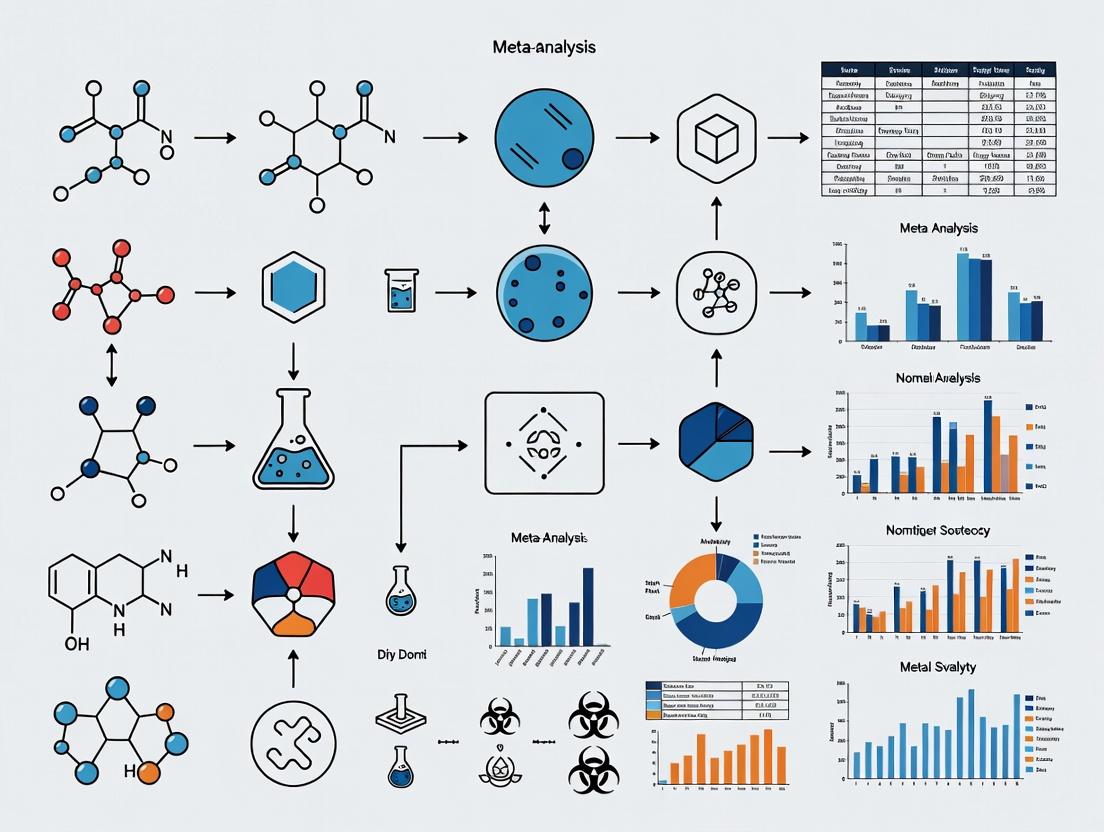
This article provides a systematic guide to meta-analysis techniques for synthesizing ecotoxicity data, tailored for researchers, scientists, and drug development professionals.
A Comprehensive Guide to Meta-Analysis Techniques for Ecotoxicity Data: From Methodology to Validation
Abstract
This article provides a systematic guide to meta-analysis techniques for synthesizing ecotoxicity data, tailored for researchers, scientists, and drug development professionals. It covers the foundational role of meta-analysis in quantifying environmental risks and informing policy, as evidenced by its application to pollutants like organochlorine pesticides and microplastics[citation:3][citation:4]. The methodological core details the step-by-step process, including systematic review protocols (PRISMA), statistical models for effect size calculation, and the use of tools like Meta-Mar[citation:2][citation:6]. It addresses critical challenges such as managing data heterogeneity, assessing publication bias, and validating results against measured concentrations[citation:3][citation:9]. Furthermore, the guide explores advanced integrations with machine learning for toxicity prediction and frameworks for the critical appraisal of methodological quality[citation:1][citation:3]. The conclusion synthesizes key takeaways and outlines future directions, including the need for standardized data and method validation to enhance reliability in biomedical and environmental risk assessment.
The Power and Purpose of Meta-Analysis in Ecotoxicology
This document provides detailed application notes and protocols for conducting a meta-analysis within the specialized field of ecotoxicity research. As a core quantitative synthesis methodology, meta-analysis transcends narrative reviews by statistically aggregating results from multiple independent studies. It is particularly vital for evaluating complex environmental stressors—such as biodegradable microplastics (BMPs) and combined stressors like temperature and microplastics—where individual study outcomes may be variable or seemingly contradictory [1] [2].
Framed within a broader thesis on advanced evidence synthesis for ecological risk assessment, these protocols address the urgent need for robust, transparent, and reproducible methods. The objective is to move from qualitative summaries to quantitative, evidence-based conclusions that can inform regulatory frameworks, identify critical knowledge gaps, and guide the design of safer materials [1]. The following sections detail a standardized workflow, from protocol registration to advanced visualization, equipping researchers with the tools to generate high-quality, defensible synthetic evidence.
Detailed Methodological Protocols
The execution of a rigorous meta-analysis follows a staged, pre-defined protocol. Adherence to this structured process minimizes bias, enhances reproducibility, and ensures the synthesis addresses a clear research question [3].
Protocol Development and Registration
Before any data collection, a detailed protocol must be drafted and registered in a public repository. This commits the research plan to writing, reducing the risk of selective reporting.
- Key Elements: The protocol should include the rationale, explicit eligibility criteria, planned search strategies, data extraction variables, and intended statistical synthesis methods [4].
- Registration Platforms: For environmental health topics, platforms like PROSPERO are recommended. Registration provides a time-stamped record, promotes transparency, and helps avoid duplication of effort [3] [4].
Formulating the Research Question and Eligibility Criteria
A focused research question is the foundation of a successful meta-analysis. The PICO framework (Population, Intervention/Exposure, Comparator, Outcome) is adapted for ecotoxicity research [3].
- Population (P): The biological subject (e.g., aquatic invertebrates, freshwater fish).
- Intervention/Exposure (I): The environmental stressor (e.g., exposure to polybutylene succinate (PBS) microplastics, combined exposure to microplastics and elevated temperature) [1] [2].
- Comparator (C): The control condition (e.g., organisms not exposed to the stressor).
- Outcome (O): The measured biological endpoint (e.g., oxidative stress, growth rate, mortality, reproductive output) [1] [2]. Example: "In freshwater invertebrates (P), does exposure to biodegradable microplastics (I) compared to no exposure (C) significantly affect growth, reproduction, and mortality (O)?" [1] [2].
Eligibility criteria (inclusion/exclusion) must be defined a priori. For example, a protocol may include only peer-reviewed, experimental studies published in English after 2014 that report means, standard deviations, and sample sizes for both control and exposed groups [2].
Systematic Literature Search and Screening
A comprehensive, reproducible search is critical to capture all relevant evidence.
- Search Strategy: Develop a strategy using Boolean operators (
AND,OR). Combine terms for the exposure (e.g., "biodegradable microplastic", "polyhydroxyalkanoate") and population (e.g., "aquatic organism", "Daphnia magna") across multiple databases (e.g., Web of Science, Scopus) [1] [3] [2]. Use both controlled vocabulary (e.g., MeSH terms) and keywords. - Screening Process: Follow the PRISMA (Preferred Reporting Items for Systematic Reviews and Meta-Analyses) flow diagram. Screening should be conducted in duplicate by independent reviewers to minimize error and bias [3]. The process involves:
- Removing duplicates.
- Screening titles and abstracts against eligibility criteria.
- Assessing the full text of potentially relevant studies.
- Data Extraction: Design a standardized form to extract relevant data from included studies. Key items include: study author/year, species, exposure characteristics (polymer type, size, concentration), control conditions, outcome data (mean, SD, sample size), and exposure duration. Extraction should also be performed in duplicate [3].
Quantitative Data Synthesis and Analysis
This is the core statistical component of the meta-analysis.
- Effect Size Calculation: The standardized mean difference (e.g., Hedges' g) is commonly used in ecotoxicology to compare continuous outcomes (e.g., growth, enzyme activity) between exposed and control groups across studies with different measurement scales [1]. Hedges' g includes a correction for small sample bias.
- Statistical Model Selection: A random-effects model is typically appropriate for ecological data, as it assumes the true effect size varies between studies due to differences in species, experimental conditions, etc. The model estimates both the overall mean effect and the variance of effects across studies (tau²) [1].
- Heterogeneity Assessment: Quantify the inconsistency of effect sizes across studies using the I² statistic. I² values of 25%, 50%, and 75% are often interpreted as low, moderate, and high heterogeneity, respectively [1]. High I² indicates a need to explore sources of variation.
- Subgroup Analysis & Meta-Regression: To investigate heterogeneity, pre-specified subgroup analyses (e.g., by polymer type: PLA vs. PHB; or by taxonomic group) or meta-regressions (using continuous moderators like particle size or exposure concentration) can be conducted [1].
- Sensitivity Analysis and Publication Bias: Assess the robustness of findings by sequentially removing each study. Evaluate potential publication bias using funnel plots and statistical tests like Egger's test [1].
The following workflow diagram summarizes this multi-stage protocol:
Application in Ecotoxicity: Quantitative Data Synthesis
The following tables synthesize hypothetical quantitative findings based on the patterns observed in recent ecotoxicological meta-analyses [1] [2]. They demonstrate how meta-analysis clarifies overall effect trends and identifies key moderating variables.
Table 1: Overall Ecotoxicological Effects of Biodegradable Microplastics (BMPs) on Aquatic Organisms [1]
| Biological Endpoint | Number of Effect Sizes (k) | Pooled Hedges' g (95% CI) | Interpretation | Heterogeneity (I²) |
|---|---|---|---|---|
| Oxidative Stress | 206 | 0.645 (0.421, 0.869) | Significant Increase | 78.5% |
| Behavioral Alteration | 158 | -2.358 (-3.101, -1.615) | Significant Impairment | 85.2% |
| Reproductive Output | 142 | -1.821 (-2.344, -1.298) | Significant Inhibition | 81.7% |
| Growth | 125 | -0.864 (-1.201, -0.527) | Significant Inhibition | 76.3% |
| Survival/Mortality | 86 | -0.312 (-0.705, 0.081) | Non-Significant Effect | 72.9% |
Note: A negative Hedges' g indicates a harmful effect (reduction in the endpoint).
Table 2: Subgroup Analysis of BMP Effects by Polymer Type [1]
| Polymer Type | Primary Affected Endpoint(s) | Magnitude of Effect | Key Notes |
|---|---|---|---|
| PBS (Polybutylene Succinate) | Growth, Behavior | High | Consistently shows negative impacts. |
| PHB (Polyhydroxybutyrate) | Reproduction, Survival | High to Moderate | Associated with significant reproductive toxicity. |
| PLA (Polylactic Acid) | Variable | Low to Moderate | Toxicity is strongly size-dependent; less evident at environmentally relevant concentrations. |
Visualization of Meta-Analytic Data
Effective visualization is crucial for interpreting and communicating complex meta-analytic results. Advanced plots move beyond basic forest and funnel plots.
Table 3: Advanced Visualization Tools for Meta-Analysis [5]
| Plot Type | Primary Purpose | Application in Ecotoxicology |
|---|---|---|
| Rainforest Plot | Enhances traditional forest plots by visually weighting study contributions and highlighting subgroups. | Display effect sizes for different species or polymer types, with point size reflecting study weight [1] [5]. |
| GOSH Plot | Diagnoses heterogeneity and identifies outlier studies by plotting effect sizes from all possible study subsets. | Explore if a specific cluster of studies (e.g., those using a particular test species) drives the overall effect [5]. |
| Network Plot | Visualizes the comparisons between different exposures (treatments) in a network meta-analysis. | Map and compare the relative toxicity of multiple plastic types (e.g., conventional PE vs. various BMPs) when direct comparisons are lacking. |
| Interactive Dashboard (e.g., Shiny App) | Allows users to dynamically explore data by filtering subgroups or adjusting model parameters. | Enable stakeholders to interrogate results, e.g., to see the effect of microplastics specifically on fish at different temperatures [5] [2]. |
The following diagram illustrates the logical relationship between different visualizations and their role in the analytical process:
Diagram Specifications for Accessibility
All visualizations must adhere to accessibility standards to ensure information is perceivable by all users [6] [7] [8].
- Color Contrast: Use the specified palette (
#4285F4,#EA4335,#FBBC05,#34A853,#FFFFFF,#F1F3F4,#202124,#5F6368). For any text within a diagram element, explicitly set afontcolorthat provides sufficient contrast against the node'sfillcolor[6]. - WCAG Compliance: Aim for a minimum contrast ratio of 4.5:1 for normal text and 3:1 for large-scale text or graphical elements against their background [7] [8].
- Max Width: Diagrams should be rendered at a maximum width of 760px for optimal readability.
The Scientist's Toolkit: Essential Research Reagents & Software
Table 4: Key Reagent Solutions and Software for Ecotoxicology Meta-Analysis
| Item Name | Category | Function/Benefit | Example/Note |
|---|---|---|---|
| PRISMA 2020 Checklist | Reporting Guideline | Ensures transparent and complete reporting of the systematic review/meta-analysis [3]. | Critical for manuscript preparation and peer review. |
| Reference Management Software (e.g., Rayyan, Covidence) | Screening Tool | Manages citations, facilitates blind duplicate screening, and resolves conflicts [3]. | Rayyan is a free, web-based tool ideal for collaborative screening. |
Meta-Analysis Statistical Software (e.g., R metafor, Meta-Mar) |
Analysis Software | Performs all statistical calculations: effect size pooling, heterogeneity estimation, meta-regression, and generates plots [9]. | Meta-Mar is a free, online platform with an AI assistant, suitable for users without advanced coding skills [9]. |
Interactive Visualization Library (e.g., R shiny, D3.js) |
Communication Tool | Creates dynamic, web-based dashboards for exploring meta-analytic data interactively [5]. | Allows stakeholders to filter results by species, stressor, or endpoint. |
| Digital Object Identifier (DOI) for Protocol | Registration | Provides a permanent, citable link to the pre-registered protocol, ensuring transparency and priority [4]. | Obtainable from registries like PROSPERO or the Open Science Framework. |
The Critical Role of Meta-Analysis in Ecotoxicology and Regulatory Science
Meta-analysis provides a quantitative framework for synthesizing evidence across disparate ecotoxicological studies, transforming subjective narrative reviews into objective, statistically robust conclusions. In regulatory science, this methodology is critical for hazard identification and risk assessment, offering a transparent means to evaluate whether an entire body of evidence indicates a chemical poses a threat to environmental or human health [10]. The transition from qualitative, weight-of-evidence approaches to quantitative evidence integration addresses key challenges in ecotoxicology, including high data heterogeneity, ostensibly discordant study results, and the need to inform policy with consolidated scientific evidence [10] [11].
This document provides detailed application notes and protocols, framing meta-analysis as an indispensable technique within a broader thesis on ecotoxicity data research. It is designed for researchers, scientists, and drug development professionals seeking to implement rigorous evidence synthesis for environmental safety assessments.
Core Components of Ecotoxicological Meta-Analysis
A robust meta-analysis in ecotoxicology involves a multi-stage process designed to minimize bias and maximize transparency. The core components are systematically applied to convert fragmented research into actionable insight.
1. Systematic Review & Data Harmonization: The foundation is a comprehensive, protocol-driven literature search (e.g., following PRISMA guidelines) [1]. Data from eligible studies are extracted and harmonized, which often requires converting diverse reported outcomes (e.g., mortality, growth inhibition, enzyme activity) into a common effect size metric, such as Hedges' g or the log response ratio [1].
2. Statistical Synthesis & Heterogeneity Assessment: Effect sizes are pooled using statistical models. The random-effects model is typically preferred in ecological contexts as it accounts for both within-study variance and the true variability in effect sizes between studies (heterogeneity) [1]. The degree of heterogeneity (e.g., quantified by I²) is critically assessed; high values signal that the overall effect may not be generalizable and necessitate investigation into underlying drivers [10].
3. Subgroup Analysis & Meta-Regression: To explain heterogeneity and extract more nuanced conclusions, analysts employ subgroup analyses (e.g., by chemical class, species, or exposure duration) and meta-regression. Meta-regression statistically explores whether continuous or categorical study-level covariates (e.g., chemical concentration, particle size, exposure time) significantly influence the observed effect size [10] [1].
4. Sensitivity Analysis & Bias Evaluation: The robustness of findings is tested through sensitivity analyses, examining if results change upon removing specific studies or using different statistical methods. Potential for publication bias (the tendency for statistically significant results to be published more often) is evaluated using funnel plots or statistical tests [1].
Application Notes: Case Studies in Hazard Identification & Regulation
The following case studies demonstrate the practical application of meta-analysis to resolve contradictory evidence and directly inform regulatory categories.
Application Note 1: Neurotoxic Hazard of Trimethylbenzene Isomers
- Objective: To determine whether trimethylbenzene (TMB) isomers represent a neurotoxic hazard by quantitatively synthesizing ostensibly discordant animal studies on pain sensitivity [10].
- Challenge: Initial studies showed conflicting results—effects were observed immediately post-exposure, resolved after 24 hours, and reappeared 50 days later following an external stressor (foot-shock) [10].
- Meta-Analytic Resolution: A meta-analysis and meta-regression were performed, accounting for confounders like isomer type, testing time, and laboratory. The analysis revealed that when all studies were considered together, the pooled effect size was statistically significant. This supported the conclusion that TMBs are a potential neurotoxic hazard, demonstrating that the apparent discordance was due to differences in experimental timing and the application of stressors [10].
Table 1: Characteristics of Animal Studies on TMB and Pain Sensitivity [10]
| Study | Exposure Duration | Test Agent | Key Test Times Post-Exposure | External Stressor Applied? |
|---|---|---|---|---|
| Korsak and Rydzyński (1996) | Sub-chronic (90 days) | 1,2,4- & 1,2,3-TMB | Immediate, 2 weeks | No |
| Douglas et al. (1993) | Sub-chronic (90 days) | C9 Fraction (~55% TMB) | 24 hours | No |
| Gralewicz et al. (1997) | Short-term (4 weeks) | 1,2,4-TMB | 50 & 51 days | Yes (Day 51) |
| Wiaderna et al. (1998) | Short-term (4 weeks) | 1,2,3-TMB | 50 & 51 days | Yes (Day 51) |
Protocol 1: Quantitative Meta-Analysis for Hazard Identification
- Literature Search: Execute a structured search in PubMed, Web of Science, and TOXLINE using defined chemical names and health endpoints [10].
- Screening & Inclusion: Apply PECO/PICO criteria. For TMBs, inclusion required: animal toxicology studies, defined TMB exposure, measurement of thermal pain sensitivity (hot plate test), and subchronic/short-term exposure duration [10].
- Data Extraction: Extract mean, standard deviation (SD), and sample size (N) for control and each exposure group. If SD is missing, estimate from standard error, confidence intervals, or p-values.
- Effect Size Calculation: Compute the standardized mean difference (e.g., Hedges' g) for each comparison between an exposed group and its control.
- Statistical Synthesis: Pool effect sizes using a random-effects model. Assess statistical heterogeneity using Cochran's Q and I² statistics.
- Meta-Regression: Model the influence of covariates (e.g., time of testing, isomer, dose) on the effect size to explain heterogeneity [10].
- Interpretation: A pooled effect size whose confidence interval does not include zero provides quantitative support for hazard identification.
TMB Meta-Analysis Workflow for Hazard Identification
Application Note 2: Quantifying Risks of Biodegradable Microplastics
- Objective: To perform the first quantitative synthesis of the ecotoxicological impacts of biodegradable microplastics (BMPs) on aquatic organisms [1].
- Challenge: A growing but fragmented body of literature on BMPs showed variable effects across polymers, species, and endpoints, making overall risk difficult to assess.
- Meta-Analytic Resolution: Analysis of 717 endpoints from 28 studies showed BMPs significantly increased oxidative stress (Hedges' g = 0.645) and impaired behavior (g = -2.358), reproduction (g = -1.821), and growth (g = -0.864). Survival effects were not significant. Subgroup analysis revealed polymer-specific risks (e.g., PBS and PHB impaired growth; PHB and PGA reduced reproduction) and that PLA toxicity was strongly size-dependent [1]. This synthesis provided clear evidence that BMPs pose non-negligible ecological risks, urging their inclusion in regulatory frameworks.
Table 2: Summary of Overall Ecotoxicological Effects of Biodegradable Microplastics (BMPs) [1]
| Endpoint | Hedges' g (Random-Effects Model) | 95% Confidence Interval | Interpretation |
|---|---|---|---|
| Oxidative Stress | 0.645 | Positive CI | Significant increase |
| Behavior | -2.358 | Negative CI | Significant impairment |
| Reproduction | -1.821 | Negative CI | Significant inhibition |
| Growth | -0.864 | Negative CI | Significant inhibition |
| Survival | Not Significant | Includes zero | No significant effect |
Protocol 2: Systematic Review & Meta-Analysis for Emerging Contaminants
- Search Strategy: Follow PRISMA. Search Web of Science/Scopus with terms: e.g.,
("biodegradable microplastic*" AND "aquatic organism*"). Define time frame [1]. - Screening: Two independent reviewers screen titles/abstracts, then full texts, based on pre-defined inclusion (e.g., in vivo aquatic exposure, BMP tested, relevant endpoint measured) and exclusion (e.g., reviews, non-BMP particles) criteria.
- Data Coding: Extract data into a standardized form: author, year, species, BMP polymer type, size, concentration, exposure duration, endpoint, and statistical results (mean, SD, N for treatment and control).
- Effect Size Calculation: For continuous data (e.g., enzyme activity, length), calculate Hedges' g. For binary data (e.g., mortality), calculate log odds ratio.
- Advanced Synthesis: Perform subgroup analysis by polymer type, taxon, and particle size. Use meta-regression to test the influence of continuous variables like exposure concentration.
- Reporting: Present overall and subgroup pooled effects. Discuss major sources of heterogeneity and environmental implications of the findings [1].
Meta-Analysis Workflow for Biodegradable Microplastic Ecotoxicity
Application Note 3: Differentiating Pesticide Regulatory Categories
- Objective: To identify whether environmental fate and ecotoxicity data can scientifically differentiate between Low-Risk Active Substances (LRAS), Candidates for Substitution (CfS), and conventional synthetic chemicals (ScC) in the EU [12].
- Challenge: Regulatory categorization has significant implications for market access and risk indicators but needed robust scientific validation.
- Meta-Analytic Resolution: A meta-analysis of regulatory data showed clear distinctions. LRAS had the shortest median degradation half-life (DT₅₀) in soil (1.78 days) and highest median EC₅₀ (least toxic) for algae. CfS were the most persistent (DT₅₀ 80.93 days) and toxic (lowest EC₅₀) [12]. This provided strong empirical support for the EU's regulatory framework and suggested that specific ecotoxicological thresholds (e.g., algal EC₅₀ > 10 mg/L) could serve as screening indicators for identifying new LRAS [12].
Table 3: Meta-Analysis of Regulatory Data for EU Pesticide Categories [12]
| Parameter | Low-Risk (LRAS) | Synthetic Chemicals (ScC) | Candidates for Substitution (CfS) |
|---|---|---|---|
| Median Soil DT₅₀ (days) | 1.78 | 19.74 | 80.93 |
| Median Water/Sediment DT₅₀ (days) | 7.23 | Data shown in study | Data shown in study |
| Median Algal EC₅₀ (mg/L) - P. subcapitata | 10.3 | 1.094 | 0.147 |
| Median Aquatic Plant EC₅₀ (mg/L) - L. gibba | 100 | 1.1 | 0.154 |
| Regulatory Implication | Preferred, low weight in risk indicators | Standard approval | Targeted for phase-out, high weight in risk indicators |
Protocol 3: Meta-Analysis of Regulatory Ecotoxicity Data
- Data Source Compilation: Use official regulatory databases (e.g., EU Pesticides Database) to list all approved active substances. Obtain all related assessment reports (e.g., EFSA Conclusion Documents) [12].
- Parameter Extraction: Systematically extract numerical values for key regulatory parameters: degradation half-lives (DT₅₀) in soil and water, and acute ecotoxicity endpoints (EC₅₀/LC₅₀) for standard test organisms (algae, aquatic invertebrates, fish).
- Categorization and Cleaning: Classify each substance into its regulatory category (LRAS, CfS, ScC). Exclude substances with incomplete data.
- Descriptive & Comparative Statistics: Calculate median and range for each parameter by category. Use non-parametric tests (e.g., Kruskal-Wallis) to determine if differences between categories are statistically significant.
- Indicator Development: Based on the distributions, propose science-based threshold values (e.g., "LRAS typically have an algal EC₅₀ > X mg/L") that could streamline future regulatory evaluations [12].
Table 4: Key Research Reagent Solutions and Resources for Ecotoxicological Meta-Analysis
| Resource Name | Type | Primary Function / Utility |
|---|---|---|
| ECOTOX Knowledgebase | Curated Database | A comprehensive, publicly available source of single-chemical toxicity data for aquatic and terrestrial species. Essential for data mining and initial evidence gathering [13]. |
| PRISMA Guidelines | Reporting Framework | Provides a standardized checklist and flow diagram for conducting and reporting systematic reviews and meta-analyses, ensuring transparency and completeness [1]. |
| R Statistical Software | Analysis Software | The primary environment for advanced meta-analysis. Packages like metafor, meta, and robumeta are specifically designed for calculating effect sizes, fitting complex models, and generating publication-quality plots. |
| Web of Science / Scopus | Bibliographic Database | Core platforms for executing comprehensive, reproducible systematic literature searches across multidisciplinary scientific literature. |
| Cochrane Handbook | Methodology Guide | The definitive guide to the methodology of systematic reviews, offering in-depth guidance on statistical methods, risk of bias assessment, and interpretation, applicable beyond clinical fields. |
Synthesis Workflow for Regulatory Decision Support
The integration of meta-analysis into the regulatory science workflow transforms fragmented data into a structured evidence base for decision-making.
From Data to Decision: Meta-Analysis in Regulatory Science
Meta-analysis is a critical, transformative tool in ecotoxicology and regulatory science. It moves the field beyond qualitative synthesis by providing a transparent, statistical framework to integrate evidence, resolve apparent contradictions, quantify overall effects, and identify key moderators of toxicity. As demonstrated through applications in neurotoxic hazard assessment, emerging contaminant evaluation, and pesticide regulation, meta-analysis directly strengthens the scientific foundation of environmental protection policies. Its systematic approach is indispensable for managing the complexity of modern ecotoxicological data and ensuring that regulatory decisions are built upon a robust, objective, and comprehensive assessment of the available science.
Application Notes: Core Concepts in Ecotoxicological Meta-Analysis
Meta-analysis provides a quantitative framework for synthesizing results from independent ecotoxicological studies, enabling researchers to discern general patterns of chemical effects, quantify overall toxicity, and identify sources of variability. Within this framework, three statistical pillars are paramount: effect sizes, which measure the magnitude and direction of a toxicological response; heterogeneity, which quantifies the consistency of effects across studies; and confidence intervals, which express the precision of the pooled estimate [14] [15].
In ecotoxicology, these concepts are applied to translate disparate experimental outcomes—such as reductions in growth, survival, or reproduction—into a common metric for synthesis. For instance, a meta-analysis on plastic toxicity revealed that microplastics significantly reduce insect survival (effect size: -1.17) and growth (effect size: -0.69) [16]. This quantitative synthesis is critical for ecological risk assessment (ERA), moving beyond qualitative reviews to provide regulators with robust, statistically defensible evidence on contaminant impacts across species and ecosystems [17] [15].
Understanding and managing heterogeneity—the variation in effect sizes beyond random sampling error—is a central challenge. In environmental studies, heterogeneity arises from legitimate biological and methodological diversity (e.g., differences in species sensitivity, plastic polymer type, exposure concentration, or test duration) [16] [18]. Rather than merely a statistical nuisance, investigating heterogeneity can reveal key moderators of toxicity. A meta-analysis on microplastic-heavy metal co-toxicity, for example, used machine learning to identify heavy metal concentration and exposure time as critical drivers of variable toxic effects [18]. Confidence intervals contextualize the findings by providing a range of plausible values for the true effect. Narrow intervals indicate greater precision, often stemming from a larger number of studies or consistent results, while wide intervals suggest uncertainty and call for more research [15] [19]. The following table synthesizes key effect size metrics and heterogeneity statistics from recent ecotoxicological meta-analyses.
Table 1: Summary of Key Metrics from Recent Ecotoxicological Meta-Analyses
| Study Focus & Citation | Primary Effect Size Metric | Key Pooled Effect Size (Hedges' g or log RR) | Heterogeneity Statistic (I²) | Major Identified Moderators of Heterogeneity |
|---|---|---|---|---|
| Plastic toxicity to insects [16] | Hedges' g | Survival: -1.17; Growth: -0.69 | Not explicitly reported | Plastic type (micro- vs. nanoplastic), concentration, exposure duration |
| Biodegradable microplastic toxicity to aquatic organisms [1] | Hedges' g | Behavior: -2.358; Oxidative Stress: +0.645 | High heterogeneity across endpoints | Polymer type (e.g., PBS, PHB, PLA), particle size, exposure concentration |
| Microplastic & temperature stress on freshwater invertebrates [2] | Log Response Ratio (lnRR) | Growth: -0.24; Reproduction: -0.18 | Significant heterogeneity reported | Species (e.g., Daphnia magna), feeding mode, geographical context of study |
| Transcriptional biomarkers in metal-exposed bivalves [14] | Log Response Ratio (lnRR) | Overall response: 0.50 (65% increase) | Modeled via Bayesian hierarchical models | Transcript type (e.g., mt, hsp70), tissue type, exposure time |
Experimental Protocols for Meta-Analysis
Protocol for Systematic Literature Review and Data Extraction
A rigorous, reproducible literature search forms the foundation of a credible meta-analysis. The following protocol is adapted from established methodologies in the field [18] [14] [1].
Objective: To comprehensively identify, screen, and extract relevant quantitative data from peer-reviewed ecotoxicology studies for statistical synthesis.
Materials & Software:
- Bibliographic Databases: Web of Science, Scopus, Google Scholar.
- Reference Management Software: EndNote, Zotero, or Mendeley.
- Screening Tool: Rayyan.ai or Covidence for blinded screening.
- Data Extraction Form: Custom-designed in Microsoft Excel, Google Sheets, or specialized meta-analysis software.
Procedure:
- Define the PICO/S Framework: Formulate the research question using Population (e.g., freshwater invertebrates), Intervention/Exposure (e.g., polystyrene microplastics > 1 mg/L), Comparator (control conditions), and Outcome (e.g., growth rate, mortality). Specify Study designs (e.g., laboratory toxicity tests).
- Develop Search Strategy:
- Identify core search terms from the PICO elements (e.g., "microplastic", "Daphnia*", "growth", "mortality").
- Utilize Boolean operators (AND, OR, NOT) and database-specific syntax (e.g., asterisk * for truncation).
- Apply the search string to title, abstract, and keyword fields. An example from a recent review is:
("temperature*" OR "climate change") AND ("Microplastic*") AND ("Freshwater" OR "lakes") AND ("invertebrat*")[2]. - Set a publication date range (e.g., from database inception to present).
- Execute Search & Manage Records: Run the search across all selected databases. Merge results and remove duplicates using reference management software.
- Screen Studies:
- Title/Abstract Screening: Two independent reviewers assess records against inclusion/exclusion criteria. Resolve conflicts through discussion or a third reviewer.
- Full-Text Screening: Retrieve and assess the full text of potentially relevant studies. Maintain a log of excluded studies with reasons.
- Extract Data:
- Extract descriptive information: author, year, test species, contaminant type/concentration, exposure duration, endpoint measured.
- Extract quantitative data for effect size calculation: mean, standard deviation (SD or SE), and sample size (n) for both treatment and control groups. If not directly reported, calculate from figures using software like WebPlotDigitizer or extract from test statistics (e.g., t-value, p-value) [14] [15].
- Extract data on potential moderators: taxonomic group, particle size, polymer type, temperature, pH, etc. [16] [18].
- All extractions should be performed independently by two reviewers to ensure accuracy.
Protocol for Calculating Effect Sizes and Assessing Heterogeneity
This protocol outlines the core statistical synthesis process, applicable in software like R (with metafor or meta packages), Comprehensive Meta-Analysis, or RevMan.
Objective: To compute a standardized metric of toxicological effect for each study, pool them into an overall estimate, and quantify the consistency of effects across the included studies.
Materials & Software:
- Statistical software (R, Python, Stata, or dedicated meta-analysis software).
- Dataset containing extracted means, SDs, and sample sizes.
Procedure:
- Calculate Individual Study Effect Sizes:
- For continuous data (e.g., length, weight, enzyme activity), the Hedges' g is the recommended standardized mean difference. It includes a correction for small sample bias:
g = (Mean_treatment - Mean_control) / SD_pooled * J, whereJis the correction factor [16] [1]. - For proportional or count data (e.g., survival counts), the log Response Ratio (lnRR) is often used:
lnRR = ln(Mean_treatment / Mean_control)[2] [14]. Its variance is also calculated for weighting. - Calculate the variance and standard error for each effect size estimate.
- For continuous data (e.g., length, weight, enzyme activity), the Hedges' g is the recommended standardized mean difference. It includes a correction for small sample bias:
- Model Selection and Pooling:
- Test for Heterogeneity: Compute Cochran's Q statistic and the I² statistic. I² describes the percentage of total variation across studies that is due to heterogeneity rather than chance (e.g., I² > 50% suggests substantial heterogeneity) [2] [1].
- Choose Meta-Analytic Model: If heterogeneity is low (I² < 25-30%), a fixed-effect model can be used, assuming a single true effect size. In ecotoxicology, substantial heterogeneity is common; therefore, a random-effects model (e.g., DerSimonian-Laird, restricted maximum likelihood) is typically more appropriate, as it assumes true effects vary across studies and estimates the average effect [14].
- Pool Effect Sizes: Compute the weighted average of individual effect sizes, where the weight assigned to each study is typically the inverse of its variance (more precise studies receive greater weight). Report the pooled effect size with its 95% confidence interval.
- Investigate Heterogeneity (Moderator/Subgroup Analysis): If significant heterogeneity exists (I² is high), conduct analyses to explain it.
- Categorical Moderators: Use subgroup analysis or meta-regression with a mixed-effects model to compare pooled effects between groups (e.g., microplastics vs. nanoplastics; different polymer types) [16] [2].
- Continuous Moderators: Use meta-regression to test if effect size correlates with a continuous variable (e.g., exposure concentration, log-transformed particle size, temperature) [18] [14].
Protocol for Constructing and Interpreting Confidence Intervals
Confidence intervals (CIs) are fundamental for inference, and the method of calculation can impact regulatory decisions [15] [19].
Objective: To calculate a range of plausible values for the true pooled effect size or benchmark dose and to select an appropriate method based on the data structure.
Materials & Software: Statistical software (R, with packages like drc for benchmark dose modeling).
Procedure:
- For Pooled Effect Sizes:
- The 95% CI around a pooled effect from a random-effects model is typically calculated as:
Pooled Estimate ± 1.96 * Standard Error. - Visually inspect CIs on a forest plot. If the CI for an overall effect does not cross the line of no effect (e.g., Hedges' g = 0 or lnRR = 0), it is statistically significant at the α=0.05 level.
- The 95% CI around a pooled effect from a random-effects model is typically calculated as:
- For Benchmark Dose (BMD) and Related Metrics:
- In dose-response analysis, the Benchmark Dose (BMD) is a dose that produces a predetermined benchmark response (BMR, e.g., a 10% effect). The lower confidence limit of the BMD (BMDL) is often used as a point of departure in risk assessment [19].
- Comparison of CI Methods for BMD [19]:
- Delta Method: An analytic approximation based on the variance-covariance matrix. It is computationally fast but can be unreliable for nonlinear models, often producing excessively narrow intervals.
- Likelihood-Ratio (LR) Method: Determines the interval based on values where the log-likelihood drops by a specified amount (e.g., χ²/2) from its maximum. It is more reliable than the delta method for nonlinear models and is suitable for routine analysis.
- Bootstrap Method: A resampling technique that estimates the sampling distribution of the BMD empirically. It is computationally intensive (requiring thousands of runs) but is highly flexible, robust for complex models, and integrates well with probabilistic risk assessment. It is considered the gold standard when computational resources allow.
- Recommendation: For regulatory ecotoxicology where BMD modeling is applied, the likelihood-ratio method provides a good balance of reliability and efficiency for calculating confidence limits [19].
Interpretation: A recent meta-analysis on chronic toxicity data reformatted common endpoints like the No Observed Effect Concentration (NOEC) into effective concentrations (e.g., EC₅). It found median adjustment factors (e.g., NOEC/1.2 ≈ EC₅) and highlighted that the median percent effect occurring at the NOEC was 8.5% [15]. This underscores that traditional hypothesis-testing endpoints (NOEC, LOEC) correspond to variable effect levels, and their CIs (or conversion to point estimates with CIs) are crucial for accurate risk interpretation.
Visualizations
Visualization 1: Meta-Analysis Workflow for Ecotoxicity Data
Visualization 2: Comparison of Confidence Interval Calculation Methods
The Researcher's Toolkit
Table 2: Essential Tools for Ecotoxicological Meta-Analysis
| Tool Category | Specific Tool / Software | Primary Function in Meta-Analysis | Key Notes / Relevance |
|---|---|---|---|
| Bibliographic & Screening | Web of Science, Scopus, Google Scholar | Primary literature databases for systematic searching. | Use complex Boolean queries. Google Scholar for grey literature checks [18] [14]. |
| Rayyan.ai, Covidence | Platform for blinded title/abstract and full-text screening by multiple reviewers. | Manages PRISMA flow, reduces screening bias. | |
| Data Extraction & Management | Microsoft Excel, Google Sheets | Custom spreadsheet for structured data extraction. | Pre-pilot the form. Include fields for all potential moderators [18]. |
| WebPlotDigitizer | Extracts numerical data from published graphs and figures. | Essential when means/SDs are not reported in text [14]. | |
| Statistical Synthesis | R with metafor, meta, drc packages |
Comprehensive statistical environment for all meta-analytic calculations, modeling, and graphing. | metafor is highly flexible for complex models and meta-regression. drc for dose-response and BMD analysis [16] [19]. |
| Comprehensive Meta-Analysis (CMA) | User-friendly commercial software for conducting meta-analysis. | Good for teams less familiar with programming. | |
| Specialized Analysis | Machine Learning Libraries (e.g., scikit-learn in Python, caret in R) |
Identifying complex, non-linear moderators of heterogeneity. | Used in advanced analyses to pinpoint key toxicity drivers (e.g., XGBoost model in [18]). |
Bayesian Statistical Software (e.g., Stan, JAGS, brms in R) |
Fitting hierarchical models to account for multiple levels of variability. | Suitable for complex data structures and incorporating prior knowledge [14]. |
Historical Context & The Emergence of Systematic Synthesis
The call for rigorous evidence synthesis in environmental science was powerfully foreshadowed by Rachel Carson's Silent Spring, which itself constituted a narrative synthesis of disparate studies to warn of pesticide dangers [20]. The formal scientific impetus for such synthesis was articulated in the 19th century, with Lord Rayleigh (1880s) emphasizing that science requires not just accumulating facts but "digestion and assimilation of the old," and George Gould (1898) envisioning a system where a researcher could gain knowledge of "the experience of every other man in the world" within an hour [20]. The term "systematic review" appears in the medical literature as early as 1867 [20]. The modern evolution accelerated in the late 20th century, driven by the need to minimize bias, increase statistical power, and organize growing bodies of evidence, culminating in structured frameworks like those developed by the Cochrane Collaboration [20]. In ecotoxicology, this evolution has transitioned from narrative reviews to quantitative meta-analyses, now routinely used to inform critical policy decisions [21].
Current Landscape & Methodological Challenges in Ecotoxicology
Recent mapping of the field reveals significant growth but also critical methodological shortcomings. An analysis of 105 meta-analyses on organochlorine pesticides—inspired by the research wave following Silent Spring—synthesized 3,911 primary studies [21]. A quantitative evaluation of their methodological quality yielded concerning results, as summarized below.
Table 1: Methodological Quality Assessment of Organochlorine Pesticide Meta-Analyses (n=105) [21]
| Quality Dimension | Percentage of Meta-Analyses with Deficiency | Key Implications for Ecotoxicity Research |
|---|---|---|
| Low Overall Methodological Quality | 83.4% | Undermines reliability of synthesized evidence for regulation. |
| Common Use in Policy Documents | Commonly cited | Poor-quality synthesis may directly misinform environmental policy. |
| Geographic Bias in Production | Limited from developing nations | Lack of synthesis where pesticides are still in use for disease control. |
| Taxonomic Bias | Paucity of wildlife meta-analyses | Despite ample primary evidence, synthesis gaps exist for key taxa. |
| Impact of Reporting Guidelines | Positive correlation with quality | Adherence to protocols is a readily implementable improvement. |
Concurrently, the application of meta-analysis has expanded to novel stressors. A 2025 global meta-analysis on plastic toxicity to insects found microplastics significantly impaired all measured health traits, with survival (effect size: -1.17) and growth (-0.69) most affected [16]. Another 2025 meta-analysis on interactive stressors revealed that elevated temperature exacerbates microplastic toxicity in freshwater invertebrates for growth, reproduction, and stress endpoints, though not for mortality [2]. These studies demonstrate the method's power but also inherit the field's overarching quality challenges.
Application Notes: A Standardized Protocol for Ecotoxicity Meta-Analysis
To address these quality gaps, the following protocol adapts systematic review guidelines from regulatory toxicology [22] and evidence synthesis best practices [20] for ecotoxicity data research.
Protocol: Six-Step Systematic Review for Ecotoxicity Data Synthesis
Step 1: Problem Formulation & Protocol Registration Define the PECO/T statement (Population, Exposure, Comparator, Outcome, Time/Taxa). Specify primary and secondary research questions. Pre-register the review protocol on a platform like PROSPERO or the Open Science Framework to minimize bias.
Step 2: Systematic Literature Search & Study Selection
- Search Strategy: Utilize multiple databases (e.g., Web of Science, Scopus, ECOTOX [23]). Develop search strings using Boolean operators combining terms for stressor, taxa, and endpoints [2].
- Inclusion/Exclusion Criteria: Define criteria a priori. For example: 1) Empirical studies exposing organisms to the stressor(s) of interest; 2) Inclusion of an unexposed control group; 3) Reported quantitative data on ecologically relevant endpoints (survival, growth, reproduction, behavior); 4) Full text in English (for feasibility, though this introduces bias) [23] [2].
- Screening: Conduct blinded screening by two independent reviewers at title/abstract and full-text levels. Resolve conflicts via consensus or a third reviewer.
Step 3: Data Extraction & Coding Extract data into a standardized, pilot-tested form. Key fields include: study ID, test species, life stage, exposure system (lab/field), exposure concentration/duration, endpoint, mean/ variance measures for control and treatment groups, sample size, and moderators (e.g., chemical type, particle size, temperature) [16] [2].
Step 4: Study Quality & Risk of Bias (RoB) Assessment Use a domain-based RoB tool tailored to ecotoxicity studies (e.g., based on criteria from the EPA's evaluation guidelines [23]). Assess bias from selection, confounding, exposure characterization, outcome measurement, and selective reporting. Do not use quality scores as weights in meta-analysis; instead, use RoB for sensitivity/subgroup analysis [22].
Step 5: Evidence Synthesis & Meta-Analysis
- Effect Size Calculation: Calculate a standardized effect size (e.g., Hedge's g, log response ratio) for each comparison to account for different measurement scales.
- Statistical Model: Use random-effects models by default due to expected heterogeneity between studies. Assess heterogeneity using the I² statistic.
- Moderator & Subgroup Analysis: Explore sources of heterogeneity (e.g., taxon, plastic type [16], temperature regime [2]) via meta-regression or subgroup analysis if sufficient studies exist.
Step 6: Confidence Rating & Reporting Rate the overall confidence in the body of evidence. Prepare the report following PRISMA guidelines, ensuring all data and analytical code are publicly archived (e.g., on GitHub/Zenodo [21] [16]).
Systematic Review Workflow for Ecotoxicology
The Scientist's Toolkit: Reagents & Materials for Meta-Analytic Research
This toolkit comprises essential digital and methodological "reagents" for executing the protocol above.
Table 2: Research Reagent Solutions for Ecotoxicity Meta-Analysis
| Tool/Resource | Primary Function | Application in Protocol Step |
|---|---|---|
| EPA ECOTOX Database [23] | Comprehensive repository of curated ecotoxicity studies from open literature. | Step 2: Primary database for identifying relevant studies on pesticide effects. |
| Rayyan, Covidence | Web tools for blinded screening and selection of studies by multiple reviewers. | Step 2: Managing the systematic screening process, conflict resolution. |
| PRISMA Checklist & Flow Diagram | Reporting guidelines ensuring transparent and complete reporting of the review. | Step 6: Framework for structuring the final review manuscript. |
| R Statistical Environment (metafor, robvis packages) | Software for all statistical analyses, including effect size calculation, meta-analysis, meta-regression, and risk-of-bias visualization. | Step 5 & 4: Core computational engine for synthesis and quality visualization. |
| GitHub / Zenodo | Platform for version control, public archiving of data, and sharing analytical code to ensure reproducibility [21] [16]. | Step 6: Public deposition of all digital materials supporting the review. |
| PECO/T Framework | Structured format for defining the review question (Population, Exposure, Comparator, Outcome/Time). | Step 1: Ensuring a focused, answerable research question. |
| Risk of Bias (RoB) Tool for Ecotoxicity | Customized tool based on EPA study acceptance criteria [23] (e.g., control adequacy, exposure verification). | Step 4: Critical appraisal of internal validity of included primary studies. |
Case Applications & Visualizing Complex Interactions
Case 1: Synthesizing Effects of Interactive Stressors
A 2025 meta-analysis on microplastics and temperature in freshwater invertebrates provides a model [2]. After systematic search and selection, data extraction captured effect sizes for growth, mortality, reproduction, and stress. The key finding was a significant interaction where elevated temperature amplified the negative effects of microplastics on growth, reproduction, and physiological stress, but not on mortality [2]. This illustrates the protocol's power to disentangle complex, non-additive effects relevant to real-world multi-stressor environments.
Case 2: Pathway Analysis for Mechanistic Insight
Beyond calculating summary effects, meta-analysis can synthesize evidence on mechanistic pathways. The physiological pathway diagram below, derived from synthesized evidence [16] [2], illustrates how stressors like microplastics, potentially exacerbated by temperature, lead to population-level ecological impacts.
Physiological Pathways from Microplastic Stress to Population Impact
Future Directions & Integration into Regulatory Risk Assessment
The evolution points toward deeper integration into regulatory frameworks. The U.S. EPA provides guidelines for evaluating open literature toxicity data in risk assessments [23], and the Texas Commission on Environmental Quality (TCEQ) has developed formal guidance for systematic reviews in toxicity factor development [22]. The future lies in:
- Automation & Machine Learning: For screening and data extraction from primary studies.
- Living Systematic Reviews: Continually updated syntheses as new evidence emerges.
- Formal Adoption by Agencies: Using pre-registered, high-quality meta-analyses as a primary evidence stream in regulatory decision-making, moving beyond the current reliance on single guideline studies.
- Closing Geographic & Taxonomic Gaps: Actively supporting the production of systematic reviews in developing countries and for under-synthesized taxa [21].
The trajectory from Silent Spring to systematic reviews represents the maturation of environmental evidence synthesis from persuasive narrative to a quantifiable, transparent, and indispensable scientific discipline for informing global environmental policy.
Bridging Laboratory Data and Real-World Ecological Risk Assessment
The central challenge in modern ecological risk assessment (ERA) lies in translating controlled, single-stressor laboratory toxicity data into predictions about the multifactorial and variable conditions of real-world ecosystems. This translation is a core component of a broader thesis on meta-analysis techniques for ecotoxicity data research. Meta-analysis provides the statistical and conceptual framework to quantitatively synthesize disparate laboratory studies, account for variability, and derive more robust, generalizable insights into contaminant effects. By systematically aggregating data across chemicals, species, and experimental conditions, researchers can bridge the gap between simplified lab models and complex environmental exposures, ultimately supporting more predictive and protective risk assessments for pharmaceuticals, pesticides, and industrial chemicals [15].
Application Notes: Integrating Data for Predictive Risk Assessment
Meta-analysis serves as a critical tool for reconciling diverse laboratory findings and quantifying overall effect magnitudes. For instance, a global meta-analysis on plastic pollution revealed that microplastics significantly impair insect health, with an average reduction in survival (Hedges' g = -1.17) and growth (Hedges' g = -0.69) [16]. This synthesis demonstrates how meta-analysis can move beyond qualitative summaries to provide quantitative, comparable metrics of hazard. These synthesized effect sizes are more reliable for informing risk characterization than individual, potentially conflicting studies.
From Lab Point Estimates to Real-World Protection Goals
A persistent issue in ERA is the use of different effect metrics from toxicity tests. Point estimates like the EC20 (Effect Concentration for 20% of organisms) and hypothesis-testing results like the NOEC (No Observed Effect Concentration) are not directly comparable. A pivotal meta-analysis established adjustment factors to bridge this gap, showing that the median NOEC corresponds to an ~8.5% effect level. The study derived a median adjustment factor of 1.2 to convert a NOEC to an approximate EC5—a level often considered within background population variability [15]. This standardization is vital for applying laboratory data to real-world scenarios where protecting population-level sustainability is the goal.
Advanced Analytics for Spatial and Integrated Risk
Real-world risk is spatially heterogeneous. Advanced meta-analytic techniques, such as Self-Organizing Maps (SOM), can integrate large geospatial datasets to identify patterns and "hotspots" of contamination. Research on soil heavy metals used SOM to reveal complex spatial distributions driven by industrial and agricultural sources, with cadmium identified as a primary risk driver [24]. Furthermore, structural equation modeling (SEM) within an analytic framework can disentangle the contributions of multiple stressors (e.g., anthropogenic activity, soil properties) on observed toxicity, moving toward causal understanding rather than mere correlation [24].
Assessing Complex Real-World Interactions: Multiple Stressors
Laboratory studies traditionally focus on single chemicals, but ecosystems face multiple, simultaneous stressors. Meta-analysis is uniquely suited to investigate interactions. A synthesis of studies on freshwater invertebrates found that elevated temperature significantly exacerbates the sublethal toxicity of microplastics on growth, reproduction, and physiological stress responses [2]. This highlights a critical pathway for bridging lab data: using meta-regression to analyze how environmental covariates (e.g., temperature, pH) modify chemical toxicity, thereby refining lab-derived estimates for specific field conditions.
Table 1: Summary of Key Meta-Analysis Findings in Ecotoxicology
| Stressors Studied | Key Synthesized Findings | Implication for Real-World ERA | Primary Source |
|---|---|---|---|
| Microplastics (Insects) | Significant negative effects on survival (-1.17), growth (-0.69), and reproduction (-0.47). | Quantifies pervasive hazard of emerging pollutants to terrestrial invertebrate communities. | [16] |
| Microplastics & Temperature (Freshwater Invertebrates) | Elevated temperature amplifies negative effects of microplastics on growth and reproduction. | Climate change must be integrated as a multiplier in chemical risk assessments. | [2] |
| Toxicity Endpoints (Freshwater Chronic Tests) | Median NOEC equates to ~8.5% effect; Adjustment factor of 1.2 converts NOEC to ~EC5. | Enables standardization and more protective use of diverse laboratory data. | [15] |
| Heavy Metals in Soil (Spatial Analysis) | Cd, Pb, Cr are primary risk drivers; spatial patterns link to industrial/agricultural sources. | Guides targeted, cost-effective remediation and monitoring efforts. | [24] |
Detailed Experimental Protocols
Protocol 1: Standardized Evaluation of Ecotoxicity Studies for Meta-Analysis
Purpose: To consistently screen, evaluate, and extract data from primary literature for inclusion in a meta-analysis dossier [25]. Procedure:
- Literature Search & Screening: Execute systematic searches in databases (e.g., Web of Science, Scopus) using defined Boolean strings for chemicals, organisms, and endpoints. Apply pre-defined inclusion/exclusion criteria (e.g., peer-reviewed, controlled experiment, relevant endpoints reported) to titles/abstracts [2].
- Dossier Creation & Data Extraction: For each included study, create a standardized dossier. Extract data into predefined fields: chemical identity/purity, test organism (species, life stage), experimental design (control, replication, exposure duration), endpoint type (mortality, growth, reproduction), and results (mean, variance, sample size for control and treatment groups) [25].
- Quality Assessment: Evaluate each study against predefined criteria for internal validity:
- Exposure Characterization: Was dose/concentration, route, duration, and media chemistry clearly documented and measured? [25]
- Biological Relevance: Were test organisms appropriate surrogates and were the measured endpoints linked to ecological fitness? [26]
- Experimental Design: Were controls properly employed and was the study powered adequately (e.g., sufficient replication)? [25]
- Statistical Reporting: Are the data reported with sufficient detail (e.g., exact n, measure of variance) to calculate effect size? [15]
- Data Codification: Code extracted data for moderators (e.g., chemical class, taxon, exposure time, temperature) for subsequent meta-regression analysis [16] [2].
Table 2: Standardized Ecotoxicity Study Evaluation Criteria
| Assessment Category | Key Questions for Review | Adequacy Indicator |
|---|---|---|
| Test Substance & Exposure | Is purity/stability reported? Are exposure concentration, duration, and route clearly defined and verified? | Explicit, measured values; use of appropriate solvents/controls. |
| Test Organism | Is species, source, life stage, and health status documented? Is it a relevant surrogate? | Use of standard test species (e.g., Daphnia magna, fathead minnow) or justified alternative. |
| Experimental Design | Was a control group used? Was replication adequate (n≥3)? Was randomization applied? | Presence of negative control; replication stated; blind scoring if subjective. |
| Endpoint Measurement | Is the endpoint clearly defined and measurable? Is it linked to individual fitness or population sustainability? | Objective measures (e.g., length, count, survival) versus subjective scores. |
| Statistical Analysis & Reporting | Are raw data or summary statistics (mean, SD/SE, n) reported for each group? Is the statistical test appropriate? | Data presented allows for effect size calculation; use of recognized statistical methods. |
Protocol 2: Laboratory Toxicity Testing for Core ERA Endpoints
Purpose: To generate standardized toxicity data for the ecological effects characterization phase of ERA [26]. Avian Acute Oral Toxicity Test (OECD TG 223):
- Test Organisms: Use healthy, young-adult birds (e.g., Northern Bobwhite quail, Mallard duck). Acclimate for at least 5 days.
- Dosing: Prepare the test substance in a suitable vehicle. Administer a single oral dose via gavage to graded dose groups (typically 5-6). Include a vehicle-control group.
- Observation: Monitor birds for mortality and signs of toxicity (e.g., lethargy, ataxia) at 1, 2, 4, 8, 24, and 48 hours post-dosing, then daily for 14 days.
- Endpoint Calculation: Record time-to-death. At study termination, calculate the median lethal dose (LD₅₀) using probit or logit analysis [26].
Freshwater Invertebrate Acute Immobilization Test (Daphnia sp.):
- Test Organisms: Use neonates (<24 hours old) from a healthy culture of Daphnia magna or D. pulex.
- Exposure: Prepare a geometric series of at least 5 concentrations of the test substance in reconstituted standard freshwater. Disperse solutions into test vessels, with 10-20 neonates per vessel and at least 4 replicates per concentration.
- Incubation & Observation: Maintain tests at 20±1°C with a 16:8 light:dark cycle. Do not feed. Record the number of immobile (non-motile) daphnids after 24 and 48 hours.
- Endpoint Calculation: Calculate the median effective concentration (EC₅₀ for immobilization) at 48h using appropriate statistical methods [26].
Honey Bee Acute Contact Toxicity Test:
- Test Organisms: Use healthy adult worker honey bees (Apis mellifera) from outdoor hives.
- Treatment: Anesthetize bees briefly with CO₂. Apply 1.0 µL of the test substance in acetone topically to the dorsal thorax. Treat control bees with acetone only.
- Housing & Observation: Place bees in cages with sucrose solution ad libitum. Maintain at 33±1°C and high humidity. Record mortality at 4, 24, 48, and 72 hours post-treatment.
- Endpoint Calculation: Calculate the median lethal dose (LD₅₀) at 24 and 48h [26].
Protocol 3: Conducting a Quantitative Meta-Analysis
Purpose: To statistically synthesize effect sizes from multiple ecotoxicity studies. Procedure:
- Effect Size Calculation: For each independent comparison within the dossier, calculate a standardized effect size (e.g., Hedges' g, log response ratio). Use means, standard deviations, and sample sizes from treatment and control groups [16].
- Model Fitting: Employ weighted random-effects meta-analysis models, as heterogeneity among ecotoxicity studies is expected. Weight each effect size by its inverse variance.
- Heterogeneity & Moderator Analysis: Quantify total heterogeneity (I² statistic). Use meta-regression to test if moderators (e.g., chemical class, plastic polymer type [16], exposure temperature [2], trophic level) explain significant variance.
- Sensitivity & Bias Assessment: Conduct sensitivity analyses (e.g., leave-one-out). Assess publication bias using funnel plots and statistical tests (e.g., Egger's regression).
Visualizing Pathways and Workflows
Figure 1: Integrative Workflow from Lab Data to Field Risk Assessment via Meta-Analysis
Figure 2: Interactive Pathways of Microplastic & Temperature Toxicity [2]
Figure 3: Methodology for Standardizing Toxicity Endpoints Using Adjustment Factors [15]
The Scientist's Toolkit: Essential Reagents & Materials
Table 3: Key Research Reagent Solutions for Ecotoxicity Testing & Analysis
| Item/Category | Function in Research | Example Application in Protocols |
|---|---|---|
| Reference Toxicants | To validate the health and sensitivity of test organism cultures. | Potassium dichromate (for Daphnia), Diazinon (for bees). Used in periodic quality control tests. |
| Standardized Test Media | To provide consistent, defined water chemistry for aquatic tests, eliminating confounding variability. | Reconstituted freshwater (e.g., EPA "hard water" or OECD M4 medium) for fish and invertebrate tests [26]. |
| Vehicle/Solvent Controls | To dissolve poorly soluble test substances without causing toxicity, establishing a proper baseline. | Acetone, methanol, dimethyl sulfoxide (DMSO). Used at minimal, non-toxic concentrations (e.g., ≤0.1% v/v). |
| Analytical Grade Test Substances | To ensure exposure is to the chemical of interest at known purity, critical for dose-response accuracy. | High-purity (>98%) active ingredients for pesticide or pharmaceutical testing. Purity must be documented [25]. |
| Live Test Organism Cultures | To provide consistent, healthy organisms of known age and history, ensuring reproducible results. | Cultures of Daphnia magna, Chironomus dilutus, fathead minnows, or Apis mellifera bees maintained under standardized conditions. |
| Meta-Analysis Software | To perform statistical synthesis, including effect size calculation, heterogeneity testing, and meta-regression. | R packages (metafor, robumeta), Comprehensive Meta-Analysis (CMA) software. Essential for Protocol 3. |
| Data Extraction & Management Tools | To systematically create and manage dossiers for the meta-analysis process. | Spreadsheet software (e.g., with predefined templates) or systematic review platforms (e.g., CADIMA, Rayyan) [25] [2]. |
A Step-by-Step Guide to Designing and Executing Rigorous Ecotoxicity Meta-Analyses
Framing the Research Question and Developing a Protocol
A well-constructed research question is the foundational pillar of any rigorous scientific investigation. This is particularly critical in the field of ecotoxicology, where researchers synthesize evidence from diverse studies to assess the impacts of contaminants like microplastics, heavy metals, and pharmaceuticals on organisms and ecosystems [2]. A precisely framed question dictates the entire meta-analytic process, from literature search strategy to data synthesis and interpretation. Within the broader thesis on meta-analysis techniques, this protocol provides a structured framework for formulating research questions and developing robust, reproducible methodologies for synthesizing ecotoxicity data, ultimately aiming to inform environmental risk assessment and policy.
Application Notes: Framing the Ecotoxicity Research Question
A research question in ecotoxicity meta-analysis should be specific, measurable, and biologically meaningful. It must clearly define the Population (the organisms or systems studied), Exposure (the contaminant and its characteristics), Comparator (the control or baseline condition), and Outcomes (the measured biological endpoints), often abbreviated as PECO.
Example from Current Research: A 2025 meta-analysis investigating combined stressors framed its central question as: "How do microplastic pollution and elevated temperatures combine to affect key physiological and ecological processes, such as growth, reproduction, mortality, and stress responses, in freshwater invertebrates?" [2]. This question explicitly defines:
- Population: Freshwater invertebrates.
- Exposure: Microplastics and elevated temperature.
- Comparator: Conditions without microplastics and at ambient temperature.
- Outcomes: Growth, reproduction, mortality, stress responses.
This clarity guides every subsequent step of the review protocol.
Detailed Experimental Protocol for Ecotoxicity Meta-Analysis
The following protocol is adapted from established systematic review methodologies and recent applications in environmental science [2].
Protocol Registration and Development
Before beginning, document the protocol. While no single mandatory registry exists for ecological reviews, publishing a protocol in an open repository (e.g., Open Science Framework) or as a journal article is considered best practice. Key protocol elements should include [27]:
- Rationale and research question(s).
- Search strategy (databases, date ranges, syntax).
- Study eligibility (inclusion/exclusion) criteria.
- Procedures for study selection, data extraction, and risk of bias assessment.
- Planned data synthesis and statistical analysis methods.
Literature Search Strategy
The goal is to perform a comprehensive, unbiased search to identify all relevant studies.
- Information Sources: Primary databases include Web of Science Core Collection and Scopus. Supplemental searches may include PubMed/MEDLINE, GreenFILE, and specialized databases like ECOTOX. Hand-searching reference lists of included studies and relevant reviews is also recommended [2].
- Search Syntax: Use a structured Boolean query combining terms for:
- Stressor: (e.g., "microplastic", "nanoplastic", "polyethylene", "polystyrene").
- Population: (e.g., "freshwater invertebrate", "Daphnia", "benthic macroinvertebrate").
- Exposure Modifier (if applicable): (e.g., "temperature", "warm", "climate change").
- Outcome: (e.g., "mortality", "growth", "reproduction", "oxidative stress").
Table 1: Example Search Syntax for Web of Science [2]
| Concept | Example Search Terms |
|---|---|
| Stressor | ("microplastic*" OR "nanoplastic*" OR "polyethylene" OR "polystyrene") |
| Population | ("freshwater invertebrate*" OR "Daphnia magna" OR "Cladocera" OR "benthic") |
| Exposure Modifier | ("temperature*" OR "warm*" OR "thermal stress" OR "climate change") |
| Combined | Combine groups with AND; use * for truncation. |
- Time Frame: Justify the start date. For emerging contaminants, searches may start from the year the contaminant was first identified in the environment. For example, a microplastic review may start from 2014, when freshwater microplastics research became a coherent field [2].
Study Screening and Eligibility
A two-stage screening process (title/abstract, then full-text) against pre-defined criteria is used [2].
Table 2: Study Inclusion and Exclusion Criteria
| Criterion | Inclusion | Exclusion |
|---|---|---|
| Study Type | Primary research articles reporting quantitative experimental data. | Reviews, commentaries, editorials, modeling-only papers. |
| Language | English (for feasibility, but note potential language bias). | Non-English articles without translatable data. |
| Population | Laboratory or field studies on defined freshwater invertebrate species. | Studies on vertebrates, plants, microorganisms, or marine/terrestrial taxa. |
| Exposure | Studies testing the defined contaminant(s), with a clear control group. | Studies with co-exposure to irrelevant contaminants or no clear control. |
| Outcome | Reports at least one quantitative endpoint (mean, variance, sample size) for a relevant biological response (e.g., survival, growth). | Only qualitative descriptions or irrelevant endpoints (e.g., behavioral with no link to fitness). |
- Workflow: The screening process should be visualized using a PRISMA (Preferred Reporting Items for Systematic Reviews and Meta-Analyses) flow diagram.
Data Extraction & Management
Use a standardized, pre-piloted form in a spreadsheet or systematic review software (e.g., CADIMA, Rayyan).
- Bibliographic Data: Author, year, journal, DOI.
- Study Characteristics: Test organism (species, life stage), test system (lab/field/mesocosm), exposure duration.
- Exposure Details: Contaminant type, size, polymer, concentration; modifier levels (e.g., temperature).
- Outcome Data: Essential for meta-analysis: Mean, measure of variance (Standard Deviation, Standard Error, Confidence Interval), and sample size (n) for both control and treatment groups. Raw data is preferred [2].
- Effect Modifiers: Data on water chemistry (pH, hardness), organism feeding mode (filter feeder, shredder), which may explain heterogeneity.
Table 3: Key Data Extraction Items
| Category | Specific Item to Extract | Format/Units |
|---|---|---|
| Study ID | First author & publication year | Text |
| Population | Test species; life stage; feeding mode | Text |
| Exposure | Contaminant concentration | mg/L, particles/L |
| Exposure Modifier | Temperature | °C |
| Outcome | Mean survival in control group | %, Proportion |
| Outcome | Standard Deviation (SD) in treatment group | Same as mean |
| Sample Size | Number of replicates (n) in control | Integer |
| Notes | Any unusual experimental conditions | Text |
Quantitative Data Synthesis & Analysis
The core of the meta-analysis involves calculating effect sizes and statistically pooling them.
- Effect Size Calculation: For continuous data (e.g., growth, reproduction), calculate the Hedges' g (a bias-corrected standardized mean difference). For proportional data (e.g., mortality), calculate the log response ratio (lnRR) or odds ratio. These metrics standardize results across studies for comparison.
- Model Fitting: Use weighted random-effects or mixed-effects models. Random-effects models account for both within-study variance and between-study heterogeneity. Use restricted maximum-likelihood (REML) estimation.
- Heterogeneity Analysis: Quantify heterogeneity using the I² statistic (percentage of total variation due to between-study differences). An I² > 50% suggests substantial heterogeneity.
- Subgroup Analysis & Meta-Regression: If heterogeneous, explore sources of variation. Pre-specified subgroups (e.g., by species, feeding mode, polymer type) can be compared. Meta-regression tests the influence of continuous moderators (e.g., concentration, temperature) on the effect size [2].
- Sensitivity & Bias Assessment: Conduct sensitivity analyses (e.g., leave-one-out analysis). Assess publication bias visually with funnel plots and statistically with Egger's regression test. Evaluate study quality/risk of bias using tailored tools.
Visualizing the Conceptual Framework and Analysis Workflow
A clear conceptual diagram illustrates the hypothesized relationships between stressors and biological outcomes, guiding the analysis.
Table 4: Key Research Reagent Solutions and Materials for Ecotoxicity Meta-Analysis
| Item/Category | Function/Purpose | Example/Note |
|---|---|---|
| Bibliographic Databases | To perform comprehensive, reproducible literature searches. | Web of Science, Scopus, PubMed. Using multiple databases minimizes missed studies [2]. |
| Systematic Review Software | To manage screening, deduplication, and consensus among reviewers. | Rayyan, CADIMA, Covidence. |
| Statistical Software with Meta-Analysis Packages | To calculate effect sizes, fit meta-analytic models, and create forest/funnel plots. | R (metafor, meta packages), Stata (metan). R is preferred for its flexibility and open-source nature. |
| Data Extraction Form | To ensure consistent, accurate, and complete data collection from heterogeneous studies. | Custom-designed spreadsheet or form, piloted before full use. |
| Reporting Guidelines | To ensure the review is conducted and reported transparently and completely. | PRISMA (Preferred Reporting Items for Systematic Reviews and Meta-Analyses) checklist and flow diagram. |
| Chemical/Environmental Databases | To standardize and verify chemical nomenclature and properties. | U.S. EPA CompTox Chemicals Dashboard, PubChem. |
Within a thesis focused on meta-analysis techniques for ecotoxicity data research, systematic literature searching forms the indispensable foundation. A rigorous, transparent, and reproducible search protocol is critical for minimizing bias and ensuring the resulting synthesis accurately reflects the available evidence on chemical hazards, such as per- and polyfluoroalkyl substances (PFAS) or emerging contaminants like biodegradable microplastics (BMPs) [28] [1]. This document provides detailed application notes and protocols for conducting systematic searches, framed explicitly for ecological risk assessment and toxicological meta-analysis.
Core Principles and Quantitative Frameworks
Defining the Research Scope: PECO/PICO Criteria
A precisely formulated research question is essential. In environmental toxicology, the PECO framework (Population, Exposure, Comparator, Outcome) is widely adopted [28]. For a meta-analysis on ecotoxicity, this translates to:
- Population: The aquatic or terrestrial organisms under study (e.g., Daphnia magna, zebrafish).
- Exposure: The chemical stressor, its form, and concentration (e.g., PFPrA, biodegradable microplastic particles).
- Comparator: The control group or baseline exposure condition.
- Outcome: The measured toxicological endpoint (e.g., survival, growth, reproduction, oxidative stress) [1].
Establishing these criteria a priori guides all subsequent steps, including search string development and study screening.
Quantitative Foundations: Effect Size Measures for Ecotoxicity
Meta-analysis quantitatively synthesizes results using effect sizes. The choice of effect size is dictated by the type of data reported in primary studies. Common measures in ecotoxicology include [29]:
Table 1: Common Effect Size Measures in Ecotoxicological Meta-Analysis
| Effect Size Type | Common Measures | Use Case Example | Key Consideration |
|---|---|---|---|
| Comparative | Log Response Ratio (lnRR), Standardized Mean Difference (SMD/Hedges' g) | Comparing mean outcome (e.g., body length, enzyme activity) between an exposed and control group. | lnRR is preferred for continuous, ratio-based data; SMD is unitless and useful for combining different endpoints. |
| Binary | Odds Ratio (OR), Risk Ratio (RR) | Comparing proportions (e.g., survival vs. mortality, incidence of a lesion). | Requires data on the number of events and total subjects in each group. |
| Correlation | Fisher's z-transformation of correlation coefficient (Zr) | Synthesizing relationships between continuous variables (e.g., exposure concentration and biomarker level). |
A critical methodological advance is the use of multilevel meta-analytic models to account for non-independence among multiple effect sizes extracted from the same study, a common scenario in ecotoxicology [29].
Application Protocol: A Stepwise Guide
This protocol integrates the PRISMA reporting guideline and systematic review frameworks from environmental health research into a cohesive workflow for ecotoxicity meta-analysis [22] [1].
Step 1: Problem Formulation & Protocol Registration Define the PECO criteria and review scope. Develop and register a detailed protocol specifying databases, search strings, screening criteria, and analysis plans. Using PRISMA-P (Preferred Reporting Items for Systematic Review and Meta-Analysis Protocols) is recommended for transparency [30].
Step 2: Systematic Search Strategy Development
- Database Selection: Search multiple bibliographic and specialized databases to cover peer-reviewed and "gray" literature.
- Core Bibliographic: PubMed/MEDLINE, Web of Science, Scopus.
- Specialized Toxicological: TOXLINE, ECOTOX Knowledgebase [31].
- Search String Architecture:
- Concept Blocks: Build blocks of synonyms for each PECO element (e.g., for Exposure: "PFPrA" OR "perfluoropropanoic acid" OR "CASRN 422-64-0").
- Boolean Operators: Combine blocks with
AND; combine synonyms within a block withOR. - Field Tags & Filters: Use database-specific tags (e.g.,
[Title/Abstract]in PubMed) and apply appropriate filters (e.g., species, publication date). - Iterative Refinement: Pilot-test strings, check for known key papers, and adjust to balance sensitivity (recall) and specificity (precision).
Table 2: Exemplar Search Strategy Components for an Ecotoxicity Meta-Analysis
| Component | Example Terms for a Biodegradable Microplastics Meta-Analysis | Boolean/Field Logic |
|---|---|---|
| Exposure | "biodegradable microplastic" OR "biodegradable nanoplastic" OR "polylactic acid microparticle" OR "PHA microplastic" | OR within block |
| Population | "aquatic organism" OR "freshwater invertebrate" OR "fish" OR "Daphnia" OR "algae" | OR within block |
| Outcome | "toxicity" OR "mortality" OR "growth" OR "reproduction" OR "oxidative stress" OR "behavior" | OR within block |
| Final Query | (Exposure block) AND (Population block) AND (Outcome block) |
Filtered by date (e.g., 2014-2024) [1] |
Step 3: Search Execution & Record Management Execute searches across all selected databases. Import all records into a reference management software (e.g., EndNote, Zotero) or systematic review platform (e.g., DistillerSR, Rayyan). Deduplicate records rigorously using automated tools and manual checks [28].
Step 4: Screening Studies A two-stage screening process against PECO criteria:
- Title/Abstract Screening: Screen all unique records.
- Full-Text Screening: Retrieve and assess the full text of potentially eligible studies. Use dual, independent screening with conflict resolution to minimize bias. Document reasons for exclusion at the full-text stage.
Step 5: Data Extraction & Coding Develop and pilot a standardized data extraction form. Extract:
- Descriptive data: Study ID, author, year, test species, exposure characteristics (chemical, concentration, duration).
- Outcome data: Means, standard deviations, sample sizes for control and treatment groups (for continuous outcomes); event counts and totals (for binary outcomes).
- Meta-data for bias assessment: Study design elements (e.g., randomization, blinding, solvent controls).
Step 6: Critical Appraisal (Risk of Bias/Study Quality) Assess the internal validity of individual studies using tools tailored to toxicology (e.g., the U.S. EPA's Risk of Bias tool, Klimisch scores). This assessment can inform sensitivity analyses [22].
Step 7: Data Synthesis & Meta-Analysis
- Calculate Effect Sizes: Transform extracted data into a common effect size measure (see Table 1).
- Statistical Modeling: Fit an appropriate meta-analytic model (e.g., multilevel random-effects model) to account for within-study clustering and between-study heterogeneity [29].
- Assess Heterogeneity: Quantify inconsistency using statistics like I² and τ².
- Explore Heterogeneity: Conduct subgroup analysis (e.g., by polymer type, species) or meta-regression to explain variance [1].
- Assess Publication Bias: Use funnel plots, Egger's regression test, or trim-and-fill methods.
Step 8: Reporting & Visualization Report the review in full accordance with the PRISMA 2020 statement, including the flow diagram and checklist [32] [33]. Present results with clear visualizations (forest plots, summary tables).
Systematic Review Workflow for Ecotoxicity Meta-Analysis (PRISMA-Adapted)
Integration with Meta-Analysis: From Search to Synthesis
The systematic search directly feeds into the meta-analytic data pipeline. A key challenge is managing the transition from qualitative screening to quantitative data preparation.
Data Pipeline from Systematic Search to Meta-Analytic Synthesis
Table 3: Research Reagent Solutions for Systematic Review & Meta-Analysis
| Tool Category | Specific Tool/Resource | Primary Function in Protocol |
|---|---|---|
| Protocol & Reporting | PRISMA-P & PRISMA 2020 Checklist [30] [33] | Guides protocol development and ensures complete reporting of the review. |
| Reference Management | EndNote, Zotero, Mendeley | Stores search results, facilitates deduplication, and manages citations. |
| Systematic Review Platforms | DistillerSR, Rayyan, Covidence | Supports collaborative screening, full-text review, and data extraction. |
| Search Automation | SWIFT-Review [28] | Uses text-mining to prioritize relevant records during screening. |
| Deduplication Tools | "Deduper" tools (e.g., ICF's Python-based tool) [28] | Performs advanced deduplication beyond basic reference manager functions. |
| Statistical Analysis | R packages (metafor, meta), Stata, Comprehensive Meta-Analysis |
Performs all meta-analytic calculations, modeling, and generates plots. |
| Specialized Databases | ECOTOX Knowledgebase [31], EPA CompTox Dashboard | Identifies toxicology studies and gray literature not in standard databases. |
| Data Visualization | R (ggplot2), PRISMA Flow Diagram Generator [32] |
Creates forest plots, funnel plots, and the PRISMA flow diagram. |
1. Introduction and Theoretical Foundation
Integrating ecotoxicity data from diverse studies through meta-analysis is foundational for advancing environmental risk assessment and predictive toxicology. The core challenge lies in the heterogeneous nature of primary study reporting, where identical biological endpoints are described using inconsistent terminology, measurement units, and data formats [34]. Narrative literature reviews are inherently limited by subjective judgment and lack quantitative synthesis, which can lead to erroneous conclusions as the volume of evidence grows [35]. Quantitative meta-analysis overcomes these limitations by statistically combining results from independent studies, improving precision, resolving controversies, and enabling the investigation of effect modifiers [36] [37]. However, the validity of any meta-analysis is contingent upon the Findable, Accessible, Interoperable, and Reusable (FAIR) principles of its underlying data [34]. Standardizing extracted variables is not merely a preparatory step but a critical scientific endeavor that transforms fragmented findings into a coherent, computationally ready dataset capable of supporting robust secondary analysis, model validation, and regulatory decision-making [38] [39].
2. Quantitative Data on Standardization Efficiency
The implementation of systematic, technology-aided standardization protocols yields significant gains in efficiency and coverage. Key performance metrics from recent applications are summarized below.
Table 1: Performance Metrics of Automated Vocabulary Standardization in Toxicological Data Extraction [34]
| Dataset Source | Total Extractions | Automatically Standardized | Percentage Automated | Requiring Manual Review |
|---|---|---|---|---|
| National Toxicology Program (NTP) | ~34,000 | ~25,500 | 75% | ~51% of standardized terms |
| European Chemicals Agency (ECHA) | ~6,400 | ~3,648 | 57% | ~51% of standardized terms |
Table 2: Common Effect Size Measures for Meta-Analysis in Ecotoxicology [36] [37]
| Effect Size Measure | Data Type | Formula / Description | Primary Use Case |
|---|---|---|---|
| Standardized Mean Difference (SMD) | Continuous | ( d = \frac{\bar{X}t - \bar{X}c}{S_{pooled}} ) | Comparing mean outcomes (e.g., body weight, enzyme activity) between treatment and control groups. |
| Risk Ratio (RR) / Odds Ratio (OR) | Dichotomous | ( RR = \frac{Pt}{Pc} ); ( OR = \frac{Pt/(1-Pt)}{Pc/(1-Pc)} ) | Analyzing binary outcomes (e.g., mortality, incidence of malformation). |
| Correlation Coefficient (r) | Continuous | Pearson's r; often transformed via Fisher's z. | Assessing strength of relationship between continuous variables (e.g., concentration vs. response). |
| Hazard Ratio (HR) | Time-to-event | Derived from survival analysis models. | Analyzing time-dependent outcomes like survival or time to reproduction. |
3. Experimental Protocols for Data Extraction and Standardization
3.1 Protocol 1: Systematic Literature Search and Screening for Ecotoxicity Meta-Analysis This protocol ensures a reproducible, unbiased identification of relevant primary studies [23] [37].
- Define the Research Question & PECO/PICO Elements: Formulate the question using Population (e.g., Daphnia magna), Exposure (specific chemical), Comparator (control/unexposed), and Outcome (e.g., LC50, reproduction rate) [38].
- Develop a Search Strategy:
- Identify at least two electronic databases (e.g., Web of Science, PubMed, Scopus, ECOTOX) [37] [39].
- Create a Boolean search string using keywords and synonyms for PECO elements (e.g., ("Daphnia magna") AND (imidacloprid) AND (mortality OR LC50)).
- Search the "grey literature" (theses, reports, conference abstracts) via specialized repositories to mitigate publication bias [37].
- Perform Structured Screening:
- Use reference management software to remove duplicates.
- Screen titles and abstracts against eligibility criteria.
- Obtain and screen full texts of potentially relevant studies.
- Document the process using a PRISMA flow diagram [37].
- Pilot Testing: At least two reviewers should independently screen a subset (e.g., 10%) of studies. Calculate inter-rater agreement (e.g., Cohen's kappa) and resolve discrepancies by discussion before proceeding [38].
3.2 Protocol 2: Coding and Extraction of Study Data This protocol details the transformation of study information into a structured, coded format [38].
- Design and Pilot a Data Extraction Form: Create a spreadsheet or database with predefined fields. Categories include:
- Study Identifiers: Citation, author, year.
- Population: Species, life stage, sex, source.
- Exposure: Chemical, form, concentration/dose units, exposure route, duration.
- Methodology: Test type (acute/chronic), guideline compliance, temperature, pH.
- Outcomes: Endpoint name (raw text), reported value (mean, SD, SE), sample size (N), effect size data (see Table 2).
- Risk of Bias: Funding source, blinding, randomization, mortality in controls [36].
- Extract Data:
- Extract quantitative data directly from text, tables, or figures (using software like WebPlotDigitizer for figures).
- Record the endpoint description exactly as reported by the primary authors.
- Perform extraction in duplicate to minimize human error [38].
- Contact Authors for Missing Data: If essential data (e.g., standard deviation) are absent, contact the corresponding author to request it. Document all contact attempts [38].
3.3 Protocol 3: Standardization of Extracted Variables via Augmented Intelligence This protocol leverages controlled vocabularies and semi-automated mapping to harmonize endpoint descriptions [34].
- Assemble Controlled Vocabularies (CVs): Obtain and integrate relevant CVs:
- Create a Harmonized Crosswalk: Build a mapping table linking equivalent or related terms across the different CVs [34].
- Execute Automated Mapping:
- Use a scripting language (e.g., Python, R) to pre-process extracted endpoint text (lowercase, remove punctuation).
- Apply the crosswalk via string-matching algorithms (e.g., exact match, fuzzy match) to assign standardized CV terms to the raw endpoint descriptions.
- Manual Review and Curation:
- Manually review all matches flagged by the algorithm with low confidence or potential inaccuracies. In practice, about 50% of auto-mapped terms may require this check [34].
- For unmapped terms (often too general or complex), apply expert logic to assign the most appropriate CV term or to define a new term if necessary.
- Generate FAIR Dataset: The final output is a dataset where every endpoint is associated with a machine-readable, standardized term, enabling interoperable analysis [34] [39].
4. Visualizing Workflows and Relationships
4.1 Diagram: Data Standardization and Meta-Analysis Workflow
Diagram 1: Integrated workflow from literature search to meta-analysis, highlighting the augmented intelligence standardization core [34] [38] [37].
4.2 Diagram: The Meta-Analysis Ecosystem for Ecotoxicology
Diagram 2: The ecosystem showing how standardized data enables various analytical processes and real-world applications in ecotoxicology [34] [36] [39].
5. The Scientist's Toolkit: Essential Research Reagent Solutions
Table 3: Key Tools and Materials for Data Extraction and Standardization in Ecotoxicity Meta-Analysis
| Tool / Material | Category | Function / Purpose | Key Features / Examples |
|---|---|---|---|
| Controlled Vocabulary Crosswalks [34] | Reference Standard | Provides the authoritative mapping between diverse endpoint descriptions and standardized terms. Essential for interoperability. | Harmonized mappings between UMLS, BfR DevTox, and OECD terms [34]. |
| ECOTOXr R Package [39] | Software Tool | Enables reproducible, programmatic access and curation of data from the US EPA ECOTOX database directly within the R environment. | Promotes FAIR principles; formalizes and documents the data retrieval process [39]. |
| Statistical Software with Meta-Analysis Libraries | Software Tool | Performs calculation of effect sizes, statistical pooling, heterogeneity assessment, and visualization. | R (metafor, meta packages), Python (statsmodels, meta), RevMan (Cochrane), Stata. |
| WebPlotDigitizer | Data Extraction Utility | Extracts numerical data from scatter plots, bar charts, and line graphs in published articles when raw data are unavailable. | Critical for utilizing data presented only in graphical form [38]. |
| Reference Management Software with Screening Modules | Workflow Tool | Manages citations, facilitates duplicate removal, and supports collaborative screening of titles/abstracts and full texts. | Rayyan, Covidence, EndNote, Zotero. |
| Project-Specific Data Extraction Form (e.g., Excel, REDCap, Google Sheets) | Documentation Template | Structures and standardizes the data coding and extraction process across multiple reviewers to ensure consistency and completeness [38]. | Must be piloted and refined; includes clear instructions for each variable [38]. |
| Accessible Color Palette [40] [41] | Visualization Guideline | Ensures that charts, graphs, and diagrams are perceivable by individuals with color vision deficiencies and meet contrast standards. | Use of patterns/shapes with color; maintaining a 3:1 contrast ratio for graphical objects [42] [41]. |
In the field of ecotoxicology, meta-analysis has become an indispensable tool for synthesizing evidence from diverse studies on the impacts of chemicals, pesticides, and emerging contaminants like microplastics on organisms and ecosystems [43] [2]. This quantitative synthesis allows researchers to move beyond the limitations of individual studies to identify general patterns, estimate overall effect sizes, and resolve inconsistencies in the literature. The validity and interpretability of a meta-analysis hinge on the appropriate choice of a statistical model. The decision between a fixed-effect model and a random-effects model is not merely a technical statistical choice but a fundamental assumption about the nature of the data and the goal of the analysis [44].
A fixed-effect model operates on the assumption that all included studies are estimating a single, common true effect size. Variations among study results are attributed solely to sampling error within studies. This model is conceptually appropriate when studies are functionally identical in design, population, and intervention—a scenario often difficult to achieve in ecological research [44]. In contrast, a random-effects model explicitly assumes that the true effect size varies across studies. It accounts for two sources of variance: within-study sampling error and between-study heterogeneity. This model is more appropriate for ecotoxicity meta-analyses, where studies inevitably differ in species tested, chemical exposure concentrations, experimental conditions (e.g., temperature, pH), and measurement protocols [43] [2]. The random-effects model, often fitted using Restricted Maximum Likelihood (REML) estimation, provides a more conservative and generalizable estimate by acknowledging and modeling this inherent diversity [45].
This article provides detailed application notes and protocols to guide researchers in making this critical model selection decision within the context of ecotoxicity research, ensuring robust and interpretable synthesis of environmental evidence.
Comparative Analysis: Fixed-Effect vs. Random-Effects Models
The core distinction between the two models lies in their underlying assumptions about the data structure, which directly influences how studies are weighted and how results are generalized.
Table 1: Foundational Assumptions and Implications of Meta-Analytic Models
| Aspect | Fixed-Effect Model | Random-Effects Model (REML) |
|---|---|---|
| Core Assumption | All studies share a single, common true effect size. | The true effect size varies across studies, forming a distribution. |
| Source of Variance | Within-study sampling error only. | Both within-study sampling error and between-study heterogeneity. |
| Statistical Goal | To estimate the one common effect. | To estimate the mean of the distribution of true effects. |
| Inference Scope | Conditional on the set of studied included. Can only be generalized to populations identical to those in the analyzed studies. | Unconditional. Can be generalized to a wider population of potential studies from the same distribution. |
| Study Weighting | Weights are inversely proportional to the study's within-study variance. Larger, more precise studies receive substantially greater weight. | Weights are inversely proportional to the sum of the study's within-study variance and the estimated between-study variance (τ²). Weights are more balanced between large and small studies. |
| Effect on Confidence Intervals | Typically yields narrower confidence intervals around the pooled estimate. | Typically yields wider confidence intervals, reflecting uncertainty about between-study differences. |
| Ideal Use Case | Replication studies with near-identical experimental protocols, species, and conditions. | Synthesizing studies with expected methodological or biological heterogeneity (common in ecology). |
The choice of model has a direct and quantifiable impact on the analytical outcome, primarily through the weighting scheme.
Table 2: Impact of Model Choice on Meta-Analytic Outputs
| Analytic Component | Impact of Fixed-Effect Model | Impact of Random-Effects Model |
|---|---|---|
| Pooled Effect Estimate | May be disproportionately influenced by one or a few large, precise studies. | Provides a more balanced estimate that incorporates information from all studies more equitably. |
| Precision (CI Width) | Confidence intervals are often narrower, potentially overstating precision if heterogeneity exists. | Confidence intervals are wider, appropriately incorporating uncertainty about the variation in true effects [44]. |
| Statistical Significance | May be more likely to find a statistically significant result due to narrower CIs. | May be less likely to find statistical significance for the same reason, offering a more conservative test [44]. |
| Handling of Heterogeneity | Does not model between-study heterogeneity. High heterogeneity invalidates the model assumption. | Explicitly estimates and incorporates between-study heterogeneity (τ²). The model is conceptually valid in the presence of heterogeneity. |
A Practical Decision Framework for Ecotoxicity Research
The following workflow provides a step-by-step, a priori protocol for selecting the appropriate statistical model for an ecotoxicity meta-analysis. This decision should be based on study design and conceptual reasoning, not on post-hoc examination of statistical results [44].
Diagram: A priori decision workflow for selecting a meta-analysis statistical model in ecotoxicity research.
Key Decision Criteria:
- Assess Study Homogeneity: Evaluate the included studies for similarity in experimental design (e.g., lab vs. mesocosm), organism (species, life stage), exposure protocol (concentration, duration), and measured endpoint. Meaningful dissimilarity strongly favors a random-effects model [44]. For example, a meta-analysis on pesticide impacts that includes different chemical classes (e.g., organophosphates and triazoles) and various fish species should use a random-effects model [43].
- Define Inference Goal: Determine if conclusions should be restricted to the exact conditions of the analyzed studies (fixed-effect) or generalized to a broader universe of potential studies (random-effects). Ecological risk assessment typically requires the broader generalization offered by the random-effects model.
- Consider the Number of Studies: With a very small number of studies (e.g., fewer than 5-7), estimating the between-study variance (τ²) in a random-effects model can be imprecise [46] [44]. In such cases, analysts might consider a fixed-effect model or must interpret the random-effects results with extreme caution, acknowledging the limitation. Sensitivity analysis presenting both results is highly recommended [44].
Detailed Experimental Protocols
Protocol 1: Implementing a Random-Effects Meta-Analysis for Combined Stressors
This protocol outlines the steps for synthesizing studies on interactive effects, such as microplastics and temperature, using a random-effects model [2].
Objective: To quantitatively synthesize the combined effect of microplastic pollution and elevated temperature on freshwater invertebrate endpoints (growth, mortality, reproduction, stress).
Materials & Software: Bibliographic databases (Web of Science, Scopus), reference management software, statistical software capable of meta-analysis (e.g., R with metafor or meta package, Stata, RevMan).
Procedure:
- Systematic Search: Execute a comprehensive search using a Boolean string combining terms for: a) stressor A (e.g., "microplastic"), b) stressor B (e.g., "temperature" OR "warm"), and c) population (e.g., "freshwater invertebrate"). Apply pre-defined inclusion/exclusion criteria [2].
- Data Extraction: For each study, extract: mean, standard deviation (SD), and sample size (n) for both control and experimental groups. If only median and interquartile range (IQR) are provided, estimate mean and SD using established methods (e.g., Wan et al. method) [47]. Record effect modifiers: species, microplastic type/size, temperature change, exposure duration.
- Effect Size Calculation: Calculate a standardized effect size for each comparison (e.g., Hedges' g, log response ratio). This accounts for differences in measurement scales across studies. Compute the sampling variance for each effect size.
- Model Fitting: Fit a random-effects meta-analysis model using REML estimation. The model is: yᵢ = μ + uᵢ + eᵢ, where yᵢ is the observed effect in study i, μ is the overall mean effect, uᵢ ~ N(0, τ²) is the study-specific deviation, and eᵢ ~ N(0, vᵢ) is the sampling error.
- Heterogeneity & Subgroup Analysis: Quantify between-study heterogeneity using τ² and I² statistics. Conduct subgroup analyses or meta-regression to investigate if effect modifiers (e.g., species, plastic polymer) explain the heterogeneity [2].
- Sensitivity & Validation: Perform leave-one-out analysis to check if results are driven by a single study. Assess publication bias using funnel plots and Egger's test.
Protocol 2: Applying Linear Mixed Models (LMMs) for Complex Ecotoxicity Data
This protocol details the use of LMMs, an extension of random-effects models, for analyzing hierarchical data from standardized ecotoxicity tests, such as behavioral assays in zebrafish [48].
Objective: To identify "bad actor" metals in complex mixtures by analyzing larval zebrafish locomotor activity data, accounting for correlations within repeated measurements over time.
Materials: Zebrafish larval locomotor assay data (distance moved per time bin), chemical concentration data for water samples, statistical software (e.g., R with lme4 or nlme package).
Procedure:
- Data Structure Recognition: A typical assay tracks multiple larvae per exposure group over time with alternating light/dark cycles. Measurements within the same larva (across time) and within the same exposure group are correlated, violating independence assumptions of standard linear models. This creates a three-level hierarchy: time points (level 1) nested within larvae (level 2) nested within exposure group (level 3) [48].
- Model Specification: Define a linear mixed model. For example:
Activity_tli = β₀ + β₁*Time_t + β₂*LightCondition_t + β₃*MetalConcentration_l + u_l + v_li + e_tliWhere:Activity_tliis the measured activity at time t for larva i in exposure group l.βterms are fixed effects for the overall intercept, time trend, light effect, and metal concentration.u_l~ N(0, σ²u) is the random intercept for exposure group l.v_li~ N(0, σ²v) is the random intercept for larva i within group l.e_tli~ N(0, σ²) is the residual error.
- Model Fitting & Inference: Fit the model using REML. Test the significance of the fixed effect of
MetalConcentrationto determine if it predicts behavioral change. The random effects (u_l,v_li) partition the variance, acknowledging the hierarchical design and providing correct standard errors for fixed effects. - Extension to Mixtures: To identify interactions between multiple metals, include fixed effects for individual metal concentrations and their product terms in the model. Model selection techniques (e.g., AIC) can be used to find the most parsimonious set of "bad actor" metals and interactions [48].
Diagram: Linear mixed model workflow for hierarchical ecotoxicity data analysis.
The Scientist's Toolkit: Essential Materials & Reagents
Table 3: Research Reagent Solutions for Ecotoxicity Meta-Analysis & Modeling
| Item | Function / Description | Application Example |
|---|---|---|
| Standardized Test Organisms | Biologically relevant species with well-characterized responses. Enables comparison across studies. | Daphnia magna (water flea), Danio rerio (zebrafish) embryos, Chironomus riparius (midge) for sediment toxicity [43] [48] [2]. |
| Reference Toxicants | Pure chemical compounds used for quality control of assay sensitivity and organism health. | Potassium dichromate (for Daphnia), 3,4-Dichloroaniline (for fish embryos). |
| Chemical Analysis Standards | Certified reference materials for calibrating analytical equipment to quantify chemical concentrations in exposure media. | Essential for accurate dose-response modeling and mixture characterization [48]. |
| Statistical Software Packages | Open-source or commercial software with advanced modeling capabilities. | R (metafor, lme4, robumeta), Python (statsmodels), Stata, Comprehensive Meta-Analysis (CMA). |
| Data Repository Access | Platforms for depositing and accessing raw ecotoxicity data to ensure reproducibility and facilitate future meta-analysis. | EPA's CompTox Chemicals Dashboard, NCBI's Biosample, journal-specific supplementary data archives [49]. |
| Censored Data Handling Tools | Software functions or packages designed to correctly analyze data with non-detects (values below detection limits). | R (NADA, survival packages) for implementing Tobit or survival models, crucial for environmental monitoring data [45]. |
Meta-analysis provides a quantitative framework for synthesizing evidence across multiple independent studies in ecotoxicology, moving beyond narrative reviews to offer robust, statistically integrated conclusions. The core of this synthesis is the calculation of a standardized effect size, a metric that quantifies the magnitude and direction of a phenomenon—such as the toxicity of a chemical—in a comparable way across studies with different experimental designs, species, or measurement scales [50].
Selecting an appropriate effect size metric is a critical foundational decision that determines the validity and interpretability of the meta-analysis. In ecotoxicology, the choice is guided by the type of data (continuous, binary, proportional) and the specific research question. This document details three principal effect size metrics: Hedges' g for standardized mean differences, the odds ratio (OR) for binary outcomes, and the response ratio (RR) for proportional changes. Their proper application, as demonstrated in recent meta-analyses on biomarkers [50], microplastics [16] [51], and combined stressors [2], is essential for generating reliable evidence to inform environmental risk assessment and policy [52].
The following table summarizes the key characteristics, applications, and computational considerations for the three primary effect size metrics used in ecotoxicology meta-analysis.
Table 1: Comparative Summary of Primary Effect Size Metrics in Ecotoxicology Meta-Analysis
| Metric | Primary Use Case | Ecological Interpretation | Key Advantages | Key Considerations & Formulas |
|---|---|---|---|---|
| Hedges' g | Comparing means between two groups (e.g., exposed vs. control) for continuous data (e.g., enzyme activity, growth, gene expression). | The standardized difference between group means. A value of 0.5 indicates the exposed group mean is 0.5 pooled SDs higher than the control. | • Directly interpretable in SD units.• Includes small-sample bias correction (J).• Widely used and understood. | • Formula: g = J * (X̄ₑ - X̄꜀) / Sₚₒₒₗₑₑ• Sₚₒₒₗₑₑ = √[((nₑ-1)SDₑ² + (n꜀-1)SD꜀²)/(nₑ + n꜀ - 2)]• Variance: V_g ≈ (nₑ+n꜀)/(nₑn꜀) + g²/(2(nₑ+n꜀)) |
| Odds Ratio (OR) | Analyzing binary outcomes (e.g., survival/death, presence/absence of a lesion). | The odds of the outcome occurring in the exposed group relative to the odds in the control group. An OR of 2.0 means the odds are doubled. | • Intuitive for binary endpoints.• Unaffected by study sample size for effect estimation.• Foundation for risk-based metrics. | • Formula: OR = (a/b) / (c/d), where a=exposed events, b=exposed non-events, c=control events, d=control non-events.• Analyzed on log scale: ln(OR).• Variance: V_ln(OR) = 1/a + 1/b + 1/c + 1/d |
| Response Ratio (RR) | Quantifying proportional change in a continuous response (e.g., biomass, reproduction rate). | The proportional change in the treatment mean relative to the control mean. An RR of 1.15 indicates a 15% increase. | • Naturally intuitive for ecological data.• Preserves the original measurement scale.• Useful for dose-response synthesis. | • Formula: RR = ln(X̄ₑ / X̄꜀)• Requires X̄ₑ and X̄꜀ > 0.• Variance (simple): V_RR ≈ (SDₑ²/(nₑX̄ₑ²)) + (SD꜀²/(n꜀X̄꜀²))• Requires adjustment for correlated designs [53]. |
Detailed Protocols for Calculating Effect Sizes
Protocol for Calculating Hedges' g
Application Context: This protocol is used to synthesize studies reporting continuous outcome measures for a treatment (exposed) and a control group. It is ideal for endpoints like biomarker expression levels (e.g., metallothionein mRNA [50]), physiological rates (growth, feeding [16]), biochemical assays (enzyme activity, oxidative stress markers [51]), and behavioral metrics.
Step-by-Step Computational Procedure:
- Extract Data: For each study, obtain the mean (
X̄), standard deviation (SD), and sample size (n) for both the exposed (e) and control (c) groups. - Calculate the Pooled Standard Deviation:
S_pooled = √[ ((n_e - 1) * SD_e² + (n_c - 1) * SD_c²) / (n_e + n_c - 2) ] - Compute Cohen's d:
d = (X̄_e - X̄_c) / S_pooled - Apply Small-Sample Bias Correction (J):
J = 1 - (3 / (4 * (n_e + n_c - 2) - 1))Hedges' g = J * d - Calculate the Sampling Variance (V_g):
V_g ≈ (n_e + n_c) / (n_e * n_c) + g² / (2 * (n_e + n_c))
Worked Example: A study exposed earthworms to cadmium and measured metallothionein gene expression.
- Control:
X̄_c = 1.0,SD_c = 0.2,n_c = 10 - Exposed:
X̄_e = 3.5,SD_e = 0.8,n_e = 10
S_pooled = √[ ((9 * 0.64) + (9 * 0.04)) / 18 ] = √[ (5.76 + 0.36) / 18 ] = √(0.34) ≈ 0.583d = (3.5 - 1.0) / 0.583 ≈ 4.29J = 1 - (3 / (4*18 - 1)) = 1 - (3 / 71) ≈ 0.958g = 0.958 * 4.29 ≈ 4.11(This indicates an extremely large up-regulation).V_g ≈ (20)/(100) + (4.11²)/(40) ≈ 0.20 + 0.422 ≈ 0.622
Considerations: Hedges' g is preferred over Cohen's d in ecological meta-analyses due to its unbiased correction for small sample sizes, which are common in experimental toxicology. Its interpretability relies on the assumption that the SD is a consistent scaling metric across studies.
Protocol for Calculating the Odds Ratio (OR)
Application Context: This protocol is applied to studies with binary or dichotomous outcomes, such as survival/mortality, hatching success/failure, or incidence of a specific morphological deformity. It is fundamental for synthesizing acute lethality data (e.g., LC50 studies) or other all-or-nothing responses.
Step-by-Step Computational Procedure:
- Construct a 2x2 Table: For each study, organize counts into a contingency table.
a: Number of exposed individuals with the event (e.g., died).b: Number of exposed individuals without the event (e.g., survived).c: Number of control individuals with the event.d: Number of control individuals without the event.
- Calculate the Odds Ratio:
OR = (a / b) / (c / d) - Log-Transform the OR: For analysis, use the natural logarithm, which yields a symmetric distribution centered at 0 (where ln(OR)=0 implies no effect).
ln(OR) = ln(OR) - Calculate the Sampling Variance of ln(OR):
V_ln(OR) = 1/a + 1/b + 1/c + 1/d - Convert Back for Interpretation: The summary ln(OR) from the meta-analysis is exponentiated to obtain the summary OR and its confidence interval for reporting.
Worked Example: A sediment toxicity test reports survival in an amphipod species.
- Exposed Group: 35 died (
a), 15 survived (b). - Control Group: 10 died (
c), 40 survived (d).
OR = (35/15) / (10/40) = (2.333) / (0.25) = 9.33ln(OR) = ln(9.33) ≈ 2.234V_ln(OR) = 1/35 + 1/15 + 1/10 + 1/40 ≈ 0.0286 + 0.0667 + 0.1 + 0.025 = 0.2203- The standard error is
SE = √(0.2203) ≈ 0.469.
Considerations: The OR can be difficult to interpret for common outcomes. A continuity correction (e.g., adding 0.5 to all cells) is often applied when one cell contains a zero to allow computation. The meta-analysis is performed on the ln(OR) scale.
Protocol for Calculating the Response Ratio (RR)
Application Context: This protocol is ideal for synthesizing data where the proportional change is of primary interest, such as changes in biomass, reproduction rate, or enzymatic activity. It is widely used in ecology and was notably applied in a meta-analysis showing microplastics reduce insect survival by a factor of -1.17 (a proportional decrease) [16]. It is also valuable for analyzing "before-after" style experiments in field ecotoxicology [54].
Step-by-Step Computational Procedure:
- Extract Data: Obtain the mean (
X̄), standard deviation (SD), and sample size (n) for both groups. Ensure means are positive. - Calculate the Log Response Ratio:
RR = ln(X̄_e / X̄_c) = ln(X̄_e) - ln(X̄_c)- An RR of 0 indicates no effect.
- An RR > 0 indicates a positive response (increase).
- An RR < 0 indicates a negative response (decrease).
- Calculate the Sampling Variance (V_RR):
V_RR ≈ (SD_e² / (n_e * X̄_e²)) + (SD_c² / (n_c * X̄_c²)) - Address Complex Designs: For studies with correlated measures (e.g., repeated measures on the same experimental units), a covariance term must be incorporated into the variance calculation [53]. For studies with multiple treatments sharing a common control, covariances among effect sizes must be accounted for.
Worked Example: A study examines the effect of a pesticide on algal growth rate.
- Control:
X̄_c = 1.5 divisions/day,SD_c = 0.15,n_c = 8 - Exposed:
X̄_e = 1.0 divisions/day,SD_e = 0.10,n_e = 8
RR = ln(1.0 / 1.5) = ln(0.6667) ≈ -0.405(This indicates a ~33% reduction in growth rate).V_RR ≈ (0.10²/(8*1.0²)) + (0.15²/(8*1.5²)) = (0.01/8) + (0.0225/(8*2.25)) = 0.00125 + (0.0225/18) = 0.00125 + 0.00125 = 0.0025- The standard error is
SE = √(0.0025) = 0.05.
Considerations: The RR is only applicable when means are positive. Its variance is dependent on the coefficient of variation (SD/mean) of each group. It provides an intuitively meaningful effect size but requires careful handling of non-independent data structures [53].
Decision Workflow and Meta-Analysis Process
Diagram 1: Workflow for Selecting an Effect Size Metric
The diagram above provides a logical pathway for selecting the appropriate effect size metric based on the fundamental structure of the primary study data. This decision is critical and must be made prior to data extraction. A recent evaluation of meta-analyses in environmental science found that unclear or inappropriate effect size selection is a common methodological weakness [52].
Diagram 2: Generic Meta-Analysis Workflow from Search to Synthesis
This second diagram illustrates the sequential stages of conducting a meta-analysis, highlighting where effect size calculation (Step 3) fits into the broader process. This workflow is essential for ensuring methodological rigor, as outlined in guidelines followed by recent high-quality meta-analyses in the field [50] [2].
Successful ecotoxicology meta-analysis relies on more than statistical formulas. It requires a suite of conceptual, data, and software tools. The following table details key resources for designing and executing a robust synthesis.
Table 2: Essential Toolkit for Ecotoxicology Meta-Analysis Research
| Tool Category | Specific Item / Resource | Function & Application in Meta-Analysis |
|---|---|---|
| Conceptual Frameworks | Biomarker Robustness Criteria [50] | Provides a checklist (concentration-dependence, temporal stability, species universality) to guide the evaluation of synthesized biomarker studies. |
| Collaboration for Environmental Evidence Synthesis Assessment Tool (CEESAT) [52] | A critical appraisal tool to assess and ensure the methodological quality of systematic reviews and meta-analyses. | |
| Data & Evidence Sources | CompTox Chemicals Dashboard (US EPA) / REACH Database [55] | Primary sources for extracting experimental ecotoxicity data (e.g., EC50, LC50) for a vast number of chemicals. |
| Open Science Framework (OSF), Zenodo | Platforms for pre-registering meta-analysis protocols and publicly archiving raw data, code, and results to enhance transparency and reproducibility. | |
| Statistical Software | R with metafor, robumeta, or meta packages |
The standard computational environment for performing all stages of meta-analysis, from effect size calculation to complex modeling and visualization. |
| STATA, Comprehensive Meta-Analysis (CMA) | Alternative commercial software with dedicated modules for meta-analysis. | |
| Reporting Guidelines | PRISMA (Preferred Reporting Items for Systematic Reviews and Meta-Analyses) | An evidence-based minimum set of items for reporting, crucial for ensuring clarity and completeness. Adherence improves methodological quality [52]. |
| ROSES (Reporting Standards for Systematic Evidence Syntheses) | A reporting standard tailored specifically for systematic reviews and meta-analyses in environmental science. |
Best Practices and Critical Appraisal
To ensure credibility and utility, meta-analyses in ecotoxicology must adhere to high methodological standards. A 2025 systematic appraisal of 105 meta-analyses on organochlorine pesticides found that 83.4% of scored methodological elements were of low quality, and this poor quality did not prevent studies from being cited in policy documents [52]. To avoid common pitfalls, practitioners must:
- Assess and Report Heterogeneity: Quantify inconsistency using the I² statistic and explore its sources via subgroup analysis or meta-regression (e.g., by species, chemical class, exposure duration) [50] [2] [51].
- Conduct Sensitivity Analyses: Test the robustness of results by examining the influence of individual studies, alternative statistical models, or the impact of including unpublished ("grey") literature.
- Evaluate Publication Bias: Use funnel plots, Egger's regression test, or trim-and-fill methods to assess the risk of bias from missing studies. Failure to assess publication bias was a notable gap in nearly 40% of appraised meta-analyses [52].
- Use Reporting Guidelines: Adhering to guidelines like PRISMA is empirically linked to significantly higher methodological quality scores [52]. Pre-registering the study protocol is a mark of best practice.
- Provide Full Data and Code: Publicly sharing data sets and analysis scripts (e.g., on GitHub or Zenodo), as done in several recent meta-analyses [50] [16], is essential for verification and cumulative science.
Conducting Subgroup Analysis and Meta-Regression to Explain Heterogeneity
1. Introduction to Heterogeneity in Ecotoxicology Meta-Analysis
Meta-analysis in ecotoxicology quantitatively synthesizes effect sizes—such as Hedges' g or log response ratios—from independent studies to determine the overall impact of a stressor (e.g., biodegradable microplastics, pesticides) on organisms or ecosystems [1] [56]. A core challenge is heterogeneity: the variability in observed effects that extends beyond simple sampling error [50]. This heterogeneity is not merely statistical noise; it often reflects true biological or methodological diversity, arising from differences in test species, stressor characteristics (e.g., polymer type, particle size), exposure conditions, or measured endpoints [1] [17].
Ignoring heterogeneity can lead to misleading overall effect estimates. Therefore, quantifying and explaining it is a primary analytical goal. Subgroup analysis and meta-regression are the standard statistical tools for this task [1] [50]. Subgroup analysis tests for differences in mean effect size across predefined categorical levels (e.g., taxonomic groups). Meta-regression explores whether a continuous or categorical moderator variable (e.g., exposure concentration, particle size) can predict the variation in effect sizes across studies [1].
This protocol details the application of these techniques within ecotoxicity research, providing a framework for transforming heterogeneity from a statistical problem into a source of scientific insight regarding the drivers of toxicological effects.
2. Methodological Foundations: Quantifying Effects and Heterogeneity
2.1. Calculating Effect Sizes and Variance The foundation is the calculation of a comparable effect size for each study or experimental unit. For continuous data (e.g., enzyme activity, growth rate), the Hedges' g * (bias-corrected standardized mean difference) is recommended. For survival or binary response data, the *log odds ratio is appropriate. Each effect size estimate (yᵢ) has an associated variance (vᵢ), which is inversely related to the study's weight in the analysis [1] [50].
2.2. Quantifying Heterogeneity After calculating individual effects, a random-effects model is typically fitted to obtain an overall mean effect, acknowledging that the true effects vary across studies [1] [56]. Heterogeneity is quantified using:
- Cochran's Q statistic: A weighted sum of squared deviations. A significant Q suggests the presence of heterogeneity.
- I² statistic: Describes the percentage of total variation across studies due to heterogeneity rather than chance (e.g., I² = 75% indicates high heterogeneity) [1] [50].
3. Protocol for Subgroup Analysis
3.1. Purpose and Planning Subgroup analysis tests whether the mean effect size differs between two or more categories. It is used to investigate specific a priori hypotheses, such as "The effect of microplastics on growth is more pronounced in crustaceans than in fish" [1].
- Step 1 – Define Subgroups: Identify categorical moderator variables from your systematic review. Common subgroups in ecotoxicology include:
- Step 2 – Statistical Analysis: Perform a mixed-effects model analysis. Studies are grouped by the categorical moderator, assuming a common true effect within groups (fixed-effect) but allowing that true effect to differ between groups (random-effects). The between-groups heterogeneity (QBetween) is tested for significance.
- Step 3 – Interpretation: A significant QBetween indicates the moderator variable explains a portion of the total heterogeneity. The analysis yields separate pooled effect estimates and confidence intervals for each subgroup.
Table 1: Example Results from a Subgroup Analysis on Biodegradable Microplastic Toxicity [1] [56]
| Subgroup (Moderator) | Level | Number of Endpoints | Pooled Hedges' g (95% CI) | Interpretation |
|---|---|---|---|---|
| Biological Endpoint | Oxidative Stress | 206 | 0.645 (0.321, 0.969) | Significant increase |
| Behavior | 142 | -2.358 (-3.102, -1.614) | Significant impairment | |
| Reproduction | 125 | -1.821 (-2.455, -1.187) | Significant inhibition | |
| Growth | 168 | -0.864 (-1.225, -0.503) | Significant inhibition | |
| Survival | 76 | -0.452 (-1.105, 0.201) | Non-significant effect | |
| Polymer Type | PBS | 45 | -1.85 (-2.62, -1.08) | Strong negative effect on growth/behavior |
| PHB | 38 | -1.92 (-2.75, -1.09) | Strong negative effect on reproduction/survival | |
| PLA | 112 | -0.41 (-0.89, 0.07) | Weaker, size-dependent effect |
4. Protocol for Meta-Regression
4.1. Purpose and Planning Meta-regression assesses whether a continuous or categorical moderator variable can explain the variance in effect sizes across studies. It answers questions like "Does the effect size become more negative with increasing exposure concentration?" [50].
- Step 1 – Select Moderator Variables: Extract potential moderators from each study. These can be:
- Continuous: Exposure concentration (log-transformed), exposure duration, particle size (nm/µm), organism life stage.
- Categorical: Same as for subgroup analysis.
- Step 2 – Model Fitting and Selection: Fit a random-effects meta-regression model where the effect size yᵢ is regressed on the moderator variable(s). The model can be univariable (one moderator) or multivariable. Use restricted maximum likelihood (REML) for estimation. Model fit can be compared using the Akaike Information Criterion (AIC).
- Step 3 – Interpretation: The slope coefficient indicates the direction and magnitude of the relationship. An R² analog (the proportion of total heterogeneity explained by the model) can be calculated. The significance of the moderator is tested (e.g., p < 0.05).
Table 2: Example Structure for a Meta-Regression Analysis Output [1] [50]
| Moderator Variable | Type | Coefficient (β) | SE (β) | p-value | Interpretation |
|---|---|---|---|---|---|
| Intercept | -- | -1.20 | 0.35 | 0.001 | Baseline effect |
| log10(Concentration) | Continuous | -0.45 | 0.12 | 0.001 | Effect becomes more negative by 0.45 Hedges' g per log unit increase. |
| Particle Size (µm) | Continuous | 0.02 | 0.005 | 0.001 | Larger particles are associated with less negative effects (size-dependent toxicity). |
| Taxon: Crustacea | Categorical | -0.60 | 0.28 | 0.03 | Crustaceans show a more negative effect than the reference taxon (e.g., Fish). |
5. Integrated Workflow for Heterogeneity Exploration
Figure 1: Workflow for Exploring Heterogeneity in Ecotoxicology Meta-Analysis
6. The Scientist's Toolkit: Essential Software & Reagents
Table 3: Key Research Tools for Meta-Analysis in Ecotoxicology
| Tool/Resource | Type | Primary Function in Analysis | Example/Note |
|---|---|---|---|
| R Statistical Software | Software | Core platform for all statistical computations, data manipulation, and visualization. | Essential packages: metafor (meta-analysis), dplyr (data wrangling), ggplot2 (graphics). |
| PRISMA Guidelines | Protocol | Provides a structured framework for conducting and reporting systematic reviews and meta-analyses [1]. | Ensures transparency, reproducibility, and minimizes bias in the literature search and study selection process. |
| Web of Science / PubMed | Database | Primary engines for performing systematic, reproducible literature searches [1] [50]. | Use Boolean operators with terms like "(biodegradable microplastic) AND (ecotox)" [1]. |
| Reference Manager | Software | Manages citations, PDFs, and facilitates screening and data extraction. | Zotero, Mendeley, or EndNote. |
| Moderator Variable Codebook | Document | A pre-defined data extraction sheet ensuring consistent coding of study characteristics (moderators). | Includes columns for species, concentration, particle size, endpoint, etc., with explicit units and categories. |
| Species Sensitivity Distribution (SSD) Models | Model | A regulatory ecotoxicology model used to estimate hazardous concentrations [17]. | Can be a source of data or a point of comparison for meta-analysis findings. |
| Biomarker Assay Kits | Laboratory Reagent | Provide standardized methods to measure key endpoints (e.g., oxidative stress enzymes) across studies, improving comparability [50]. | Kits for Catalase (CAT), Glutathione S-transferase (GST), Lipid Peroxidation (MDA). |
| Standardized Test Materials | Material | Using certified reference microplastics or chemicals reduces variability attributed to stressor composition [1]. | e.g., Characterized polymer beads of specific sizes and shapes. |
Meta-analysis has emerged as a cornerstone methodology in modern ecotoxicology, enabling the quantitative synthesis of disparate studies to derive robust conclusions about the impacts of environmental pollutants. This approach is critical for integrating growing datasets from environmental epidemiology and toxicogenomics, revealing correlative and causative relationships between pollutants and adverse outcomes across biological levels [57]. The field grapples with complex questions, such as the effects of microplastics on insect health—where meta-analysis has quantified significant reductions in survival (-1.18) and growth (-0.69) [16]—or the long-standing impacts of organochlorine pesticides. However, the utility of meta-analysis is contingent upon methodological rigor. A recent evaluation of 105 meta-analyses on organochlorine pesticides found that 83.4% of assessed methodological elements were of low quality, highlighting a pervasive challenge in the field [52]. This underscores the necessity for robust, transparent software tools that guide researchers through a principled analytical workflow, from data collection and effect size calculation to heterogeneity exploration and bias assessment, to ensure reliable, policy-relevant evidence synthesis [52] [58].
Comparative Analysis of General-Purpose Statistical Platforms
General-purpose statistical software provides flexible, powerful environments for conducting meta-analyses, often requiring users to possess intermediate statistical knowledge [59]. The following table compares key platforms used in environmental health and ecotoxicology research.
Table 1: Comparison of General-Purpose Statistical Software for Meta-Analysis
| Platform | Primary Analysis Model | Key Ecotoxicology-Ready Features | Typical Use Case | Accessibility |
|---|---|---|---|---|
| STATA | Random-effects (REML default) [58] | meta suite; subgroup analysis; Galbraith plots; contour-enhanced funnel plots [58]. |
Comprehensive meta-analysis from data prep to publication bias diagnosis [58]. | Requires license; extensive documentation [59]. |
| R | User-defined (e.g., metafor, meta) |
Vast package ecosystem (e.g., robvis for risk-of-bias); full customization [16]. |
Highly tailored, reproducible analyses and complex modeling [16]. | Free; requires coding proficiency [59]. |
| Python | User-defined (e.g., statsmodels, pingouin) |
Libraries for data manipulation (pandas) and ML integration [60]. |
Analyses integrated into AI/ML pipelines for predictive toxicology [60]. | Free; requires coding proficiency. |
| SAS | User-defined (PROC MIXED) | Advanced multivariate and network meta-analysis. | Large-scale, industry-standard analyses in regulatory contexts. | Requires license; steep learning curve. |
A typical workflow in STATA, a widely used platform, demonstrates the standard meta-analytical process [58]:
- Data Preparation: Declare meta-analysis data using
meta set(for precomputed effects) ormeta esize(to compute effects from summary data). - Summary Estimation: Obtain the overall effect and heterogeneity statistics (τ², I²) using
meta summarize. - Heterogeneity Exploration: Investigate variation via subgroup analysis (
meta forestplot, subgroup()) or meta-regression (meta regress). - Bias Assessment: Visualize small-study effects with funnel plots (
meta funnelplot) and perform formal tests (meta bias, egger).
Specialized Toxicology and Ecotoxicology Software
To address the specific needs of toxicity data analysis, specialized software has been developed, prioritizing domain-specific methods and user-friendly interfaces that minimize the need for coding.
Table 2: Specialized Software for Toxicology and Ecotoxicity Meta-Analysis
| Software | Core Specialty | Unique Analytical Methods | Output & Compliance | Ideal User Profile |
|---|---|---|---|---|
| ToxGenie | Acute & chronic toxicity testing [59] | Spearman-Karber, Trimmed Spearman-Karber, Moving Average-Angle; NOEC/LOEC determination [59]. | Automated OECD/EPA compliant reports [59]. | Ecotoxicologist needing routine, guideline-aligned analysis. |
| ADMET Prediction Platforms (e.g., ADMETLab) [60] | In silico prediction of drug metabolism & toxicity [60] | QSAR, graph neural networks, transformer models for multi-endpoint prediction [60]. | Predictive scores for hepatotoxicity, cardiotoxicity, etc. [60]. | Drug discovery researcher screening compound libraries. |
| CEESAT | Quality appraisal of environmental meta-analyses [52] | Tool for critically appraising methodology against 16 items [52]. | Quality score (Gold to Red) to inform evidence reliability [52]. | Any researcher or policy-maker evaluating synthesis literature. |
ToxGenie exemplifies this category, designed to overcome the limitations of generic software and outdated tools like the US EPA's DOS program [59]. It features an intuitive GUI and an automated decision tree that guides users through statistical analysis without requiring deep coding knowledge or manual study of extensive manuals [59]. Its strength lies in automating expert-level judgments for key toxicity endpoints like the No Observed Effect Concentration (NOEC) and the Lowest Observed Effect Concentration (LOEC) [59].
Application Notes & Protocols for Ecotoxicity Meta-Analysis
Protocol: Conducting a Meta-Analysis on Chemical Toxicity Using STATA
This protocol outlines the steps to synthesize studies investigating the effect of a chemical stressor on a continuous biological outcome (e.g., growth, enzyme activity).
Pre-Analysis Phase
- Systematic Search & Screening: Execute a reproducible search across multiple databases (e.g., Scopus, Web of Science, PubMed) [52]. Document the search string and number of identified/selected studies using a PRISMA-style flow diagram.
- Data Extraction: Design a piloted extraction form. Extract means, standard deviations (SD), and sample sizes (n) for treatment and control groups from each study. If only standard error (SE) or confidence intervals (CI) are reported, convert to SD. Also extract potential effect modifiers (e.g., species, exposure duration, chemical concentration).
- Effect Size Calculation: For continuous data, the Hedge's g standardized mean difference is recommended as it corrects for small sample bias. In STATA, use
meta esizewith thehedgesgoption to compute effect sizes and their variances directly from summary statistics [58].
Analytical Phase
- Model Declaration: Declare a random-effects model, which assumes true effects vary between studies due to methodological or biological differences. This is often the default and most plausible assumption in ecological data [58]. Use
meta set es seormeta esize .... - Overall Effect & Forest Plot: Execute
meta summarizeto obtain the pooled effect estimate with 95% CI and heterogeneity statistics (I²). Generate a forest plot withmeta forestplot[58]. - Heterogeneity Investigation: If I² indicates substantial heterogeneity (>50%), explore sources using meta-regression (
meta regress) with extracted covariates (e.g.,meta regress exposure_duration chemical_concentration) [58]. - Sensitivity & Bias Analysis: Perform a leave-one-out analysis (
meta summarize, leaveoneout). Assess publication bias with a contour-enhanced funnel plot (meta funnelplot, contours(1 5 10)) and Egger's test (meta bias, egger) [58]. The trim-and-fill method (meta trimfill) can estimate the impact of missing studies [58].
Protocol: Quality Appraisal of Existing Meta-Analyses Using CEESAT
Before relying on an existing meta-analysis for decision-making, critically appraise its methodology [52].
- Tool Familiarization: Obtain the Collaboration for Environmental Evidence Synthesis Assessment Tool (CEESAT v2.1), which scores 16 methodological items from "Gold" to "Red" [52].
- Structured Appraisal: Evaluate the meta-analysis against each CEESAT item, focusing on key weak areas identified in the literature:
- Reporting Check: Verify the analysis reports on publication bias, explores statistical heterogeneity, and states whether reporting guidelines (e.g., PRISMA) were followed [52]. A study found that 37.3% of appraised meta-analyses failed to report publication bias tests, a major concern for validity [52].
- Informed Judgment: Use the profile of scores (e.g., prevalence of "Red" or "Amber" ratings) to gauge the confidence one should place in the meta-analytic findings, especially if they are cited in policy documents [52].
Diagram Title: Workflow for Conducting and Appraising an Ecotoxicity Meta-Analysis
Methodological Standards & Visualization in Reporting
Adherence to Reporting Guidelines and Quality Assessment
The methodological quality of ecotoxicity meta-analyses is often suboptimal [52]. Adherence to reporting guidelines like PRISMA (Preferred Reporting Items for Systematic Reviews and Meta-Analyses) is strongly correlated with higher methodological quality [52]. Key areas requiring diligent reporting include:
- Literature Search: Providing a full search strategy for at least one database [52].
- Data Presentation: Summarizing individual study data and effect sizes in structured tables or forest plots.
- Heterogeneity & Bias: Reporting metrics like I² and tau², and results from publication bias tests (e.g., Egger's test). One review found that exploring heterogeneity was a relative strength (reported in 85.5% of meta-analyses), while sensitivity analyses were often omitted (reported in only 37.3%) [52].
Accessible Data Visualization Standards
Effective visual communication of meta-analytic results is essential. All graphics must meet Web Content Accessibility Guidelines (WCAG) to ensure accessibility for users with visual impairments [61].
- Color Contrast: Graphical elements (lines, bars) must achieve a minimum 3:1 contrast ratio against neighboring elements. Text must achieve a 4.5:1 ratio against its background [61]. Use a contrast checker to validate pairings [62].
- Dual Encoding: Do not use color alone to convey meaning. For forest or funnel plots, differentiate subgroups using both color and shape or texture [61]. Integrate text labels directly onto charts where possible to act as a second encoding [61].
- Palette Selection: Utilize color palettes designed for accessibility. The specified palette (#4285F4, #EA4335, #FBBC05, #34A853, #FFFFFF, #F1F3F4, #202124, #5F6368) provides a basis. Remember that dark backgrounds allow for a wider array of compliant color shades [61].
Diagram Title: Meta-Analysis Integrating Data to Inform an Adverse Outcome Pathway (AOP)
The Scientist's Toolkit: Essential Research Reagent Solutions
Table 3: Essential Digital Tools & Resources for Ecotoxicity Meta-Analysis
| Tool/Resource Name | Category | Primary Function in Research | Key Benefit for Ecotoxicology |
|---|---|---|---|
| CEESAT v2.1 Tool [52] | Quality Appraisal | Critically assesses methodological quality of environmental evidence syntheses. | Identifies weaknesses in meta-analyses that may inform policy, improving evidence reliability [52]. |
| PRISMA Guidelines | Reporting Framework | Provides a checklist and flow diagram for transparent reporting of systematic reviews. | Mitigates reporting bias and improves reproducibility, directly addressing common quality gaps [52]. |
| GitHub / Zenodo | Data Repository | Hosts and archives code, data, and scripts for open science. | Ensures long-term access, reproducibility, and transparency, as demonstrated in recent meta-analyses [16]. |
| WebAIM Contrast Checker [62] | Accessibility Tool | Validates color contrast ratios against WCAG standards. | Ensures that forest plots, funnel plots, and other visuals are accessible to all researchers [61]. |
| Toxicogenomics Databases (e.g., ToxCast) [60] | Primary Data Source | Provide high-throughput screening data on chemical bioactivity. | Supply molecular-initiating-event data for AOP development and meta-analysis of mechanistic studies [57]. |
R metafor package |
Statistical Software | Comprehensive suite for conducting meta-analysis in R. | Enables advanced, customizable models for complex ecotoxicity data and integration with other R tools [16]. |
Within the broader thesis on meta-analysis techniques for ecotoxicity data, this case study serves as a focused application. It demonstrates how quantitative evidence synthesis can resolve uncertainties regarding the interactive effects of global climate change and emerging chemical pollutants [29]. Freshwater invertebrates, crucial for nutrient cycling and ecosystem stability, face the dual stressors of microplastic pollution and rising temperatures [2]. While studied independently, their combined ecological impact remains complex and context-dependent. This analysis applies rigorous meta-analytic protocols—systematic literature search, multilevel modeling to handle non-independent effect sizes, and heterogeneity assessment—to synthesize empirical evidence from controlled experiments [2] [29]. The objective is to move beyond qualitative summaries to produce a quantitative, generalizable conclusion on how elevated temperature modulates the toxicity of microplastics, thereby informing ecological risk assessment under future climate scenarios.
Meta-Analysis Protocol: A Step-by-Step Application
This protocol details the application of meta-analytic techniques to investigate the combined effects of microplastics and elevated temperature on freshwater invertebrates [2].
2.1 Problem Formulation & Literature Search
- Objective: To quantify the combined effect size of microplastic exposure and elevated temperature on key biological endpoints (growth, mortality, reproduction, stress) in freshwater invertebrates.
- Search Strategy: A systematic search was performed on Web of Science and Scopus for peer-reviewed articles (2014–2024). The search combined terms related to: (1) Stressor A: ("temperature" OR "climate change" OR "thermal stress"), (2) Stressor B: ("Microplastic" OR "Polyethylene" OR "polystyrene"), and (3) Organism: ("Freshwater" AND invertebrat*) using Boolean operators [2].
- Inclusion/Exclusion: Studies were included if they: (i) exposed freshwater invertebrates to both microplastics and a temperature increase, (ii) reported quantitative data on at least one endpoint, and (iii) provided means, variance, and sample sizes. Reviews, grey literature, and studies without a proper control were excluded [2].
2.2 Data Extraction & Effect Size Calculation
- Data Extraction: From each qualified study, the following was extracted: species, microplastic type/size/concentration, temperature regime, biological endpoint, and summary statistics (mean, SD/SE, N) for control and treatment groups.
- Effect Size Metric: The log-transformed response ratio (lnRR) was selected as the primary effect size. It is suitable for comparing a continuous outcome (e.g., body size, reproduction rate) between treatment (microplastic + temperature) and control groups [29]. A negative lnRR indicates a harmful effect of the combined stressors. The sampling variance (vi) for each lnRR was also calculated to weight studies in the analysis [29].
2.3 Statistical Synthesis & Modeling
- Model Selection: A multilevel meta-analytic model was employed to account for non-independence of multiple effect sizes extracted from the same study. This model incorporates random effects at the study and observation level, providing more reliable estimates than traditional random-effects models that assume independence [29].
- Analysis Steps:
- Overall Mean Effect: A multilevel model was fitted to estimate the overall pooled effect size (β) across all endpoints and studies.
- Heterogeneity Quantification: The total variance (τ²) and I² statistic were calculated to assess the proportion of observed variance due to real differences rather than sampling error [29].
- Subgroup Analysis & Meta-Regression: To explain heterogeneity, analyses were stratified by biological endpoint (growth, mortality, reproduction, stress). Further, meta-regression was conducted with potential moderators (e.g., species, microplastic polymer, temperature change magnitude) [2].
- Sensitivity & Bias Assessment: Publication bias was assessed using funnel plots and Egger's regression test. Sensitivity analyses checked the robustness of results to the inclusion of specific studies [29].
Data Synthesis & Key Findings
The meta-analysis synthesized data from 137 experimental observations [2]. The following tables summarize the quantitative findings.
Table 1: Overall and Endpoint-Specific Meta-Analysis Results for Combined Stressor Effects
| Biological Endpoint | Number of Observations | Pooled Effect Size (lnRR) | 95% Confidence Interval | Interpretation |
|---|---|---|---|---|
| Overall Effect | 137 | -0.41 | [-0.58, -0.24] | Significant negative effect |
| Growth | 38 | -0.52 | [-0.75, -0.29] | Significant reduction |
| Mortality | 35 | -0.18 | [-0.42, +0.06] | Non-significant increase |
| Reproduction | 32 | -0.61 | [-0.90, -0.32] | Significant impairment |
| Physiological Stress | 32 | -0.89 | [-1.15, -0.63] | Significant increase |
Table 2: Heterogeneity and Modifier Analysis for Synthesized Data
| Analysis Model | Heterogeneity (I²) | Key Modifier/Variable | Result of Meta-Regression | Implication |
|---|---|---|---|---|
| Full Model (All data) | 68.5% | -- | -- | High heterogeneity |
| Subgroup by Endpoint | -- | Endpoint Type | Significant (p < 0.01) | Effect varies by endpoint |
| Meta-Regression | -- | Species (e.g., Daphnia magna) | Significant (p < 0.05) | Species-specific sensitivity |
| Meta-Regression | -- | Feeding Mode (Filter-feeder) | Significant (p < 0.05) | Filter-feeders more affected |
Key Synthesis: The combined stressors of microplastics and elevated temperature have a significant overall adverse effect on freshwater invertebrates. The impact is most severe on physiological stress responses (e.g., oxidative stress) and reproduction, while mortality is not significantly increased on average [2]. High heterogeneity (I² = 68.5%) indicates substantial variation in effect sizes, which was partially explained by the biological endpoint measured and species identity, with filter-feeding species like Daphnia magna showing particular sensitivity [2].
Experimental Protocol for Generating Primary Data
The following protocol standardizes a laboratory bioassay to generate primary data on dual-stressor effects, suitable for future inclusion in meta-analyses.
4.1 Test Organism and Acclimation
- Organism: Daphnia magna neonate (<24 h old) from in-house cultures.
- Acclimation: Acclimate cultures to the base experimental temperature (e.g., 20°C) for at least three generations under a 16:8 light:dark cycle. Feed a non-limiting diet of green algae (Pseudokirchneriella subcapitata).
4.2 Stressor Preparation and Exposure System
- Microplastic Stock: Prepare a stock suspension of 1 µm fluorescent polystyrene microspheres in reconstituted freshwater. Sonicate to disperse aggregates before each use. Verify concentration via microscopy or particle counter.
- Temperature Control: Use programmable water baths or environmental chambers to maintain precise temperature regimes.
- Experimental Design: A full factorial design with four groups (Control, Microplastic-only, Temperature-only, Combined) and at least 10 replicates per group. Each replicate is an individual daphnid in 50 mL of test medium.
- Exposure Conditions:
- Control: Base temperature (20°C), no microplastics.
- Microplastic-only: Base temperature + a defined concentration (e.g., 10⁵ particles/L).
- Temperature-only: Elevated temperature (e.g., 25°C), no microplastics.
- Combined: Elevated temperature + microplastics.
- Renew test medium and microplastic suspension every 48 hours. Feed algae daily.
4.3 Endpoint Measurement and Data Collection
- Mortality: Record daily.
- Growth: Measure body length (from eye to base of spine) under a microscope at the start and end of a 21-day exposure.
- Reproduction: Count the total number of live offspring produced per adult over 21 days.
- Physiological Stress: At termination, pool organisms from replicates per treatment. Measure biochemical markers like Lipid Peroxidation (MDA assay) or antioxidant enzyme activity (e.g., Catalase, SOD).
- Statistical Analysis for Primary Study: Use two-way ANOVA to test for main effects of microplastics and temperature and their interaction on each endpoint. Report descriptive statistics (mean, SD, N) for all groups.
Visualizing Pathways and Workflows
Diagram 1: Mechanistic pathway by which microplastics and elevated temperature jointly impact organisms.
Diagram 2: Stepwise workflow for conducting an ecological meta-analysis.
The Scientist's Toolkit: Essential Research Reagents & Materials
Table 3: Key Reagents and Materials for Microplastic-Temperature Bioassays
| Item Name | Specification / Example | Primary Function in Research |
|---|---|---|
| Reference Microplastics | Polystyrene microspheres (1-10 µm), fluorescent or plain. Polyethylene or polypropylene fragments. | Serve as standardized, well-characterized particles for exposure studies, allowing for comparability across labs. |
| Reconstituted Freshwater | Prepared per standard guidelines (e.g., EPA or OECD), using specific salts (CaCl₂, MgSO₄, NaHCO₃, KCl). | Provides a consistent, contaminant-free water medium for tests, eliminating natural water variability. |
| Temperature Control System | Programmable water bath or environmental chamber with ±0.5°C precision. | Precisely maintains and manipulates temperature regimes to simulate climate warming scenarios. |
| Model Organism Cultures | Daphnia magna, Chironomus riparius, or Hyalella azteca in continuous culture. | Provide a reliable source of genetically similar, healthy test organisms sensitive to environmental stressors. |
| Algal Feed | Pseudokirchneriella subcapitata or Chlorella vulgaris in exponential growth phase. | Standardized, nutritious food source for filter-feeding test organisms during culture and exposure. |
| Oxidative Stress Assay Kits | Commercial kits for Lipid Peroxidation (MDA), Glutathione (GSH), or Catalase Activity. | Quantify sublethal physiological stress responses, a key endpoint amplified by combined stressors [2]. |
| Particle Characterization Tool | Dynamic Light Scattering (DLS) instrument or Coulter Counter. | Measures and verifies microplastic particle size distribution and concentration in stock and exposure suspensions. |
| Statistical Software with Meta-Analysis Packages | R with metafor and meta packages; comprehensive meta-analysis software. |
Performs multilevel meta-analysis, calculates effect sizes, models heterogeneity, and assesses publication bias [29]. |
Navigating Common Pitfalls and Enhancing the Reliability of Ecotoxicity Meta-Analyses
Within the domain of ecotoxicological research, meta-analysis serves as a powerful quantitative tool to synthesize findings from diverse studies, aiming to derive robust conclusions about the effects of chemicals on biological systems. A fundamental challenge in this synthesis is between-study heterogeneity—the variability in observed effect sizes that extends beyond what would be expected from random sampling error alone [63]. This heterogeneity, quantified by statistics such as I², is not merely a statistical nuisance but a reflection of real-world complexity arising from differences in test species, chemical properties, experimental protocols, and environmental conditions [64].
Effectively addressing heterogeneity is critical. Unmanaged, high heterogeneity can obscure true effect patterns, reduce the precision of pooled estimates, and ultimately lead to misleading conclusions that may compromise environmental risk assessments and regulatory decisions [52]. Evidence suggests that methodological shortcomings in handling heterogeneity are prevalent; an evaluation of meta-analyses on organochlorine pesticides found that 83.4% of appraised methodological elements were of low quality, and issues related to exploring and interpreting heterogeneity were common [52]. This article, framed within a broader thesis on meta-analysis techniques for ecotoxicity data, details the sources of high heterogeneity and provides structured protocols for its management, equipping researchers with strategies to enhance the reliability and interpretability of their syntheses.
Quantitative Foundations: Understanding I² and Its Limitations
The I² statistic is the most widely used metric to quantify heterogeneity, representing the percentage of total variability in a set of effect estimates attributable to between-study differences rather than chance [65] [66]. It is derived from Cochran’s Q statistic and the degrees of freedom (df): I² = max(0%, [(Q – df) / Q] × 100%) [66]. Conventional, though arbitrary, thresholds interpret I² = 25% as low, 50% as moderate, and 75% as substantial heterogeneity [66].
However, reliance solely on a point estimate of I² is strongly discouraged due to its inherent limitations, particularly in the small meta-analyses typical of ecotoxicology [67]. Key characteristics and biases include:
- Dependence on Precision and Power: I² is influenced by the precision (sample size) of included studies. Larger, more precise studies reduce the denominator of total variability, which can inflate I² even if the absolute between-study variance (τ²) is constant [66].
- Substantial Bias in Small Meta-Analyses: With a typical median of fewer than 10 studies per meta-analysis, I² estimates can be significantly biased [67]. The bias is positive (overestimation) when true heterogeneity is low but negative (underestimation) when true heterogeneity is high. For example, with 7 studies and 80% true heterogeneity, I² can underestimate by an average of 28 percentage points [67].
- Temporal Instability: Cumulative I² estimates can fluctuate dramatically as new studies are added to a meta-analysis. One investigation found that I² estimates varied by more than 40% over time in 10 out of 16 large meta-analyses [65]. Stability typically requires a sufficient body of evidence.
The following table synthesizes empirical data on the reliability of I² estimates and the impact of common biases.
Table 1: Quantitative Profile of I² Statistic Reliability and Biases
| Aspect | Key Finding | Implication for Ecotoxicity Meta-Analysis | Primary Source |
|---|---|---|---|
| Stability Threshold | I² estimates stabilized within ±20% of final value after a median of 467 events and 11 trials. No major fluctuations after 500 events and 14 trials [65]. | Meta-analyses with fewer subjects/studies yield unreliable, unstable I² estimates. | [65] |
| Bias in Small Analyses | With 7 studies and no true heterogeneity, I² overestimates by ~12 percentage points. With 7 studies and 80% true heterogeneity, I² underestimates by ~28 percentage points [67]. | The common scenario of few studies leads to systematic misclassification of heterogeneity severity. | [67] |
| Prevalence of High I² | In a sample of Cochrane reviews, the distribution of I² was uniform across the 50-100% range for analyses flagged as having "substantial heterogeneity" [68]. | High heterogeneity is a frequent challenge requiring predefined management strategies. | [68] |
| Methodological Quality | 83.4% of methodological elements in environmental meta-analyses were rated low quality; handling of heterogeneity was a key weakness [52]. | Inadequate reporting and analysis of heterogeneity are widespread problems in the field. | [52] |
Identifying the sources of heterogeneity is the first step in its management. In ecotoxicity meta-analyses, heterogeneity arises from multiple interrelated domains.
- Biological and Toxicological Diversity: This includes variability in species sensitivity (e.g., algae vs. fish), life stages tested, and endpoints measured (e.g., mortality, reproduction, growth). A meta-analysis on nanoplastics, for instance, explicitly tested and found that polymer type (e.g., polystyrene) was a significant source of differential toxicity [64].
- Experimental and Methodological Variability: Differences in laboratory protocols, exposure durations (acute vs. chronic), test concentrations, and the use of different effect metrics (e.g., NOEC, ECxx, LC50) introduce substantial variability. The presence of confounding additives, such as the biocide sodium azide (NaN₃) in nanoplastic suspensions, has been identified as a major interfering factor that can artificially inflate effect sizes and heterogeneity if not accounted for [64].
- Chemical and Exposure Context: The specific chemical compound, its formulation, and exposure pathways (e.g., waterborne vs. dietary) contribute to variability. Furthermore, the environmental matrix (freshwater vs. marine) has been shown to influence toxicity outcomes, necessitating separate analyses [64].
- Study Quality and Reporting: Heterogeneity can stem from variations in study design quality, risk of bias, and completeness of reporting. Inconsistent statistical reporting (e.g., providing only p-values without effect sizes) forces the use of estimation techniques that add uncertainty.
Core Protocol: A Stepwise Workflow for Assessing and Managing Heterogeneity
The following protocol provides a structured, sequential workflow for handling heterogeneity, from planning to interpretation. Adherence to such a protocol can address common methodological flaws identified in the literature [68] [52].
Figure 1: A sequential workflow for the assessment and management of heterogeneity in meta-analysis. Key decision points involve evaluating the magnitude of I² and the success of investigations into its sources [68] [63].
Protocol Steps:
Step 1: Pre-specification (A Priori)
- In the meta-analysis protocol, define how heterogeneity will be assessed (I², τ², Q-statistic).
- Pre-specify potential sources of heterogeneity (e.g., test species, exposure duration) for subgroup analysis or meta-regression based on biological/chemical rationale.
- Decide the model choice rule (e.g., "always use a random-effects model" or "use fixed-effect if I² < 50% and CI includes zero").
Step 2: Quantification and Reporting
- Calculate and report both I² and its 95% confidence interval to convey uncertainty [65] [67]. Always report the absolute heterogeneity variance (τ²) alongside I², as τ² is independent of study scale and more informative for cross-comparisons [63] [66].
- Interpret I² cautiously within its CI, especially when the number of studies (k) is small (e.g., <10) [67].
Step 3: Investigation of Sources
- Conduct pre-specified subgroup analyses or meta-regressions to examine if methodological, biological, or chemical covariates explain heterogeneity.
- Example from Ecotoxicity: In the nanoplastic meta-analysis, data were subgrouped by environment (freshwater/marine), and the influence of polymer type and the presence of the biocide NaN₃ were explicitly tested [64]. This approach can transform unexplained heterogeneity into explained variation.
Step 4: Model Selection
- Random-Effects Model: Default to a random-effects model when heterogeneity is present, as it incorporates between-study variance (τ²) into the uncertainty of the pooled estimate. It is more conservative when effects are diverse [68] [63].
- Fixed-Effect Model: Justify its use only if there is strong evidence for a single true effect size (I² ~0%). Its use in the presence of substantial heterogeneity is a major methodological flaw identified in reviews [68].
- Note: The choice should not be based solely on a test of significance for heterogeneity [68].
Step 5: Sensitivity and Robustness Analyses
- Perform analyses to assess how robust the pooled estimate is to the handling of heterogeneity. This includes:
- Leave-one-out analysis.
- Comparing fixed- and random-effects results.
- Analyzing subgroups defined by study quality (risk of bias).
- Assess publication bias (e.g., funnel plot, Egger's test) and evaluate its potential impact on heterogeneity, as selective publication can inflate I² [52].
Step 6: Prudent Interpretation
- If high, unexplained heterogeneity persists (I² > 75%), consider presenting the analysis as an exploratory or descriptive summary of a diverse literature rather than a definitive single effect estimate [63].
- Report a prediction interval alongside the confidence interval for the pooled effect. The prediction interval estimates the range within which the true effect of a new, similar study would fall, directly incorporating heterogeneity (τ²) and offering more practical guidance for ecotoxicological application [63].
Application in Ecotoxicity: Specialized Protocols and Data Harmonization
Ecotoxicity data present unique challenges requiring specialized handling before heterogeneity can be assessed.
Protocol for Data Extraction and Harmonization
Disparate effect metrics (NOEC, LOEC, EC/LCxx) are a major source of methodological heterogeneity. The following protocol, exemplified by recent research, standardizes data for synthesis [64] [69].
Table 2: Protocol for Harmonizing Ecotoxicity Effect Metrics
| Step | Action | Tool/Method | Rationale & Example |
|---|---|---|---|
| 1. Metric Extraction | Extract all reported effect metrics (NOEC, LOEC, ECxx, LC50) and associated data (mean, SE, SD, sample size). | Pre-designed data extraction form. | Ensures all usable data is captured [64]. |
| 2. Conversion to Common Scale | Apply conversion factors to approximate a standardized metric. | Use of pre-derived Adjustment Factors (AFs). E.g., NOEC/AF ≈ EC5; EC20/AF ≈ EC5 [69]. | Harmonizes diverse metrics. A meta-analysis derived median AFs of 1.2 (NOEC to EC5) and 1.7 (EC20 to EC5) [69]. |
| 3. Acute-to-Chronic Conversion | If necessary, apply Acute-to-Chronic Ratios (ACRs) or uncertainty factors. | Assessment factor (e.g., factor of 10) or taxon-specific ACRs. | Allows pooling of acute and chronic data, a common necessity [64]. |
| 4. Data Quality Screening | Identify and address confounding factors reported in primary studies. | Critical review of methods sections. | Removes artifactual heterogeneity. E.g., excluding toxicity data from nanoplastic studies where NaN₃ biocide was present [64]. |
Figure 2: A data harmonization workflow for ecotoxicity meta-analysis, integrating quantitative adjustment factors and quality control steps to reduce methodological heterogeneity [64] [69].
Once data are harmonized, investigate substantive sources of heterogeneity.
- Subgroup Analysis/Meta-regression: Statistically compare effect sizes between pre-defined categories (e.g., freshwater vs. marine organisms [64], vertebrates vs. invertebrates [69]).
- Species Sensitivity Distributions (SSDs): As used in regulatory ecotoxicology [17], fitting SSDs to meta-analytic data can visualize variability in sensitivity across taxa and derive protective concentrations (e.g., HC₅). Heterogeneity in the underlying data affects the SSD slope and confidence intervals.
The Scientist's Toolkit: Reagents and Research Solutions
This table outlines key methodological "reagents" – analytical tools and approaches – essential for implementing the protocols described.
Table 3: Research Reagent Solutions for Managing Heterogeneity
| Item | Function in Managing Heterogeneity | Application Notes |
|---|---|---|
| Adjustment Factors (AFs) | Convert diverse effect metrics (NOEC, EC20, etc.) to a common scale (e.g., EC5), reducing methodological heterogeneity [69]. | Use taxon- or chemical-specific factors where available. Default to general median factors (e.g., 1.2 for NOEC to EC5) when specific data are lacking [69]. |
| τ² (Tau-squared) Estimators | Quantify the absolute variance of true effects between studies. Critical for calculating weights in random-effects models and prediction intervals [63] [66]. | Compare estimates from different estimators (e.g., DerSimonian-Laird, REML). Report the estimate chosen with justification. |
| Prediction Interval | Provides the expected range for the true effect in a new study, directly contextualizing heterogeneity for application [63]. | Calculate and report alongside the pooled estimate's confidence interval whenever a random-effects model is used. |
| Meta-regression & Subgroup Analysis | Statistically tests whether continuous or categorical study-level covariates explain variance in effect sizes, transforming "unexplained" into "explained" heterogeneity [64] [63]. | Pre-specify covariates. Use cautiously with small k (< 10), as power is low. |
| Risk of Bias / Quality Assessment Tool | Identifies methodological weaknesses in primary studies that may introduce systematic variation (heterogeneity) [52]. | Use field-specific tools (e.g., adapted from CEESAT [52]). Conduct sensitivity analyses excluding high-risk studies. |
| Publication Bias Tests | Detects asymmetry in the effect size distribution that may artificially inflate heterogeneity [52]. | Use funnel plots and regression tests (e.g., Egger's). Apply trim-and-fill or selection models to adjust estimates if bias is suspected. |
High heterogeneity (I²) is an inherent feature of ecotoxicity meta-analysis, stemming from biological diversity and methodological variability. Rather than an obstacle to be eliminated, it is a phenomenon to be rigorously quantified, investigated, and transparently reported. Management begins with the pre-specification of strategies, proceeds through the careful harmonization of ecotoxicological data using standardized protocols, and relies on the appropriate use of statistical models and sensitivity analyses. By moving beyond a simplistic reliance on the I² point estimate to a comprehensive approach involving τ², confidence and prediction intervals, and systematic exploration of sources, researchers can produce syntheses that are not only statistically robust but also scientifically informative. This disciplined approach is essential for ensuring that meta-analytic findings provide a reliable foundation for environmental science and decision-making.
Publication bias is a systematic distortion in the available body of scientific evidence, occurring when the publication of research results is influenced by the direction or statistical significance of the findings [70] [71]. In the context of meta-analysis techniques for ecotoxicity data, this bias manifests when studies showing significant adverse effects of a chemical are more readily published than those showing null or negligible effects [72]. This selective reporting threatens the validity of environmental risk assessments, which rely on comprehensive and unbiased evidence synthesis to inform regulations and safety standards for chemicals and emerging contaminants [13].
The causes are multifaceted, rooted in author submission bias, where researchers may not write up null results; editorial bias, where journals favor "positive" or novel findings; and outcome reporting bias within studies [71]. For ecotoxicity research, which often involves complex, costly testing, the failure to publish negative results can lead to a severe overestimation of a chemical's hazard [72]. The consequences are significant: biased meta-analyses can lead to the misallocation of regulatory resources, undue public concern, or conversely, a failure to identify truly hazardous substances [71].
Core Methods for Detecting Publication Bias
Funnel Plots
The funnel plot is a foundational visual tool for assessing publication bias. It is a scatterplot where the effect size (e.g., log odds ratio, standardized mean difference) of each study is plotted on the horizontal axis against a measure of its precision (typically the standard error or sample size) on the vertical axis [71].
- Principle: In the absence of bias, the plot should resemble an inverted, symmetrical funnel. High-precision (large) studies cluster narrowly at the top near the mean effect, while lower-precision (small) studies spread more widely at the bottom [71].
- Interpretation: Asymmetry, indicated by a gap in the scatter of points, typically at the bottom-left or bottom-right corner of the plot, suggests the absence of small studies showing no effect or an effect in the opposite direction—a classic sign of publication bias [71].
- Critical Limitations in Ecotoxicity: Visual interpretation is highly subjective and unreliable, with experts performing no better than chance [73]. Furthermore, asymmetry can arise from factors other than publication bias, including:
Egger's Regression Test
Egger's test provides a statistical complement to the funnel plot by quantifying its asymmetry [74] [71]. It tests whether the relationship between effect size and its precision deviates systematically from zero.
- Statistical Model: The test performs a weighted linear regression of the standardized effect size (effect size divided by its standard error) against the inverse of the standard error (precision). The regression equation is:
(Effect Size / SE) = a + b * (1 / SE). - Interpretation: The test evaluates the significance of the intercept (
a). A statistically significant intercept (p < 0.05) indicates funnel plot asymmetry, which is suggestive of publication bias or other small-study effects [71]. - Critical Limitations: The test's statistical power is highly dependent on the number of studies (
k) in the meta-analysis. It has low sensitivity in small meta-analyses (e.g., k < 20), which are common in specialized ecotoxicity fields [75]. Like the funnel plot, it cannot distinguish between asymmetry caused by publication bias and that caused by genuine heterogeneity [74].
Emerging and Alternative Methods
Due to the limitations of traditional tools, newer methods are gaining traction:
- Doi Plot & LFK Index: This method transforms effect sizes and variances to create a plot based on the z-score and cumulative rank. The accompanying LFK index quantifies asymmetry and performs robustly even with as few as five studies, showing higher sensitivity than Egger's test in small meta-analyses [75] [76].
- Z-Curve Plot: This is a model-fit diagnostic that plots the observed distribution of z-statistics against the distribution predicted by a meta-analytic model. Discontinuities at common significance thresholds (e.g., z = 1.96) provide direct visual evidence of selective reporting [77].
- Selection Models & PET-PEESE: These are advanced correction methods that model the publication selection process or use regression to estimate the true effect size in the absence of bias, often providing more reliable adjusted estimates than simpler methods [77] [74].
Detailed Application Protocols for Ecotoxicity Meta-Analysis
Protocol 1: Conducting and Interpreting a Funnel Plot Analysis
Objective: To visually assess the potential for publication bias and small-study effects in a compiled ecotoxicity dataset.
Pre-Analysis Requirements:
- A completed meta-analysis with calculated effect sizes and standard errors for at least 10 studies (though more are strongly recommended) [71].
- Access to statistical software (e.g., R with
metaforormetapackage, Stata, RevMan).
Procedure:
- Data Preparation: Ensure all effect sizes are on a common, unbounded scale. For ecotoxicity prevalence data (e.g., incidence of a deformity), apply a logit or log transformation to the proportion before plotting [70].
- Plot Generation: a. Set the y-axis to the standard error of the effect size (inverse of precision). b. Set the x-axis to the chosen effect size metric. c. Plot each study as a point. Optionally, superimpose a vertical line at the pooled meta-analytic effect and contour lines denoting pseudo-confidence intervals.
- Visual Inspection & Documentation: a. Assess overall shape for symmetry. Use a checklist: Is the scatter of points widest at the bottom? Is the distribution of points roughly equal on both sides of the pooled effect line? b. Systematically scan for gaps, particularly in the bottom-left quadrant (small studies showing no/negative effect) or bottom-right quadrant (small studies showing a strong positive effect) [71]. c. Document observations objectively (e.g., "notable absence of points in the bottom-left region").
- Ecotoxicity-Specific Considerations:
- Heterogeneity Investigation: If asymmetry is observed, explore subgroups (e.g., by taxonomic group, exposure duration, chemical class) to see if asymmetry is reduced within more homogeneous subsets [72].
- Database Searches: Consult the ECOTOX Knowledgebase to check if your meta-analysis has missed small, non-significant studies that are in the gray literature or older reports [13].
Funnel Plot Analysis Workflow for Ecotoxicity Data
Protocol 2: Performing and Interpreting Egger's Test
Objective: To statistically test for the presence of small-study effects, as a marker of potential publication bias.
Pre-Analysis Requirements:
- The same dataset used for the funnel plot.
- Statistical software capable of meta-regression.
Procedure:
- Model Specification: Fit a weighted linear regression model where the dependent variable is the standardized effect size (effect size / standard error) and the independent variable is the inverse of the standard error (1/SE) [71].
- Execution & Output: a. Run the meta-regression. The key output is the intercept of the regression line with its p-value and 95% confidence interval. b. Record the intercept's value, test statistic (e.g., t-value), and exact p-value.
- Interpretation: a. Null Hypothesis: The intercept is equal to zero (no small-study effects). b. Significant Result (p < 0.05): Suggests asymmetry is present. The sign of the intercept indicates the direction: a positive intercept suggests smaller studies have larger effect sizes than larger studies [71]. c. Non-Significant Result (p ≥ 0.05): Does not prove the absence of bias, especially if the meta-analysis has low power (few studies) [75].
- Reporting Standards:
Comparative Performance of Detection Methods
Table 1: Comparison of Key Publication Bias Detection Methods Relevant to Ecotoxicity Meta-Analysis
| Method | Primary Output | Minimum Studies (k) | Key Strength | Key Limitation in Ecotoxicity Context | Recommended Use |
|---|---|---|---|---|---|
| Funnel Plot [71] | Visual asymmetry | 10 (but unreliable) | Intuitive; reveals pattern of missing studies. | Subjective; confounded by heterogeneity [73] [72]. | Mandatory first visual check. Never use alone. |
| Egger's Test [74] [71] | Statistical significance (p-value) | 20+ for reliable power [75] | Quantifies funnel plot asymmetry. | Low power for k<20; cannot distinguish cause of asymmetry [75]. | Primary statistical test when k is sufficiently large. |
| Doi Plot / LFK Index [75] [76] | LFK index (values: -1 to +1) | 5 (robust at low k) [75] | Superior sensitivity with few studies; less prone to confounding. | Newer method, less familiar to some researchers and reviewers. | Preferred statistical test when k is small (<20). |
| Z-Curve Plot [77] | Visual model-fit diagnostic | Not explicitly stated | Directly visualizes selective reporting at significance thresholds. | Requires fitting multiple models; advanced interpretation. | Supplemental, model-focused diagnosis. |
| Trim-and-Fill [74] [71] | Adjusted effect size estimate | 10+ | Provides a "corrected" estimate by imputing missing studies. | Assumes asymmetry is solely due to publication bias; can be inaccurate [71]. | A simple correction method for sensitivity analysis only. |
The Scientist's Toolkit for Publication Bias Assessment
Table 2: Essential Research Reagent Solutions & Tools for Publication Bias Analysis in Ecotoxicity
| Item / Resource | Function / Purpose | Application Notes for Ecotoxicity |
|---|---|---|
| ECOTOX Knowledgebase [13] | A comprehensive, publicly available repository of curated ecotoxicity test results from the literature. | A critical tool for proactive searching to locate small or non-significant studies that may be missed in standard journal searches, thereby reducing bias before meta-analysis. |
| Statistical Software (R + Packages) | Execution of statistical tests and generation of plots. | Core Packages: metafor (funnel, Egger's, trim-and-fill), meta (user-friendly), RobustBayesianMetaAnalysis (for Z-curve & selection models) [77]. Essential for reproducible analysis. |
| PRISMA 2020 Checklist & Flow Diagram | Guideline for transparent reporting of systematic reviews and meta-analyses. | Includes an item specifically for reporting publication bias assessments. Using this framework ensures methodological rigor [72]. |
| Cochrane Handbook | Definitive guide to systematic review methodology. | Provides authoritative, in-depth chapters on the use and limitations of funnel plots, Egger's test, and other bias detection methods [78]. |
| Doi Plot & LFK Index Calculator | Web-based or standalone tool for generating Doi plots and calculating the LFK index. | Available from the authors of the method [75]. Should be used as a more robust alternative to Egger's test for meta-analyses with a limited number of studies. |
Correction Strategies and Integrated Workflow
When bias is detected, simple sensitivity analyses like the trim-and-fill method can provide an initial adjusted estimate [71]. However, for a more robust correction, advanced methods such as selection models or PET-PEESE are recommended, as they explicitly model the selection process or estimate the limit effect size as variance approaches zero [77] [74].
The most rigorous approach is to integrate bias assessment throughout the meta-analytic process:
- A Priori Protocol: Register your systematic review plan, detailing the search strategy for gray literature and unpublished data from sources like ECOTOX [13].
- Comprehensive Search: Exhaustively search multiple databases and specialist repositories to minimize the file-drawer problem.
- Dual Assessment: Use both a visual tool (Funnel or Doi plot) and a statistical test (Egger's or LFK index) for detection [75] [71].
- Contextual Interpretation: Always interpret asymmetry in the context of known heterogeneity in the field (e.g., differences between aquatic and terrestrial test systems) [72].
- Model-Based Correction: If bias is suspected, report the primary results alongside results from an appropriate adjustment method (e.g., selection model) as part of a sensitivity analysis [74].
The reliable detection and correction of publication bias is not an optional step but a fundamental component of valid evidence synthesis in ecotoxicology. While the traditional duo of funnel plots and Egger's test provides a starting point, researchers must be acutely aware of their limitations—particularly low power in small meta-analyses and confusion with heterogeneity. The integration of newer, more robust tools like the Doi plot and LFK index is advisable, especially for specialized research questions with limited primary studies. Ultimately, the credibility of a meta-analysis hinges on a transparent, multi-faceted approach that combines rigorous statistical assessment with a thorough understanding of the ecological and methodological context of the primary data.
In ecotoxicity research, the concentration of a pollutant to which an organism is exposed is the fundamental metric for deriving dose-response relationships, safety thresholds, and regulatory criteria. This exposure is defined in two distinct ways: the nominal concentration, which is the amount of chemical added to a test system, and the measured concentration, which is the analytically verified amount present in the medium during the experiment [79]. For stable, non-reactive chemicals, these values are often assumed to be equivalent. However, for persistent, mobile, and surface-active contaminants like per- and polyfluoroalkyl substances (PFAS), significant and systematic discrepancies can arise due to factors such as sorption to test vessels, biological uptake, and complex matrix effects [79] [80].
This nominal vs. measured concentration dilemma introduces a critical source of uncertainty and potential bias in meta-analyses of ecotoxicity data. When synthesizing studies, researchers often encounter a mix of studies reporting only nominal concentrations and those reporting measured values. Relying solely on nominal data can lead to inaccurate effect estimates and misinformed conclusions about a chemical's risk, as the actual exposure may be substantially over- or under-estimated [79]. For PFAS, a class of "forever chemicals" notorious for their environmental persistence and bioaccumulation potential, this problem is particularly acute [81] [82]. A meta-analysis on PFAS toxicity to microalgae found that many studies use concentrations far exceeding environmental levels, potentially skewing understanding of real-world impacts [81]. Furthermore, standard analytical protocols like the EPA's draft Method 1633 may underestimate the total PFAS burden by not capturing the full spectrum of compounds present, indicating that even "measured" concentrations might be incomplete [80].
Therefore, the central thesis of this application note is that robust meta-analysis in ecotoxicology, especially for PFAS, must explicitly account for the nominal-measured concentration discrepancy. This requires standardized protocols for data curation, criteria for evaluating study quality based on exposure verification, and methodologies for adjusting or harmonizing concentration data. The following sections provide a framework for integrating these considerations into systematic reviews and meta-analyses, complete with data summaries, actionable protocols, and essential research tools.
The following tables synthesize key quantitative findings from recent meta-analyses relevant to the nominal vs. measured concentration dilemma, focusing on PFAS.
Table 1: Correlation Between Nominal and Measured Concentrations in PFAS Aquatic Toxicity Tests (Meta-Analysis Data) [79]
| PFAS Compound | Water Type | Number of Concentration Pairs | Linear Correlation Coefficient (R) | Median Percent Difference (Measured vs. Nominal) | Key Influencing Condition |
|---|---|---|---|---|---|
| PFOA | Freshwater | 125 | > 0.98 | Relatively Low | Presence of substrate |
| PFOA | Saltwater | 12 | > 0.84 | Not Specified | Limited dataset |
| PFOS | Freshwater | 477 | > 0.95 | Relatively Low | Presence of substrate |
| PFOS | Saltwater | 171 | > 0.84 | Not Specified | Test vessel material, feeding regime |
Note: A correlation > 0.84 was observed for PFOA and PFOS combined in saltwater tests. "Relatively low" median percent difference indicates general agreement but specific values were not provided in the source [79].
Table 2: Summary Effect Sizes from a Meta-Analysis of PFAS Toxicity to Microalgae [81]
| Response Indicator Category | Number of Effect Sizes (k) | Overall Mean Inhibition/Effect | Key Findings |
|---|---|---|---|
| Biomass | 535 | -98.60% | Strong negative correlation with PFAS concentration. |
| Photosynthesis | 388 | Significant inhibition (p<0.05) | Direct impact on energy production. |
| Oxidative Stress & Membrane Damage | 432 (combined) | Significant increase (p<0.05) | Leads to potential toxin release; Chlorophyta more affected than Cyanobacteria. |
| PFAS Removal by Microalgae | 67 | Limited efficiency | Suggests microalgae alone are insufficient for PFAS remediation. |
Table 3: Human Half-Lives (t₁/₂) of Select PFAS from a Systematic Review [83]
| PFAS Compound | Estimated Mean Half-Life (Years) | Range from Studies (Years) | Notes on Heterogeneity |
|---|---|---|---|
| PFOA | 1.48 – 5.1 | Reported ranges vary | High heterogeneity due to population variability, ongoing exposure. |
| PFOS | 3.4 – 5.7 | Reported ranges vary | High heterogeneity; depends on isomeric composition. |
| PFHxS | 2.84 – 8.5 | Reported ranges vary | Longest half-life; high variability among studies. |
Table 4: Trophic Magnification Factors (TMFs) for PFAS in Aquatic Food Webs [82]
| PFAS Compound | Average TMF | 95% Confidence Interval | Interpretation |
|---|---|---|---|
| F-53B (Alternative) | 3.07 | 2.41 – 3.92 | Highest magnification; minimal regulatory scrutiny. |
| PFOS | 3.02 | 2.64 – 3.46 | Strong biomagnification. |
| PFDA | 2.80 | 2.35 – 3.33 | Strong biomagnification. |
| Overall PFAS Average | 2.00 | 1.64 – 2.45 | Concentration doubles per trophic level on average. |
Note: TMF > 1 indicates biomagnification. Methodological differences (e.g., tissue type, normalization) were a dominant source of variability [82].
Detailed Experimental & Meta-Analytical Protocols
Protocol 1: Conducting a Meta-Analysis on Nominal vs. Measured Concentration Discrepancy
This protocol provides a step-by-step methodology for a meta-analysis aimed at quantifying the difference between nominal and measured concentrations, as applied to PFAS [79].
Objective: To systematically collect, analyze, and synthesize data from ecotoxicity studies to determine the correlation and magnitude of difference between nominal and measured concentrations of a target pollutant (e.g., PFOA, PFOS) and to identify experimental factors contributing to discrepancies.
Procedure:
- Literature Search & Screening:
- Databases: Search Web of Science, Scopus, PubMed, and specialized environmental toxicology databases.
- Search String: Use combined terms:
("PFAS" OR "perfluoroalkyl" OR "PFOA" OR "PFOS") AND ("nominal concentration" OR "measured concentration" OR "analytical verification") AND ("toxicity" OR "ecotoxicity"). - Screening: Apply PRISMA guidelines. Include primary studies that report both nominal and analytically measured concentrations for the same treatment in aquatic toxicity tests. Exclude reviews, studies without primary data, or those where concentrations are only reported graphically without numerical data [79].
Data Extraction & Codification:
- Create a standardized spreadsheet. For each treatment in each study, extract: nominal concentration, corresponding mean measured concentration, standard deviation, sample size, and water type (fresh/salt).
- Code for moderating variables:
Statistical Analysis:
- Linear Correlation: For each compound and water type, plot measured vs. nominal concentrations. Calculate Pearson's correlation coefficient (R) and the geometric mean of measured/nominal ratios [79].
- Percent Difference Analysis: Calculate the percent difference for each pair:
[(Measured - Nominal) / Nominal] * 100. Determine the proportion of data points where the absolute percent difference exceeds a threshold (e.g., ±20%, per EPA stability criteria) [79]. - Meta-Regression: Use linear or mixed-effects models to test if coded moderating variables (test condition, study quality) significantly explain variance in the measured/nominal ratio.
Heterogeneity & Bias Assessment:
- Quantify between-study heterogeneity using I² statistic.
- Assess publication bias visually with funnel plots and statistically using Egger's test.
Protocol 2: Experimental Validation of Exposure Concentrations in Chronic PFAS Tests
This protocol outlines best practices for verifying exposure concentrations in a laboratory toxicity test, minimizing the nominal-measured gap [79] [80].
Objective: To maintain and document stable, analytically verified exposure concentrations of PFAS throughout a chronic ecotoxicity test.
Procedure:
- Test Solution Preparation:
- Use high-purity PFAS analytical standards. Prepare a concentrated stock solution in a suitable solvent (e.g., methanol, if necessary) and verify its concentration via LC-MS/MS.
- Spike the stock into test water (with defined chemistry) to achieve the highest desired nominal concentration. Serially dilute to create other treatment levels. Include a solvent control if applicable (≤ 0.01% v/v final).
- Vessel Selection: Prefer glass over plastic to minimize sorption losses for ionic PFAS. Conduct preliminary adsorption tests if using novel materials [79].
Exposure Regime & Sampling:
- Use a static-renewal or flow-through system appropriate for the test duration and compound stability.
- Sampling Schedule: Collect water samples from each treatment replicate at the following time points:
- Time Zero (T0): Immediately after test solution preparation and organism introduction.
- During Renewal: Prior to discarding old medium and adding new.
- Test Termination.
- Process samples immediately (filtration, acidification if needed) and store at 4°C or -20°C until analysis.
Chemical Analysis:
- Method: Use isotope-dilution liquid chromatography with tandem mass spectrometry (LC-MS/MS).
- Quantification: Employ a multi-point internal standard calibration curve. Include quality control samples (blanks, duplicates, matrix spikes) in each batch.
- Reporting: Report time-weighted average (TWA) concentrations for each treatment. The test is considered valid if measured concentrations in all treatments remain within ±20% of the nominal or TWA throughout the exposure period [79].
Protocol 3: Integrating Measured Data into an Ecotoxicity Meta-Analysis Workflow
This protocol guides the integration of concentration data quality into a broader meta-analysis of biological effects [81] [82].
Objective: To synthesize effect sizes (e.g., growth inhibition, mortality) from multiple studies while accounting for the reliability of the exposure metric.
Procedure:
- Effect Size Calculation:
- Extract or calculate a standardized effect size (e.g., log response ratio, Hedges' g) for each treatment-control comparison from included studies.
- Crucial Link: Record the exposure concentration used for this calculation. Priority Order: 1) Time-weighted average measured concentration, 2) Initial measured concentration, 3) Reported nominal concentration [79].
Covariate Creation for Concentration Reliability:
- Create a "Concentration Data Quality" (CDQ) score or categorical covariate for each effect size. Example categories:
- Category A (High): TWA measured concentration reported.
- Category B (Medium): Initial/final measured concentration reported (not TWA).
- Category C (Low): Only nominal concentration reported.
- For PFAS, downgrade studies using only EPA Method 1633 if the analysis aims to capture total PFAS burden, as this method may miss many compounds [80].
- Create a "Concentration Data Quality" (CDQ) score or categorical covariate for each effect size. Example categories:
Model Fitting and Sensitivity Analysis:
- Fit a multilevel meta-analytic model with effect size as the outcome. Include the CDQ score as a moderator to test if it explains significant variance in effect sizes.
- Perform a sensitivity analysis: Run the primary model only on studies with high CDQ scores (Category A). Compare the summary effect estimate and confidence intervals with the model using all studies.
Interpretation:
- Report whether and how the CDQ moderator affected the results. If low-CDQ studies show systematically different effect sizes, the overall meta-analytic mean may be biased, and conclusions should be weighted toward high-quality studies.
The Scientist's Toolkit: Essential Reagents and Materials
Table 5: Key Research Reagent Solutions for PFAS Ecotoxicity and Analysis Studies
| Item | Function/Significance | Example/Note |
|---|---|---|
| PFAS Analytical Standards | Essential for preparing known exposure solutions and calibrating analytical instruments. | Use isotopically labeled internal standards (e.g., ¹³C-PFOA, ¹³C-PFOS) for accurate quantification via isotope dilution [79] [80]. |
| LC-MS/MS Grade Solvents | Required for preparing mobile phases, stock solutions, and sample extraction to minimize background interference. | Methanol, acetonitrile, ammonium acetate. |
| Test Organisms | Model species for assessing toxicity across trophic levels. | Microalgae: Chlorella vulgaris, Scenedesmus obliquus [81]. Invertebrates: Daphnia magna. Fish: Zebrafish (Danio rerio). |
| Defined Test Media | Provides reproducible water chemistry, eliminating confounding toxicity from unknown ions. | Reconstituted freshwater (e.g., EPA Moderately Hard Water), artificial seawater. |
| Solid Phase Extraction (SPE) Cartridges | For concentrating and cleaning up PFAS from water and biological samples prior to analysis. | WAX (Weak Anion Exchange) or carbon-based sorbents are commonly used for anionic PFAS. |
| Glass Test Vessels | Minimizes sorptive loss of PFAS compared to plastic, leading to more accurate exposure maintenance [79]. | Use borosilicate glass beakers or vials; precondition with test solution. |
| Stable Isotope Tracers (¹⁵N) | Used to accurately determine the trophic position of organisms in food web studies for calculating TMFs [82]. | e.g., ¹⁵N-labeled ammonium or nitrate salts added to cultured prey or base of food web. |
Workflow and Pathway Visualizations
Meta-Analysis Workflow Integrating Concentration Quality
Experimental Protocol for Exposure Verification
Within the framework of a doctoral thesis investigating meta-analysis techniques for ecotoxicity data research, the imperative to ensure the robustness and reliability of synthesized findings is paramount. Ecotoxicity meta-analyses, which statistically integrate results from diverse studies on chemical hazards, are foundational for ecological risk assessment and regulatory decision-making [10]. However, these analyses are susceptible to inherent uncertainties stemming from heterogeneous experimental designs, variable taxonomic sensitivities, and gaps in underlying data [84] [85]. Sensitivity analysis emerges as a critical, non-negotiable component of the meta-analytic workflow. It systematically probes the stability of pooled effect estimates or derived safety thresholds (e.g., HC5 – the Hazardous Concentration for 5% of species) against methodological choices, model assumptions, and the influence of individual data points [85] [86]. This document provides detailed application notes and experimental protocols for implementing sensitivity analysis, with a focused examination of the Leave-One-Out (LOO) method and complementary techniques. The goal is to equip researchers with a standardized toolkit to quantify uncertainty, validate conclusions, and thereby fortify the scientific credibility of meta-analytic outcomes in ecotoxicology [10].
Core Concepts and Quantitative Foundations
Sensitivity analysis in ecotoxicity meta-analysis evaluates how perturbations in input data or analytical assumptions propagate to the final results. Key quantitative outputs from meta-analyses, such as pooled effect sizes or species sensitivity distribution (SSD) parameters, must be tested for resilience [10] [85].
The table below summarizes core quantitative data and descriptors central to sensitivity testing in ecotoxicological meta-analysis, as evidenced by recent research.
Table 1: Key Quantitative Outputs and Data Characteristics for Sensitivity Analysis
| Metric/Descriptor | Typical Range or Value | Role in Sensitivity Analysis | Example from Literature |
|---|---|---|---|
| HC5 (Hazard Concentration, 5th percentile) | Varies by chemical; e.g., 0.000653 – 1410 µg/L for acetylcholinesterase inhibitors [85]. | Primary target for uncertainty estimation. Sensitivity analyses test how HC5 changes with taxa removal or model choice. | LOO variance estimation applied to HC5 for carbamate and organophosphate insecticides [85]. |
| Pooled Effect Size (e.g., SMD, Risk Ratio) | Derived from meta-analysis of controlled studies; significance is key [10]. | Assess stability against inclusion/exclusion of individual studies or subgroups (e.g., by lab or species). | Meta-analysis of Trimethylbenzene (TMB) effects on pain sensitivity [10]. |
| Minimum Species Requirement for SSD | Commonly 8-13 species from diverse taxa [85]. | Tests robustness of HC5 when data approach or fall below this threshold. | SSDn method developed for chemicals with insufficient taxonomic diversity [85]. |
| Dataset Scale (Toxicity Records) | Large-scale models utilize thousands of records; e.g., 3,250 entries from 14 taxa [84]. | Evaluates model performance and prediction stability across chemical classes and taxonomic groups. | Global SSD models built from 3,250 ECOTOX entries [84]. |
| Prediction Performance (Q²) | Machine learning meta-models; e.g., Q² = 0.77 for predicting GRM cytotoxicity [87]. | Sensitivity of prediction accuracy to input features (e.g., material properties, experimental conditions). | Meta-analysis of graphene-related material toxicity using machine learning [87]. |
Detailed Experimental Protocols
Protocol 1: Leave-One-Out (LOO) Sensitivity Analysis for SSDs
1. Objective: To estimate the variance and confidence intervals of a fifth-percentile hazard concentration (HC5) derived from a single-chemical Species Sensitivity Distribution (SSD) by systematically excluding each species in the dataset [85].
2. Materials & Input Data:
- A curated dataset of acute toxicity values (e.g., LC50/EC50) for one chemical, with a minimum of 8 species preferably spanning multiple taxonomic groups [85].
- Statistical software with distribution-fitting capabilities (e.g., R with
fitdistrpluspackage).
3. Procedure:
- Step 1 – Base SSD Construction: Fit the complete set of species sensitivity data (geometric mean per species) to a statistical distribution (e.g., log-normal). Calculate the baseline HC5 from the 5th percentile of the fitted distribution [85].
- Step 2 – LOO Iteration: For each species i in the dataset of N species, create a new dataset excluding species i. Re-fit the SSD model and compute the HC5₍₋ᵢ₎ value.
- Step 3 – Variance Estimation: After N iterations, calculate the mean LOO HC5 and its variance. The variance provides an estimate of uncertainty in the baseline HC5 due to sample composition [85].
- Step 4 – Confidence Interval Derivation: Use the LOO mean and variance to calculate confidence intervals (e.g., 95% CI). Research indicates this LOO-derived CI is nearly identical to conventionally estimated confidence intervals for the HC5 [85].
4. Interpretation: A stable HC5 with a narrow LOO confidence interval indicates the result is not unduly influenced by any single species. A large variance or a significant shift in the mean HC5 upon removing a specific species flags that species as highly influential, warranting further toxicological scrutiny.
Protocol 2: Sensitivity Analysis via the Toxicity-Normalized SSD (SSDn) Method
1. Objective: To estimate an HC5 for a data-poor chemical by leveraging shared toxicity patterns across a group of similar compounds (e.g., same mode of action), and to analyze the sensitivity of the result to the choice of normalizing species [85].
2. Materials & Input Data:
- A group of toxicologically similar chemicals (e.g., carbamate insecticides).
- Acute toxicity data for multiple species for each chemical. The set of species tested does not need to be identical across all chemicals [85].
3. Procedure:
- Step 1 – Group SSD Construction: Normalize all toxicity values within the chemical group by the toxicity value of a common "normalizing species" (nSpecies) tested for each chemical. This creates a combined, dimensionless sensitivity distribution (SSDn) [85].
- Step 2 – Back-Calculation: Calculate the HC5 for the SSDn. Back-calculate chemical-specific HC5 values by multiplying the SSDn HC5 by the actual toxicity value of the nSpecies for each chemical [85].
- Step 3 – Multi-nSpecies Sensitivity Test: Repeat Steps 1-2 using every possible species in the dataset as the nSpecies. This generates a distribution of back-calculated HC5 values for the target chemical.
- Step 4 – Robustness Assessment: Calculate the mean and standard deviation of the HC5 distribution from Step 3. A low standard deviation indicates the HC5 estimate is robust to the choice of normalizing species [85].
4. Interpretation: This protocol is particularly valuable for data-poor chemicals. The sensitivity of the HC5 to different nSpecies choices quantifies the uncertainty introduced by the modeling approach itself. It provides a more robust and transparent HC5 estimate than a single-chemical SSD built on limited data.
Diagram 1: SSDn Method with Sensitivity Analysis Workflow (94 characters)
Protocol 3: Monte Carlo Simulation for Probabilistic Sensitivity Analysis
1. Objective: To propagate multiple sources of uncertainty (e.g., in individual toxicity values, distribution model parameters) through an SSD or meta-analysis model to produce a probabilistic distribution of the HC5 or effect size.
2. Materials & Input Data:
- A dataset with associated measures of variability (e.g., standard error for each study's effect size, or species mean toxicity values with confidence limits).
- Software capable of running Monte Carlo simulations (e.g., R, Python).
3. Procedure:
- Step 1 – Parameterize Uncertainty: Define probability distributions for key uncertain inputs. For each species' toxicity value, define a distribution (e.g., log-normal) with its mean and standard error. For meta-analysis, assign distributions to each study's effect size [10].
- Step 2 – Simulation Loop: Run a large number of iterations (e.g., 10,000). In each iteration:
- Randomly sample a value for each uncertain input from its defined distribution.
- Run the full meta-analysis or SSD fitting model with the sampled inputs.
- Record the output (HC5 or pooled effect size).
- Step 3 – Analyze Output Distribution: After all iterations, analyze the resulting distribution of outputs. Calculate the median, 5th, and 95th percentiles to define a credible interval.
4. Interpretation: The resulting probability distribution provides a comprehensive view of total uncertainty. It directly answers questions like: "What is the probability the HC5 is below a specific regulatory threshold?" This is a more informative and powerful result than a single point estimate with a confidence interval.
The Scientist's Toolkit: Essential Research Reagents & Materials
Table 2: Key Reagents, Databases, and Software for Sensitivity Analysis
| Item Name | Function in Sensitivity Analysis | Critical Specifications / Notes |
|---|---|---|
| ECOTOX Knowledgebase [84] [88] | Primary source for curated acute and chronic ecotoxicity data. Provides the foundational records for building SSDs and meta-analysis datasets. | Must be carefully filtered for effect type (e.g., mortality, immobilization), duration, and life stage to ensure comparability [88]. |
| Web-ICE Database [85] | Source of curated acute toxicity data with mode-of-action and taxonomic assignments. Essential for grouping chemicals (e.g., acetylcholinesterase inhibitors) for SSDn analysis. | Used in developing normalized SSDs for chemical groups [85]. |
| ADORE Benchmark Dataset [88] | A standardized dataset for fish, crustaceans, and algae, featuring LC50/EC50 values, chemical descriptors, and phylogenetic data. Enables reproducible sensitivity analysis of ML models. | Designed to prevent data leakage; includes predefined train/test splits to objectively assess model robustness [88]. |
| OpenTox SSDM Platform [84] | An interactive tool for building and visualizing SSD models. Facilitates the application of sensitivity analyses by providing an accessible framework for model manipulation. | Supports transparency and collaboration; hosts global and class-specific SSD models [84]. |
R Statistical Software with fitdistrplus & metafor packages |
The computational environment for fitting statistical distributions to SSDs [85] and performing quantitative meta-regression [10]. | Essential for executing LOO, SSDn, and Monte Carlo protocols programmatically. |
| Categorical Regression (CatReg) Software (U.S. EPA) [86] | A meta-analytic tool for combining ordinal dose-response data from different studies, species, or sexes. Includes hypothesis testing for determining appropriate data pooling. | Used in dose-response analysis within risk assessment; its structured testing informs sensitivity of conclusions to data combination choices [86]. |
Diagram 2: Sensitivity Analysis in the Meta-Analytic Workflow (98 characters)
Application in Ecotoxicity Meta-Analysis: Case Studies
Case Study 1: Resolving Discordance in Neurotoxicity Data A meta-analysis on Trimethylbenzene (TMB) isomers and pain sensitivity initially faced seemingly discordant results across studies: effects appeared immediately post-exposure, resolved after 24 hours, and reappeared 50 days later following a stressor [10]. A qualitative sensitivity analysis (subgroup examination) suggested testing time and external stress were key modifiers. Quantitative meta-regression formally tested this by including "testing time" and "stressor application" as covariates. The analysis confirmed that these factors significantly explained heterogeneity, and the pooled effect size remained significant when controlling for them, leading to a robust conclusion of neurotoxic hazard [10] [86]. This demonstrates how sensitivity analysis moves beyond simple pooling to diagnose and account for critical study-level differences.
Case Study 2: Prioritizing Chemicals with High Confidence A large-scale SSD modeling effort applied to 8,449 industrial chemicals from the EPA's CDR database used sensitivity criteria to identify high-priority compounds. Models integrated 3,250 toxicity records across 14 taxa [84]. Chemicals were flagged for high toxicity not solely based on a low point estimate of HC5, but presumably through an assessment of the certainty and robustness of that estimate (e.g., narrow confidence intervals from sensitivity testing, consistency across taxonomic subgroups). This application shows how sensitivity analysis outputs are directly used to triage chemicals for regulatory attention with greater confidence [84].
Case Study 3: Benchmarking Machine Learning Meta-Models A meta-analysis of in vitro toxicity data for graphene-related materials used machine learning to predict cytotoxicity [87]. The model's performance (Q² = 0.77) was a key finding. Sensitivity analysis here involved feature importance analysis to determine which material properties (e.g., lateral size, functionalization) and experimental conditions most influenced predictions. This informs future testing by highlighting the most critical parameters to control and report, thereby improving the consistency of data for future meta-analyses [87].
A foundational challenge in ecological risk assessment is the severe lack of empirical toxicity data for the vast majority of chemicals in commerce and the diverse species they may affect [89]. For over 350,000 chemicals and mixtures registered globally, ecotoxicology information is decidedly limited [89]. This data sparsity creates significant obstacles for traditional meta-analysis, which relies on the availability of comparable, statistically robust datasets. The problem is compounded by the prevalence of non-standard endpoints—biological effects measured using varied protocols, life stages, or exposure scenarios that defy direct comparison [90]. Furthermore, meta-analysis in ecotoxicology must contend with the evolutionary diversity of non-target species, where a chemical's effect can vary dramatically based on genetic differences in toxicant targets and metabolic pathways [89]. These gaps and inconsistencies hinder the ability to perform reliable quantitative synthesis, ultimately slowing evidence-based decision-making for environmental protection. This article provides application notes and protocols for deploying advanced meta-analytical and computational techniques to overcome these barriers, framed within the broader thesis that modern ecotoxicology must integrate New Approach Methodologies (NAMs) and in silico strategies to build predictive capacity in the face of uncertainty [91] [92].
Quantitative Landscape of Data Gaps and Available Solutions
The scope of the data gap problem and the performance of tools designed to bridge them can be summarized quantitatively. The following tables synthesize key statistics on data deficiencies and the efficacy of computational prediction methods.
Table 1: The Scale of Ecotoxicological Data Gaps and Knowledge Limitations
| Data Gap Category | Quantitative Description | Primary Source/Context |
|---|---|---|
| Chemicals with Limited Data | >350,000 chemicals and mixtures registered for global use; ecotoxicology information is limited for the majority. [89] | Global chemical inventories and regulatory assessments [89] |
| Well-Characterized Chemicals | Only approximately 500 out of over 100,000 chemicals on the market have a well-characterized toxicity profile. [92] | European Chemicals Agency (ECHA) assessment [92] |
| Adverse Outcome Pathways (AOPs) with Defined tDOA | Limited evidence for the Taxonomic Domain of Applicability (tDOA) for most AOPs in the AOP-Wiki repository. [89] | AOP development and curation efforts [89] |
| Conservation of Adversity-Related Genes | An estimated 70% of adversity-related genes in vertebrates are also found across invertebrates, highlighting potential for read-across but also complexity. [89] | Comparative genomic studies [89] |
Table 2: Performance of Computational Tools for Cross-Species Prediction
| Tool/Method | Primary Function | Key Performance Metric/Outcome | Application Example |
|---|---|---|---|
| SeqAPASS | Evaluates protein sequence similarity to predict chemical susceptibility across species. [91] [89] | Successfully guided toxicity testing for chlorantraniliprole; correctly predicted susceptibility of Daphnia spp. despite a known resistance mutation. [91] | Prediction of ryanodine receptor (RyR) target susceptibility for diamide insecticides. [91] |
| AOP-helpFinder | Uses text mining and AI on scientific literature to identify potential links between stressors and adverse outcomes. [92] | Generates confidence scores for proposed Key Event Relationships (KERs); applied to bisphenols, pesticides, and ionizing radiation. [92] | Automated construction of pre-AOP networks from published abstracts. [92] |
| EcoDrug | Database identifying human drug targets and orthologs in >600 eukaryotic species. [89] | Contains information for >1000 pharmaceuticals, enabling ortholog-based susceptibility predictions. [89] | Prioritization of pharmaceuticals for environmental risk based on target conservation. [89] |
Core Methodological Protocols
Protocol: Integrated Computational-Experimental Workflow for Data Gap Filling
This protocol details a convergent approach, combining bioinformatic prediction with focused empirical validation, to address specific toxicity data gaps for a chemical of interest [91].
Define the Problem & Identify Molecular Initiating Event (MIE):
- Clearly state the data gap (e.g., "No acute toxicity data for Chemical X on aquatic invertebrate species A, B, and C").
- Identify the known or hypothesized primary molecular target (MIE) of the chemical (e.g., inhibition of the ryanodine receptor (RyR)) using existing mammalian or model organism data [91].
Bioinformatic Susceptibility Prediction:
- Acquire the protein sequence of the known molecular target (e.g., RyR) from a well-studied sensitive species.
- Input the sequence into the SeqAPASS tool (or a comparable platform like EcoDrug). Configure the tool to perform a tiered analysis:
- Generate a prediction output classifying species as "Likely Susceptible," "Likely Not Susceptible," or "Indeterminate."
Hypothesis-Driven Experimental Design:
- Use the SeqAPASS predictions to formulate testable hypotheses. For example: "Species predicted as 'Likely Susceptible' will exhibit significant mortality or sub-lethal effects at environmentally relevant concentrations of Chemical X."
- Select a subset of species for testing that represent different prediction categories and ecological relevance. Prioritize species with no existing data [91].
Focused Toxicity Testing:
- Conduct standardized acute or chronic toxicity tests (e.g., OECD or EPA guidelines) with the selected species and Chemical X.
- Ensure test conditions (temperature, pH, light) are controlled and documented.
- Include a positive control (a species with known sensitivity) to confirm test validity.
Data Integration and Analysis:
- Compare experimental results (e.g., LC50 values) with the bioinformatic predictions.
- Calculate the accuracy, sensitivity, and specificity of the prediction tool for this chemical class.
- Use the new empirical data to refine the computational model (e.g., adjusting residue importance weighting in SeqAPASS).
Extrapolation and Reporting:
- For species that were predicted susceptible but not tested, apply a conservative assessment factor based on the validated model's performance.
- Clearly report the integrated lines of evidence: computational prediction, experimental validation, and final weight-of-evidence conclusion for filling the original data gap [91].
Protocol: Systematic Review and Meta-Analysis of Studies with Non-Standard Endpoints
This protocol adapts clinical meta-analysis techniques [93] for ecotoxicology, focusing on harmonizing disparate study designs and endpoints for quantitative synthesis.
Define the PECO Framework:
- Population: Specify the species or taxonomic group (e.g., freshwater fish).
- Exposure: Define the chemical/stressor and exposure route (e.g., aqueous exposure to pharmaceutical Y).
- Comparator: Define the control condition (e.g., solvent control).
- Outcome: Broadly define the adverse outcome of interest (e.g., reproductive impairment). Do not restrict by specific measurement type at this stage.
Systematic Literature Search & Screening:
- Develop a comprehensive search string using databases (PubMed, Web of Science, Elsevier’s Embase) and environmental repositories (ECOTOX, AOP-Wiki).
- Use librarian guidance if possible to ensure robustness [93].
- Screen titles/abstracts, then full texts, against pre-defined inclusion/exclusion criteria. Document reasons for exclusion.
Data Extraction and Endpoint Categorization:
- Extract study characteristics (species, life stage, exposure duration, endpoint measured, statistical results).
- Categorize non-standard endpoints into conceptual "bins" aligned with Key Events in an Adverse Outcome Pathway (AOP). For example:
- Record the raw data (means, measures of variance, sample size) and the specific unit of measurement for each endpoint.
Calculation of Effect Sizes and Transformation:
- For continuous data (e.g., growth, enzyme activity), calculate the standardized mean difference (e.g., Hedges' g) between control and exposed groups for each study endpoint.
- For dichotomous data (e.g., mortality, presence of deformity), calculate the odds ratio or risk ratio.
- Apply variance-stabilizing transformations where necessary. If endpoints within a "bin" are on different scales, ensure all effect sizes are transformed to a common, interpretable metric (e.g., percent change from control with a pooled standard deviation).
Multi-Level Meta-Analysis:
- Employ a multi-level random-effects meta-analysis model to account for three sources of variance:
- Sampling variance within each study.
- Variance between different studies.
- Variance between different endpoint types within the same AOP-based "bin."
- Use the
metaforpackage in R or similar software. Model structure:Effect Size ~ 1 + (1 | Study_ID) + (1 | Endpoint_Type). - Assess heterogeneity using the I² statistic and Q-test [93].
- Employ a multi-level random-effects meta-analysis model to account for three sources of variance:
Sensitivity and Bias Analysis:
- Conduct subgroup analysis or meta-regression using moderators such as taxonomic family, exposure duration, or study quality score.
- Assess publication bias using funnel plots and Egger's test for each major endpoint "bin" [93].
- Report pooled effect estimates for each AOP-aligned "bin," providing a synthesized quantitative measure of the chemical's effect on a biological pathway, despite initial endpoint heterogeneity.
Visual Workflows for Integrated Analysis
The following diagrams illustrate the core logical and procedural relationships described in the protocols.
Workflow for Filling Specific Toxicity Data Gaps
Meta-Analysis Workflow for Non-Standard Endpoints
Table 3: Key Computational and Informatic Resources for Overcoming Data Gaps
| Tool/Resource Name | Type | Primary Function in Ecotoxicology | Access/Reference |
|---|---|---|---|
| SeqAPASS | Bioinformatics Tool | Predicts chemical susceptibility across species by comparing protein sequence and functional domain conservation for a known molecular target. [91] [89] | https://seqapass.epa.gov/ |
| AOP-Wiki | Knowledgebase | Central repository for curated Adverse Outcome Pathways, providing a framework for organizing mechanistic knowledge and linking non-standard endpoints. [89] [92] | https://aopwiki.org/ |
| AOP-helpFinder | AI/Text Mining Tool | Uses natural language processing on scientific literature to propose potential links between stressors, key events, and adverse outcomes, aiding in AOP development. [92] | https://aop-helpfinder.u-paris-sciences.fr/ |
| EcoDrug | Database | Maps human drug targets to orthologs in hundreds of eukaryotic species, facilitating read-across predictions for pharmaceuticals and other target-specific chemicals. [89] | www.ecodrug.org |
| ECOTOXicology Knowledgebase (ECOTOX) | Database | Curated database of single-chemical toxicity data for aquatic and terrestrial life, essential for finding existing data and identifying gaps. [93] | U.S. EPA |
| CompTox Chemicals Dashboard | Database | Provides access to chemistry, toxicity, and exposure data for hundreds of thousands of chemicals, supporting identification of analogs for read-across. [92] | U.S. EPA |
Table 4: Key Biological & Experimental Models for Focused Testing
| Model System | Taxonomic Group | Utility in Filling Data Gaps | Standardized Test Guidelines |
|---|---|---|---|
| Daphnia magna & D. pulex | Freshwater Crustacean | Sensitive invertebrate models for acute and chronic toxicity testing. Useful for validating bioinformatic predictions for neurotoxicants and growth disruptors. [91] | OECD 202 (Acute), OECD 211 (Reproduction) |
| Danio rerio (Zebrafish) | Fish (Vertebrate) | Model for vertebrate development, behavior, and multi-generational effects. Embryo tests (FET) can provide high-throughput data for screening. [91] | OECD 236 (FET), OECD 203 (Acute) |
| Pimephales promelas (Fathead Minnow) | Fish (Vertebrate) | Standard model for fish acute and lifecycle toxicity testing, especially for endocrine-disrupting chemicals. [91] | OECD 210 (Fish Early-Life Stage), EPA OPPTS 850.1075 |
| EcotoxChips | Transcriptomic Tool | Custom quantitative PCR arrays containing evolutionarily conserved gene sequences to measure pathway-specific responses across multiple species. [89] | - |
| In vitro Reporter Gene Assays | Cell-Based | High-throughput assays for specific MIEs (e.g., receptor binding, enzyme inhibition) to confirm target interaction and generate quantitative potency data. [89] | - |
Meta-analysis provides a powerful quantitative framework for synthesizing ecotoxicity data across studies, offering the potential to clarify uncertain effect sizes, resolve seemingly discordant findings, and inform robust environmental risk assessments [10]. However, its scientific credibility and utility for policy are fundamentally dependent on methodological rigor. Recent evidence reveals a widespread crisis in quality: an evaluation of 105 meta-analyses on organochlorine pesticides found that 83.4% of methodological elements were scored as low quality using a critical appraisal tool [52]. Critically, meta-analyses with poor methodologies are cited in policy documents at the same rate as higher-quality ones, risking the misinforming of environmental management [52].
The root cause lies in heterogeneous primary study designs and inconsistent reporting. As exemplified in oil pollution research, vast differences in protocols—such as exposure concentration measurements, oil dispersion methods, and effect endpoint reporting—often render studies incomparable for quantitative synthesis [94]. This heterogeneity, coupled with frequent omissions in reporting key methodological details like publication bias assessments, undermines the reproducibility and reliability of synthetic work [52].
Reporting guidelines like the Collaboration for Environmental Evidence Synthesis Assessment Tool (CEESAT) are designed to combat this issue by providing a structured framework to appraise and guide the conduct of systematic reviews and meta-analyses [52]. Their adoption is a keystone strategy for improving methodological transparency, consistency, and overall quality in ecotoxicity evidence synthesis, ensuring its fitness for informing both science and policy.
Application Notes: Implementing Guidelines for Data Curation and Synthesis
Synthesis of Current Methodological Challenges and Reporting Gaps
The application of reporting guidelines addresses well-documented, pervasive weaknesses in the current evidence synthesis landscape. A systematic analysis highlights specific areas of concern and the potential impact of guideline use.
Table 1: Key Methodological Deficiencies in Ecotoxicity Meta-Analyses and the Impact of Guideline Use [52].
| Methodological Element | Prevalence of Poor Reporting/Conduct | Consequence | Documented Impact of Guideline Use |
|---|---|---|---|
| Publication Bias Assessment | 37.3% of appraised meta-analyses did not report tests. | Risk of skewed, over-optimistic effect size estimates. | Significantly improves reporting completeness and statistical rigor. |
| Data Extraction & Coding | 44.3% received the lowest score for data extraction items. | Introduces error, reduces reproducibility, hinders reuse. | Ensures transparent, consistent, and verifiable data handling. |
| Sensitivity Analysis | 62.7% did not report conducting sensitivity analyses. | Inability to assess robustness of findings to methodological choices. | Promotes testing of assumptions and stability of conclusions. |
| Study Search Strategy | Relatively stronger, but comprehensiveness often lacking. | Risk of missing relevant evidence, introducing selection bias. | Mandates explicit, reproducible, and extensive search protocols. |
Integrating CEESAT with Complementary Workflows and Databases
CEESAT does not operate in isolation. Its effective implementation is enhanced by integration with complementary frameworks and data infrastructure designed for the ecotoxicology domain.
The ATTAC workflow (Access, Transparency, Transferability, Add-ons, Conservation sensitivity) provides actionable guidelines for data prime movers and re-users, promoting open and collaborative science [95]. It aligns with CEESAT by emphasizing:
- Accessibility: Ensuring data are findable and available, a prerequisite for synthesis [95].
- Transparency & Transferability: Documenting methodologies and homogenizing data formats to ensure interoperability and reuse, directly supporting the rigorous synthesis assessed by CEESAT [95].
Furthermore, curated databases like the ECOTOXicology Knowledgebase (ECOTOX) exemplify the application of systematic review principles at scale. ECOTOX employs standardized procedures to curate over one million test results from more than 53,000 references [13] [96]. Its structured data fields—covering species, chemical, test method, and results—provide a foundational model for the data coding consistency that meta-analysts must achieve, demonstrating how systematic curation enables secondary analysis [96].
Table 2: Complementary Tools and Guidelines for Robust Evidence Synthesis.
| Tool/Workflow | Primary Focus | Role in Improving Meta-Analysis | Key Reference |
|---|---|---|---|
| CEESAT v2.1 | Critical appraisal of methodological quality in environmental evidence syntheses. | Provides a benchmark for designing, conducting, and reporting high-quality meta-analyses. | [52] |
| ATTAC Workflow | Promoting sustainable reuse of scattered wildlife ecotoxicology data. | Guides data preparation and sharing to ensure future usability for synthesis (a "prime mover" focus). | [95] |
| ECOTOX Database | Systematic curation of primary ecotoxicity literature into a structured knowledgebase. | Serves as a model for data standardization and a potential source for meta-analytic data extraction. | [13] [96] |
| FAIR Principles | General guidelines for scientific data management (Findable, Accessible, Interoperable, Reusable). | Underpins all modern data sharing initiatives, enabling the data ecosystem meta-analysis relies upon. | [95] |
Experimental Protocols for Guideline-Driven Meta-Analysis
Protocol 1: CEESAT-Informed Design and Reporting of a Meta-Analysis
This protocol outlines the steps for conducting a meta-analysis with explicit reference to CEESAT criteria to ensure high methodological quality from inception.
Objective: To quantitatively synthesize the effects of a specified chemical stressor on a defined biological endpoint across ecotoxicological studies. Guideline Foundation: CEESAT v2.1 assessment criteria [52].
Procedure:
- Protocol Registration & Team Training:
- Action: Prior to beginning, register the review protocol on an open registry (e.g., PROSPERO, Open Science Framework). Assemble a multi-disciplinary team and train all members on CEESAT criteria, the ATTAC workflow principles [95], and data extraction software.
- CEESAT Alignment: Ensures transparency and reduces risk of bias (Items 1.1, 1.2).
Systematic Literature Search:
- Action: Develop a search string using population, exposure, comparator, outcome (PECO) elements. Search at minimum three bibliographic databases (e.g., Web of Science, Scopus, PubMed) and one specialized database (e.g., ECOTOX [13]). Document full search strings, dates, and record counts.
- CEESAT Alignment: Demonstrates a comprehensive search strategy (Items 3.1, 3.2).
Screening & Study Eligibility:
- Action: Use dual independent screening (title/abstract, then full-text) against pre-defined eligibility criteria in a platform like Rayyan or Covidence. Resolve conflicts via consensus or third adjudicator. Report a flow diagram (PRISMA).
- CEESAT Alignment: Ensures a reproducible and unbiased selection process (Items 4.1, 4.2).
Data Extraction & Critical Appraisal:
- Action: Extract data using a pre-piloted, standardized form. Extract all required metrics for effect size calculation (e.g., mean, SD, sample size for each group). In parallel, appraise the risk of bias (RoB) in each primary study using a domain-based tool (e.g., for experimental studies, assess blinding, randomization, allocation concealment).
- CEESAT Alignment: Ensures accurate, consistent data collection and evaluates the reliability of underlying evidence (Items 5.1, 5.2, 6.1-6.3).
Quantitative Synthesis & Analysis:
- Action: Calculate a standardized effect size (e.g., Hedge's g, log response ratio) for each comparison. Perform random-effects meta-analysis. Quantify heterogeneity (I² statistic). Conduct pre-specified subgroup analyses or meta-regressions (e.g., by species class, exposure duration) to explore heterogeneity. Perform sensitivity analyses (e.g., removing high RoB studies, using different effect size metrics).
- CEESAT Alignment: Provides a robust, quantitative summary and explores consistency (Items 7.1, 7.2).
Assessment of Publication Bias:
- Action: Statistically test for small-study effects using Egger's regression test and visually inspect a funnel plot. If bias is suspected, apply a correction method (e.g., trim-and-fill).
- CEESAT Alignment: Addresses risk of bias due to missing evidence, a critical quality item [52].
Diagram 1: CEESAT-Informed Meta-Analysis Protocol Workflow. The dashed red lines indicate how CEESAT criteria inform and govern each step of the standard meta-analysis process.
Protocol 2: Resolving Discordant Results via Meta-Regression – A Case Study
This protocol details a specific approach for using meta-regression, guided by systematic review principles, to investigate sources of heterogeneity in seemingly conflicting studies, as demonstrated in neurotoxicity research on trimethylbenzene (TMB) isomers [10].
Objective: To determine whether apparent inconsistencies in reported effects of TMBs on pain sensitivity are due to methodological or biological moderators. Case Study Basis: TMB neurotoxicity assessment [10].
Procedure:
- Problem Formulation & Hypothesis Generation:
- Action: Identify discordance: Some TMB studies showed effects immediately post-exposure, others at 24 hours, and others 50 days post-exposure following a stressor [10]. Formulate hypothesis: Effect manifestation depends on testing timepoint and the application of an external stressor.
- Guideline Link: Emulates the systematic, question-focused approach mandated by CEESAT.
Structured Data Extraction for Moderators:
- Action: Beyond standard effect size data, extract potential effect modifiers for each study: specific TMB isomer, exposure duration, time between exposure end and testing (0, 24 hrs, 50 days), application of foot-shock stressor (yes/no), laboratory of origin, species/strain.
- Guideline Link: Aligns with ATTAC's "Add-ons" principle for providing auxiliary metadata [95] and enables the deep interrogation of heterogeneity.
Multi-Variable Meta-Regression Modeling:
- Action: Construct a random-effects meta-regression model with the standardized effect size as the dependent variable. Include the key categorical moderators (testing timepoint, stressor application) as independent variables. Control for other variables like isomer and laboratory as covariates. Use model selection (e.g., AIC) to identify the most parsimonious model explaining variance.
- Outcome (from case study):* The model confirmed that testing timepoint and stressor were significant predictors, reconciling the discordance and confirming TMBs as a neurotoxic hazard [10].
Sensitivity and Robustness Checks:
- Action: Re-run the meta-regression excluding studies judged as high RoB. Compare the significance and magnitude of moderator coefficients. Validate findings using alternative statistical packages (e.g.,
metaforin R,statsmodelsin Python). - Guideline Link: Directly addresses CEESAT's implicit requirement for testing the robustness of conclusions.
- Action: Re-run the meta-regression excluding studies judged as high RoB. Compare the significance and magnitude of moderator coefficients. Validate findings using alternative statistical packages (e.g.,
Diagram 2: Protocol for Resolving Discordance via Meta-Regression. This workflow transforms conflicting primary evidence into a synthesized understanding by quantitatively testing hypotheses about study-level moderators.
Implementing the protocols above requires a suite of specialized tools and resources. This toolkit curates essential solutions for conducting guideline-compliant ecotoxicity meta-analyses.
Table 3: Research Reagent Solutions for Ecotoxicity Meta-Analysis.
| Tool Category | Specific Resource | Function & Relevance | Key Features |
|---|---|---|---|
| Quality Appraisal | CEESAT v2.1 [52] | The core guideline for assessing and ensuring methodological quality in environmental evidence syntheses. | Provides 20+ scored items across all review stages; generates a quality profile. |
| Risk of Bias Tools | ECO (Risk of Bias in Ecology); SYRCLE's RoB tool (for animal studies) | Assesses internal validity of primary studies, informing sensitivity analysis and weighting. | Domain-based checklists tailored to ecological/experimental study designs. |
| Data Sources | ECOTOX Knowledgebase [13] [96] | Authoritative, curated source of primary toxicity data for aquatic and terrestrial species. | Over 1 million test records; standardized fields facilitate extraction. |
| Data Curation & Workflow | ATTAC Workflow Guidelines [95] | Guides data preparation and sharing to maximize reusability for future synthesis. | Focuses on Access, Transparency, Transferability, Add-ons, Conservation. |
| Statistical Software | R packages (metafor, robvis); Stata (metan); Python (statsmodels) |
Performs all statistical calculations: effect size computation, meta-analysis, meta-regression, visualization. | Open-source, highly customizable, supports complex modeling. |
| Screening/Extraction Platforms | Rayyan; Covidence; SysRev | Manages the systematic review process: deduplication, blinded screening, data extraction forms. | Cloud-based collaboration, reduces error, maintains an audit trail. |
| Reporting Guidelines | PRISMA (Preferred Reporting Items for Systematic Reviews and Meta-Analyses) | Ensures complete, transparent reporting of the meta-analysis itself. | Standardized checklist and flow diagram for final publication. |
The integration of reporting guidelines like CEESAT is not merely an academic exercise but a necessary intervention to elevate the credibility and policy-utility of ecotoxicity meta-analysis. The evidence is clear: unstructured synthesis leads to prevalent methodological weaknesses [52], while guideline adherence promotes the transparency, reproducibility, and robustness required for decision-making.
Immediate Actions for Researchers:
- Design with CEESAT: Use CEESAT v2.1 as a checklist during the protocol development phase of any new meta-analysis [52].
- Embrace Complementary Frameworks: Apply the ATTAC principles when curating or sharing primary data to be "meta-analysis ready" [95].
- Systematize Data Handling: Employ structured tools and databases (e.g., ECOTOX models) for data extraction to minimize error and maximize interoperability [96].
For the Broader Community: Journals and funding agencies should mandate the use of guidelines like CEESAT and PRISMA for relevant synthetic works. Furthermore, investment in shared, FAIR-aligned data infrastructure is critical to reduce the resource burden of data homogenization—the primary bottleneck to high-quality synthesis [95] [94]. By institutionalizing these standards, the field can ensure its synthetic science is as reliable as the primary evidence it seeks to summarize.
This application note provides a consolidated framework for enhancing the ecological relevance of ecotoxicity testing through the integration of advanced meta-analysis techniques and standardized exposure protocols. We detail methodologies for synthesizing global toxicity data, with a focus on effect sizes for pollutants such as microplastics, and present step-by-step experimental procedures for conducting environmentally realistic assays in soil and aquatic systems. Furthermore, we introduce a quantitative translation framework using adjustment factors to bridge disparate toxicity metrics (e.g., NOEC, EC20) to a common benchmark (EC5), facilitating the extrapolation of laboratory point estimates to field-relevant doses. Accompanying protocols, data tables, and visual workflows are designed to equip researchers and risk assessors with the tools necessary to align experimental findings with ecological realism.
A persistent challenge in ecological risk assessment is the translation of controlled laboratory toxicity results into predictions of effects under complex, variable environmental conditions. Laboratory studies often employ high, standardized concentrations and uniform, spherical particles or pure chemical solutions to ensure reproducibility [97] [98]. However, environmental pollutants like micro- and nanoplastics (MNPs) exist in heterogeneous shapes, sizes, and polymer compositions, and their behavior in exposure media is dynamic, influenced by factors such as ionic strength and organic matter content [97]. This disconnect can lead to significant over- or under-estimations of actual ecological risk.
Meta-analysis emerges as a critical tool to bridge this gap. By statistically synthesizing data from hundreds of independent studies, meta-analysis can quantify overarching effect patterns, identify key moderators of toxicity (e.g., particle type, exposure duration), and provide a more robust, generalized understanding of hazard [16]. The subsequent step is to apply these synthesized insights to refine testing protocols and develop frameworks for dose extrapolation, moving from laboratory concentrations to environmentally relevant doses. This document outlines a cohesive strategy to achieve this, structured within a thesis on meta-analytical techniques for ecotoxicity research.
Meta-Analysis Methodology for Synthesizing Ecotoxicity Data
The following protocol outlines the process for conducting a meta-analysis of ecotoxicity data, as exemplified by recent research on plastic toxicity [16].
Protocol: Systematic Review and Meta-Analytical Calculation
Objective: To quantitatively synthesize the effects of a target stressor (e.g., microplastics) across multiple studies and biological endpoints.
Procedure:
- Literature Search & Screening:
- Define search strings using keywords (e.g., "microplastic," "nanoplastic," "[species name]," "toxicity," "survival," "growth") for databases like Web of Science, Scopus, and Google Scholar.
- Apply pre-defined inclusion/exclusion criteria (e.g., must report mean, sample size, and variance measure for both control and exposed groups).
- Data Extraction:
- Extract quantitative data for relevant biological traits (survival, growth, reproduction, etc.).
- Record potential moderators: stressor characteristics (type, size, concentration), exposure duration, organism taxonomy, and experimental conditions.
- Effect Size Calculation:
- Calculate the Hedges' g statistic (a standardized mean difference) for each comparison to account for variations in measurement scales across studies. Negative values indicate a harmful effect of the stressor.
- Compute variance and confidence intervals for each effect size.
- Statistical Synthesis:
- Perform a random-effects meta-analysis model to pool effect sizes, acknowledging inherent heterogeneity among studies.
- Assess heterogeneity using the I² statistic.
- Conduct moderator analyses (e.g., meta-regression, subgroup analysis) to investigate sources of heterogeneity, such as the impact of plastic type or exposure concentration.
Data Presentation: The results of a meta-analysis on the toxicity of plastics to insect health are summarized below [16].
Table 1: Meta-Analysis Summary of Microplastic Effects on Insect Health Traits [16]
| Biological Trait | Pooled Effect Size (Hedges' g) | 95% Confidence Interval | Interpretation |
|---|---|---|---|
| Survival | -1.17 | [-1.56, -0.78] | Large, significant reduction |
| Growth | -0.69 | [-0.99, -0.39] | Moderate, significant reduction |
| Development | -0.69 | [-1.05, -0.33] | Moderate, significant reduction |
| Feeding | -0.68 | [-1.04, -0.32] | Moderate, significant reduction |
| Fecundity | -0.47 | [-0.75, -0.19] | Small to moderate reduction |
| Behavior | -0.24 | [-0.48, 0.01] | Minor, non-significant effect |
Visualization: Meta-Analysis Workflow
The following diagram illustrates the sequential workflow for conducting an ecotoxicity meta-analysis.
Diagram Title: Workflow for an Ecotoxicity Meta-Analysis
Experimental Protocols for Environmentally Realistic Exposure Testing
To generate data suitable for ecological extrapolation, laboratory tests must evolve to better mimic environmental conditions. The following protocols adapt standardized guidelines to account for the particle-specific properties of MNPs [97] [98].
Protocol 1: Preparation of Environmentally Relevant Micro- and Nanoplastics
Objective: To generate MNP test materials that reflect the diverse and irregular shapes found in nature, rather than using only commercial spherical particles.
Procedure:
- Top-Down Fragmentation:
- Obtain post-consumer plastic products (e.g., bags, bottles) of known polymer type.
- Use a cryogenic mill to freeze the plastic with liquid nitrogen and mechanically grind it into a heterogeneous mixture of micro- and nano-sized fragments.
- Characterization:
- Size & Shape: Analyze the particle size distribution and morphology using dynamic light scattering (DLS) and scanning electron microscopy (SEM).
- Chemistry: Characterize surface chemistry and polymer composition using Fourier-transform infrared spectroscopy (FTIR) and thermal extraction desorption-gas chromatography/mass spectrometry (TED-GC/MS).
- Contaminants: Screen for common plastic additives (e.g., phthalates, BPA) that may leach and contribute to toxicity.
Protocol 2: Soil Ecosystem Exposure Test (e.g., Earthworms)
Objective: To assess the toxicity of MNPs in a soil matrix under controlled conditions [97].
Procedure:
- Spiking Soil:
- Homogenously mix the characterized MNPs into a defined, untreated artificial or natural soil at a range of environmentally relevant concentrations (e.g., mg MNP per kg dry soil).
- Pre-incubate the spiked soil for 7-14 days to allow for particle aging and stabilization.
- Exposure:
- Introduce test organisms (e.g., Eisenia fetida earthworms) into the spiked soil.
- Maintain test units under controlled light and temperature for 28 days according to OECD guideline 222, but with modifications for particle monitoring.
- Monitoring & Analysis:
- Regularly measure soil physicochemical parameters (pH, moisture, organic matter).
- Monitor MNP aggregation and distribution in the soil matrix at test initiation and termination.
- Assess endpoints: survival, biomass change, reproduction (cocoon production), and histopathological endpoints.
Protocol 3: Aquatic Ecosystem Exposure Test (e.g., Daphnids)
Objective: To assess the toxicity of MNPs in a water column, accounting for their dynamic behavior [97].
Procedure:
- Exposure System Setup:
- Prepare MNP dispersions in standardized freshwater (e.g., ISO or OECD reconstituted water) using non-toxic dispersants if necessary, followed by sonication.
- Use semi-static or flow-through systems to maintain stable exposure concentrations, acknowledging that particles may settle or agglomerate.
- Exposure:
- Expose test organisms (e.g., Daphnia magna) to a concentration series of MNPs.
- Conduct an acute (48-h) immobilization test or a chronic (21-day) reproduction test per OECD guidelines 202 and 211, with critical adaptations.
- Critical Modifications for MNPs:
- Dosing Verification: Regularly sample and quantify the actual MNP concentration in the water column using techniques like fluorescence microscopy (for labeled particles) or pyrolysis-GC/MS.
- Behavioral Observation: Document particle ingestion and potential physical interference (e.g., carapace fouling).
- Endpoint Analysis: Measure standard endpoints (immobilization, growth, offspring production) and consider sub-lethal biomarkers (oxidative stress, gene expression).
Translating Laboratory Metrics to Environmental Doses: A Meta-Analytical Framework
Laboratory studies report toxicity using various metrics, creating a barrier to unified risk assessment. A recent meta-analysis provides a solution by developing adjustment factors to translate common metrics to a low-effect benchmark [15].
The Adjustment Factor Model
The analysis derived median adjustment factors based on chronic toxicity data for freshwater species. These factors allow for the conversion of commonly reported values to an approximate EC5 (Effect Concentration for 5% response), a point estimate often within the range of control variability [15].
Table 2: Adjustment Factors for Translating Toxicity Metrics to Approximate EC5 Values [15]
| Original Toxicity Metric | Median % Effect at Metric | Median Adjustment Factor to EC5 | Calculation Example |
|---|---|---|---|
| NOEC (No Observed Effect Concentration) | 8.5% | 1.2 | Approx. EC5 = NOEC / 1.2 |
| LOEC (Lowest Observed Effect Concentration) | 46.5% | 2.5 | Approx. EC5 = LOEC / 2.5 |
| MATC (Maximum Acceptable Toxicant Concentration) | 23.5% | 1.8 | Approx. EC5 = MATC / 1.8 |
| EC20 (20% Effect Concentration) | 20.0% | 1.7 | Approx. EC5 = EC20 / 1.7 |
| EC10 (10% Effect Concentration) | 10.0% | 1.3 | Approx. EC5 = EC10 / 1.3 |
Application: These factors, which showed consistency across chemical and taxon types, can be used in screening-level risk assessments. For example, if a laboratory study on a fish reports a NOEC of 100 µg/L for a specific plastic type, an approximate EC5 for use in a sensitive population assessment would be 100 / 1.2 = 83.3 µg/L.
Visualization: From Laboratory Data to Environmental Dose Estimation
The following diagram outlines the integrated application of meta-analysis and adjustment factors to optimize ecological relevance.
Diagram Title: Integrated Framework for Ecologically Relevant Dose Estimation
The Scientist's Toolkit: Essential Reagent Solutions
Table 3: Key Research Reagents and Materials for Advanced Ecotoxicity Testing
| Item | Function / Purpose |
|---|---|
| Cryogenic Mill | For top-down generation of irregular, environmentally representative micro- and nanoplastic particles from post-consumer products [97]. |
| TED-GC/MS (Thermal Extraction Desorption-Gas Chromatography/Mass Spectrometry) | For accurate characterization of polymer mass and identification of organic additives in plastic particles without extensive sample preparation [97]. |
| Dynamic Light Scattering (DLS) & Scanning Electron Microscope (SEM) | For complementary analysis of particle size distribution in suspension (DLS) and detailed visualization of primary particle size and morphology (SEM) [97]. |
| Pyrolysis-GC/MS | For quantitative analysis of specific plastic polymer concentrations in complex environmental matrices like soil or biological tissue [97]. |
| Standardized Reconstituted Water & Soil | Provides a consistent, defined medium for aquatic (e.g., ISO water) and terrestrial (e.g., OECD artificial soil) tests, reducing background variability [97]. |
| Fluorescently Labeled MNPs | Allows for visual tracking and quantification of particle uptake, distribution, and trophic transfer within test organisms and microcosms. |
| Meta-Analysis Software (R packages: metafor, robumeta) | Open-source statistical tools for calculating effect sizes, performing random-effects models, and conducting moderator analyses in ecological meta-analyses [16]. |
Critical Appraisal and Comparative Frameworks for Ecotoxicity Meta-Analyses
Meta-analysis has become a cornerstone methodology for synthesizing evidence in ecotoxicology, offering a quantitative framework to reconcile findings from disparate primary studies on chemical impacts [52]. In fields such as organochlorine pesticide research, these syntheses are not merely academic exercises; they directly inform environmental and public health policy [52] [99]. However, the authoritative appearance of a meta-analysis can mask significant methodological weaknesses, potentially leading to misleading conclusions that misinform critical decision-making [52]. The integration of diverse data streams, including those from New Approach Methodologies (NAMs) like in vitro assays and in silico models, further complicates the synthesis landscape, demanding even greater rigor in evidence assessment [100] [101].
This context underscores the urgent need for standardized, transparent tools to appraise the methodological quality of secondary research. The Collaboration for Environmental Evidence Synthesis Assessment Tool (CEESAT) was developed to meet this need. As a critical appraisal tool, CEESAT provides a structured framework to evaluate the rigor and reliability of systematic reviews and meta-analyses in environmental science [52] [102]. Its application reveals a sobering reality: an assessment of 105 meta-analyses on organochlorine pesticides found that 83.4% of methodological elements were of low quality, and this poor quality did not deter their citation in policy documents [52] [99]. Introducing and correctly applying CEESAT is therefore paramount for advancing robust, credible, and policy-relevant evidence synthesis in ecotoxicity research.
The CEESAT Framework: Structure and Scoring Criteria
CEESAT (version 2.1) is designed to evaluate the methodological transparency and conduct of environmental evidence syntheses. It breaks down the complex process of a systematic review or meta-analysis into discrete, assessable components [52] [102].
Core Domains and Scoring System: The tool is organized around several key domains of the review process, including planning, literature searching, screening, data extraction, and critical appraisal of primary studies. Each domain contains specific items (e.g., "3.1: Was the search strategy adequate?"). For every item, the review under evaluation receives a score on a four-tiered scale [52]:
- Gold (4): The review fulfills the highest standard of methodology.
- Green (3): The review fulfills a high standard.
- Amber (2): The review partially fulfills the criteria.
- Red (1): The review does not fulfill the criteria or provides no relevant information.
This scoring allows for a granular assessment of strengths and weaknesses. The color-coding facilitates quick visual interpretation of results, as illustrated in the application case study below [52].
Key Methodological Elements Assessed: While CEESAT covers the entire review process, its application highlights common critical failure points. Areas such as data extraction (items 5.1, 5.2, 6.1-6.3) are frequently weak, with one analysis finding red scores in 44.3% of cases [52]. Conversely, literature searching (items 3.1, 3.2) often shows relative strength. Furthermore, CEESAT's framework encourages evaluators to survey additional crucial meta-analytic practices not explicitly scored in the core tool, such as testing for publication bias, quantifying and exploring heterogeneity, performing sensitivity analyses, and the use of reporting guidelines like ROSES (RepOrting standards for Systematic Evidence Syntheses) [52] [102].
The following workflow diagram outlines the structured process of applying the CEESAT framework to evaluate a meta-analysis.
Table 1: Key Domains and Selected Criteria in CEESAT v2.1 Assessment
| CEESAT Domain | Example Criteria Item | High-Quality Standard (Green/Gold) | Common Weakness (Amber/Red) |
|---|---|---|---|
| Searching | 3.1: Was the search strategy adequate? | Searches multiple databases, uses tailored strings, includes grey literature [52]. | Reliance on a single database or incomplete search terms. |
| Screening | 4.1: Was an explicit, reproducible screening process used? | Dual independent screening with pre-tested, published protocol [102]. | Single reviewer screening or process not described. |
| Data Extraction | 6.1: Was data extraction performed reliably? | Dual independent extraction with a piloted form; conflicts resolved systematically [52]. | Single reviewer extraction; process not described. |
| Critical Appraisal | 7.1: Was the risk of bias/study validity of primary studies assessed? | Use of a validated tool; assessment used in sensitivity or subgroup analysis [102]. | No assessment of primary study validity, or tool not specified. |
Application Notes and Protocols for CEESAT Implementation
Protocol for Conducting a CEESAT Assessment
A rigorous CEESAT assessment should follow a structured protocol to ensure consistency and reproducibility, much like the systematic reviews it evaluates.
- Preparation and Training: Obtain the official CEESAT v2.1 guidance. Assessors must be familiar with systematic review methodology and undergo calibration exercises using training examples to establish consistent interpretation of scoring criteria.
- Eligibility Verification: Confirm the article is a systematic review or meta-analysis with a quantitative synthesis. Studies that are narrative reviews, or meta-analyses that do not employ systematic methods (e.g., lack a comprehensive search), are not suitable for CEESAT appraisal [52].
- Dual Independent Review: Two assessors should independently score the review against all CEESAT items. This minimizes individual bias and error.
- Consensus and Adjudication: Assessors meet to compare scores. Discrepancies are discussed with reference to the CEESAT guidance. If consensus cannot be reached, a third experienced reviewer adjudicates.
- Data Extraction and Supplementary Survey: Final scores are recorded. Additionally, extract data on key meta-analytic practices not fully captured in CEESAT (see Table 2) [52].
- Reporting: Results are typically summarized in a table or heatmap (showing Gold/Green/Amber/Red scores) and accompanied by a narrative summary of major methodological strengths and limitations.
Protocol for a "Map of Systematic Reviews" Using CEESAT
CEESAT is instrumental in conducting a broader "map of systematic reviews" (also called a scoping review of secondary literature). This methodology, exemplified in research on non-genetic inheritance, synthesizes the landscape of meta-analyses on a given topic [102].
- Systematic Search: Conduct a comprehensive search across multiple databases (e.g., Scopus, Web of Science, PubMed) to identify all relevant systematic reviews and meta-analyses on the topic of interest (e.g., organochlorine pesticides) [52] [102].
- Screening: Screen records (title/abstract, then full-text) against predefined eligibility criteria using dual independent reviewers.
- Data Extraction & CEESAT Appraisal: For each included review, extract meta-data (e.g., topic, primary study count, species) and perform a full CEESAT assessment as per the protocol above [102].
- Bibliometric Analysis (Research Weaving): Integrate bibliometric analysis to "weave" together evidence on research patterns, author networks, and geographical contributions [52] [102].
- Synthesis: Analyze the extracted data to answer overarching questions. For example: What proportion of meta-analyses are low quality? Which methodological steps are most often weak? Are there gaps in the topics synthesized? [99] [102].
The following diagram illustrates this integrated "research weaving" methodology that combines CEESAT assessment with bibliometric mapping.
Case Study: Application of CEESAT to Organochlorine Pesticide Meta-Analyses
A seminal 2025 study applied CEESAT to evaluate 105 meta-analyses on organochlorine pesticides, synthesizing 3,911 primary studies [52] [99]. This case study exemplifies CEESAT's utility in diagnosing widespread methodological issues.
Findings on Methodological Quality: The assessment revealed a pervasive deficit in rigor. Overall, 83.4% of all scored methodological elements received Amber or Red (low-quality) ratings [52] [99]. Data extraction and critical appraisal were particularly problematic areas. Alarmingly, the study found no statistical difference in methodological quality between meta-analyses that were cited in 227 policy documents and those that were not, indicating that policy is often informed by low-quality syntheses [52].
Supplementary Survey Insights: Beyond core CEESAT scores, the survey of additional practices found significant reporting gaps [52]:
- Publication Bias: 37.3% of meta-analyses failed to report any assessment of publication bias, a major threat to validity.
- Heterogeneity: While 85.5% reported a heterogeneity statistic (e.g., I²), far fewer conducted in-depth exploration via meta-regression to explain its sources.
- Sensitivity Analysis: Only 37.3% reported performing sensitivity analyses.
- Reporting Guidelines: Use of reporting guidelines like PRISMA or ROSES was linked to higher methodological quality, underscoring their value [52].
Table 2: Summary of Supplementary Methodological Practices Surveyed in 83 Meta-Analyses on Organochlorine Pesticides [52]
| Methodological Practice | Reported and Adequately Applied | Not Reported or Inadequate | Key Implication |
|---|---|---|---|
| Publication Bias Assessment | 62.7% (52/83) | 37.3% (31/83) | Unassessed bias threatens the validity of pooled effect estimates. |
| Heterogeneity Exploration | 85.5% (71/83) reported I²/Q; fewer used meta-regression. | 14.5% (12/83) | Unexplained heterogeneity limits the interpretability of summary effects. |
| Sensitivity Analysis | 37.3% (31/83) | 62.7% (52/83) | Reduced confidence in the robustness of the findings. |
| Use of Reporting Guidelines | Associated with higher scores. | Commonly absent. | Guidelines are a practical tool for improving methodological conduct. |
Conducting a CEESAT assessment or, more importantly, executing a high-quality meta-analysis that would score well requires a specific toolkit of resources and reagents.
Table 3: Key Research Reagent Solutions for CEESAT-Informed Meta-Analysis
| Tool/Resource | Function/Description | Role in CEESAT Framework / Meta-Analysis |
|---|---|---|
| CEESAT v2.1 Tool & Guidance | The critical appraisal checklist and manual. | The central framework for evaluating or guiding the methodology of an evidence synthesis [52] [102]. |
| Reporting Guidelines (ROSES, PRISMA) | Standards for reporting systematic reviews and meta-analyses. | Their use is surveyed in CEESAT and strongly correlates with higher methodological quality [52] [102]. |
| Systematic Review Software (Rayyan, Covidence) | Platforms for managing reference screening and selection. | Supports reproducible screening (CEESAT Domain 4) with features for dual independent review and conflict resolution. |
Statistical Software (R with metafor, meta) |
Programming environment for statistical computation and graphing. | Essential for calculating effect sizes, heterogeneity statistics (I²), publication bias tests, and generating forest plots [52]. |
| Reference Management Software (Zotero, EndNote) | Tools for organizing bibliographic data. | Critical for managing search results from multiple databases, supporting CEESAT Domain 3 (Searching). |
| Pre-registration Platforms (PROSPERO, OSF) | Repositories for registering review protocols before commencement. | Demonstrates a priori planning and reduces bias, aligning with high standards in CEESAT Domains 1 & 2. |
| Biomarker Assay Kits (e.g., for vitellogenin, CYP1A enzyme activity) | Reagents for measuring specific biological effects in primary ecotoxicity studies. | While not used directly in CEESAT, standardized assays in primary studies improve the reliability of data later synthesized in meta-analysis [103]. |
| In Vitro Bioassay Platforms (e.g., T47D-kBluc, Attagene Factorial assays) | Cell-based assays for screening chemical activity on specific pathways (e.g., estrogenicity). | Generate mechanistic data that can be integrated into weight-of-evidence assessments alongside traditional in vivo data, a growing dimension in synthesis [100] [103]. |
Validating Meta-Analytic Findings Against Measured Exposure Data
Meta-analysis has emerged as a powerful quantitative tool for synthesizing ecotoxicological research, offering estimates of overall effect sizes and exploring heterogeneity across studies [35]. In fields such as microplastics research, it forces systematic consideration of methods, outcomes, and moderators, increasing the generalizability and statistical power of findings [16] [35]. However, the inherent constraints of literature-based synthesis—including publication bias, variable primary data quality, and selective reporting—mean that meta-analytic conclusions require rigorous validation [35]. A core thesis in modern ecotoxicology is that meta-analytic predictions must be tested against empirical exposure data derived from controlled laboratory experiments, field measurements, or benchmark datasets to confirm their real-world relevance and reliability. This document provides detailed application notes and protocols for executing this critical validation step, ensuring that synthesized evidence accurately reflects biological and ecological realities.
Core Quantitative Findings from Ecotoxicity Meta-Analyses
The following tables summarize key quantitative findings from recent meta-analyses in ecotoxicology, which serve as reference points for validation exercises. The effect sizes, measured as Hedges' g or response ratios, represent the pooled estimates that validation data must be tested against.
Table 1: Meta-Analytic Effect Sizes of Microplastics on Insect Health [16]
| Biological Endpoint | Mean Effect Size (Hedges' g) | 95% Confidence Interval | Number of Studies |
|---|---|---|---|
| Survival | -1.17 | [-1.56, -0.78] | 45 |
| Growth | -0.69 | [-0.94, -0.44] | 38 |
| Development | -0.69 | [-0.99, -0.39] | 22 |
| Feeding | -0.68 | [-0.96, -0.40] | 19 |
| Fecundity | -0.47 | [-0.74, -0.20] | 17 |
| Behavior | -0.24 | [-0.43, -0.05] | 28 |
Table 2: Combined Effects of Microplastics and Elevated Temperature on Freshwater Invertebrates [104]
| Biological Endpoint | Overall Effect Direction | Key Moderating Factors | Notable Species-Specific Response |
|---|---|---|---|
| Growth | Significant negative effect | Species, feeding mode | Daphnia magna showed resilience. |
| Reproduction | Significant negative effect | Geographical region, plastic polymer | D. magna showed heightened sensitivity. |
| Stress Markers (e.g., oxidative stress) | Significant positive effect | Exposure duration, temperature increase | Amplified effect under dual stressors. |
| Mortality | Non-significant effect | Plastic concentration, taxonomic group | Filter feeders more affected than shredders. |
Validation Protocols
Protocol 1: Validation Against Controlled Laboratory Experiments
Objective: To test the accuracy of a meta-analytic summary effect size by replicating a representative exposure scenario under controlled laboratory conditions.
Workflow: The logical relationship and sequence of steps for this protocol are defined in the diagram below.
Title: Lab-Based Validation of a Meta-Analytic Effect
Procedure:
- Define Validation Target: Select a specific meta-analytic finding for validation. For example, validate the finding that "microplastics reduce insect survival by a mean effect size (Hedges' g) of -1.17" [16].
- Design Laboratory Experiment:
- Test Organism: Select a model insect species (e.g., Drosophila melanogaster, a larvae of Tenebrio molitor) commonly used in the primary studies included in the meta-analysis.
- Exposure Material: Use the microplastic type (e.g., polystyrene spheres) and size fraction (micro- vs. nano-) identified as most common or most impactful in the meta-analysis [16].
- Concentration & Duration: Set exposure concentrations and durations to reflect the central tendency (e.g., median or mode) of the studies synthesized. Include a negative control (no plastic).
- Endpoint Measurement: Define the primary endpoint identically to the meta-analysis (e.g., proportion surviving after 14 days). Ensure sufficient replication (n) to achieve statistical power.
- Execute Exposure and Measurement: Conduct the experiment under standardized conditions (temperature, light, humidity), meticulously documenting any deviations from planned protocols.
- Calculate Observed Effect Size: From the laboratory data, calculate the same effect size metric used in the meta-analysis (e.g., Hedges' g for survival between control and exposed groups).
- Statistical Comparison: Determine if the observed effect size from your experiment falls within the 95% confidence interval (CI) of the meta-analytic summary effect. Use a two-sample t-test or an equivalence test for formal comparison.
- Interpretation:
- If the observed effect lies within the CI, the meta-analytic prediction is considered validated for that specific experimental context.
- If the observed effect lies outside the CI, investigate potential causes: differences in experimental organism, plastic characteristics, exposure conditions, or uncontrolled confounding factors not accounted for in the meta-analysis.
Protocol 2: Validation Using a Standardized Benchmark Dataset
Objective: To assess the predictive accuracy of a meta-analytic model by comparing its estimates to a curated, high-quality dataset of measured toxicity values.
Workflow: The process for benchmarking meta-analytic predictions against a reference dataset is shown in the diagram below.
Title: Benchmark Dataset Validation Workflow
Procedure:
- Select Benchmark Dataset: Identify a relevant, high-quality dataset with measured exposure-response data. The ADORE dataset is a prime example, providing curated acute toxicity (LC50/EC50) data for fish, crustaceans, and algae, coupled with chemical and species traits [88].
- Extract Predictor Variables: From the benchmark dataset, extract the key variables (moderators) identified in the meta-analysis as significant predictors of toxicity. For example, if a meta-analysis on chemical toxicity found that organism class and chemical log P (octanol-water partition coefficient) were key moderators, extract these fields for each record in ADORE.
- Generate Meta-Analytic Predictions: Use the final meta-regression model from the meta-analysis. Input the extracted moderator values from the benchmark dataset into this model to generate a predicted effect size (e.g., log-transformed LC50) for each record.
- Retrieve Measured Values: Obtain the actual measured effect size (e.g., the reported LC50) for the same records from the benchmark dataset.
- Conduct Agreement Analysis: Perform a regression of the measured values (y-axis) against the meta-analytic predictions (x-axis). Calculate metrics of agreement:
- Coefficient of determination (R²): The proportion of variance in measured data explained by the predictions.
- Root Mean Square Error (RMSE): The average magnitude of prediction error.
- Slope and Intercept: A perfect agreement would yield a slope of 1 and an intercept of 0.
- Interpretation: High R² (>0.6) and low RMSE indicate the meta-analytic model has strong predictive validity and generalizes well to independent, high-quality data. Low agreement indicates the model may be overfitted to the original meta-analytic sample or is missing critical explanatory variables.
Protocol 3: Field Validation of Combined Stressor Effects
Objective: To test meta-analytic conclusions about interactive effects of multiple stressors (e.g., microplastics and temperature) in a realistic field or mesocosm setting [104].
Procedure:
- Define Interaction Hypothesis: Based on the meta-analysis (e.g., "temperature increase exacerbates microplastic toxicity" [104]), formulate a specific, testable hypothesis (e.g., "The negative effect of microplastics on invertebrate community richness will be significantly stronger at a higher ambient temperature").
- Design Field/Mesocosm Study:
- Setup: Establish replicate field mesocosms (e.g., in-stream enclosures, pond limnocorrals) or select natural sites along a gradient of the stressors (e.g., temperature).
- Treatment Structure: Implement a full-factorial design: (1) Control (ambient temperature, no microplastic addition), (2) Microplastic addition only, (3) Elevated temperature only, (4) Elevated temperature + microplastic addition. The microplastic dose should reflect environmentally relevant concentrations.
- Response Variables: Measure the endpoints identified in the meta-analysis (e.g., growth, reproduction, mortality, species richness). Include biochemical stress markers (e.g., oxidative stress enzymes) if the meta-analysis suggests them as a mechanism [104].
- Statistical Modeling: Analyze field data using generalized linear mixed models (GLMMs) with the stressor factors (temperature, microplastic) and their interaction term as fixed effects. Site or mesocosm identity should be a random effect.
- Compare to Meta-Analytic Model:
- Check the direction and significance of the interaction term from your field model against the meta-analytic conclusion.
- Extract the effect sizes for the individual and combined stressors from your field data. Visually and statistically compare these to the forest plots or summary estimates from the meta-analysis using overlap of confidence intervals.
- Contextual Interpretation: A successful validation occurs when the field-observed interaction aligns in direction and approximate magnitude with the meta-analytic synthesis. Discrepancies require analysis of ecological complexity not captured in laboratory studies (e.g., species interactions, alternative food sources, habitat refugia) that may modulate stressor effects.
The Scientist's Toolkit: Essential Research Reagent Solutions
Table 3: Key Reagents, Materials, and Resources for Validation Studies
| Item Name | Function/Description | Application in Validation | Example/Source |
|---|---|---|---|
| Standardized Micro/Nanoplastics | Well-characterized particles with known polymer, size, shape, and surface chemistry. | Provides a consistent, replicable exposure material for lab validation (Protocol 1) against meta-analyses of plastic toxicity. | Polystyrene fluorescent microspheres; Polyethylene fragments from commercial suppliers. |
| Reference Toxicant | A chemical with known, stable toxicity used to assess the health and sensitivity of test organisms. | Ensures the reliability of the biological model system in any validation experiment, establishing data quality. | Potassium dichromate (for Daphnia), Sodium chloride (for algae). |
| Benchmark Ecotoxicity Dataset | A curated, publicly available dataset of measured toxicity endpoints with associated metadata. | Serves as the gold standard for validating the predictive power of meta-analytic models (Protocol 2). | ADORE Dataset: Acute toxicity for fish, crustaceans, algae [88]. |
| Environmental DNA (eDNA) Kits | Reagents for extracting, amplifying, and sequencing DNA from environmental samples. | Enables high-resolution assessment of biodiversity impacts in field validation studies (Protocol 3) for community-level meta-analyses. | Commercial kits from Qiagen, Invitrogen. |
| Oxidative Stress Assay Kits | Colorimetric or fluorometric assays for markers like lipid peroxidation (MDA) or antioxidant enzymes (SOD, CAT). | Quantifies sub-lethal physiological stress mechanisms proposed in meta-analytic findings [104]. | Kits for MDA, SOD, CAT activity from Sigma-Aldrich, Cayman Chemical. |
| Meta-Analysis Software & Scripts | Statistical packages and code for calculating effect sizes, pooling estimates, and assessing heterogeneity. | Used to re-analyze or subset the original meta-analysis data for direct comparison with new validation data. | R packages: metafor, robumeta. Public code: GitHub repositories from published meta-analyses [16]. |
| Accessible Visualization Tools | Software that supports the creation of diagrams and charts with high color contrast and alternative text. | Ensures that workflows and results from validation protocols are communicated accessibly to all researchers [41]. | Graphviz (for diagrams), Highcharts library, with color contrast checkers [105] [106]. |
Methodology and Foundational Framework
The synthesis of ecotoxicity data for chemical safety assessments relies on two principal methodological approaches: the traditional narrative review and the systematic review with meta-analysis. These approaches differ fundamentally in their objectives, processes, and the nature of the conclusions they yield, directly impacting their utility in regulatory and research contexts within ecotoxicology.
A traditional narrative review provides a qualitative, expert-driven summary of the literature on a broad topic. It is characterized by a flexible, non-systematic search strategy and the absence of explicit, pre-defined criteria for study selection or synthesis. Conclusions are typically integrative and descriptive, aiming to summarize the current state of knowledge, identify trends, and highlight research gaps. For instance, a narrative review on cosmetic ingredients in aquatic ecosystems compiled evidence on occurrence and toxicity, identifying predominant contaminants like plastic microbeads and summarizing reported toxic effects without statistically aggregating the data [107]. This approach is valuable for scoping broad fields and generating hypotheses but is susceptible to author selection bias and lacks quantitative rigor.
In contrast, a systematic review with meta-analysis is a hypothesis-driven, quantitative methodology designed to minimize bias. It begins with a pre-registered protocol that defines the research question, eligibility criteria, and analytical plan before any data are collected [108]. The process involves a comprehensive, reproducible literature search across multiple databases, followed by the screening of studies against strict criteria. Relevant data are then extracted and statistically pooled in a meta-analysis to produce a single, weighted effect estimate (e.g., a summary EC₅₀ or odds ratio) with a confidence interval [109]. This approach was effectively employed in a 2025 meta-analysis comparing pesticide categories, where median DT₅₀ (degradation half-life) and EC₅₀ values were calculated for Low-Risk Active Substances (LRAS), Candidates for Substitution (CfS), and conventional Synthetic Chemical Compounds (ScC), providing strong quantitative evidence for regulatory distinctions [12].
Table 1: Foundational Comparison of Review Methodologies
| Aspect | Traditional Narrative Review | Systematic Review with Meta-Analysis |
|---|---|---|
| Primary Aim | Provide broad overview, identify themes/gaps [107]. | Answer a specific question via quantitative data synthesis [12] [109]. |
| Research Question | Broad, exploratory. | Narrow, focused (uses PICO/PECO frameworks) [109]. |
| Literature Search | Selective, often non-exhaustive; not fully reproducible. | Comprehensive, structured, documented, and reproducible [110] [109]. |
| Study Selection | Implicit, subjective criteria. | Explicit, pre-defined eligibility criteria applied consistently [108]. |
| Data Synthesis | Qualitative, narrative summary. | Quantitative, statistical pooling (meta-analysis) [12] [109]. |
| Bias Management | High risk of selection and reporting bias. | Protocols, dual screening, and risk-of-bias tools used to minimize bias [108]. |
| Output | Descriptive conclusions, identified trends. | Pooled effect estimate (e.g., summary EC₅₀), confidence interval, heterogeneity analysis [12]. |
Diagram 1: Methodological Pathways for Review Types
Statistical Synthesis and Quantitative Rigor
The core distinction between the review types lies in the quantitative synthesis phase. Meta-analysis applies statistical models to combine results from multiple independent studies, transforming qualitative evidence into a quantitative summary measure.
The process requires all included studies to provide compatible effect size data. In ecotoxicity, this is commonly a measure of toxicity (e.g., LC₅₀, EC₅₀, NOEC) or environmental fate (e.g., DT₅₀). A critical step is assessing heterogeneity—the degree of variability in effect sizes across studies beyond random chance. This is quantified using the I² statistic. High heterogeneity (e.g., I² > 75%) suggests underlying methodological or biological differences, prompting the use of a random-effects model, which assumes the true effect varies between studies and assigns more balanced weights. Low heterogeneity supports using a fixed-effect model, assuming a single true effect size [109].
Results are visualized using forest plots, which display each study's effect estimate and confidence interval alongside the pooled diamond-shaped summary. Funnel plots and statistical tests like Egger's regression are used to investigate publication bias [109]. This rigorous statistical foundation allows meta-analyses to provide precise, probabilistic conclusions. For example, the pesticide meta-analysis conclusively showed that CfS had a median soil DT₅₀ of 80.93 days—dramatically higher than the 1.78 days for LRAS—and significantly lower EC₅₀ values for algae, providing robust numerical support for their regulatory classification [12].
Table 2: Core Statistical Concepts in Meta-Analysis of Ecotoxicity Data
| Concept | Description | Role in Ecotoxicity Synthesis | Example from Pesticide Meta-Analysis [12] |
|---|---|---|---|
| Effect Size | Quantitative measure of the phenomenon (e.g., toxicity, persistence). | The fundamental data point for pooling (e.g., log(EC₅₀), DT₅₀). | Median EC₅₀ for algae (P. subcapitata): 10.3 mg/L (LRAS) vs. 0.147 mg/L (CfS). |
| Weighting | Studies contribute to the pooled estimate based on precision (inverse variance). | Larger, more precise studies (tighter CIs) influence the summary more. | Studies with more replicates or lower variability given greater weight in calculating median values. |
| Heterogeneity (I²) | Percentage of total variation across studies due to true differences vs. chance. | High I² may stem from different species, exposure durations, or test conditions. | Not explicitly reported, but differences between pesticide types (herbicide vs. insecticide) likely contribute. |
| Fixed-Effect Model | Assumes all studies estimate one common true effect size. | Used when heterogeneity is low (I² < 25-50%). | Likely not used given expected variability between chemicals and test systems. |
| Random-Effects Model | Assumes true effect size varies between studies; estimates the mean distribution. | Default choice in ecotoxicity due to expected biological and methodological diversity. | Appropriate for comparing central tendency (median) of different pesticide categories. |
| Forest Plot | Visual display of individual study estimates and the pooled result. | Allows visual assessment of variability, consistency, and summary effect direction. | Key figure to show distribution of DT₅₀ or EC₅₀ values within each regulatory category. |
| Funnel Plot / Publication Bias | Scatter plot of effect size against precision to detect missing studies. | Small-scale studies showing no significant toxic effect may be unpublished. | Critical for assessing whether the available data for CfS or LRAS is representative. |
Diagram 2: Statistical Analysis Workflow for Meta-Analysis
Data Requirements and Curation Protocols
The feasibility and reliability of a meta-analysis are contingent upon the availability, quality, and uniformity of primary data. Ecotoxicity research presents unique challenges due to the diversity of tested species, endpoints, and exposure regimes.
Traditional narrative reviews have low formal data requirements, relying on the author's curated selection of studies. In contrast, systematic reviews and meta-analyses demand a structured, auditable data pipeline. The first critical resource is a comprehensive, curated database. The ECOTOXicology Knowledgebase (ECOTOX) is the world's largest such resource, containing over one million curated test results from over 50,000 references for more than 12,000 chemicals [110]. Its data curation follows systematic review principles, with strict protocols for literature search, applicability screening, and data extraction using controlled vocabularies, ensuring consistency and reusability [110].
A meta-analysis protocol must pre-define the PECO/PICO framework (Population, Exposure/Intervention, Comparator, Outcome). For the pesticide study [12], this was:
- Population: Non-target aquatic organisms (algae, invertebrates, fish).
- Exposure: Pesticide active substances approved in the EU.
- Comparator: Between substance categories (LRAS vs. CfS vs. ScC).
- Outcome: Median DT₅₀ (environmental fate) and median acute EC₅₀/LC₅₀ (ecotoxicity).
Data extraction then focuses on these specific endpoints, along with critical moderator variables (e.g., species, test duration, temperature) to explain heterogeneity. When empirical data are scarce, in silico predictions from Quantitative Structure-Activity Relationship (QSAR) models like ECOSAR, VEGA, or TEST can be used to fill gaps, as demonstrated in a dataset of predictions for 2697 chemicals [111].
Table 3: Data Source Comparison for Ecotoxicity Reviews
| Data Aspect | Traditional Narrative Review | Systematic Review / Meta-Analysis |
|---|---|---|
| Primary Source | Selected key studies, reviews, expert knowledge. | Exhaustive search of databases (PubMed, Web of Science, Scopus, Embase) and grey literature [109]. |
| Key Database | Varied, non-systematic. | ECOTOX Knowledgebase is foundational [110]; regulatory documents (e.g., EFSA conclusions) [12]. |
| Search Strategy | Not typically documented. | Documented search strings with Boolean operators, tailored to multiple databases [110] [109]. |
| Study Screening | Implicit, by author. | Dual-phase (title/abstract, full-text), independent screening by multiple reviewers against pre-defined criteria [108]. |
| Data Extraction | Note-taking for narrative. | Structured forms capturing chemical, species, endpoint, test conditions, effect size, and moderator variables [12] [110]. |
| Handling Data Gaps | Noted qualitatively. | May trigger subgroup analysis or use of QSAR predictions to extend coverage [111]. |
| Quality Assessment | Informal expert judgment. | Formal risk-of-bias assessment using domain-specific tools (e.g., for toxicology studies). |
Application Notes: Protocols for Ecotoxicity Evidence Synthesis
Protocol for a Narrative Review in Ecotoxicology
A narrative review on a topic like "Emerging Contaminants in Aquatic Systems" should be structured to provide maximum insight despite its methodological flexibility.
- Topic Scoping & Outline: Define the broad boundaries (e.g., contaminant classes, geographic scope, effects). Create a thematic outline (e.g., occurrence, pathways, toxic mechanisms, regulatory status).
- Iterative Literature Search: Conduct searches in broad scientific databases (Google Scholar, PubMed) using keyword combinations. Employ snowballing (checking references of key papers) to identify seminal works.
- Thematic Synthesis: Organize selected literature into the pre-defined themes. Summarize findings, noting consistencies, contradictions, and major knowledge gaps. Describe key studies and their contributions to the field's understanding.
- Conclusion Formulation: Synthesize themes into a coherent narrative that summarizes the state of the science, highlights critical environmental or health concerns, and proposes directions for future research [107].
Protocol for a Systematic Review & Meta-Analysis in Ecotoxicology
This protocol is based on best practices [109] [108] and applied examples [12] [110].
Phase 1: Planning & Protocol Registration (Pre-Registration)
- Formulate Research Question: Use the PECO framework. Example: "In freshwater aquatic organisms (P), how do pesticide active substances classified as Candidates for Substitution (E) compare to those classified as Low-Risk (C) in terms of acute toxicity endpoints (O)?"
- Develop & Register Protocol: Document all planned methods for search, screening, extraction, synthesis, and analysis. Register the protocol on platforms like PROSPERO, Open Science Framework (OSF), or a journal that publishes protocols [108].
Phase 2: Search & Screening
- Comprehensive Search: Search multiple databases (e.g., ECOTOX [110], Scopus, Web of Science, regulatory agency websites) with tailored search strings. Include grey literature.
- Dual Screening: Two reviewers independently screen titles/abstracts, then full texts, against eligibility criteria. Resolve conflicts by consensus or a third reviewer. Document the process with a PRISMA flow diagram [108].
Phase 3: Data Extraction & Risk of Bias
- Calibrated Extraction: Develop a standardized extraction form. Pilot it on a subset of studies. Extract: study ID, chemical, species, endpoint, effect size with variance, test conditions, and funding source.
- Assess Study Reliability/Risk of Bias: Use a tool appropriate for toxicology studies (e.g., assessing blinding, randomization, statistical reporting, compliance with OECD test guidelines).
Phase 4: Statistical Synthesis & Reporting
- Effect Size Calculation: Transform all relevant endpoint data (e.g., LC₅₀, NOEC) into a common, comparable effect size metric (e.g., log-transformed concentration).
- Meta-Analysis Execution:
- Assess statistical heterogeneity (Q-test, I²).
- Choose appropriate meta-analysis model (fixed- or random-effects).
- Compute the summary effect estimate and confidence interval.
- Conduct planned subgroup analyses (e.g., by taxonomic group) or meta-regression to explore heterogeneity.
- Perform sensitivity analyses (e.g., leave-one-out) and test for publication bias.
- Reporting: Follow PRISMA guidelines. Report the pooled estimate, its uncertainty, and the strength of evidence, clearly stating limitations related to data quality and heterogeneity [109].
Table 4: Research Reagent Solutions for Ecotoxicity Evidence Synthesis
| Tool / Resource | Type | Primary Function in Review Process | Key Features for Ecotoxicity |
|---|---|---|---|
| ECOTOX Knowledgebase [110] | Curated Database | Primary data source for empirical ecotoxicity test results. | >1M records; curated via systematic review; includes aquatic/terrestrial species; controlled vocabularies. |
| EFSA Conclusion Documents / EU Pesticides Database [12] | Regulatory Database | Source of regulator-accepted, standardized data for approved substances. | Contains high-quality Tier 1 ecotoxicity and environmental fate data used in formal risk assessments. |
| ECOSAR, VEGA, TEST [111] | QSAR Software | Provide predicted toxicity values to fill data gaps or screen large chemical inventories. | Predict endpoints (e.g., fish LC₅₀, daphnia EC₅₀) based on chemical structure. |
| Covidence, Rayyan, SysRev | Screening Software | Manage the study screening and selection process during systematic reviews. | Enable dual independent screening, conflict resolution, and progress tracking. |
| R (metafor, meta packages), RevMan | Statistical Software | Perform all statistical calculations for meta-analysis and generate plots. | Handle complex models, meta-regression, and produce forest/funnel plots. |
| PRISMA Guidelines & Flow Diagram Generator | Reporting Framework | Ensure complete and transparent reporting of the review process. | Standardized checklist and diagram for documenting search results and study inclusion. |
| PECO/PICO Framework [109] | Methodological Framework | Structure the research question and eligibility criteria systematically. | Ensures the review addresses a clear, focused question (Population, Exposure, Comparator, Outcome). |
The choice between a narrative review and a meta-analysis is dictated by the research objective. Narrative reviews are superior for mapping a broad field, contextualizing complex issues, and identifying knowledge gaps where primary research is needed. They are the appropriate starting point for investigating emerging contaminants or novel toxicological mechanisms [107] [112].
Meta-analyses provide the quantitative, statistical power needed for informed decision-making. They are indispensable for regulatory toxicology, such as validating the differential risk profiles of pesticide categories [12], deriving robust predicted-no-effect concentrations (PNECs), or assessing the reliability of NAMs (New Approach Methodologies) against traditional in vivo data. The integration of systematic review protocols with large-scale curated databases like ECOTOX and predictive QSAR models represents the future of efficient, evidence-based chemical safety assessment [110] [111].
Ultimately, both methodologies are vital. Narrative reviews guide the field by asking "What do we need to study?" while meta-analyses strengthen the foundation for regulation and prediction by answering "What does the combined evidence conclusively tell us?"
The integration of artificial intelligence (AI) and machine learning (ML) into toxicity prediction represents a paradigm shift in ecotoxicology and drug development. This evolution is occurring within a critical context: the pressing need for robust meta-analysis techniques to synthesize fragmented, heterogeneous toxicological data into actionable knowledge. Traditional toxicity assessment, reliant on in vitro assays and animal testing, is hampered by high costs, low throughput, and significant uncertainties in cross-species extrapolation, accounting for approximately 30% of drug development failures [113] [114]. Meanwhile, environmental chemical regulation struggles to evaluate hundreds of thousands of substances using traditional methods [88].
AI and ML offer a transformative alternative by identifying complex, non-linear patterns within large-scale datasets that are intractable to conventional statistical analysis. Framing this advancement within meta-analysis research is essential. Modern meta-analysis in toxicology no longer merely aggregates p-values; it employs ML to uncover global patterns, mediate heterogeneity, and generate novel, predictive hypotheses from dispersed datasets. For instance, ML-enhanced meta-analysis of over 1,820 experimental datasets has successfully decoded the synergistic toxicity of microplastics and heavy metals in terrestrial ecosystems [115]. This synergy between computational toxicology and advanced meta-analytics is accelerating the transition toward Next-Generation Risk Assessment (NGRA), enabling more efficient, human-relevant, and mechanistic-based safety evaluations [116] [117].
Benchmarking AI Performance Against Traditional Models
The efficacy of AI/ML models is established through rigorous benchmarking against traditional quantitative structure-activity relationship (QSAR) models and experimental data. Performance is quantified using standard metrics across classification and regression tasks.
Table 1: Benchmarking Performance of AI/ML Models vs. Traditional Methods for Toxicity Prediction
| Toxicity Endpoint | Traditional Model (Benchmark) | AI/ML Model (Advanced) | Key Performance Metric (AI/ML vs. Traditional) | Dataset/Source |
|---|---|---|---|---|
| General Drug Toxicity | Standard QSAR/Classical ML | Optimized Ensemble (RF + KStar) | Accuracy: 93% vs. ~72-85% [118] | Proprietary Toxicity Dataset [118] |
| hERG Channel Blockade | Conventional Descriptor-based Models | Graph Neural Networks (GNNs) | AUC-ROC Improvement: ~0.07 - 0.15 [119] | hERG Central (~300K records) [119] |
| Drug-Induced Liver Injury | Logistic Regression / RF | Multimodal Deep Learning | AUPRC: 0.63 vs. 0.35 (Chem-only) [120] | 434 Hazardous + 790 Approved Drugs [120] |
| MP-HM Co-Toxicity | Standard Meta-Regression | XGBoost Meta-Analysis | Predictive Performance: R² = 0.71 [115] | 1,820 Datasets (113 studies) [115] |
| Acute Aquatic Toxicity | Single-Descriptor QSAR | Ensemble ML with Species Features | Q² (Predictive Power): Significant increase [88] | ADORE Dataset (Fish, Crustaceans, Algae) [88] |
Beyond accuracy, advanced models demonstrate superior capability in identifying adverse outcome pathways (AOPs) and managing data heterogeneity. For example, models integrating ToxCast in vitro bioactivity data as biological features outperform pure structure-based models in predicting in vivo outcomes [116]. A key benchmark is performance under temporal validation, where a model trained on pre-1991 data correctly identified 95% of drugs withdrawn post-1991 due to toxicity, demonstrating generalizability beyond its training set [120].
Core Protocols for AI-Driven Meta-Analysis in Ecotoxicology
Protocol 1: ML-Enhanced Meta-Analysis for Complex Mixture Toxicity This protocol details the integration of ML with conventional meta-analysis to assess combined stressors, as demonstrated for microplastic-heavy metal (MP-HM) co-toxicity [115].
- Systematic Literature Review & Data Extraction: Identify all relevant studies via databases (PubMed, Web of Science, ECOTOX). Extract quantitative data (e.g., % change in growth, survival) and metadata (chemical properties, exposure time, organism, particle size).
- Effect Size Calculation & Dataset Assembly: Calculate standardized effect sizes (e.g., Hedge's g, log response ratio) for each observation. Assemble a unified dataset where each row is an observation and columns include effect sizes, moderator variables, and experimental covariates.
- Data Preprocessing for ML: Address heterogeneity by one-hot encoding categorical variables (e.g., species). Normalize continuous moderators. Handle missing covariate data using imputation or tree-based models that tolerate it.
- Model Training & Validation: Employ an algorithm like XGBoost capable of capturing non-linear interactions. Use a train-test split (e.g., 80:20) or k-fold cross-validation. Train the model to predict the effect size based on all moderators.
- Interpretation with SHAP Analysis: Apply SHapley Additive exPlanations (SHAP) to quantify the contribution of each moderator (e.g., HM concentration, MP size) to the predicted combined toxicity, identifying key drivers.
- Validation & Pathway Modeling: Validate model predictions against a held-out test set. Use partial least squares path modeling (PLS-PM) on SHAP-identified key drivers to formalize the hypothesized toxicity pathway [115].
Protocol 2: Development of an Optimized Ensemble ML Model for Toxicity Classification This protocol outlines the development of a high-accuracy model, detailing the steps for feature engineering, resampling, and ensemble creation [118].
- Data Acquisition & Labeling: Obtain a curated toxicity dataset (e.g., from TOXRIC or ChEMBL). Assign binary labels (toxic/non-toxic) based on experimental endpoints (e.g., LD50 thresholds) [113].
- Molecular Featurization: Generate molecular descriptors (e.g., molecular weight, logP) and fingerprints (e.g., ECFP4). Use Principal Component Analysis (PCA) for dimensionality reduction and to generate a principal feature set.
- Addressing Class Imbalance: Apply resampling techniques (SMOTE for oversampling minority class; random undersampling for majority class) on the training set only to prevent data leakage.
- Model Training with Rigorous Validation:
- Scenario 1 (Baseline): Train multiple models (Random Forest, KStar, SVM, etc.) using original features and a simple percentage split.
- Scenario 2 (Feature Engineering): Train models using the PCA-derived features and a percentage split.
- Scenario 3 (Robust Validation): Train models using PCA features and 10-fold cross-validation.
- Ensemble Construction: Identify top-performing individual models (e.g., eager Random Forest and lazy KStar). Develop an optimized ensemble model (OEKRF) using a weighted voting or stacking strategy.
- Performance Evaluation: Evaluate all models across scenarios using accuracy, precision, recall, F1-score, and AUC-ROC. Compute composite scores like W-saw (weighted score across all metrics) for final model selection [118].
Protocol 3: Building a Human-Centric Toxicity Predictor Using Genotype-Phenotype Differences This protocol focuses on bridging the translational gap by leveraging biological disparity between models and humans [120].
- Data Compilation: Curate lists of drugs: hazardous (failed due to human toxicity) and approved. Gather corresponding preclinical model (e.g., cell line, mouse) and human omics data (gene expression, essentiality profiles) from databases like DrugBank and ChEMBL [113] [119].
- Calculation of Genotype-Phenotype Difference (GPD) Features: For each drug target gene, compute three GPD metrics: a) Difference in gene essentiality scores between human and model cell lines; b) Difference in tissue-specific expression patterns; c) Difference in network connectivity within species-specific protein-protein interaction networks.
- Feature Integration & Labeling: For each drug, create a feature vector combining its chemical descriptors (from PubChem/ChemBL) and the GPD features of its target genes. Label data with human toxicity outcome.
- Model Training & Temporal Validation: Train a classifier (e.g., XGBoost) using data strictly from a defined historical period (e.g., pre-1991). Validate performance prospectively by predicting toxicity for drugs introduced to the market after this period.
- Mechanistic Interpretation: Use feature importance analysis to identify which GPD dimensions (e.g., differential network connectivity) most strongly predict human-specific toxicity, offering mechanistic insight [120].
Diagram 1: Workflow for Machine Learning-Enhanced Meta-Analysis in Ecotoxicology. This diagram outlines the integration of systematic review, machine learning modeling, and interpretative analysis to derive mechanistic insights from heterogeneous toxicology data [115].
The success of AI-driven toxicity prediction is contingent on access to high-quality, well-curated data and appropriate in vitro tools for model training and validation.
Table 2: Key Databases for AI-Driven Toxicity Prediction and Meta-Analysis
| Database Name | Primary Content & Data Type | Scale/Volume | Utility in AI/Meta-Analysis Research |
|---|---|---|---|
| ToxCast/Tox21 [116] [119] | High-throughput screening (HTS) data; Nuclear receptor & stress response assay results. | ~4,746 chemicals; 12 assay targets (Tox21). | Primary source for developing bioactivity-based ML models; benchmark for computational toxicology. |
| ECOTOX/ADORE [88] | Curated in vivo aquatic & terrestrial ecotoxicity results (LC50, EC50). | >1.1M entries; core ADORE set focuses on fish, crustaceans, algae. | Essential for ecotoxicity meta-analysis; provides species-specific data for cross-species prediction models. |
| ChEMBL [113] [119] | Manually curated bioactive molecules with drug-like properties, ADMET data. | Millions of bioactivity data points. | Training data for drug toxicity classifiers; source of chemical structures and standardized endpoints. |
| DrugBank [113] [121] | Comprehensive drug data with target, pathway, and clinical information. | Detailed data on >15,000 drugs. | Provides links between chemicals, protein targets, and clinical outcomes for human-centric modeling. |
| hERG Central [119] | Specialized database for hERG channel inhibition data. | Over 300,000 experimental records. | Critical for building highly accurate cardiotoxicity prediction models, both classification and regression. |
| DSSTox/CompTox Dashboard [113] [88] | Curated chemical structures, properties, and toxicity values. | Thousands of chemicals with linked data. | Source of standardized chemical identifiers and properties for data integration across studies. |
Table 3: Research Reagent Solutions for Experimental Validation
| Reagent/Assay Kit | Function | Protocol Integration Point |
|---|---|---|
| MTT or CCK-8 Cell Viability Assay Kits [113] [121] | Measures in vitro cytotoxicity by quantifying metabolic activity of cells. | Used to generate ground-truth data for training or validating cytotoxicity prediction models (Protocols 1 & 2). |
| hERG Potassium Channel Inhibition Assay Kit | Measures blockade of the hERG channel, a key marker of cardiotoxicity. | Provides experimental validation data for computational hERG toxicity predictions (referenced in Table 1). |
| Species-Specific Cell Lines | Primary hepatocytes (human, rat) or cell lines (HepG2, etc.). | Used in in vitro assays to generate species-specific toxicity data for building GPD models (Protocol 3). |
| Transcriptomic Profiling Services | RNA-sequencing or microarray analysis. | Generates gene expression data for exposed cells/tissues, enabling omics-level feature generation for ML models. |
| Standardized Reference Toxicants | Chemical controls (e.g., 3,4-Dichloroaniline for aquatic tests). | Ensures quality control and inter-laboratory reproducibility of experimental data fed into meta-analyses [88]. |
Diagram 2: AI Model Development Pipeline for Toxicity Prediction. This diagram illustrates the integration of multimodal data sources into advanced AI architectures, culminating in interpretable predictions [116] [113] [119].
Applications and Future Directions in Predictive Ecotoxicology
The application of AI and ML extends beyond simple binary classification, enabling sophisticated analysis central to modern ecotoxicology meta-analysis.
A primary application is deconvoluting mixture toxicity. ML models can analyze complex meta-analysis datasets to identify the relative contribution of multiple stressors and their interaction effects. For example, SHAP analysis revealed that nanoscale microplastics had the most pronounced amplifying effect on heavy metal toxicity [115]. Furthermore, AI facilitates species-sensitivity distribution (SSD) extrapolation. Models trained on the ADORE dataset, which includes phylogenetic and trait-based features, can predict toxicity for untested species, reducing animal testing [88]. This aligns with the 3Rs principle (Replacement, Reduction, Refinement) in toxicology [117].
A critical frontier is improving human translatability. The Genotype-Phenotype Difference (GPD) approach directly quantifies biological disparities between test models and humans, offering a pathway to reduce translational failure [120]. Future directions must address several challenges:
- Developing Explainable AI (XAI): Moving beyond "black box" models to those that provide mechanistic insights linked to Adverse Outcome Pathways (AOPs) is crucial for regulatory acceptance [116] [117].
- Standardizing Data and Protocols: As emphasized in ecotoxicology meta-analyses, variability in experimental protocols is a major source of heterogeneity. Promoting standardized reporting and utilizing benchmark datasets like ADORE are essential [115] [88].
- Implementing Continuous Learning Frameworks: Creating systems where AI models are continuously updated with new experimental and post-market surveillance data will create a virtuous cycle of improvement [119].
- Bridging the Gap to Regulatory Use: This requires robust validation via temporal hold-out sets and prospective studies, demonstrating that models can reliably predict future outcomes [120]. Regulatory-grade models must be validated against standardized benchmarks and integrated into defined assessment workflows [116] [117].
The convergence of high-dimensional data, advanced meta-analytic techniques, and interpretable AI is forging a new paradigm in toxicity prediction. This paradigm shift promises to enhance the efficiency of chemical safety assessment, reduce reliance on animal testing, and ultimately deliver more protective outcomes for human health and ecological systems.
Within the domain of ecotoxicology and drug development, the path from laboratory research to informed policy is fraught with complexity. Individual studies, while valuable, often provide fragmented evidence. Meta-analysis techniques have emerged as a powerful tool to synthesize this evidence, offering a more robust foundation for decision-making. However, the utility of any meta-analysis is intrinsically tied to the methodological rigor and transparency of the primary studies it incorporates. Inconsistent reporting, variable experimental designs, and inaccessible raw data can severely limit the comparability, reliability, and relevance of synthesized findings [122]. This application note details protocols and best practices designed to enhance the methodological rigor of ecotoxicity research, thereby ensuring that meta-analyses produce interpretable, actionable results for policymakers, risk assessors, and drug development professionals.
A prerequisite for rigorous meta-analysis is access to comprehensive, high-quality data. The U.S. Environmental Protection Agency's Ecotoxicology (ECOTOX) Knowledgebase is a cornerstone resource. It is a publicly available repository curating single-chemical toxicity data from peer-reviewed literature, serving as a primary data source for ecological risk assessments and model development [13].
Table: ECOTOX Knowledgebase Data Metrics (as of 2025)
| Metric | Scale | Primary Use in Meta-Analysis |
|---|---|---|
| Number of References | >53,000 | Identifies breadth of evidence and potential publication trends. |
| Test Records | >1 million | Provides the fundamental data units for quantitative synthesis. |
| Species Covered | >13,000 aquatic & terrestrial | Enables cross-species sensitivity analyses and model extrapolation. |
| Chemicals Covered | >12,000 | Supports chemical categorization, read-across, and structure-activity relationship (QSAR) modeling [13]. |
Protocol: Utilizing the ECOTOX Knowledgebase for Meta-Analysis Scoping
- Define the Research Question: Clearly articulate the policy-relevant question (e.g., "What is the species sensitivity distribution for Chemical X in freshwater environments?").
- Search Strategy: Use the ECOTOX
SEARCHfeature with specific chemical identifiers (Name, CAS RN) and relevant filters (e.g., freshwater, acute exposure). TheEXPLOREfeature is recommended for broader, exploratory queries [13]. - Data Extraction & Curation: Customize output to include over 100 data fields. Critical fields for meta-analysis include: species taxonomy, chemical concentration, exposure duration, endpoint (e.g., LC50, NOEC), and test conditions.
- Quality Assessment: Triage records based on reported methodological detail. Studies lacking essential information (e.g., control group results, exposure verification) should be flagged for sensitivity analysis [122].
- Data Visualization: Use the built-in
DATA VISUALIZATIONtools to create initial scatter plots or distribution graphs, which can reveal data gaps or outliers before formal statistical synthesis [13].
Core Application Note: A Protocol for Standardized Study Reporting
Inconsistencies in reporting are a major barrier to meta-analysis. A standardized checklist ensures primary studies contain the necessary information for reliability and relevance assessments [122]. The following protocol adapts and expands upon recommendations from the Chemical Response to Oil Spills: Ecological Effects Research Forum (CROSERF) modernization initiative.
Table: Essential Reporting Elements for Ecotoxicity Studies
| Reporting Element | Key Components | Rationale for Meta-Analysis |
|---|---|---|
| 1. Experimental Design | Hypothesis, test type (static/renewal/flow-through), replication, randomization, blinding. | Assesses internal validity and potential for bias. |
| 2. Test Substance & Characterization | Source, purity, chemical composition (e.g., for mixtures), preparation method. | Ensures accurate chemical grouping and exposure characterization. |
| 3. Test Organism | Species, life stage, source, husbandry, acclimation procedures. | Enables analysis of intra- and inter-species variability. |
| 4. Exposure Conditions & Media | Temperature, pH, salinity, dissolved oxygen, lighting, loading rates. | Identifies confounding variables and defines the domain of applicability. |
| 5. Chemical Analysis & Metrics | Analytical verification of exposure concentrations (nominal vs. measured), reported effect metric (e.g., EC50 with CI). | Fundamental for accurate dose-response modeling and cross-study comparison. |
| 6. Quality Assurance/Quality Control (QA/QC) | Use of reference toxicants, control group performance, solvent controls, adherence to standardized test guidelines. | Provides a benchmark for data reliability and laboratory proficiency. |
| 7. Statistical Methods | Software, methods for endpoint calculation, data transformations, handling of non-detects. | Ensures statistical results are transparent and reproducible. |
| 8. Data Accessibility | Provision of raw data (e.g., individual organism responses, replicate measurements) in supplementary materials or repositories. | Allows for re-analysis, alternative statistical approaches, and inclusion in future meta-analyses [122]. |
Protocol: Implementing the Reporting Checklist Researchers should integrate this checklist during the planning stage of a study and use it to structure the methods and results sections of manuscripts. Journals and peer reviewers are encouraged to adopt similar criteria for publication. For meta-analysis practitioners, this checklist serves as a data quality scoring system. Each study can be evaluated against the elements, and a quality or "reporting completeness" score can be used as a weighting factor or inclusion criterion in the synthesis [122].
Advanced Protocol: Interdisciplinary Workflow for Policy-Relevant Meta-Analysis
Synthesizing ecotoxicity data for policy requires integrating diverse data streams and perspectives. The Methodology for Interdisciplinary Research (MIR) framework provides a structured process for this integration [123]. The following workflow adapts the MIR framework for meta-analysis in ecotoxicology.
Diagram: Interdisciplinary Meta-Analysis Workflow for Policy [123]
Protocol: The Four-Phase Interdisciplinary Meta-Analysis Process
- Phase 1: Conceptual Design - The interdisciplinary team (ecotoxicologists, statisticians, policy specialists) defines the policy objective. This leads to integrated theoretical frameworks and operationalized research questions (e.g., translating "ecosystem health" into measurable endpoints like survival, growth, reproduction) [123].
- Phase 2: Technical Design - The team decides on the methodological "how." This includes defining the systematic review protocol (PICO framework), selecting software for data management and analysis (e.g., R, CMA), and pre-registering the analysis plan to mitigate bias.
- Phase 3: Execution & Modular Analysis - Literature searches and data extraction are performed. Team members may work modularly—statisticians analyze effect sizes, while ecotoxicologists assess biological plausibility—before reconvening [123].
- Phase 4: Integrated Synthesis & Policy Translation - Findings are integrated. The team interprets statistical heterogeneity (e.g., Is variability due to species, methodology, or study quality?), quantifies uncertainty, and co-develops policy-relevant outputs like a species sensitivity distribution (SSD) or a clear statement on evidence strength [122].
Table: Key Research Reagent Solutions for Ecotoxicology Meta-Analysis
| Tool/Reagent | Function in Rigorous Research | Application in Meta-Analysis |
|---|---|---|
| Standardized Reference Toxicants (e.g., Sodium chloride, Potassium chloride, Dilbit) | Serves as a positive control to validate test organism health and laboratory procedure consistency across time and between labs [122]. | Allows meta-analysts to calibrate and filter data based on laboratory performance and quality control. |
| Chemical Dispersion Systems & Analytical Standards | Ensures precise and reproducible delivery of hydrophobic test substances (e.g., oils, APIs) and accurate chemical characterization of exposure media [122]. | Enables the comparison of studies using similar dispersion techniques and the evaluation of toxicity based on measured, not just nominal, concentrations. |
| Species-Specific Culture Media & Diets | Maintains healthy, genetically stable test populations, reducing background variability in control groups and ensuring consistent sensitivity [122]. | Reduces noise in the data, making cross-study comparisons of effect concentrations more reliable. |
| ECOTOX Knowledgebase & APIs [13] | A curated, centralized data repository providing structured access to toxicity data, chemical properties, and species information. | The primary source for data mining, scoping reviews, and extracting large datasets for statistical synthesis. |
| Systematic Review Software (e.g., Rayyan, CADIMA) | Facilitates collaborative management of the literature review process, from duplicate removal to blinded screening. | Enhances transparency, reproducibility, and efficiency in the study selection phase of a meta-analysis. |
Statistical Software with Meta-Analysis Packages (e.g., R with metafor, robumeta) |
Performs complex statistical synthesis, including effect size calculation, heterogeneity assessment, and meta-regression. | Allows for sophisticated modeling of data, investigation of moderators (e.g., pH, temperature), and visualization of results. |
Data Synthesis & Visualization Pathway
Transforming curated data into a policy-applicable model involves a critical sequence of validation and synthesis steps.
Diagram: From Data Curation to Policy-Relevant Model [122] [13]
Protocol: Executing the Synthesis Pathway
- Data Abstraction & Filtering: Extract data into a structured matrix. Apply QA/QC filters (e.g., exclude studies where control mortality exceeded test guideline limits) [122].
- Endpoint Standardization: Harmonize diverse endpoints (e.g., convert all lethal concentrations to a standard time point using a recognized model) to ensure comparability.
- Statistical Synthesis & Modeling: Fit appropriate models. For SSDs, fit a distribution (e.g., log-normal) to species mean effect concentrations. Use meta-regression to explore sources of heterogeneity (e.g.,
~ temperature + species_class). - Model Validation & Uncertainty Quantification: Validate the model using hold-back data or bootstrap techniques. Quantify uncertainty in key outputs (e.g., the HC5—hazardous concentration for 5% of species—and its confidence interval).
- Policy Application: Translate the validated model output (e.g., the HC5) into a policy tool by applying appropriate assessment factors or integrating it into a probabilistic risk assessment framework. Document all assumptions and uncertainties explicitly for the decision-maker.
Meta-analysis, the quantitative synthesis of results from multiple independent studies, is considered a high level of evidence for cumulating knowledge in ecotoxicology [124] [37]. Its application is critical for reconciling conflicting data, identifying broad effect patterns of chemicals like pesticides, and informing environmental policy [52]. However, the methodological rigor of these syntheses directly dictates their validity and utility.
Recent evidence reveals significant concerns. A 2025 systematic evaluation of 105 meta-analyses on organochlorine pesticides found that 83.4% of appraised methodological elements were of low quality [52]. Alarmingly, this poor quality does not deter their use in policy; meta-analyses are cited in policy documents irrespective of their methodological rigor [52]. Furthermore, common flaws include a failure to assess publication bias (absent in 37.3% of reviewed meta-analyses) and inadequate exploration of heterogeneity [52]. These deficiencies undermine the objectivity and reproducibility that are the foundational pillars of a valid meta-analysis, potentially leading to misleading conclusions that misinform regulation and future research.
This document establishes detailed Application Notes and Protocols to address these gaps. Framed within a broader thesis on advancing ecotoxicity data synthesis, its purpose is to provide researchers, scientists, and drug development professionals with a reproducible, transparent, and statistically sound framework for conducting ecotoxicity meta-analyses, thereby elevating the standard of evidence in the field.
Application Notes: Foundational Principles for a Valid Synthesis
Quantitative Landscape of Current Methodological Quality
The methodological shortcomings in the field are both prevalent and systemic. The following table summarizes key quantitative findings from a major appraisal of organochlorine pesticide meta-analyses, illustrating the scope of the problem [52].
Table 1: Methodological Quality Assessment of Organochlorine Pesticide Meta-Analyses (n=83 appraised studies) [52]
| Methodological Element | Percentage Scoring as Low or Very Low Quality | Key Deficiency Observed |
|---|---|---|
| Overall Methodological Quality | 83.4% | Widespread low-quality scores across critical appraisal criteria. |
| Data Extraction & Management | 44.3% (received lowest score) | Lack of independent dual review, unclear error checking processes. |
| Publication Bias Assessment | 37.3% (did not report) | Failure to test for or report bias from missing studies. |
| Sensitivity Analyses | 62.7% (did not report) | Omission of analyses to test robustness of findings. |
| Use of Reporting Guidelines | Not quantified, but noted as low | Inconsistent application of PRISMA or other standards. |
Core Principles for Improvement
To counter these trends, a valid ecotoxicity meta-analysis must adhere to three non-negotiable principles:
- Systematic Protocol: The entire process must be guided by a pre-registered and publicly available protocol that details the research question, search strategy, inclusion criteria, and planned analyses. This minimizes bias and post-hoc decision-making [124] [110].
- Comprehensive Search & Transparency: Searches must extend beyond standard databases (e.g., Scopus, Web of Science) to include specialist sources like ECOTOX, grey literature, and unpublished studies to mitigate publication bias [124] [52] [110]. Full search strings must be documented for reproducibility [124].
- Rigorous Critical Appraisal: The quality and risk of bias of each included primary study must be assessed using validated, domain-specific tools (e.g., adapted from Cochrane tools). The meta-analysis's conclusions are directly limited by the quality of the input studies [124].
Detailed Experimental Protocols
Protocol I: Systematic Literature Search & Screening
This protocol aligns with the systematic review pipeline used by authoritative sources like the ECOTOX knowledgebase and PRISMA guidelines [23] [110].
Objective: To identify, screen, and select all relevant primary ecotoxicity studies in a reproducible, unbiased manner.
Materials:
- Information Sources: At minimum, two multidisciplinary databases (e.g., Scopus, Web of Science Core Collection) and one subject-specific database (e.g., ECOTOX, AGRICOLA) [37] [110].
- Search Strategy Development: Collaborate with an information specialist. Define key concepts (Population, Exposure, Comparator, Outcome - PECO) and use Boolean operators (AND, OR, NOT). Include synonyms, trade names, and CAS numbers for chemicals. No date or language filters should be applied initially [124] [110].
- Reference Management Software: (e.g., Covidence, Rayyan, EndNote).
Procedure:
- Search Execution: Run the final search strategy across all designated databases. Record the date of search and number of hits from each source.
- Deduplication: Merge results and remove duplicate citations using reference management software.
- Title/Abstract Screening: Two independent reviewers screen all titles and abstracts against pre-defined eligibility criteria (see Table 2). Disagreements are resolved by consensus or a third reviewer. Inter-rater reliability (e.g., Cohen's Kappa) should be calculated [124].
- Full-Text Screening: Two independent reviewers assess the full text of potentially relevant studies against the same criteria. Reasons for exclusion at this stage are documented. The final flow of studies is depicted in a PRISMA diagram.
- Supplementary Searching: Perform backward (scanning references of included studies) and forward (identifying citations to included studies) citation chasing. Search for grey literature through regulatory agency websites and conference proceedings.
Table 2: Example Eligibility Criteria for an Ecotoxicity Meta-Analysis
| Criterion | Inclusion | Exclusion |
|---|---|---|
| Population | Aquatic or terrestrial non-target eukaryotic species (e.g., Daphnia magna, fathead minnow, earthworm). | Microbes, in vitro studies, studies on target pests. |
| Exposure | Controlled exposure to a single, specified organic contaminant (e.g., atrazine). | Mixtures, undefined extracts, metals, inorganic chemicals. |
| Comparator | Clean control or solvent control group. | Studies without a concurrent control. |
| Outcome | Quantitative apical endpoint (e.g., LC50, EC50, NOEC, growth inhibition, reproduction output). | Behavioral or sub-cellular endpoints only, unless predefined. |
| Study Design | Experimental studies with reported exposure concentration/duration and sample size [23]. | Field monitoring studies without controlled exposure, review articles. |
Diagram: Systematic Review Workflow for Ecotoxicity Meta-Analysis
Protocol II: Data Extraction & Critical Appraisal
Objective: To accurately extract quantitative and methodological data from included studies and assess their risk of bias.
Materials:
- Piloted Data Extraction Form: (Created in Excel, Google Sheets, or specialized software like CADIMA).
- Risk of Bias Tool: A validated tool adapted for ecotoxicology (e.g., based on the Cochrane Risk of Bias tool, Klimisch scores, or the tool implicit in EPA/ECOTOX guidelines [23] [110]).
Procedure:
- Form Piloting: Two reviewers independently pilot the extraction form on 3-5 studies and refine it for clarity.
- Dual Independent Extraction & Appraisal: Two reviewers independently extract data for each study. Extracted data must include: Study ID, test species/life stage, chemical/details, exposure regime (concentration, duration, medium), endpoint type and value (e.g., LC50 with confidence intervals), sample size, and summary statistics (mean, SD, SE). Concurrently, reviewers apply the risk of bias tool to the same study [124].
- Consensus & Adjudication: Reviewers compare extractions and bias assessments. Discrepancies are discussed and resolved. A third reviewer adjudicates unresolved disagreements.
- Data Validation: Perform logical and range checks on the finalized dataset.
Diagram: Dual-Review Process for Data Extraction and Critical Appraisal
Protocol III: Quantitative Data Synthesis & Statistical Analysis
Objective: To statistically combine effect sizes from included studies, quantify heterogeneity, and assess robustness.
Materials:
- Statistical Software: R (with
metafor,metapackages), Stata, or Comprehensive Meta-Analysis [124] [125]. - Effect Size Calculator: For converting primary study statistics into a common effect size (e.g., log Response Ratio, log Odds Ratio, Hedges' g).
Procedure:
- Effect Size Calculation: Transform extracted endpoint data into a comparable effect size (ES) and its variance (Var). For continuous data (e.g., growth, reproduction), the log Response Ratio (lnRR) is often appropriate. For dichotomous data (e.g., mortality/survival), use the log Odds Ratio (lnOR) [36] [125].
- Model Selection: Choose a statistical model. Use a random-effects model (e.g., DerSimonian-Laird) as the default, as it assumes true effects vary across studies due to biological and methodological differences [36]. A fixed-effect model is only justified if heterogeneity is negligible.
- Meta-analysis Execution: Compute the weighted mean effect size, confidence interval, and prediction interval.
- Heterogeneity Assessment: Quantify between-study variance using the I² statistic (percent of total variation due to heterogeneity). I² > 50% suggests substantial heterogeneity [36].
- Subgroup Analysis & Meta-regression: If I² is high, pre-specified subgroup analyses (e.g., by species class, exposure duration) or meta-regressions (using continuous moderators like chemical log Kow) should be conducted to explore sources of heterogeneity.
- Sensitivity Analysis: Test the robustness of results by: (i) sequentially removing each study ("leave-one-out"); (ii) analyzing only low risk-of-bias studies; (iii) comparing random- vs fixed-effect results.
- Publication Bias Assessment:
Diagram: Statistical Synthesis and Validation Workflow
Table 3: Key Research Reagent Solutions for Ecotoxicity Meta-Analysis
| Tool / Resource | Function / Purpose | Key Features & Notes |
|---|---|---|
| ECOTOX Knowledgebase [23] [110] | Curated Data Source: Provides systematically reviewed, single-chemical ecotoxicity data. | Over 1M test results; uses explicit review criteria; essential for comprehensive searches and data validation. |
| PRISMA 2020 Statement [124] | Reporting Guideline: Ensures transparent and complete reporting of the systematic review. | 27-item checklist and flow diagram; adherence is a marker of quality [52]. |
| Cochrane Handbook [36] | Methodological Guide: Authoritative source for systematic review and meta-analysis conduct. | Especially valuable for chapters on statistical synthesis, risk of bias, and interpreting results. |
R Statistical Software (with metafor package) [125] |
Statistical Engine: Performs all meta-analytic calculations, modeling, and graphing. | Free, flexible, reproducible; allows for complex models (meta-regression, network MA). |
| Risk of Bias / Study Quality Tool (e.g., adapted ROBINS-I, CEESAT) [52] | Critical Appraisal: Systematically evaluates internal validity of included primary studies. | Must be tailored to ecotoxicology; use pre-piloted, domain-specific criteria. |
| Reference Management & Screening Software (e.g., Covidence, Rayyan) | Workflow Management: Facilitates deduplication, blinded screening, and collaboration. | Reduces human error in the screening process; improves reproducibility. |
| Pirika.net or EPI Suite | Chemical Property Data: Provides physicochemical properties (Log Kow, solubility) for use as moderators. | Essential for meta-regression analyses exploring causes of heterogeneity in effect sizes. |
Conclusion
This guide underscores that rigorous meta-analysis is an indispensable tool for transforming fragmented ecotoxicity data into robust, actionable evidence. The foundational principles establish its necessity for risk assessment and policy[citation:3], while the methodological framework provides a roadmap for execution, emphasizing protocol-driven systematic review and appropriate statistical synthesis[citation:6][citation:8]. Success hinges on proactively troubleshooting issues like heterogeneity and publication bias[citation:3][citation:9] and validating results through critical appraisal and comparative analysis. Future directions point toward greater integration with machine learning for predictive modeling[citation:1], urgent need for improved data standardization and shared reporting practices to address prevalent methodological shortcomings[citation:3], and the development of more accessible computational tools[citation:2]. For biomedical and clinical researchers, these techniques offer a powerful paradigm for systematically evaluating the environmental health implications of pharmaceuticals and chemicals, ultimately supporting the development of safer products and more protective environmental guidelines.
References
- 1. Multi-level ecotoxicity of biodegradable microplastic to ... [https://www.sciencedirect.com/science/article/abs/pii/S0013935125021462]
- 2. Meta-analysis reveals temperature increase exacerbates ... [https://enveurope.springeropen.com/articles/10.1186/s12302-025-01227-1]
- 3. Writing a Systematic Review and Meta-analysis: A Step-by ... [https://pmc.ncbi.nlm.nih.gov/articles/PMC12402582/]
- 4. Writing a Protocol - Systematic Reviews & Meta-Analyses [https://libguides.princeton.edu/c.php?g=1019850&p=9611775]
- 5. Visualizing-meta-analysis-advanced-plots-and-interactive- ... [https://www.enago.com/academy/visualizing-meta-analysis-advanced-plots-and-interactive-tools/]
- 6. Text has minimum contrast[proposed] | ACT Rule | WAI [https://www.w3.org/WAI/standards-guidelines/act/rules/afw4f7/proposed/]
- 7. Color contrast - Accessibility - MDN Web Docs - Mozilla [https://developer.mozilla.org/en-US/docs/Web/Accessibility/Guides/Understanding_WCAG/Perceivable/Color_contrast]
- 8. Understanding WCAG 2 Contrast and Color Requirements [https://webaim.org/articles/contrast/]
- 9. Meta-Mar: Free Online Meta-Analysis Tool with AI Assistant ... [https://www.meta-mar.com/]
- 10. Quantitative meta-analytic approaches for the systematic ... [https://pmc.ncbi.nlm.nih.gov/articles/PMC11017105/]
- 11. Exploring experiences of the regulatory toxicology system [https://pmc.ncbi.nlm.nih.gov/articles/PMC12534273/]
- 12. Environmental fate and ecotoxicological parameters ... [https://enveurope.springeropen.com/articles/10.1186/s12302-025-01247-x]
- 13. Ecotoxicology (ECOTOX) Knowledgebase Resource Hub [https://www.epa.gov/comptox-tools/ecotoxicology-ecotox-knowledgebase-resource-hub]
- 14. Transcriptional Responses as Biomarkers of General Toxicity ... [https://academic.oup.com/etc/article/42/3/628/7729563]
- 15. Bridging the gap between hypothesis-based test results and ... [https://academic.oup.com/etc/article/44/6/1575/8099908]
- 16. A global meta-analysis reveals the toxicity of plastics on ... [https://www.sciencedirect.com/science/article/pii/S014765132500956X]
- 17. A meta-analysis of ecotoxicological models used for plant ... [https://www.sciencedirect.com/science/article/abs/pii/S0048969722041006]
- 18. Machine learning-enhanced meta-analysis unravels the ... [https://www.sciencedirect.com/science/article/abs/pii/S0269749125016471]
- 19. A comparison of three methods for calculating confidence ... [https://pubmed.ncbi.nlm.nih.gov/15027998/]
- 20. History of evidence synthesis to assess treatment effects [https://pmc.ncbi.nlm.nih.gov/articles/PMC4827109/]
- 21. Sixty years since Silent Spring: a map of meta-analyses on ... [https://ecoevorxiv.org/repository/view/6983/]
- 22. Guidelines for performing systematic reviews in the ... [https://www.sciencedirect.com/science/article/pii/S0273230017303100]
- 23. Evaluation Guidelines for Ecological Toxicity Data in the ... [https://www.epa.gov/pesticide-science-and-assessing-pesticide-risks/evaluation-guidelines-ecological-toxicity-data-open]
- 24. Integrative data-driven analytics for assessing ecological ... [https://www.sciencedirect.com/science/article/pii/S2772416625000087]
- 25. Data Evaluation - Toxicity Testing [https://www.ncbi.nlm.nih.gov/books/n/nap317/ddd00052/?report=reader]
- 26. Analysis Phase: Ecological Effects Characterization [https://www.epa.gov/pesticide-science-and-assessing-pesticide-risks/technical-overview-ecological-risk-assessment-0]
- 27. Protocol Templates & Forms: Institutional Review Board ... [https://irb.northwestern.edu/resources-guidance/protocol-templates-forms/]
- 28. SYSTEMATIC LITERATURE SEARCH METHODS ... - NCBI [https://www.ncbi.nlm.nih.gov/books/NBK601288/]
- 29. Quantitative evidence synthesis: a practical guide on meta ... [https://pmc.ncbi.nlm.nih.gov/articles/PMC11378872/]
- 30. Protocols — PRISMA statement [https://www.prisma-statement.org/protocols]
- 31. The ECOTOXicology Knowledgebase Literature Search and ... [https://epa.figshare.com/articles/presentation/The_ECOTOXicology_Knowledgebase_Literature_Search_and_Review_Processes_for_Identifying_and_Curating_Toxicity_Data_for_Ecological_Risk_Assessments/19104974]
- 32. An updated guideline for reporting systematic reviews [https://www.equator-network.org/reporting-guidelines/prisma/]
- 33. PRISMA 2020 checklist [https://www.prisma-statement.org/prisma-2020-checklist]
- 34. Standardizing Extracted Data Using Automated Application of ... [https://pmc.ncbi.nlm.nih.gov/articles/PMC10863721/]
- 35. Meta-Analysis: A Quantitative Approach to Research Integration [https://www.ncbi.nlm.nih.gov/books/NBK235484/]
- 36. Chapter 10: Analysing data and undertaking meta-analyses [https://www.cochrane.org/authors/handbooks-and-manuals/handbook/current/chapter-10]
- 37. How to conduct a meta-analysis in eight steps: a practical ... [https://link.springer.com/article/10.1007/s11301-021-00247-4]
- 38. 6. Data Coding and Data Extraction [https://environmentalevidence.org/information-for-authors/6-data-coding-and-data-extraction/]
- 39. ECOTOXr: An R package for reproducible and transparent ... [https://www.sciencedirect.com/science/article/pii/S0045653524019751]
- 40. Considering best practices in color palettes for molecular ... [https://pmc.ncbi.nlm.nih.gov/articles/PMC9377702/]
- 41. Data Visualizations, Charts, and Graphs - Digital Accessibility [https://accessibility.huit.harvard.edu/data-viz-charts-graphs]
- 42. Understanding Success Criterion 1.4.11: Non-text Contrast [https://www.w3.org/WAI/WCAG21/Understanding/non-text-contrast.html]
- 43. The impacts of pesticide exposure on fish conspecific ... [https://www.sciencedirect.com/science/article/pii/S0269749125007262]
- 44. Fixed Effect Versus Random Effects Models in Meta-analysis [https://pmc.ncbi.nlm.nih.gov/articles/PMC12571769/]
- 45. Trend detection with non-detects in long-term monitoring, a ... [https://pmc.ncbi.nlm.nih.gov/articles/PMC10182149/]
- 46. Should I use fixed effects or random effects when I have ... [https://pmc.ncbi.nlm.nih.gov/articles/PMC8784019/]
- 47. Comparative Efficacy of Liberal vs. Conservative Oxygenation ... [https://academic-med-surg.scholasticahq.com/article/146458-comparative-efficacy-of-liberal-vs-conservative-oxygenation-strategies-in-adult-icu-trial-populations-a-random-effects-meta-analysis]
- 48. Determining bad actors: A linear mixed effects model ... [https://pmc.ncbi.nlm.nih.gov/articles/PMC11629772/]
- 49. Estimate ecotoxicity characterization factors for chemicals ... [https://www.sciencedirect.com/science/article/pii/S0160412019314412]
- 50. Soil Ecotoxicology Needs Robust Biomarkers: A Meta ... [https://pmc.ncbi.nlm.nih.gov/articles/PMC9543370/]
- 51. Potential toxicity of microplastics on vertebrate liver [https://www.sciencedirect.com/science/article/pii/S0147651324012429]
- 52. Mapping meta-analyses on organochlorine pesticides ... [https://www.nature.com/articles/s41893-025-01634-5]
- 53. On the meta-analysis of response ratios for studies with ... [https://pubmed.ncbi.nlm.nih.gov/22164829/]
- 54. Using response-ratios for tests of physiological hypotheses ... [https://www.sciencedirect.com/science/article/abs/pii/S0022098112002080]
- 55. Ecotoxicological effect factors for calculating USEtox ... [https://enveurope.springeropen.com/articles/10.1186/s12302-024-00947-0]
- 56. Multi-level ecotoxicity of biodegradable microplastic to ... [https://pubmed.ncbi.nlm.nih.gov/40972851/]
- 57. Development and application of meta-analysis in ... [https://pubmed.ncbi.nlm.nih.gov/40741672/]
- 58. Meta-analysis [https://www.stata.com/features/overview/meta-analysis/]
- 59. Why I Developed ToxGenie, a New Toxicity Data Statistical ... [https://toxgenie.com/why-toxgenie-is-a-game-changer-for-toxicology-research/]
- 60. Computational toxicology in drug discovery: applications of ... [https://pmc.ncbi.nlm.nih.gov/articles/PMC12499773/]
- 61. How Accessibility Standards Can Empower Better Chart ... [https://www.smashingmagazine.com/2024/02/accessibility-standards-empower-better-chart-visual-design/]
- 62. Contrast Checker [https://webaim.org/resources/contrastchecker/]
- 63. Study heterogeneity [https://en.wikipedia.org/wiki/Study_heterogeneity]
- 64. A Meta‐analysis of Ecotoxicological Hazard Data ... [https://pmc.ncbi.nlm.nih.gov/articles/PMC7756468/]
- 65. Evolution of Heterogeneity (I2) Estimates and Their 95% ... [https://pmc.ncbi.nlm.nih.gov/articles/PMC3405079/]
- 66. 7.1 Heterogeneity statistics | Doing Meta-Analysis in R and ... [https://cjvanlissa.github.io/Doing-Meta-Analysis-in-R/heterogeneity-statistics.html]
- 67. The heterogeneity statistic I2 can be biased in small meta ... [https://bmcmedresmethodol.biomedcentral.com/articles/10.1186/s12874-015-0024-z]
- 68. Dealing with substantial heterogeneity in Cochrane reviews ... [https://pmc.ncbi.nlm.nih.gov/articles/PMC3056846/]
- 69. Bridging the gap between hypothesis-based test results and ... [https://academic.oup.com/etc/article-abstract/44/6/1575/8099908]
- 70. Publication bias in prevalence studies should not be ignored [https://systematicreviewsjournal.biomedcentral.com/articles/10.1186/s13643-025-02845-9]
- 71. Assessing and Avoiding Publication Bias in Meta-analyses [https://www.aje.com/arc/assessing-and-avoiding-publication-bias-in-meta-analyses]
- 72. Global Distribution, Ecotoxicity, and Treatment ... [https://www.mdpi.com/2305-6304/13/8/616]
- 73. Leveraging AI for Meta‐Analysis: Evaluating LLMs in ... [https://pmc.ncbi.nlm.nih.gov/articles/PMC12463026/]
- 74. Approaches for identifying and managing publication bias ... [https://deka-in-medicine.com/index.php/dim/article/view/1]
- 75. Examining and Interpreting Doi Plot Asymmetry in Meta ... [https://pubmed.ncbi.nlm.nih.gov/40878807/]
- 76. The demise of the funnel plot in meta-analysis [https://discourse.datamethods.org/t/the-demise-of-the-funnel-plot-in-meta-analysis/28359]
- 77. Z-Curve Plot: A Visual Diagnostic for Publication Bias in ... [https://arxiv.org/html/2509.07171v1]
- 78. Identifying publication bias in meta-analyses of continuous ... [https://www.cochrane.org/events/identifying-publication-bias-meta-analyses-continuous-outcomes]
- 79. META-ANALYSIS COMPARING NOMINAL AND MEASURED ... [https://pmc.ncbi.nlm.nih.gov/articles/PMC11375628/]
- 80. PFAS measuring protocols likely underestimate total ... [https://foodpackagingforum.org/news/pfas-measuring-protocols-likely-underestimate-total-concentrations]
- 81. Meta-analysis evaluates toxicity of PFAS to microalgae [https://www.sciencedirect.com/science/article/abs/pii/S0304389425022447]
- 82. Unravelling the magnitude and drivers of PFAS trophic ... [https://www.nature.com/articles/s41467-025-65746-4]
- 83. Estimation of per- and polyfluoroalkyl substances (PFAS) ... [https://www.sciencedirect.com/science/article/pii/S0013935123025471]
- 84. Species sensitivity distribution modeling for ecotoxicity ... [https://www.sciencedirect.com/science/article/pii/S004896972502515X]
- 85. Advancing Fifth Percentile Hazard Concentration Estimation ... [https://pmc.ncbi.nlm.nih.gov/articles/PMC10749190/]
- 86. Quantitative meta-analytic approaches for the analysis of ... [https://assessments.epa.gov/risk/document/&deid%3D341014]
- 87. A meta-analysis based on mammalian in vitro toxicity data [https://www.sciencedirect.com/science/article/pii/S2452074822000581]
- 88. A benchmark dataset for machine learning in ecotoxicology [https://www.nature.com/articles/s41597-023-02612-2]
- 89. Towards Precision Ecotoxicology: Leveraging Evolutionary ... [https://pmc.ncbi.nlm.nih.gov/articles/PMC11017229/]
- 90. Ecotoxicology | PPTX [https://www.slideshare.net/slideshow/ecotoxicology-246770617/246770617]
- 91. Computational new approach methods guide focused testing ... [https://academic.oup.com/etc/article/44/9/2557/7943030]
- 92. Editorial trend: adverse outcome pathway (AOP) and ... [https://link.springer.com/article/10.1007/s11356-023-30647-w]
- 93. A systematic review and meta-analysis of selected toxicity ... [https://pmc.ncbi.nlm.nih.gov/articles/PMC7584237/]
- 94. Quantitative review summarizing the effects of oil pollution ... [https://www.sciencedirect.com/science/article/abs/pii/S0269749122021753]
- 95. The ATTAC guiding principles to openly and ... [https://pmc.ncbi.nlm.nih.gov/articles/PMC9823217/]
- 96. A Curated Database of Ecologically Relevant Toxicity Tests to ... [https://academic.oup.com/etc/article/41/6/1520/7730623]
- 97. Exposure protocol for ecotoxicity testing of microplastics and... [https://orbit.dtu.dk/en/publications/exposure-protocol-for-ecotoxicity-testing-of-microplastics-and-na/]
- 98. Assessing the toxicity of micro- and nanoplastics to ecosystems | IGB [https://www.igb-berlin.de/en/news/assessing-toxicity-micro-and-nanoplastics-ecosystems]
- 99. Sixty years since Silent Spring: a map of meta-analyses on ... [https://www.academia.edu/129186755/Sixty_years_since_Silent_Spring_a_map_of_meta_analyses_on_organochlorine_pesticides_reveals_urgent_needs_for_improving_methodological_quality]
- 100. Unlocking the future of environmental safety: a framework ... [https://www.sciencedirect.com/science/article/pii/S3050620425000235]
- 101. Advancing human health risk assessment: the role of new ... [https://pmc.ncbi.nlm.nih.gov/articles/PMC12537679/]
- 102. Non-genetic inheritance of environmental exposures [https://environmentalevidencejournal.biomedcentral.com/articles/10.1186/s13750-021-00245-9]
- 103. A framework for prioritizing contaminants in retrospective ... [https://pmc.ncbi.nlm.nih.gov/articles/PMC10601791/]
- 104. Meta-analysis reveals temperature increase exacerbates ... [https://link.springer.com/article/10.1186/s12302-025-01227-1]
- 105. Coolors - The super fast color palettes generator! [https://coolors.co/]
- 106. Paletton - The Color Scheme Designer [https://paletton.com/]
- 107. Occurrence and ecotoxicity of cosmetic ingredients in ... [https://www.sciencedirect.com/science/article/pii/S2405665025000460]
- 108. Systematic Reviews and Meta-Analyses: Protocol [https://guides.lib.vt.edu/SRMA/protocol]
- 109. A comprehensive guide to conduct a systematic review and ... [https://pmc.ncbi.nlm.nih.gov/articles/PMC12366998/]
- 110. The ECOTOXicology Knowledgebase: A Curated Database of ... [https://pmc.ncbi.nlm.nih.gov/articles/PMC9408435/]
- 111. Dataset on aquatic ecotoxicity predictions of 2697 ... [https://www.sciencedirect.com/science/article/pii/S2352340923007904]
- 112. Frontiers in Toxicology | Articles [https://www.frontiersin.org/journals/toxicology/articles]
- 113. Artificial Intelligence-Driven Drug Toxicity Prediction [https://pmc.ncbi.nlm.nih.gov/articles/PMC12299075/]
- 114. Machine Learning-Enabled Drug-Induced Toxicity Prediction [https://pubmed.ncbi.nlm.nih.gov/39899688/]
- 115. Machine learning-enhanced meta-analysis unravels the ... [https://pubmed.ncbi.nlm.nih.gov/41101449/]
- 116. AI-based toxicity prediction models using ToxCast data [https://www.sciencedirect.com/science/article/pii/S0300483X25001891]
- 117. The role of machine learning in predictive toxicology [https://www.sciencedirect.com/science/article/pii/S0024320525004564]
- 118. A robust and statistical analyzed predictive model for drug ... [https://www.nature.com/articles/s41598-025-02333-z]
- 119. Recent advances in AI-based toxicity prediction for drug ... [https://www.frontiersin.org/journals/chemistry/articles/10.3389/fchem.2025.1632046/full]
- 120. Machine learning advances human-centric drug toxicity ... [https://www.news-medical.net/news/20251107/Machine-learning-advances-human-centric-drug-toxicity-prediction.aspx]
- 121. Artificial Intelligence-Driven Drug Toxicity Prediction [https://www.mdpi.com/2305-6304/13/7/525]
- 122. Aquatic Toxicology [https://www.sciencedirect.com/science/article/abs/pii/S0166445X22003186]
- 123. Research design: the methodology for interdisciplinary ... [https://pmc.ncbi.nlm.nih.gov/articles/PMC5897493/]
- 124. Ten simple rules for interpreting and evaluating a meta-analysis [https://pmc.ncbi.nlm.nih.gov/articles/PMC10538771/]
- 125. HOW TO PERFORM A META-ANALYSIS - PubMed Central [https://pmc.ncbi.nlm.nih.gov/articles/PMC9150877/]